Key Highlights
-
Find out the science behind the summer solstice. This day is the longest day of the year. See what it means for the amount of daylight you can get.
-
Take a look at Britain’s link to the solstice. Learn about old places like Stonehenge and their meaning for the longest day of the year.
-
Read about solstice celebrations, from fire festivals long ago to today’s Pagan events like Litha.
-
Learn about the tales and stories for the longest day. These talk about driving away evil spirits and finding good luck.
-
Discover what makes the dawn crowd at Stonehenge so special in solstice celebrations. It is a tradition that feels both old and exciting.
-
Get set for Summer Solstice 2026. See how Britain celebrates this big event in the sky.
Introduction
Welcome to the lead-up to the summer solstice. This is the longest day in the northern hemisphere. As daylight stays for longer and nature is full of life, you may ask what the summer solstice means. It is not just an event that happens in space. This day has a lot of history, culture, and celebration in Britain. People take part in old rituals at Stonehenge and enjoy new ways to celebrate, too. The summer solstice is a key day in the year. It brings the start of summer and shows its importance.
Understanding the Summer Solstice: Science and Significance
The word ‘solstice’ comes from the Latin ‘solstitium’, which means ‘sun standing still’. People saw that the sun’s path stops at its highest point during the year. This happens at the summer solstice. On this day, we have the longest day and the shortest night in the northern hemisphere.
The summer solstice shows the start of astronomical summer. People take part in different solstice celebrations at this time. The hours of daylight are more, and the path of the sun in the sky is higher. These are not just about science; these moments have big meaning for people. People have known about this for many years. Now, let’s think about the science and the real meaning of this special day.
What Causes the Summer Solstice and Its Effect on Daylight Hours
Have you ever thought about what makes the summer solstice happen? The main reason is the tilt of the Earth. The Earth does not spin straight up and down. Instead, it is tilted to one side. As the Earth goes around the sun, this tilt changes how the sun’s light hits different parts of the planet at different times of the year.
During the summer solstice, the northern hemisphere is tilted more towards the sun than at any other time. On this day, the sun is at its highest point in the sky and sits right above the Tropic of Cancer. Because of this, we notice that the longest day of the year happens. This tilt is also why we have seasons.
So, at this time, the UK gets the most sunlight in a single day. The closer you are to the north, the more daylight you get. If the Earth were not tilted, the amount of daylight and the night would be almost the same every day of the year. We would not have the changing seasons that are such a big part of our lives.
The Astronomical Meaning Behind the Longest Day
The summer solstice is a clear moment from an astronomical point of view. It happens when the sun reaches its highest point and sits farthest north in the sky. At this time, the north pole is tilted closest to the sun. This gives us the most hours of daylight and the longest period of daylight in the year.
This event marks the start of astronomical summer. The path of the sun across the sky is at its highest and longest, so the sun stays above the horizon for a longer time. People often call this the ‘longest day’, but it does not mean there are more than 24 hours in the day. It means there is more daylight, not more hours overall.
The summer solstice is an important point in the year for Earth. The year also has equinoxes, when day and night are equal. For many years, people have had solstice celebrations. They do this to show how much this moment matters in the cycle of the year and how it supports life on Earth.
Britain’s Historical Relationship with the Summer Solstice
Britain has a deep link with the summer solstice. For thousands of years, ancient cultures here have watched for this big day in the year. People would honour it with solstice celebrations and different rituals. The longest day has left its mark on our land, with ancient monuments like Stonehenge and other standing stones being the most well known.
These sites are not put there by chance. Many have been set up to line up with the movements of the sun, like huge calendars in the open. For early people, the solstice was an important time. It helped them know when to plant and harvest crops. The day also was a time for a big religious festival for many. Even now, this long story still shapes how we enjoy the longest day.
Ancient Celebrations and the Origins of Litha
The summer solstice has been celebrated since the neolithic era. People in ancient cultures knew this day was key for planting crops so they could have a good harvest. Back then, there were big gatherings, lots of food, and rituals to honour the sun’s power.
Before Christianity spread, groups like the Germanic and Celtic tribes took part in solstice celebrations with big bonfires. They thought these fires would help the sun stay strong, keep away evil spirits, and make sure they had enough food for the year. These fire festivals were a big part of the early religious festival for midsummer.
Today, these old customs live on in the Pagan religious festival called Litha. This festival happens at the summer solstice and is all about midsummer and the sun god being at his strongest. Litha is one of the most important events in the Pagan calendar, as it carries on the ways of those ancient cultures who lived in step with the seasons.
Folklore, Myths, and Legends of the Solstice in the UK
The summer solstice has always been full of stories, old beliefs, and tales. People used to think this was the time when the line between our world and another was at its weakest. This let spirits and fairies move about more with us on earth. There were many ways to keep safe and bring in good luck.
To keep away evil spirits, people would put on garlands made from herbs and flowers. St. John’s Wort, also called ‘chase devil’, was one of the strongest plants for this. It became linked with St John the Baptist’s Day on 24th June, which is often tied to midsummer’s day and its celebrations.
Other things people did at the solstice were:
-
Keeping ashes from a midsummer bonfire and wearing them for protection against bad luck.
-
Putting bonfire ashes across their gardens to help bring a good harvest.
-
Rolling a flaming wheel, called a ‘sunwheel’, down a hill into a river. If the wheel’s fire went out before it reached the water, people said this would bring a good harvest.
People in these times did these things to try and get good luck, keep away evil spirits, and hope for a good harvest.
Experiencing Stonehenge at Dawn: A Timeless Tradition
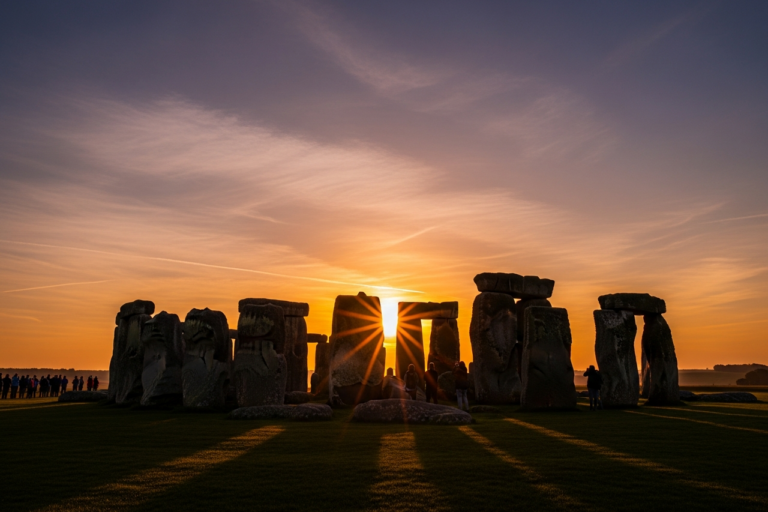
There is nothing the people in Britain look forward to like seeing the sun rise over Stonehenge on the summer solstice. Every year, thousands go to this old stone circle to see the midsummer sunrise. This has become a way for us to join with the people who built Stonehenge so long ago. It ties us to our past, and to each other.
The significance of the summer solstice at Stonehenge is plain to see. The site pulls all kinds of people, for celebrations and for simple rituals. It brings a feeling of togetherness. The way the stones and the sun link up has called people here for many years. For some, it’s a very special moment. It feels both old and personal. Let’s look at why this stone circle is so valued, and go over what happens at one of these modern gatherings.
Why Stonehenge Is the Epicentre for Solstice Gatherings
Stonehenge is the central spot for solstice gatherings, and that is not by chance. The monument was set up with the sun as a main focus. The whole layout lines up with the path of the sun on the longest day of the year. If you stand at the centre of the monument, you will see the midsummer sunrise. The sun comes up just over the Heel Stone, which is one of the ancient stones standing outside.
This exact way the stones line up makes Stonehenge well-known for the longest day. The ancient stones frame the sunrise in a way that shows skill and care. The people who made Stonehenge took great notice of the movements of the sun. Stonehenge stands as proof of this, showing how much they paid attention to it.
People have come to see this event for hundreds of years. It has become a place for people to gather and witness the midsummer sunrise. The link between the sunrise and the ancient stones gives the site a strong feel. It connects all of us to those who, long ago, came here for the summer solstice, sharing in the path of the sun.
What to Expect at Stonehenge in 2026: Rituals and Revelry
If you plan to visit Stonehenge for the summer solstice in 2026, you can expect a unique blend of ancient rituals and modern revelry. Thousands of people from all walks of life gather, including Pagans and Druids who conduct ceremonies to mark Litha and honour the movements of the sun. The atmosphere is festive, respectful, and filled with a sense of community.
The main event is the sunrise itself, but the celebration lasts through the shortest night. You’ll see people singing, dancing, playing drums, and simply soaking in the incredible energy of the occasion. It’s a chance to connect with ancient cultures and witness a religious festival that predates many modern faiths.
To get the most out of your experience, it helps to be prepared. Access to the monument is managed by English Heritage, and there are specific rules to follow to protect the site while allowing people to celebrate.
|
Event Aspect |
What to Expect at Stonehenge 2026 |
|---|---|
|
Access |
Free, managed access to the stone circle for the solstice. Check the English Heritage website for exact timings. |
|
Atmosphere |
A mix of festive celebration and spiritual reverence. Expect crowds, music, and chanting. |
|
Activities |
Watching the sunrise, observing Druid and Pagan rituals, and connecting with fellow attendees. |
|
Restrictions |
No alcohol, large bags, or camping within the monument area. Respect the stones and the rules. |
Conclusion
As we step into the magic of the Summer Solstice in 2026, it is a good time to think about the many traditions and celebrations that come with this special day. The event marks the longest day of the year, and people across Britain join together to honour nature and old customs. From large groups meeting at Stonehenge at sunrise to warm Litha rituals, there is a strong sense of connection to the past and to the earth.
Some people like to focus on the science, while others are there for the history or the fun that comes with the celebrations. The Summer Solstice is a good chance to come together and celebrate light, life, and the local community. Take some time to gather your family and friends. Enjoy the spirit of this unique day and see what ways you can take part in these loved traditions. The longest day of the year is a perfect time to make good memories.
Frequently Asked Questions
How does the summer solstice affect daylight in the UK?
The summer solstice is when the UK has its longest day of the year. On this day, we see the most amount of sunlight. At this time, the northern hemisphere leans towards the sun, so hours of daylight go up a lot. If you are further north in Britain, you get more daylight than people living in other parts.
What makes Litha rituals unique to British solstice celebrations?
Litha rituals in Britain are special. They mix old Celtic and Germanic ways with new Pagan ideas. Solstice celebrations here often happen at ancient spots, letting people feel close to the land’s long past. There is a strong focus on bonfires, sun worship, and what nature gives. All these come from the ancient cultures of Britain.
Where are the best places in Britain to experience the summer solstice besides Stonehenge?
Besides Stonehenge, you get to see the summer solstice at other ancient monuments around Britain. The Avebury Stone Circle in Wiltshire has a larger group, but it feels more relaxed. The Rollright Stones in Oxfordshire and Castlerigg Stone Circle in Cumbria are good places to watch the sunrise. You can also join in solstice celebrations there. People gather at these sites, all full of ancient standing stones.