Key Highlights
-
The Feast of the Sacred Heart of Jesus is an important event in the Catholic Church. It is a time to honour the divine love Jesus has for all people.
-
The feast of the Sacred Heart began after Saint Margaret Mary Alacoque saw visions in the 17th century.
-
This feast of the Sacred Heart is not on a fixed date. It takes place on the Friday after the Solemnity of Corpus Christi each year, which is always in the month of June.
-
The Sacred Heart of Jesus is shown in art with strong signs like a crown of thorns and flames. These show Christ’s suffering and his powerful love for us.
-
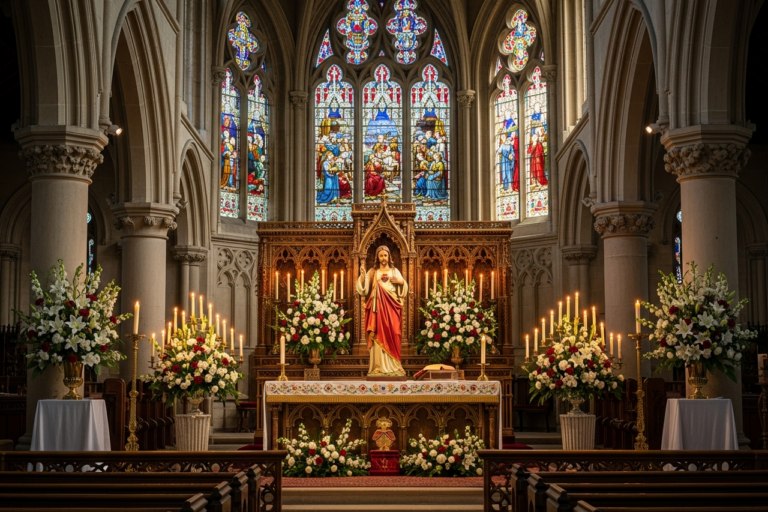
Across Britain, Catholic parishes mark the feast of the Sacred Heart with special prayers, Eucharistic adoration, and people coming together in the community.
-
Celebrating the Sacred Heart of Jesus makes key Catholic beliefs about divine love and mercy even clearer.
Introduction
Welcome to a closer look at one of the most loved traditions in the Catholic Church: the Feast of the Sacred Heart of Jesus. The feast of the Sacred Heart is a special day that people in Britain and across the world celebrate. On this day, people in many places come together in a quiet but strong show of faith. It is a time to think about the great love Jesus Christ has for us all. We will go through the story, meaning, and wonderful traditions of the Sacred Heart of Jesus together.
Understanding the Feast of the Sacred Heart of Jesus in Britain
The Feast of the Sacred Heart of Jesus is a very special day in the Catholic Church. It is about giving honour to the real heart of Jesus. His heart is a sign of His deep and never-ending love for all people. In Britain, this feast is a time for Catholics to think about the kind and boundless love that comes from the heart of Christ. People pray and say sorry for the wrong things done in the world on this day.
This feast calls believers to get closer to the Heart of Jesus. It gives comfort, strength, and mercy to those who look for it. The feast of the sacred heart is not just any day. It is a real offer to feel God’s own love—one that will never end. Next, we will talk about how this feast of the sacred heart began and why the heart of Jesus is still important for so many people in the catholic church today.
Historical Origins of the Devotion
The devotion to the Sacred Heart began in the Middle Ages. But it became well-known in the 17th century because of the visions of a French nun. Her name was Saint Margaret Mary Alacoque. She was a sister in a convent at Paray-le-Monial. In 1673, she started to see powerful visions of Jesus. In these visions of Jesus, He showed her His heart and said it was “passionately in love with humanity”.
In those moments, Jesus asked Margaret Mary to spread a special devotion to His heart. He wanted there to be a feast day to honour His Heart. He also asked for time to make up for the lack of care and wrongs against His Heart. Jesus spoke of some new acts, like receiving Communion on the First Friday of each month. He also asked people to spend an hour in prayer. This became the Holy Hour of Adoration.
After these events, the devotion grew in the Catholic Church. The feast day is held on the Friday after the octave of Corpus Christi. In 1856, Pope Pius IX made the feast official for the whole universal church. He made it a day all Catholics must keep, and it became an important part of the church calendar.
Keywords: sacred heart, margaret mary alacoque, margaret mary, pope pius ix, catholic church, corpus christi, universal church, first friday, saint margaret mary, feast day, visions of jesus, 17th
Why the Feast Is Celebrated by Catholics Today
For Catholics today, the Feast of the Sacred Heart helps people to see what is at the centre of their faith. The feast of the sacred heart draws attention to God’s infinite love for everyone. This is a special day for people to honour the love of Jesus and think about his compassion, mercy, and great divine love. The sacred heart gives a real way for people to understand what can sometimes feel like a big idea. This makes God’s love feel close, and something each person can know.
When people take part in this celebration, they see just how much Christ gave and how he always wants a close relationship with us. People are called to answer this love with their own hearts. The feast of the sacred heart reminds people to live with thankfulness, to help others, and to pray more often. For many, this time with the heart of Christ brings good comfort and strength.
The feast of the sacred heart is still important for the universal church because:
-
It points to the deep and caring love of Jesus for each person.
-
It asks people to make up for sins and times they have not paid attention to God.
-
It gets people involved in things like the First Friday devotion.
-
It helps everyone remember the forgiving and merciful heart of Christ.
The Sacred Heart of Jesus: Symbolism and Significance
In Catholic faith, the Sacred Heart of Jesus means much more than a body part. The sacred heart stands for the whole person of Jesus, the way he thinks and what he wants. In the Bible, the heart often means the very centre of someone’s life. So, the divine heart is a sign of who Jesus is at his core and shows the boundless love of Christ for his Father and for all people.
This devotion gives people both a strong image and a special feeling to focus on. It asks you to think about the love, kindness, and giving that the heart of Jesus holds. When you learn what the picture of the sacred heart stands for, it can help you understand and value this tradition even more. Next, we will talk about the details of the images used and what this devotion means for people in the Catholic faith.
The Meaning Behind the Sacred Heart Iconography
The image of the Sacred Heart is one of the most known symbols in Catholicism. It carries rich meaning that speaks to many people. In the visions given to Saint Margaret Mary Alacoque, Jesus’s heart was seen on a throne made of flames. It was said to shine brighter than the sun. Each part of the image gives us a strong message about Christ’s boundless love and his pain for all people.
This image is more than just art. It is a silent sermon you see with your own eyes. The symbol of Christ shown here tells a story about suffering, giving up much, and the strong, powerful love Jesus has for us. When you look at the image of the Sacred Heart, you are asked to think about what Jesus went through for your salvation and the love He gives without end.
The key parts and their meanings are:
-
The Flames: They show the burning and deep love Jesus holds for every one of us. This love is also strong enough to clean and make us new.
-
The Crown of Thorns: It sits around the heart to remind of the pain and great hurt Jesus had, and the mockery faced during His final days.
-
The Wound: This marks where Jesus’s side was cut on the cross. From the wound, blood and water came out, showing the start of the Church and the sacraments.
The image of the Sacred Heart, as seen by Saint Margaret Mary Alacoque, is both a symbol of
The Role of the Sacred Heart in Catholic Tradition
The devotion to the Sacred Heart of Jesus holds a central place in Catholic spirituality, influencing prayer life, liturgical practice, and personal piety. It goes beyond a single feast day, weaving its way into the daily lives of the faithful. It encourages a personal relationship with Jesus, seeing Him not just as a distant divine figure but as someone with a loving, compassionate heart.
One of the most significant aspects of this devotion is the “Promises of the Sacred Heart.” These are twelve promises Jesus reportedly made to Saint Margaret Mary for those who honour His Sacred Heart. These promises offer comfort and assurance, covering various aspects of spiritual and temporal life. Many families perform an Act of Consecration, dedicating themselves and their homes to the Sacred Heart.
Furthermore, the devotion is closely linked with practices like Eucharistic Adoration and prayers for the sanctification of priests. In 1995, Saint John Paul II instituted the World Day of Prayer for the Sanctification of Priests on the same day as the feast, placing the priesthood under the protection of the Heart of Jesus.
|
Devotional Practice |
Significance in Catholic Tradition |
|---|---|
|
First Friday Devotion |
Receiving Holy Communion on nine consecutive first Fridays of the month, a practice requested by Jesus to honour His heart and make reparation. |
|
Eucharistic Adoration |
Spending time in prayer before the Blessed Sacrament, often in a “Holy Hour,” to console the Heart of Jesus for the indifference of humanity. |
|
Act of Consecration |
A formal prayer dedicating oneself, one’s family, or a community to the Sacred Heart of Jesus, seeking His protection and guidance. |
Observing the Feast Across Catholic Parishes in the UK
Across the United Kingdom, Catholic parishes mark the feast of the sacred heart with both respect and happiness. This feast day takes place in the month of June, which is set aside for the heart of Jesus. It is a time when people come together to pray and celebrate. Churches hold special services to show what Christ’s love and mercy mean.
You see both busy city cathedrals and small village chapels taking part in the feast of the sacred heart. The way each place celebrates may be different, but they all show praise for Jesus’s caring heart. The feast day helps the faith in the local catholic church grow. Now, let’s take a look at some usual ways people celebrate and join in community events that keep this great tradition of the heart of jesus alive across Britain.
Common Practices and Prayers During the Feast
On the Feast of the Sacred Heart, most parishes have special Masses. These often come with readings and talks that be about the love and care of Jesus. These services are at the heart of the day’s events. The community comes together, takes Holy Communion, and thinks about the Divine Heart. Many churches to set up times for Eucharistic Adoration, so people can spend some quiet moments in prayer.
People in the parish say special prayers and the Litany of the Sacred Heart. Many will choose to make personal or group acts of reparation. This is done to make up for wrongdoing and times people have not cared. If you have kept the First Friday devotion, this feast is important. It often shows you have made it through the nine consecutive months of prayer and receiving Holy Communion. The whole day is full of ways to build up your spiritual life.
Parish practices often include:
-
Celebrating a solemn Mass for the feast.
-
Holding extended hours for Eucharistic Adoration.
-
Reciting the Litany of the Sacred Heart.
-
Organising communal Acts of Reparation.
-
Encouraging the faithful to reflect on the Promises of the Sacred Heart.
Community Gatherings and Local Traditions
Besides the formal church services, the feast day brings people together in the community and helps parishioners feel closer. Many parishes in the Catholic Church hold events after Mass, like coffee mornings or shared meals. These things make a happy, welcoming mood. It gives everyone a chance, no matter their state of life, to meet and celebrate the sacred heart and their faith.
For parishes named after the Sacred Heart, this feast day is the main festival for their church. They often have larger celebrations. There might be processions through the area, talks for the people, or family fun days. The local ways of marking the day help each community feel that the feast day is special to them.
Some common community activities include:
-
Parish breakfasts or luncheons after the feast day Mass.
-
Special evening services or prayer groups.
-
Activities for children and families to learn about the Sacred Heart.
-
As the feast is also the World Day of Prayer for Priests, special prayers and support for parish clergy are common.
Conclusion
To sum up, the Feast of the Sacred Heart of Jesus is much more than just a date. The feast of the Sacred Heart is a special tradition that brings Catholics together all over Britain. It has a long history and deep meaning. This feast is there to help us remember the love and care shown by the heart of Jesus. Each church takes part through prayers and its own customs. These ways add to the rich life of faith and help people feel closer to each other.
As we get ready for the feast of the Sacred Heart in 2026, this is a good time to grow and value this tradition even more. I hope your feast of the Sacred Heart brings you closer to your faith and helps you feel like you belong in the Catholic community.
Frequently Asked Questions
When is the Feast of the Sacred Heart of Jesus observed each year?
The feast of the Sacred Heart of Jesus is not on the same date every year. In the Catholic liturgical calendar, it is always held on the Friday after the second Sunday after Pentecost. This Friday is also just after the Solemnity of Corpus Christi. So, the feast of the Sacred Heart always happens in the month of June.
What distinguishes the feast from the solemnity of the Sacred Heart of Jesus?
In the Catholic Church, “feast” and “solemnity” are names for levels of a liturgical celebration. The celebration of the Most Sacred Heart of Jesus is actually a “solemnity,” which is the highest level for any celebration. Although many people say the “feast of the Sacred Heart” when talking to others, the true title is the “Solemnity of the Most Sacred Heart of Jesus.” This shows just how important the celebration is in the Catholic Church. The day is about honouring the sacred heart of Jesus and it holds a very special place for all who take part.
Are there notable stories or miracles associated with the Sacred Heart devotion?
Yes, the devotion to the Sacred Heart is full of stories. The visions of Jesus that were shown to Saint Margaret Mary Alacoque are at the heart of this devotion. In these visions, Jesus gave the twelve Promises of the Sacred Heart. He promised to give graces and blessings to those who honour His heart. These promises include things like peace in the family and help during hard times. Many see these as a great wonder of His great mercy.