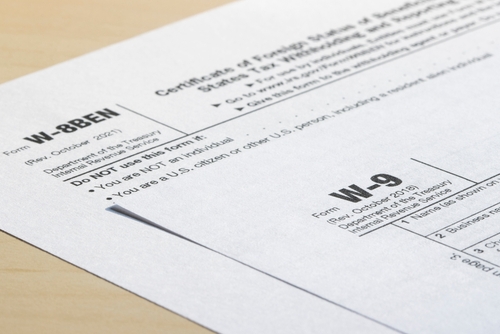

If you’re a Canadian resident earning income from a US source, you may need to complete a W-8BEN form. You might be wondering, “What is a W-8BEN form?” In official terms, it’s a Certificate of Foreign Status and Beneficial Owner for US Tax Withholding and Reporting. In simple terms, it’s a form you have to fill out if you’re a non-US citizen earning money from the US.
Whether you’re an immigrant, expat, or freelancer in Canada, filling out this form is essential if you work with US-based clients or employers. That’s why we’ve created this Remitly guide to break down the W-8BEN process in clear, practical steps. You’ll learn what the form is, why it matters for Canadians, and how to fill it out correctly.
What is a W-8BEN form?
A W-8BEN form is an official document from the Internal Revenue Service (IRS) that foreign individuals use to confirm they are not US taxpayers. It essentially tells the IRS, “I’m not a US citizen or resident, so different tax rules apply to me.”
The main purpose of the W-8BEN form is to claim a reduced rate of US tax withholding on income earned from the United States, thanks to the Canada–US tax treaty. This form ensures the correct amount of tax is withheld and helps prevent unnecessary deductions.
If you’re receiving income from US sources and you’re not a US citizen or resident, you need to submit a W-8BEN form. This includes freelancers, investors, online content creators, and anyone receiving royalties, interest, or other types of US-based payments.
Why do Canadians need to complete the W-8BEN form?
Under US tax rules, the IRS automatically withholds 30% tax on income paid to anyone who isn’t a US taxpayer. This means that as a Canadian resident earning income from a US source, you may lose almost one-third of your payment unless you complete the proper paperwork.
By filling out the W-8BEN form, you can claim benefits under the Canada–US tax treaty, which often reduces the withholding tax. For example, the rate on dividends can drop to 15%, and most types of interest income may qualify for a 0% rate.
Common types of US-sourced income that require Canadians to complete a W-8BEN include:
- Dividends from stock: For example, if you own shares of Apple or Microsoft through a Canadian brokerage like Wealthsimple or Questrade, the dividends you receive are considered from the US.
- Royalties from US intellectual properties: This includes revenue from e-books sold on Amazon.com, music streamed on Spotify’s US platform, or photos licensed through a US stock image website.
- Freelance or contract payments from US companies: For instance, designing logos for a Silicon Valley startup, writing content for a US marketing agency, or providing virtual tutoring to American students.
- Rental income from US real estate: Whether you own a condo in Florida or earn through a US-based platform like Airbnb, this income is subject to US withholding rules.
- Interest income from US banks or investment accounts: This includes interest from high-interest savings or investment accounts held with a US financial institution.
- Earnings from online platforms based in the US: Payouts from YouTube, Patreon, Etsy, or other creator platforms that classify payments as US-sourced income fall under this category.
How to fill out the W-8BEN form: a step-by-step guide
Completing the W-8BEN form is straightforward when you know what each section is asking for. Below is a simple breakdown of each part so you can fill it out correctly:
Part I: Identification of beneficial owner
This section is used to confirm your identity and where you live. You’ll need to provide:
- Your full legal name
- Your country of citizenship (Canada)
- Your permanent residence address, which should be outside the United States
- Your mailing address, if it’s different from your home address
Most Canadians do not have a US Taxpayer Identification Number (TIN), so you can leave this field blank. Instead, the IRS expects you to provide:
Your Canadian Social Insurance Number (SIN) in the “Foreign tax identifying number” box.
Providing your SIN helps the IRS verify your identity and apply the correct treaty rate for your US-sourced income.
Part II: Claim of tax treaty benefits
This is the most important part for Canadians because it determines how much tax will be withheld from their US income. Here’s what to do:
- Check the box confirming you’re claiming Canada–US tax treaty benefits
- Write “Canada” in the space provided in your country of residence
By completing this section, you can take advantage of the Canada–US treaty, which often reduces the default rate.
Part III: Certification
This final section is where you confirm that all the information you’ve provided is accurate. You’ll need to include:
- Your signature
- The date
- Your printed name
By signing, you certify that you’re not a US citizen or resident for tax purposes and that everything on the form is true. The form isn’t valid until this section is fully completed.
If a representative, accountant, or agent completes the W-8BEN on your behalf, they need legal permission to do so. This permission, called power of attorney, should be attached or included as a copy. This ensures the IRS can verify that the person signing is officially authorized to handle the form for you.
Common mistakes to avoid
When completing the W-8BEN form, be sure to avoid the following errors:
Using a P.O. box as a permanent address
Your permanent residence address should be a physical location outside the United States. If you list a P.O. box, the IRS may question your residency status, which can lead to delays or even rejection of the form.
Forgetting to sign and date the form
An unsigned W-8BEN is not valid. Without your signature and date, the payer cannot apply the correct withholding rate, and the IRS will treat the form as incomplete.
Not providing a Canadian SIN
Canadians need to provide their Social Insurance Number in the “Foreign tax identifying number” section. Leaving this blank may prevent you from benefiting from the reduced tax treaty rate.
Skipping Part II and not claiming treaty benefits
Many Canadians forget to check the treaty benefit box and write “Canada” in Part II. Missing this step means your income will not benefit from the treaty.
Submitting the wrong version of the form
The IRS updates the W-8BEN form from time to time. Using an outdated version can cause delays or rejection, so always download the latest version directly from the IRS website before completing it.
Failing to update the form when circumstances change
If your address, citizenship, or tax status changes, you need to submit a new W-8BEN. Relying on an old form can lead to compliance issues with the IRS.
Not keeping a copy for your records
Although the payer keeps and sends the form, you should keep a copy too. Having your own copy makes it much easier to resolve disputes, answer auditor questions, and show proof of your treaty claim later.
Submitting the form to the wrong payer
Some Canadians mistakenly send the W-8BEN directly to the IRS, but the form should be submitted to the payer or platform that issues your income. Sending it to the wrong place can delay processing and prevent your information from being applied correctly.
Not renewing the form every three years
The W-8BEN isn’t permanent. It expires after three years, and if you don’t renew it on time, your payer will have to use the default. Renewing the form before it expires helps you keep your reduced tax rate in place without interruptions.
Filling out the W-8BEN form with confidence
Filling out a W-8BEN is an important step for any Canadian earning income from US sources. It confirms your non-US status to the IRS and allows you to claim benefits under the Canada–US tax treaty. This can significantly reduce the default tax on dividends, interest, royalties, freelance payments, and other types of income from the US.
By identifying yourself, providing your Canadian SIN, claiming treaty benefits, and certifying your information, you can ensure your income isn’t subject to unnecessary deductions. By following the steps in this guide, you can secure the correct withholding rates and continue earning from the US stress-free.
FAQs
How often do I need to submit a W-8BEN form?
A W-8BEN form is usually valid for three years from the end of the year you sign it. After it expires, you’ll need to submit a new form to keep receiving treaty benefits. It’s also a good idea to confirm with your payer or withholding agent that your form is current.
What if I’m a dual citizen of Canada and the US?
If you’re a US citizen, you should not complete a W-8BEN form. Instead, you need to fill out a W-9 form, which reports your US tax requirements. Using the wrong form can lead to incorrect withholding and possible issues with your tax filings.
Do I need to send this form to the IRS myself?
No. The W-8BEN is sent to the withholding agent, such as the US company, platform, or financial institution paying you. They use it to apply the correct withholding rate. You don’t send it directly to the IRS.
What is the difference between a W-8BEN and a W-8BEN-E?
The W-8BEN is for individuals, while the W-8BEN-E is for entities such as corporations, partnerships, or trusts. Each form has sections tailored to the type of recipient. Using the correct form ensures proper tax treatment and helps avoid unnecessary withholding.
Can I fill out the W-8BEN form online?
Yes. Many US payers and financial institutions let you submit the W-8BEN electronically through their secure platforms. This option can speed up processing and help reduce errors compared to filling out a paper form. Just make sure the institution accepts online submissions before completing it digitally.
What happens if I submit the W-8BEN incorrectly or late?
If the form is incomplete, incorrect, or not submitted on time, the payer may apply the default withholding tax instead of the reduced treaty rate. This means more tax will be taken from your payments until the correct form is received. Submitting the W-8BEN accurately and on time ensures you’re only charged the amount of tax you’re legally required to pay.