

Meal times in any country are an excellent opportunity to connect with family and friends, and Canada is no exception. As Canadians, we particularly enjoy sharing a traditional Canadian breakfast: there’s a little bit of something for everyone in traditional Canadian food, and our breakfasts highlight this perfectly.
In this Remitly blog, we’ll look at how traditional Canadian breakfasts share similarities with American, English, and other countries’ edible fare, but with our own unique twist.
We’ll help you understand what to expect on a Canadian breakfast plate, whether you’re a newcomer to the country, a tourist, or a foodie who loves to learn about the world’s different cuisines.
Let’s take a look at some of the classic Canadian breakfasts, such as peameal bacon, along with local ingredients like maple syrup, and check out the regional variations in our dishes. And last but certainly not least, we explore our extremely important coffee culture—can’t miss that in the morning. So let’s get stuck in.
The classic “lumberjack” breakfast
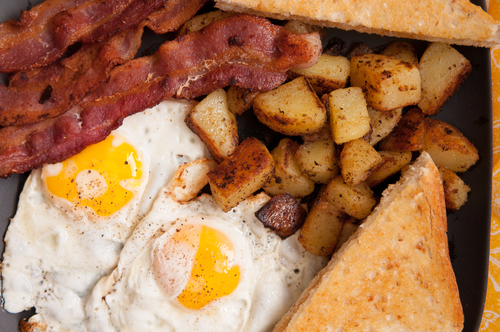
Named after 19th- and 20th-century loggers, the lumberjack breakfast is a hearty meal that used to be fit for those involved in strenuous physical labour in a cold climate. Now, it’s fit for anyone, and you can typically find it in diners across the country. It usually consists of a few key staples:
- Eggs
These can be served any way you like, usually scrambled, fried, or poached. - Meats
You’ll find a variety of meats in a traditional Canadian lumberjack breakfast, most notably strip bacon, pork sausages, ham, and even some modern twists like chicken sausages and glazed ham. - Potatoes
Fried or roasted, depending on where you go, potatoes are a must-have in a lumberjack breakfast. Usually, you’ll have hash browns, which are made from shredded potatoes, seasoned and fried in patty shapes. But it might be home fries—cubed and fried potatoes—or roasted chunks, cooked with onions, peppers, and a generous helping of butter or oil. - Toast
This is typically served on the side with butter and jam.
There’s nothing light about the lumberjack breakfast; we can assure you it’ll fill you up and keep you warm in the colder weather.
The dinner-turned-breakfast staple: poutine

Poutine used to be a popular dinner or lunch cuisine, but in recent years, Canadians have popularized the breakfast version.
Some traditionalists might argue that it should stay a lunch/dinner meal, but its inclusion as a breakfast meal shows how open to experimentation Canadians can be.
Poutine, hailing from Quebec originally but now a part of Canadian culture nationwide, consists of crispy fries topped with fresh cheese curds, layered in a hot brown gravy. But for breakfast, it also includes other foods like eggs, bacon, sausage, and hollandaise sauce.
It usually appears on restaurants’ weekend brunch menus, rather than being a regular weekday meal.
The star ingredient: real maple syrup

Now, here’s something we have to get straight: only the real-deal maple syrup should be used in a proper Canadian breakfast. Otherwise, it’s not the authentic experience you’re looking for.
If you want to be a foodie detective, look out for labels on the syrup bottle that say something like, “100% pure maple syrup” and avoid the fake stuff, which is most commonly made from corn syrup. It might not seem like a big deal to interchange the two, but trust us—you just can’t beat pure maple syrup in a Canadian breakfast.
Maple syrup can be used in a number of ways for breakfast, with the most common being pancakes and waffles. While we agree that waffles are delicious breakfast components, for a Canadian breakfast, they’re more like vessels for the real star of the show—maple syrup.
Canadians are also experts at blending sweet and savoury, often delicately mixing maple syrup with the meat, such as bacon and sausages.
Peameal bacon: a Canadian icon

If you’re not familiar with peameal bacon, you might be wondering what and how this type of pork is served. Simply put, it’s back bacon (not the regular fatty belly strips) that is rolled in cornmeal (traditionally peameal, hence the name).
This pork loin bacon is saltier and juicier than your average bacon and is often served in a sandwich, known as a ”peameal sandwich” or as a side dish.
It’s particularly well-known and beloved in Ontario.
Regional breakfast differences
Canada is massive. In fact, it’s the second-biggest country in the world, after Russia, covering almost ten million square kilometres and sitting on the Pacific, Atlantic, and Indian Oceans.
So, due to Canada’s size, it makes sense that you’d get plenty of regional variations in our breakfasts. Here are a couple of examples:
- Quebec
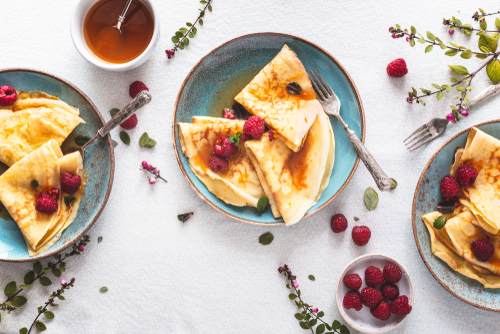
With heavy French influence, you’ll find delicious, French-inspired fare such as crêpes (thin pancakes), fèves au lard (baked beans), and pain perdu (French toast), which all make regular appearances on Canadian breakfast plates. - The Maritimes
In coastal areas, you’re more likely to find seafood in your Canadian breakfast—often fish cakes.
Coffee culture: the double-double
The beverage that fuels the nation, coffee is a staple in Canadian homes and diners. One of the most popular ways to drink it is a “double-double,” popularized by the Tim Hortons restaurant and coffeehouse chain. It consists of two creams and two sugars in a cup of coffee.
But this is a special drink, typically served in artisanal coffee shops in the cities. For many Canadians, mornings aren’t complete without a regular “cup of joe” for their commute.
Canadian tipping etiquette: what’s expected at breakfast time?

Some breakfast behaviours are the norm all over Canada. For example, if you’re heading to a diner for the first meal of the day, it helps to know that tipping is expected when you pay. The standard rate is 15%–20% of the bill’s value, and cash or card tips are equally accepted.
Drip coffee refills are standard at many Canadian diners, so get ready to drink your fill.
Also, customization is perfectly normal. Order your eggs how you like them; you don’t need to just take what’s listed on the menu. Prefer hash browns to roasted potatoes? Usually, changing this up is no problem. Likewise, if you want extra bacon or sausage, go ahead and ask for it.
Happiness in a meal: Canadian breakfasts
Canadian breakfasts are a real treat. They tend to be hearty and comforting, and centre around quality ingredients like local pork and maple syrup. There’s no right or wrong way to enjoy breakfast in Canada, whether you’re a quick-cup-of-coffee or an eggs-and-bacon kind of person.
Having said that, you might be missing out on your next favourite food if you’ve never tried peameal bacon, so why not visit your nearest diner next time you’re in Canada to taste it?
FAQs
What’s the difference between Canadian bacon and regular bacon?
In Canada, “bacon” usually refers to strip bacon. In America, “Canadian bacon” refers to the “back bacon” or “peameal bacon” that’s a unique staple in our breakfasts.
Do Canadians eat oatmeal for breakfast?
Yes, hot oatmeal (porridge) is a common, warming breakfast that’s most often enjoyed on cold winter mornings. We tend to top it with brown sugar or—of course—maple syrup.
Is breakfast a heavy meal every day?
While traditional Canadian breakfasts tend to be hearty, they’re not an everyday occurrence. Breakfasts like the lumberjack are typically enjoyed on weekends at home or in diners. They’re a special treat, not generally a weekday staple. Instead, Canadians tend to eat what many people around the world eat on workdays: cereal, toast, fruit, or yogurt.
What cultures influence Canadian breakfast foods?
Canadian breakfasts are influenced by several cultures, including English, American, and French. Naturally, Quebec is most heavily impacted by French influences, but this has spread to many cities around Canada.
What breakfast foods might surprise visitors to Canada?
Depending on where you’re from, some elements of a Canadian breakfast might be surprising to you as a tourist or immigrant, like potatoes, gravy, and sweet-and-savoury combinations.
How does Canada’s climate influence breakfast choices?
Canada can get really cold in winter, and its breakfast traditions reflect that. Meals tend to be hearty, filling, and warming when it’s freezing, but lighter in the summertime.