

Hiring contractors is a normal part of running a small business. So is collecting the right tax documentation before you pay them. Most small business owners are familiar with Form W-9—it’s the standard form for U.S.-based contractors, and many accounting workflows are built around it.
Confusion often begins when you hire someone outside the United States. Suddenly, terms like “foreign person,” “non-U.S. status,” and “withholding exemptions” enter the picture, and it may not be immediately clear which form to request or why.
The good news is that the core principle is relatively straightforward. The deciding factor between W-9 and W-8BEN generally isn’t where your contractor lives—it’s their U.S. tax status. Once you understand that distinction, most situations become much easier to navigate.
This guide walks through both forms, explains when to use each one, and highlights common mistakes small businesses tend to make along the way.
What Is Form W-9?
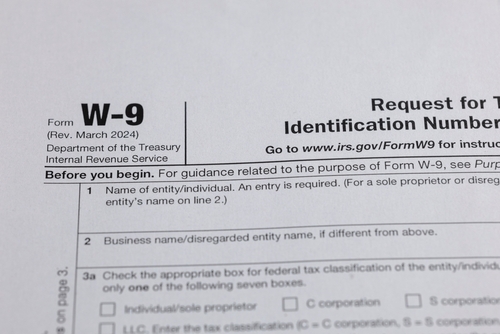
Form W-9—officially titled “Request for Taxpayer Identification Number and Certification”—is used by U.S. persons to provide their Taxpayer Identification Number (TIN) to a business that pays them. Businesses typically use the information on a W-9 to prepare Form 1099-NEC, which reports non-employee compensation to the IRS.
If you pay a U.S.-based freelancer $600 or more in a calendar year, you will generally need a completed W-9 on file before issuing a 1099.
Who Completes a W-9?
- U.S. citizens, regardless of where they currently live
- U.S. residents for tax purposes (including green card holders)
- U.S.-registered businesses, such as LLCs, corporations, and partnerships
- U.S. citizens living abroad
The last point is worth emphasizing. A U.S. citizen working remotely from another country is typically still considered a U.S. taxpayer. In most cases, they would complete a W-9, not a W-8BEN.
What Is Form W-8BEN?

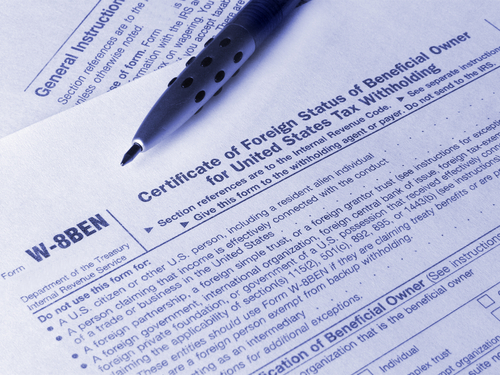
Form W-8BEN is generally considered the foreign counterpart to the W-9. It’s completed by foreign individuals—non-U.S. persons—to certify their status and establish that payments made to them are typically not subject to standard 1099 reporting.
When a contractor submits a W-8BEN, they are confirming that they are not a U.S. taxpayer and that their income may be treated differently under U.S. tax rules.
W-8BEN vs W-8BEN-E
There are two versions of this form, and using the correct one is important:
- W-8BEN — completed by foreign individuals
- W-8BEN-E — completed by foreign entities, such as foreign-registered companies or partnerships
If your overseas contractor is a freelancer or sole proprietor, they would typically use W-8BEN. If you’re contracting with a foreign business, you would generally request the W-8BEN-E instead.
The Core Difference Between W-9 and W-8BEN
| Form | Used By | Purpose |
| W-9 | U.S. persons | Provide TIN for 1099 reporting |
| W-8BEN | Foreign individuals | Certify non-U.S. tax status |
| W-8BEN-E | Foreign entities | Certify non-U.S. business status |
The key principle is that U.S. tax residency typically determines the form—not physical location.
For example, a developer in Canada who holds U.S. citizenship would generally file a W-9. A developer in Texas who is a citizen of another country and does not qualify as a U.S. tax resident would generally file a W-8BEN. Location may be relevant in certain edge cases, but tax status is usually what drives the decision.
When Should You Collect a W-9?
The Contractor Is a U.S. Citizen
U.S. citizens are subject to U.S. taxation on their worldwide income. Regardless of where they live or work, they would typically complete a W-9 when contracting with a U.S. business.
The Contractor Is a U.S. Resident for Tax Purposes
Residency for tax purposes has a specific legal definition. It includes green card holders and individuals who meet the “substantial presence test.” If your contractor qualifies as a U.S. resident under IRS rules, you would generally collect a W-9.
The Contractor Is a U.S. LLC, Corporation, or Partnership
Any business entity organized under U.S. law typically completes a W-9, even if it operates internationally or its owners are foreign nationals.
Reminder: A U.S. citizen living in Mexico, India, the Philippines, or elsewhere is still generally classified as a U.S. person for tax purposes.
When Should You Collect a W-8BEN?
The Contractor Is Not a U.S. Person
If your contractor is a foreign national who has not established U.S. tax residency, they generally fall outside the W-9 category. In those cases, you would request a W-8BEN before issuing payment.
The Contractor Is a Foreign Individual
Foreign freelancers, independent contractors, and sole proprietors who are non-U.S. persons typically complete W-8BEN. This applies even if they occasionally perform work in the United States—though that detail may affect withholding requirements.
Services Are Performed Outside the United States
When a foreign contractor performs services entirely outside the U.S., payments are often not subject to U.S. withholding tax or 1099 reporting. A completed W-8BEN helps document this status.
Best practice: It is generally advisable to collect the appropriate tax form before issuing the first payment. This can help keep your records organized and reduce the need to request documentation later.
Do You Issue a 1099 If You Receive a W-8BEN?
In many cases, no.
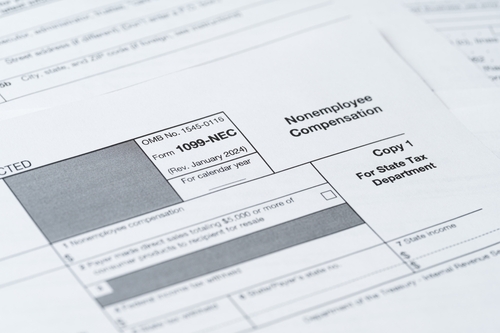
If the contractor is a non-U.S. person and services are performed outside the United States, you are generally not required to issue a 1099-NEC. The W-8BEN certifies their foreign status, and the payment typically falls outside standard 1099 reporting requirements.
However, exceptions can apply. If a foreign contractor performs services inside the United States, different rules may apply, including potential withholding obligations. Consulting a tax professional may be helpful if your situation involves cross-border complexity.
Why Collecting the Correct Form Matters
Getting this right isn’t just about administrative precision. It can have practical implications for your business.
| Reason | Impact |
| Avoid Incorrect 1099 Filing | Issuing a 1099 to a foreign contractor who submitted a W-8BEN may result in inaccurate reporting and could require corrections later. |
| Prevent Backup Withholding Issues | Paying a contractor without tax documentation may require you to apply backup withholding at a flat rate. The correct form can help reduce the likelihood of this occurring unnecessarily. |
| Reduce Audit Risk | Consistent documentation may help demonstrate that your business follows proper tax procedures. Missing contractor paperwork can create complications if questions arise later. |
| Maintain Clean Accounting Records | Accurate records of payments and tax classifications make year-end accounting significantly smoother, as collecting documentation upfront requires less effort than reconstructing records later. |
Common Mistakes Small Businesses Make
Assuming Location Equals Tax Status
This is one of the most common sources of confusion. A contractor’s address indicates where they live, not necessarily how the IRS classifies them. It’s generally better to ask about citizenship and tax residency rather than relying solely on location.
Forgetting to Collect Forms Before Payment
It’s easy to begin working with a contractor and overlook documentation before paying the first invoice. Building form collection into your onboarding process can help minimize gaps.
Mixing Up W-8BEN and W-8BEN-E
Sending the wrong form to a foreign contractor can delay onboarding and create avoidable back-and-forth. Individuals typically use W-8BEN; entities use W-8BEN-E.
Not Updating Expired W-8 Forms
W-8BEN forms are generally valid for three years, unless the contractor’s circumstances change earlier. If you work with long-term foreign contractors, setting reminders for renewals can help maintain compliance.
Simple Checklist: W-9 or W-8BEN?
| Contractor Status | Form to Collect |
| U.S. taxpayer (citizen, resident, or U.S.-registered business) | W-9 |
| Foreign individual (non-U.S. person) | W-8BEN |
| Foreign business entity | W-8BEN-E |
When in doubt, consider asking your contractor directly about their U.S. tax residency status before requesting a form.
Final Thoughts: It’s About Tax Status, Not Geography
Once the core principle is clear, most contractor situations become more manageable.
- W-9 = U.S. person
- W-8BEN = Foreign individual
- W-8BEN-E = Foreign entity
The appropriate form is typically determined by who your contractor is for U.S. tax purposes—not where they happen to be physically located when performing the work. Collecting the correct documentation before payment can help protect your business, support accurate recordkeeping, and reduce year-end complications.
Many situations are relatively straightforward. Starting with the right question—what is this contractor’s U.S. tax status?—can help guide the rest of the process.
Frequently Asked Questions (FAQs)
What is the main difference between W-9 and W-8BEN?
A W-9 is completed by U.S. persons to provide their TIN for 1099 reporting. A W-8BEN is completed by foreign individuals to certify their non-U.S. tax status. The deciding factor is generally U.S. tax residency, not physical location.
Do I issue a 1099 if I receive a W-8BEN?
In many cases, no. If the contractor is a non-U.S. person and services are performed outside the United States, a 1099 is generally not required. However, exceptions may apply.
What if a U.S. citizen lives abroad?
They would typically complete a W-9. U.S. citizens are generally taxed on their worldwide income regardless of residence.
How long is a W-8BEN valid?
A W-8BEN is typically valid for three calendar years following the year it was signed, unless the contractor’s circumstances change earlier.
Should I collect tax forms before or after paying a contractor?
Collecting the appropriate form before issuing the first payment is generally advisable, as it can help reduce compliance gaps and administrative follow-up later.



