English (US) – Page 65

Gujarati Alphabet: Script Style and Sound System

Discover the gujarati alphabet, its unique script style, and sound system. Our blog covers everything you need to know about this fascinating writing system!

English (US)

Key Highlights

Here are the key things to know about the Gujarati alphabet:

  • The Gujarati language uses its own script. This script comes from the Devanagari script but does not have the bar at the top.
  • The script is an abugida. In this type of script, each consonant comes with an inherent vowel sound.
  • The Gujarati alphabet has different letters for vowels (Swar) and consonants (Vyanjan).
  • Over time, the script has changed because of other languages like Prakrit and Sanskrit. The script turned into what we use now by the 19th century.
  • To use the script, you need to know all the letters and how they go together in groups.
  • Using an alphabet chart is a good way to learn the letters. It helps people remember the Gujarati script and say the sounds the right way.

Introduction

Welcome to the world of the Gujarati language. The Gujarati script is special and used by many people. It helps you understand the rich culture that comes from the state of Gujarat. If you are new to learning Gujarati, starting with the alphabet is a good idea.

This guide will show you the basics of the Gujarati script. You will see the different letters and learn the way they sound. We will talk about vowels and consonants. You will get useful tips on pronunciation. There will also be some links and ideas for you to keep learning the language in an easy and fun way.

Let’s start now!

Overview of the Gujarati Alphabet

The Gujarati alphabet is the system people use to write the Gujarati language. Most of the time, you will hear this language in the state of Gujarat, India. The script is called an abugida. In an abugida, every consonant has the vowel sound ‘a’ by default. If you need a different vowel, you add a special mark to the consonant.

In the Gujarati alphabet, there are vowels called Swar and consonants called Vyanjan. Each one of these has its own shape and sound. We are going to talk about how the script is put together and also learn a bit about its history.

Keywords: gujarati language, alphabet, gujarati, state of gujarat, india, abugida, inherent vowel, consonants, vowels, gujarat

Structure and Unique Features of the Script

One thing that stands out about the Gujarati script is that it is an abugida. In this script, each consonant is a main letter with its own vowel sound, which is the ‘a’ sound [ə]. If you want a different vowel with the consonant, you add a small mark on the letter to show that change. When there is no vowel after a consonant, you can put it together with the next consonant to show both sounds join. People call this a conjunct or compound letter.

This type of system helps you write faster, since you do not have to write the most common vowel all the time. There is also something else about the Gujarati script that makes it stand out from Devanagari, which is its parent script. The Gujarati letters do not have the straight line on top, which in Devanagari is called the shirorekhā. Because of this, Gujarati letters look more rounded and open.

The writing starts at the left side and goes to the right. There are not different letter cases in the Gujarati script, so it is easy to write.

These things are why reading and writing in the Gujarati script can feel smooth and clear. It is a good system that uses its consonants and inherent vowels in a smart way.

Historical Evolution and Influences

The story of how the Gujarati script grew over time is quite interesting. It came from the Nagari script, and it changed in three main steps. The first period was from the 10th to the 15th century. During this time, people wrote in languages like Prakrit and Apabhramsa.

In the second period, from the 15th to the 17th century, the Old Gujarati script started to be used more. The earliest known document written in this script is a book from 1591–1592. The script changed again in the third period, which was from the 17th to the 19th century. At this time, they made the script better for quick and easy writing, so they took out the straight line that runs on top in the Devanagari script.

Up until the 19th century, the smooth, flowing style of this script was used mostly by merchants and bankers for letters and keeping track of money. The Devanagari script was used more for academic writings and books. In the end, writers and people in the Jain community started to use the new script, and that made it the main way to write the Gujarati language.

Understanding Gujarati Vowels (Swar)

Vowels, called Swar in the Gujarati language, are the basic sounds in the alphabet. You will see them used as single letters, often at the start of a word. They also show up as small marks added to other letters called consonants. Saying these vowels the right way helps you speak Gujarati clearly.

In the past, vowels in Gujarati were put into two groups: short and long. Now, people do not hear much of a gap between the two, like in Sanskrit. Let’s look at the vowels and some easy examples. This will help you know how each one sounds in Gujarati.

List of Gujarati Vowels with Pronunciation Guide

Getting to know the Gujarati vowels is your first step toward reading the language. Each vowel has a distinct character when it stands alone and a corresponding diacritical mark (matra) when paired with a consonant. This system is a core feature of the Gujarati alphabet chart.

Below is a table listing the independent vowels and their approximate English pronunciation. This guide will help you associate the Gujarati letterforms with the sounds you already know, making the learning process more intuitive.

Gujarati Vowel English Pronunciation
અ (a) ‘a’ as in ‘ago’
આ (ā) ‘a’ as in ‘far’
ઇ (i) ‘i’ as in ‘pin’
ઈ (ī) ‘ee’ as in ‘feet’
ઉ (u) ‘u’ as in ‘put’
ઊ (ū) ‘oo’ as in ‘moon’
એ (e) ‘e’ as in ‘prey’
ઐ (ai) ‘ai’ as in ‘aisle’
ઓ (o) ‘o’ as in ‘go’
ઔ (au) ‘ou’ as in ‘ouch’
અં (am) ‘um’ as in ‘hum’
અઃ (ah) ‘ah’
ઋ (ru) ‘ru’ as in ‘rupee’

Pronunciation Examples for Each Vowel

Now that you have looked at the vowels, let’s use them in Gujarati words. Hearing the vowels in these words can help you learn how to say them. It ties the written symbol to the real sound. This can be a good tip for beginners.

You may practice by speaking these examples out loud. You can match these sounds with how they sound in English. Notice that each vowel keeps the same sound.

Here are some examples so you can practice saying the vowels:

  • આ (ā) in આમ (ām), which means “mango.” It sounds like the ‘a’ in “father.”
  • ઈ (ī) in ઈદ (īd), which means “Eid.” It sounds like the ‘ee’ in “see.”
  • ઉ (u) in ઉપવન (upvan), which means “garden.” It sounds like the ‘u’ in “put.”
  • એ (e) in એક (ek), which means “one.” It sounds like the ‘a’ in “ate.”

These examples help you understand the place of vowels in Gujarati words. It also shows how the pronunciation matches with English sounds.

Gujarati Consonants (Vyanjan) Explained

The consonants, also called Vyanjan, are the main part of the Gujarati script. In the Gujarati alphabet, there be 34 main consonants. Each consonant comes with its own ‘a’ sound. You can change this sound by adding vowel marks or you can use a mark called a virama to make it silent.

A lot of Gujarati consonants have English matches, but some make sounds you do not hear in English. These can take some time to get right. We will look at all the consonants in the Gujarati alphabet, and then share a few tips to help you learn the tricky ones in the Gujarati script.

Complete Set of Consonants and English Equivalents

The Gujarati consonants are systematically arranged based on how they are produced in the mouth, a system inherited from Sanskrit. This logical grouping makes them easier to learn. The table below provides the complete set of Gujarati consonants along with their English equivalents to serve as a pronunciation guide.

Having a clear chart of the consonants is essential. As you go through the list, try to say each sound out loud. This practice will help you build muscle memory for the unique phonetics of the Gujarati alphabet.

Gujarati Consonant English Equivalent
ક (ka) k
ખ (kha) kh
ગ (ga) g
ઘ (gha) gh
ચ (cha) ch
છ (chha) chh
જ (ja) j
ઝ (jha) jh
ટ (ṭa) t (retroflex)
ઠ (ṭha) th (retroflex)
ડ (ḍa) d (retroflex)
ઢ (ḍha) dh (retroflex)
ણ (ṇa) n (retroflex)
ત (ta) t (dental)
થ (tha) th (dental)
દ (da) d (dental)
ધ (dha) dh (dental)
ન (na) n
પ (pa) p
ફ (pha) ph/f
બ (ba) b
ભ (bha) bh
મ (ma) m
ય (ya) y
ર (ra) r
લ (la) l
વ (va) v/w
શ (sha) sh
ષ (ṣha) sh (retroflex)
સ (sa) s
હ (ha) h
ળ (ḷa) l (retroflex)

Pronunciation Tips for Difficult Gujarati Consonants

Some Gujarati consonants can be hard for English speakers. This is because these sounds are not found in English. The sounds often use a small puff of air or need you to move your tongue in a way you may not be used to. But don’t worry. With a bit of practice, you will get used to them.

Try to listen closely to how people who speak Gujarati say the words. Try to make the same sounds they do. The main thing is to learn how each of these consonants is made in the mouth. For example, when you say retroflex consonants like ‘ટ’ (ṭa), you need to curl the tip of your tongue back so it touches the roof of your mouth.

Here are some tips to help you say some of the most tricky Gujarati consonants:

  • Aspirated vs. Unaspirated: For consonants like ‘ખ’ (kha) and ‘ઘ’ (gha), let out a strong puff of air right after the first sound. This is different from ‘ક’ (ka) and ‘ગ’ (ga), where there is little to no air coming out. You can hold your hand in front of your mouth to feel the air.
  • Retroflex Consonants: For ટ (ṭa), ઠ (ṭha), ડ (ḍa), and ઢ (ḍha), curl the tip of your tongue back and press it against the hard part at the top of your

Script Style: Writing and Recognizing Gujarati Letters

The script style of the Gujarati alphabet has letters that look smooth and round. In Hindi, people use the Devanagari script, which has a big line across the top of each letter. Gujarati letters do not have this “shirorekha.” This makes the gujarati text look open and easy to see. Learning how to recognize each gujarati letter is the first step to reading well.

It can help to use an alphabet chart with visual aids when you start. These charts often show each gujarati letter with a picture, so it is easier to remember. When you feel good at knowing these letters, you can try writing them and even start typing them by using online tools.

Practice Techniques and Visual Learning Aids

When you start to learn a new script, it is important to practice the right way. If you want to learn the Gujarati language, it helps to use visual learning along with writing exercises. To begin, look at a Gujarati alphabet chart. Say each Gujarati letter out loud as you see it. Try to picture how it looks and think about how it sounds.

Visual tools can help you make strong mental links. For example, if you see a chart that shows the letter ‘ક’ (ka) with a picture of a ‘કમળ’ (kamal), which is a lotus, you will get a better feel for the shape and sound of the letter. This use of visual and active ways to learn is better than just repeating the alphabet until you know it.

Here are some ways you can practice the Gujarati alphabet:

  • Flashcards: Make or use flashcards. On one side, write the Gujarati letter. On the other side, write how to say the letter, so you can always check the pronunciation.
  • Tracing: Use printed pages where you can trace each letter. It will help you get used to writing the Gujarati letters with your hand.
  • Alphabet Songs: Search for Gujarati alphabet songs online. These songs help you match sounds with letters in a fun way.
  • Labeling: Put labels with Gujarati names on things in your house. This will help you read Gujarati words in your daily life.
  • Use a Gujarati alphabet chart: Keep your Gujarati alphabet

Printable Charts and Digital Resources for Learners

In today’s world, you can use many digital resources to learn the Gujarati alphabet. A gujarati alphabet chart that you can print is a good place to start. You can find lots of these online. Just search for “Gujarati alphabet chart” and you will see many choices. Print one out and put it on your wall. This will help you see the letters all the time.

Besides the charts, there are digital resources to help you learn. Many websites and mobile apps use games, quizzes, or audio to teach the gujarati alphabet. You might get an advertisement for an app that teaches languages, including gujarati. These apps can give you good lessons to follow. If you want to type in gujarati, phones and computers have inbuilt keyboards. There are also online tools where you can type in gujarati without much trouble.

Here are some things to look for:

  • Printable Alphabet Posters: Find colorful gujarati alphabet charts. These often come with pictures and a pronunciation guide to help.
  • Language Learning Apps: Apps like Duolingo or Memrise, plus other gujarati apps, will have lessons about the alphabet.
  • Online Keyboards: Google Input Tools lets you type in gujarati fast. You do not need to install anything.
  • Digital Flashcard Sets: Websites and apps like Anki or Quizlet have sets that help you practice the gujarati alphabet.

By

Conclusion

To sum up, learning the Gujarati alphabet is a great step that helps you explore the deep culture and good ways to talk with others. When you get to know its script, vowels, and consonants, you really start to improve your skills in the Gujarati language. Using practice methods and online tools will make it fun and help you learn faster. It does not matter if you are just starting out or want to get better, learning Gujarati will bring you closer to its traditions. If you want to start the journey, get a free talk with our experts for tips made just for you.

Frequently Asked Questions

How many letters are in the Gujarati alphabet?

The Gujarati script has 47 main letters. It has 13 vowels and 34 consonants. You can see all of them on a complete Gujarati alphabet chart. The chart is a good tool if you want to learn the Gujarati alphabet, vowels, and consonants.

What are effective ways to memorize the Gujarati alphabet?

Good memorization takes practice every day. Try to use a gujarati alphabet chart and flashcards often. When you trace each gujarati letter, you help your hands and mind remember it. An app can give you quizzes to test what you know. Looking at a picture or word for each letter will also help you remember the gujarati alphabet better.

How does Gujarati script differ from Devanagari and other Indian scripts?

The biggest thing you’ll notice is that the gujarati script does not have the straight line on top (shirorekhā) that you see in devanagari script, which is used for hindi and other languages in india. Both the gujarati script and devanagari script are a kind of abugida, but this difference makes the gujarati alphabet look more round and open.

Key Highlights

Here’s a quick look at what we’ll cover in this guide to the Urdu alphabet:

  • The Urdu language uses the Nastaliq script. It goes from right to left when you write. The script is known to be beautiful and elegant.
  • The Urdu alphabet has 38 letters. Most of these letters are consonants.
  • You will find the different letter shapes. The letters change when they are at the start, middle, or end of a word.
  • We will look at where the Nastaliq script comes from. The script has roots in Persian and Arabic writing.
  • This guide will give you tips on how to get the right pronunciation. You will also find resources to help you practice the Urdu script.

Introduction

Are you ready to get into the beautiful world of the Urdu language? Learning the Urdu alphabet is the first big step, and it can be a lot of fun. The Urdu alphabet is different from what you find in many other South Asian languages. The Urdu script is not only a way to write, but it also looks like art. This guide will help you learn about every part you need. You will see the letters by themselves and also learn how they go together to make words. Let’s start and get to know the first things about this rich and full language, Urdu.

Understanding the Urdu Alphabet and Nastaliq Script

The Urdu alphabet is written with the Nastaliq script. This style looks beautiful and smooth, and it is used for calligraphy. The script is a big part of the Urdu language and you will find it in many places in South Asia. You write the Nastaliq script from right to left in lines that go across the page. This can feel new for people who use English, since English goes from left to right.

The urdu alphabet has some things in common with the Arabic script and also with the Persian script. But the Urdu script is different in its own ways. If you want to read or write in Urdu, it is good to know what makes this script special. The next parts will talk about the history of the script and what makes it stand out.

Origins and Evolution of the Urdu Script

The story of the Urdu script starts with the Persian script, which came from the Arabic script many years ago, in the eighth and ninth centuries. The Indian subcontinent took on this script for writing Urdu because it had strong cultural and language ties with Persia. That is why Urdu uses many of the same letters and grammar rules as Persian.

One main difference is the Urdu alphabet has extra letters for sounds you hear in South Asian languages but not in Arabic or Persian. For example, there are special letters like ‘ٹ’ (ṭe) and ‘ڈ’ (ḍāl). People in the Indian subcontinent use these sounds a lot, but those letters are not in Persian or Arabic scripts. These new letters help the Urdu script show all the sounds found in Urdu.

This change makes the Urdu script stand out. It is a mix that fits the language very well. Anyone who knows the Arabic script or Persian script will find it familiar, but the special parts of the Urdu alphabet make it a full writing system on its own.

Key Characteristics of Nastaliq Calligraphy

Nastaliq calligraphy is known for the way it looks smooth and stylish. It does not look stiff like some other scripts. The lines go short up and down, but long from side to side, to give the urdu a beautiful flow. Many people see this style as more than just writing. They think it is an art form. You will find it used a lot in poetry and urdu media.

One thing that makes Nastaliq stand out is how the letters of the urdu alphabet link. The letters inside a word join together and the shapes of these letters change. It depends if a letter is at the start, in the middle, or at the end of a word. The way the script moves like this is what gives it a tilted, soft feel.

Also, if you are reading or writing urdu in the Nastaliq script, you say the words as they look. This is called phonetic pronunciation. It helps with new words from other languages because you do not need to change the way they sound much. The script can work well in many ways because of this. We will share a full chart of the urdu alphabet, with all the letters and their sounds, later in this guide.

Importance of the Urdu Alphabet in Language and Culture

The Urdu alphabet is at the heart of the Urdu language. It is the base that helps people talk and write with each other. For native speakers, it is a big part of their story and the books they love. Learning the Urdu alphabet is the first and most important thing to do in language learning. It gives you a way to read and write. It also helps you understand things better.

If you are someone new to Urdu, focus on the alphabet first. Do not jump ahead and try to pick up the Urdu language without knowing its alphabet. That is like you trying to build a house on nothing. The alphabet makes it easy to spot and say words in the right way. It also helps you build short sentences with the right pronunciation. When you put in this work with the alphabet, the rest of learning gets much easier.

In South Asia, the Urdu alphabet is not just a list of symbols. It stands for deep and old books, poems, and the art people made long ago. From poetry to stories, you can see how big this tradition is in South Asia. The alphabet pulls learners into a world full of culture and bright ideas.

Overview of Urdu Letters and Their Structure

The way Urdu letters are made shows both order and beauty. Every letter in this alphabet has a simple shape. But this shape will change, based on where it is in a word. The urdu script is written in a flowing way. Letters join together as you write, making one long line.

It is important to know how urdu letters work to read and write in this language. You have to learn each letter. You also must know its start, middle, and end forms. You need to find out more about the number of letters in the urdu alphabet, and about their pronunciation.

How Many Letters Are in the Urdu Alphabet?

A lot of people who are new to the urdu language want to know the number of letters in the urdu alphabet. The urdu alphabet has 38 letters. These include letters from Arabic and Persian. It also has letters made just for the urdu language.

All 38 letters in the urdu alphabet are seen as consonants. But some of these can also work as vowels, depending on how and where they show up in a word. For example, Alif, Wā’o, and Ye can each make long vowel sounds. This is an important thing about the urdu script.

The urdu script is great for writing because this big set of letters can match a lot of the sounds in the language. It makes the writing system both simple to use and nice to read. If you want to get started, learning these 38 letters is the first step for anyone new to urdu.

Basic Consonants and Their Pronunciation

The urdu alphabet has many consonants, and each has a different sound. Some of the most basic letters are ‘ب’ (be). It sounds like the ‘b’ in “ball.” Then there is ‘پ’ (pe). It sounds like the ‘p’ in “pen.” There is also ‘ت’ (te). This one sounds like the ‘t’ in “tomato.” All of these letters help make up many words in urdu.

Some sounds you hear in urdu are like the ones you find in english. But, some sounds are not the same. For example, the urdu alphabet has some consonants called aspirated consonants. These make a puff of air when you say them. Like ‘بھ’ (bhe) and ‘پھ’ (phe)—you push air out after the first part of the sound. The alphabet also has retroflex consonants, like ‘ٹ’ (ṭe) and ‘ڈ’ (ḍāl). To make these, you curl your tongue back a bit.

To get good at pronunciation in the urdu language, you need to learn these basic letters well. Take time to listen to native speakers. Try to say the sounds out loud so you can tell the letters apart. This will give you a good start for your speaking and listening skills in urdu. Over time, you will get better at using the alphabet and understanding new words.

The Role of Vowel Marks (Harakat) in Urdu

In Urdu, vowel sounds show up in two main ways. There are special letters for long vowels, and there are small marks for short vowels, called diacritical marks or harakat. The long vowels use the letters Alif (ا), Wā’o (و), and Ye (ی). These letters are an important part of words and one will always write them in.

The short vowels in Urdu are marked by these small signs. These marks sit above or below a consonant to show a short vowel sound. People call them harakat or Ahrāb. There are three main short vowels: ‘a’, ‘i’, and ‘u’. The mark for the short ‘a’ sound is called zabar. The mark for a short ‘i’ sound is zair. The short ‘u’ sound uses pesh. For example, zabar above a letter will add a short ‘a’ sound to it.

In most day-to-day writing, like books or newspapers, these short vowel marks are left out. People are supposed to know the sound by thinking about what the word or the sentence means. That can be hard for beginners, but over time, you will get used to looking at a word and know what the right pronunciation is, even without those extra symbols.

These rules about short vowels, long vowels, diacritical marks, specific letters, and how one uses or leaves out zabar and other marks

Visual Guide: Urdu Alphabet Chart and Letter Forms

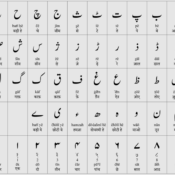
Looking at a chart of the Urdu alphabet can really help you learn more easily. The chart lets you see all the Urdu letters in the Nastaliq script side by side. You can match each urdu letter’s basic shape to its name and sound. This kind of chart is a great tool for anyone starting to learn the urdu alphabet.

When you look at the chart, take some time to see how each urdu letter has a basic shape. You’ll see that many urdu letters look the same but are different because they have dots above or below the letter. We will give you a full chart of the urdu alphabet. After that, we will talk about the sounds and where these urdu letters go when used with other letters.

Chart of Urdu Letters with Nastaliq Script

To help you get started, here is a comprehensive chart of the Urdu alphabet. This table shows each letter in its detached Nastaliq script form, its name, and a close English sound equivalent to guide your pronunciation. Seeing all the Urdu letters together is a great way to begin familiarizing yourself with the Urdu script.

Urdu Letter Letter Name Sound
ا Alif ā/a/i/u
ب Be b
پ Pe p
ت Te t
ٹ Te ṭ (retroflex t)
ث Se s
ج Jīm j
چ Che ch
ح He h
خ Khe kh
د Dāl d
ڈ Dāl ḍ (retroflex d)
ذ Zāl z
ر Re r
ڑ Re ṛ (retroflex r)
ز Ze z
ژ Zhe zh (as in measure)
س Sīn s
ش Shīn sh
ص Su’ād s
ض Zu’ād z
ط To’e t
ظ Zo’e z
ع ‘Ain (a guttural stop)
غ Ghain gh (guttural g)
ف Fe f
ق Qāf q (guttural k)
ک Kāf k
گ Gāf g
ل Lām l
م Mīm m
ن Nūn n
و Wā’o v/w/o/u
ہ Choti He h
ھ Do-Chasmi He (aspirates consonants)
ء Hamza (glottal stop)
ی Choti Ye y/i
ے Bari Ye e/ai

Use this chart as your go-to reference. As you become more familiar with these letters, you’ll start to recognize them in words and understand how the Nastaliq script works.

Sound Representation for Each Letter

Knowing the sounds in the Urdu alphabet is important for good pronunciation. Many of the letters sound like ones we use in English, such as ‘ب’ (be) for ‘b’ and ‘م’ (mīm) for ‘m’. But some sounds in the urdu alphabet are not found in English. For example, ‘ق’ (Qāf) makes a deep ‘k’ sound that comes from the back of the throat. This sound is not the same as the regular ‘ک’ (Kāf).

Some letters in the urdu language may look almost the same but sound different. One example is ‘ح’ (He) and ‘ہ’ (Choti He). Both make an ‘h’ sound, but ‘ح’ is harder and stronger. Urdu also has ‘ت’ (te) which is made by touching your tongue to your teeth and ‘ٹ’ (ṭe) where your tongue goes to the roof of your mouth.

The best way to get these sounds right is to listen closely. Use audio tools or talk with people who speak Urdu to understand the small differences, or nuances, in each sound. Keep saying these letters out loud. This is how you make your mouth get used to the sounds and improve your pronunciation of the Urdu alphabet.

Positional Variations: Initial, Medial, and Final Forms

A big part of the Nastaliq script is that the urdu letters can look different based on where they sit in a word. Each letter can have up to four shapes: when it stands alone, at the beginning of a word, in the middle, and at the end of a word. The letters join with each other in a smooth way, so the writing looks nice and is easy to write out.

The first shape is used when the letter comes at the beginning of a word. The middle shape is for when the letter is in the center, and it touches letters from both sides. The final form is used at the end of a word. When you look at the letter ‘ب’ (be), it will look different when you find it at the start of a word (بـ), in the center (ـبـ), or at the end (ـب).

But, not all letters join with the one after it. Some letters are called “breakers.” Breakers only stick to the letter before them and not after. The letter “alif” (ا) is one well-known breaker in urdu. This rule is important because it changes how words are written and lined up, so people need to know it to read and write urdu well. When you understand how these urdu letters change shape, reading and writing starts to make a lot more sense.

Beginner’s Guide: How to Start Learning the Urdu Alphabet

Starting to learn the Urdu alphabet can look hard at first. But, it is a good way to move ahead in your language learning. If you are a beginner, try to keep it simple. Break the Urdu alphabet into small steps. Do not learn everything at once. Just pick a few letters, and go over them every day.

If you have the right tools and a simple way to study, you can get a strong start with the Urdu script. This will help you pick up new words and grammar with less stress later. Next, we will see what you need and where you can find good resources to help you learn the Urdu alphabet.

What You’ll Need to Get Started (Materials, Resources, Printables)

To start learning the Urdu alphabet, you only need a few things. The main things are a notebook and a pen. When you write by hand, it helps you remember how the letters look and how to form each one.

There are many resources for the urdu alphabet online. A lot of websites give you printable charts, worksheets, and guides, often as a PDF. These are great for getting in practice with writing or for remembering how each letter looks. Try to find things that also teach pronunciation so you can hear how to say each letter the right way.

Here are the basic materials you need:

  • A notebook just for writing practice.
  • Printable urdu alphabet charts or posters you can look at quickly.
  • Flashcards, which can be printed or used on your phone, to help you check your memory.
  • Worksheets or practice papers you can often download as a PDF.

Recommended Free Online Tools and Practice Sheets

The internet makes it easy to learn the Urdu alphabet. There are many free online resources you can use. Language learning websites and apps often have lessons you can interact with. You get alphabet charts with sound, and there are online flashcards you can use any time. These tools help you stay interested and make it easier to remember what you learn.

You can find lots of free worksheets too. You just download and print them. These sheets let you trace each letter of the Urdu alphabet. This helps you learn how every letter looks and know how to move your hand as you write them. Working often with these practice sheets is a good way to get better at writing the Nastaliq script.

Here are some types of online resources you can use for free:

  • Language learning websites like UrduPod101 give out free guides and lessons.
  • YouTube channels that help people learn Urdu often teach the alphabet.
  • Some websites have PDF worksheets you can print out to practice writing.
  • Mobile apps come with alphabet games and flashcards you play with.

Step-by-Step Process for Mastering Urdu Alphabet in Nastaliq

Are you ready to learn the Urdu alphabet? When you follow a step-by-step process, it can make language learning easier. The key is to do consistent practice and keep going over what you have learned. If you focus on one thing at a time, you can slowly become good with the alphabet.

This way will help you first know the letters. Then, you can start to write them. Later, you can put the letters together to make words. Let’s look at the four steps that will take you from a beginner to someone who feels good using the Nastaliq script.

Step 1: Familiarize Yourself with the Alphabet Chart

The best way to start learning the Urdu alphabet is by using a simple and clear alphabet chart. This chart will help you a lot when you begin language learning. Take some time to look over it. Notice the Urdu letters, their basic shape, and the names that go with each one. You do not need to remember every letter right away.

You should try to get used to seeing how the letters look. Pay attention to how some Urdu letters only change with dots even though their basic shape stays the same. For example, ‘ب’ (be), ‘پ’ (pe), and ‘ت’ (te) are different. They all use a similar curve but are set apart by where the dots go. Seeing patterns like this will make it much easier for you to learn the urdu alphabet.

Keep the chart near you as you keep learning. You can print it out and put it on your wall or just save a picture on your phone. Each time you look at the alphabet, it will help you know it better. With more practice and the right tools, these Urdu letters will soon feel like old friends. This will help you move to the next steps in your language learning journey.

Step 2: Practice Pronunciation and Writing Each Letter

After you know the chart, it’s good to start practice. Pick around three to five letters from the Urdu alphabet each week. For each Urdu letter, you should listen to its correct pronunciation. You can find audio recordings for the basic letters. Play them and try to make the same sounds. Some of these sounds are not in English, so listen very carefully.

Now, open your notebook. Start writing each Urdu letter by itself again and again. Tracing guides or worksheets are helpful to get used to the right steps and directions when writing. When you write, say the letter’s name and sound out loud. This way, you use your eyes, ears, and hands together, which helps you learn better.

Doing this practice with your hands is very important. When you write the Urdu letters by hand, you remember their shapes better than if you just look at them. Doing this many times is the main point, so try to write a little each day. Stick to these steps as you focus on the letters from the Urdu alphabet.

Step 3: Learn How Letters Connect in Words

After you get used to each letter in the Urdu script, the next step is to learn how these letters join. The script for Urdu is written in a cursive way. So, knowing how letters connect is important when you want to write or read words in Urdu. The lines in the Nastaliq style look smooth because letters join to make their flow.

Every letter in Urdu can show up in more than one way. There is an initial form, a medial form, and a final form. It helps to learn the way the basic shape of any letter changes if it is at the start, middle, or end of a word. For instance, the ‘س’ (sīn) makes a long, curved end when it’s in its final form at the end of a word. If it is seen in the start or the center of a word, it changes into short straight lines.

You should practice by joining two letters together. Take a letter, then see what happens when you put it next to another letter. Remember, some letters like Alif (ا) will not always link to the next letter. Alif is called a “breaker” for this reason. You need to know these basic rules about the urdu script and each basic shape if you want to make words that people can read easily.

Step 4: Apply Your Skills with Simple Words and Phrases

Now it is time to use everything you have learned. The best way to remember this is to try your new skills with some simple words and phrases. Begin with easy vocabulary you may already know, such as “آب” (āb – water) or “نام” (nām – name). Try to write the words without reading from a guide, and when you finish, check your answers.

This part feels very good because you get to see your work pay off. You can start to build your own small vocabulary of easy words. Make sure you pick the words that use the letters you already know well. Doing this gives you more confidence and helps you see how everything in urdu comes together.

As you get better with the simple words, start using short phrases. Do not worry if everything is not perfect yet. This is the time to keep practicing and use what you have learned. Use your skills every day, and you will soon reach good proficiency in the urdu language.

Effective Tips for Memorizing Urdu Letters Quickly

Learning the Urdu alphabet can be hard at first, but you can make it easier by using a few good methods. If you are just starting out, it is important to get active with the learning instead of just reading over and over. This way, you will remember more and also have a better time while you learn.

Adding tools to help your memory or setting up simple day-to-day habits can help a lot. Even basic steps can speed things up. Here are some easy tips that make it quicker to get the Urdu alphabet down and help you feel strong in your language learning right from the start.

Mnemonics and Memory Aids for Urdu Alphabet

Using things like mnemonics and memory tricks is one of the best ways to remember the Urdu alphabet fast. These tools give your brain a shortcut to keep new things. You do not just have to repeat things over and over. You can tie the letters of the urdu alphabet to things you already know, like pictures or sounds.

For example, you can make a link between a letter’s shape and a thing you see every day. Does one letter look like something you know? Or, you can match the sound of a urdu letter to a word from your own language. These easy moves help you hold on to the letters in the urdu alphabet.

Here are some ways to help your memory:

  • Alphabet Songs: Learn a simple song for the urdu alphabet. The music and beat will help you keep the letters in your mind.
  • Visual Association: Join the shape of a letter with a picture. For example, ‘ل’ (lām) might look just like a hook.
  • Flashcards: Make flashcards with the letter on one side and its name or sound on the other way. This helps you work on bringing it back from your mind.
  • Group Similar Letters: Study letters from the urdu alphabet with shapes that are alike, and focus on where the dots are and how many there are.

Best Practice Habits for Beginners

Making good habits is one of the best ways for beginners to learn the Urdu alphabet. Doing consistent practice each day, even if it is for a short time, helps more than sitting for a long study session only once a week. When you do this often, it makes the urdu alphabet stay fresh in your mind.

Try to fit learning the urdu alphabet into your day. You can give ten minutes in the morning to look at flashcards. Or, you can use five minutes at night to write some simple words. The point is to add urdu into your daily life. This is the way to get better and reach the level you want.

Here are some best practice habits to follow:

  • Study a Little Every Day: Try to do 15-20 minutes of hard practice with the urdu alphabet each day.
  • Write by Hand: Keep writing the letters and some simple words by hand in your notebook.
  • Say It Aloud: As you work, speak the letters and words out loud so you also learn the sounds.
  • Review, Review, Review: Go back and look again at what you have learned to help it stay in your head.
  • Stay Curious: Try to find urdu script around you, on signs, or in other things you see or use.

This kind of regular effort helps with retention and makes it easier for you to know the urdu alphabet and simple words over time.

Comparing Urdu, Arabic, and Persian Alphabets

The Urdu alphabet is very much like the Arabic script and the Persian script. This is because the Urdu script comes from the Arabic script and is changed through Persian. At first look, the Urdu alphabet and the Arabic or Persian alphabets can look almost the same. But there are important things that make them different. By looking at these differences, you can see what is special about Urdu.

All three scripts use a lot of the same letters. They all also go from right to left when you write them. However, with time, each alphabet has been changed to fit the language it is for. Now, let’s look at the number of letters that are the same in these scripts, and also see what is different in urdu. This helps to show what makes the Urdu script stand out.

Shared Letters and Script Differences

The Urdu alphabet is built from the same base as the Arabic and Persian scripts. Many of its letters are taken right from Arabic. The style used for writing is called Nastaliq, which comes from the Persian script. Because of this, people who know Arabic or Persian will see many of the same letters, for example, ‘ب’ (be), ‘ج’ (jīm), and ‘د’ (dāl).

But there are also some big differences in the Urdu alphabet compared to the Arabic alphabet. The Urdu language includes some letters from the Persian script, like ‘پ’ (pe) and ‘گ’ (gāf). These letters are there to make sounds that are not a part of Arabic. The language also created new letters to show sounds from South Asian languages. Good examples are the different retroflex consonants such as ‘ٹ’ (ṭe), ‘ڈ’ (ḍāl), and ‘ڑ’ (ṛe).

One more thing to know is that the Nastaliq script is used a lot for Urdu writing in daily life. This is different from many Arabic-speaking areas, where most printed words use the Naskh script instead. All these changes and new letters help make the Urdu alphabet unique for the type of words and sounds found in the urdu language. The alphabet, with its parts from Arabic and Persian and new pieces from south asian languages, works well to show how people speak and write in Urdu.

Unique Features of Urdu Nastaliq Script

The Nastaliq script gives the Urdu alphabet some special parts. These things make it different from other ways people write words. The biggest thing you will notice is that the script goes at a slant, moving down from right to left. Unlike Naskh, the other script often used with Arabic, Nastaliq does not look straight. It looks more like flowing lines that fall down, which many people like for calligraphy and poetry.

The way Nastaliq joins the letters also changes how you read and write the urdu alphabet. All the letters in a word join together, and what they look like depends on where in the word they show up. So, learners need to pick up the way letters look alone and how they look at the start, in the middle, and at the end of words. When you learn to do this, the script lets people write words faster. The script looks neat and full at the same time.

This script also stacks letters and dots one over the other. That makes it even more special and nice to look at. When certain letters in the urdu alphabet come together, they can form one single shape. These joined shapes show advanced calligraphy skills. So, because of all these things, writing urdu with the alphabet in Nastaliq style feels like making art.

Significance of Alif and Other Special Letters in Urdu

In the Urdu alphabet, some letters are important because they have special jobs. The letter Alif (ا) is one of the most important. It is used in many ways. Alif can make vowel sounds. It can also be a silent letter that helps other vowels.

There are other special letters, too. One example is Hamza (ء). This letter is used for things like the glottal stop. It also helps break up vowel sounds. If you want to learn the Urdu alphabet well, you need to understand these letters. Knowing how Alif and other special letters work will help you get the right vowels and pronunciation. This makes it easier to pick up the small differences, or nuances, in Urdu reading and writing.

Let’s look more at Alif and other special letters in the Urdu alphabet.

The Role of Alif as a Foundational Letter

The letter Alif (ا) is one of the most important and flexible letters in the Urdu alphabet. It often acts as both a consonant carrier and a vowel. At the beginning of a word, Alif works as a silent letter that holds all the vowel sounds. While you can add marks to show short vowels, you will see that, in most writing, these marks are left out.

Alif is also used for long vowels in a more clear way. If you see it in the middle or at the end of a word, it usually stands for the long ‘ā’ sound, like the “a” in “father.” At the start of a word, a special mark called madd (ٓ) can go over Alif to make this long ‘ā’ sound, as in ‘آسمان’ (āsmān – sky).

Another key part of Alif in the urdu alphabet is that it is not joined to the letter after it. People call it a “breaker” letter. This feature is very important for how words and spaces are made in urdu writing. Because Alif does so much for other vowels, pronunciation, and making new words, it is key to the urdu alphabet.

Other Noteworthy Characters and Their Uses

Besides the basic letter Alif, the Urdu alphabet has other special marks that are key in Urdu. One of these is Hamza (ء). It is not a full letter but is instead a sign used to show a glottal stop or to show when two vowel sounds meet in one word. For example, you can see it in the word ‘چائے’ (chā’e – tea).

Do-Chasmi He ‘ھ’ is another important character in the Urdu alphabet. This letter helps make sounds that need a small burst of air, called aspirated consonants. If you join it with ‘ب’ (be), you get ‘بھ’ (bhe). With ‘پ’ (pe), you get ‘پھ’ (phe). These sounds are very common in South Asian languages, and the Urdu alphabet uses them a lot.

The letters ‘و’ (Wā’o) and ‘ی’ (Ye) are very flexible. Like Alif, both of them can be used as consonants (‘v’/’w’ and ‘y’ sounds). They can also be used as long vowels (‘o’/’u’ and ‘i’/’e’ sounds). When you learn about these special marks in the urdu alphabet, it will help you get better at reading, writing, and pronunciation of Urdu vowels and consonants. It also helps if you want to learn other South Asian languages.

Conclusion

To sum up, learning the Urdu alphabet, especially the Nastaliq script, can be a very rewarding process. It lets you explore the rich culture and many words that the Urdu language offers. When you get to know the structure and pronunciation of every letter, you start to read and write better. It helps make every talk or text more clear and meaningful.

As you practice the Urdu alphabet and get used to the letters, try to use other tools to help you. These can be charts or online tools you find on the internet. If you stay focused and keep practicing, you will soon find it easy to use the Urdu language. Also, if you want some help that is right for you, feel free to reach out for a free consultation.

Frequently Asked Questions

Where can I find printable posters or learning materials for the Urdu alphabet?

You can find great printable posters and worksheets for the Urdu alphabet on many online resources. Websites focused on language learning, such as UrduPod101, often have free PDF charts and sheets you can download. You can also check platforms like Pinterest for high-quality pdf materials about the alphabet of Urdu.

Are there free resources to practice writing the Urdu alphabet online?

Yes, there are a lot of free places online where you can practice the Urdu alphabet. You can go to websites and use apps that have fun and easy exercises for writing each Urdu letter. Many of them give you free practice sheets in PDF that you can download. With these sheets, you can trace over the letters and write them yourself. This will help you get better at each form of the alphabet.

What is the easiest way for beginners to learn the Urdu alphabet?

The easiest way for people who are new to the Urdu alphabet is to use a good chart. Start with a few letters at a time. Every day, practice how you say each letter and how to write it. You can use flashcards so you remember the letters better. Once you know some of the Urdu alphabet, try to make simple words with them. This helps you to use what you just learned about pronunciation and writing the alphabet.

How does the Nastaliq script affect reading and writing Urdu?

The Nastaliq script is smooth and joined. The letters in this script link with each other. Their shape will also change depending on where they are in a word. So, when you read or write with Nastaliq, you need to know how each letter looks at the start, in the middle, and at the end of a word. It’s not enough to know just the single letter by itself. This is important to make words the right way.

Key Highlights

Here’s a quick look at what we’ll go over in this guide to the Punjabi alphabet:

  • The Gurmukhi script was made in the 16th century by Guru Angad Dev, who was the second Sikh Guru.
  • Gurmukhi is strongly tied to Sikhism and it’s the script used for the Guru Granth Sahib.
  • The alphabet is made up of vowels, consonants, and extra signs called diacritics.
  • Many Gurmukhi letters are also found in the Hindi Devanagari script, so it can be easier for people who know Hindi to learn.
  • The script has set rules for how you write strokes, use space, and add punctuation.
  • You can type in Gurmukhi on computers and phones with online keyboards and Unicode.

Introduction

Welcome to your easy guide to the Punjabi alphabet! If you love the sound of Punjabi songs or you want to learn more about the culture of Punjab, this is a great place to start. The Gurmukhi script helps you read and write in the Punjabi language. In this post, you will get to know the letters, the sounds they make, and how the writing system of Gurmukhi works. Get ready to see and hear the letters and words that make up the Punjabi language.

Historical Background of the Gurmukhi Script

The story of the gurmukhi script starts in Punjab and goes hand in hand with the growth of Sikhism. This script began in the 16th century. That was a time when a lot of new ideas and beliefs came up in the area. The second sikh guru, Guru Angad Dev, helped make this script clear and easy for people to use. He wanted everyone to understand their spiritual teachings in their own punjabi language.

Because of this, the punjabi language and gurmukhi became a key part of who Sikhs are. Let’s look at how gurmukhi changed over time, what other scripts played a part, and why it is so important in Sikhism.

Origins and Evolution of Gurmukhi

The Gurmukhi script started because people needed a simple way to write the Punjabi language. In the 16th century, Guru Angad Dev worked on making and fixing a script that could show the real sounds of Punjabi. This was a big step, as it made it possible to write down the words and teachings of the Sikh Gurus.

This was different from other scripts before, which did not fit well with how people talked. The name “Gurmukhi” means “mouth of the guru.” This name shows that the script had a strong role in both spiritual and learning matters for people who followed Sikhism.

When Guru Angad Dev set clear rules for the script, it helped a lot. People could learn and use it more easily. This helped spread reading, writing, and the words of Sikhism to more people. Now, the Gurmukhi script is the main way to write the Punjabi language in that area.

Influence of Other Scripts on Gurmukhi

The Gurmukhi script did not come about by itself. The Punjab region has always been a meeting place for many cultures and you can see this in the languages and scripts there. Gurmukhi has a special way of writing, but it also got used to and took some things from scripts that were used back then.

One well-known script for writing the Punjabi language is the Shahmukhi script. This script is based on Perso-Arabic writing. Shahmukhi is still used today, mostly by people in Pakistan. In India’s Punjab, Gurmukhi is what most people use when they write Punjabi. There are also things in Gurmukhi that look and sound a bit like the Devanagari script, which is what you see for Hindi and many other Indian languages.

These links can be watched in some letters and the way simple sounds are shown. Still, Gurmukhi was made so it could catch the unique sounds you hear in the Punjabi language, and this makes it very different from Arabic, Persian, and some other scripts.

Role of Sikhism in Gurmukhi Development

Sikhism has played a big part in the making and spreading of the Gurmukhi script. The second Sikh Guru, Guru Angad Dev, wanted to make a script that could write down the sacred songs, called Gurbani, in an accurate way.

Because of this, the Gurmukhi script became special for Sikhs. The Guru Granth Sahib, which is the main holy book of Sikhism, is written in Gurmukhi. This helped make the script important, and it stayed in use with Sikhs over the years.

For Sikhs, learning the Gurmukhi script is more than just picking up another language. It helps them feel close to their spiritual roots. The script carries the holy teachings. So, the rise of Gurmukhi was a big event for the Punjabi language and Sikhism.

Structure of the Punjabi Gurmukhi Alphabet

The Punjabi Gurmukhi alphabet is a kind of script where every consonant has its own vowel sound that comes with it. The way the alphabet works is easy to follow and helps with pronunciation. Once you learn the main parts, you will see that reading and speaking is not too hard. The alphabet has vowels, consonants, and signs that can change how the sounds are made.

Knowing how this works is an important first step if you want to get good at the Punjabi language. We will start by looking at the vowels and how each one sounds. After that, we will look at the consonants and the special marks that are part of the Gurmukhi alphabet. This will help you understand the basics of Punjabi pronunciation.

Vowels and Their Pronunciation

The Gurmukhi script has a group of vowels that are important for clear pronunciation. There are three independent vowels called Ura (ੳ), Aira (ਅ), and Iri (ੲ). These three vowels help carry different vowel sounds in Gurmukhi. You can mix these base letters with vowel signs, known as matra, to make ten vowel sounds.

The sounds in Gurmukhi script are split into short vowels and long vowels, much like in other languages. For example, ‘ਅ’ (Aira) gives a short ‘a’ sound. ‘ਆ’ (Kanna) gives a long ‘aa’ sound. It is important to know the difference between short vowels and long vowels, as this can change the pronunciation of Punjabi words.

When you add these vowel signs to consonants, it changes the vowel sound in that letter. So, learning the independent vowels and their different vowel signs is a key part of reading and writing Gurmukhi. This helps people use correct vowels, get the right pronunciation, and read or write Punjabi the right way.

Consonants and Unique Sounds

Gurmukhi has 35 main letters. These are called “painti akhar.” They show all the consonant sounds in the Punjabi language. The way the letters are set up helps people who are learning. The letters are put in groups that match how and where you say the sound.

Something that stands out is the use of unaspirated consonants and nasal sounds. Letters such as ‘ਙ’ (ṅa) and ‘ਞ’ (ña) make nasal sounds. They matter a lot for the right pronunciation of Punjabi.

Punjabi is also a language that uses tones. Some Gurmukhi letters show if a sound is low or high tone. For example, if ‘ਘ’ (gh) is at the start of a word, it can make the sound higher. When you know these small changes in pronunciation, you will sound more natural when you speak Punjabi.

Additional Signs and Diacritics

The Gurmukhi script uses more than just basic vowels and consonants. There are some extra marks and signs that help change the way you say a word. These are called diacritics. They are needed to make sure the words are said right. You can find these marks above, below, or beside the letters.

One main diacritic is the ‘bindi,’ which looks like a dot. It helps add a nasal sound to a word. For example, if you see a bindi on ‘ਦੁਲਾਂਵ,’ the sound will change. There is also the ‘tippi.’ It looks like a small crescent and is also used to make nasal sounds, usually with some vowel signs.

The script has another sign called ‘addak’ (ੱ), which means you need to double or make the next consonant sound stronger. It gives more power to that sound. Knowing how to use these vowel signs and diacritics is needed if you want to read or write the Gurmukhi script well.

Detailed Chart of Punjabi Alphabet Letters

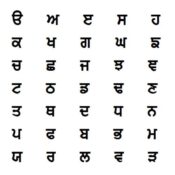
When you see the Gurmukhi alphabet in a chart, it is much easier to learn. A chart lets you look at the letters, compare them, and remember how they look and sound. This really helps, especially if you know English or any other Indic script. Having a match for each letter can make you learn the Gurmukhi letters much faster.

In the part below, there are clear charts that connect each Gurmukhi letter with its Hindi (Devanagari) and English pair. You can use these to work on your pronunciation in the Punjabi language and to help grow your vocabulary. These charts are there to help you learn the Punjabi alphabet by connecting it with things you may already know from English and Hindi.

Gurmukhi Letters with Hindi (Devanagari) Equivalents

Exploring Gurmukhi letters next to their Hindi (Devanagari) forms can help Punjabi speakers understand the language better. Each letter in the Gurmukhi script has its own features. There are independent vowels and many types of consonants. These are often seen in Hindi too. For example, the Gurmukhi letter ਗ (g) matches with ग in Devanagari. This shows how both scripts share a common past. By looking at both sides, people can see how the vowel signs and diacritics change the way words are said. This helps you get a stronger link to the Punjabi alphabet, its pronunciation, vowels, and consonants in both scripts.

Gurmukhi Letters with English Equivalents

If you are an English speaker, associating Gurmukhi letters with familiar English sounds is a great way to start. While there isn’t always a perfect one-to-one match, this chart provides a close approximation to help you begin your journey with the Punjabi alphabet. This comparison is a key tool for building your vocabulary.

Keep in mind that some Punjabi sounds don’t exist in English, especially the retroflex consonants (like ‘ਟ’ and ‘ਡ’) and certain nasal sounds. Practice listening to native speakers to get the pronunciation just right.

This chart shows some Gurmukhi letters and their approximate English equivalents:

Gurmukhi English Equivalent
a (as in about)
aa (as in car)
k
g (as in go)
ch (as in chair)
j (as in joy)
p
b
m
s
h
v/w

Pronunciation Guide for Beginners

Getting the pronunciation right is one of the best parts of learning a new language. If you are starting to learn the Gurmukhi script, try to pay attention to the special sounds in the Punjabi language right away. The Gurmukhi script is not like English. In Gurmukhi, each letter stands for the same sound every time. This makes it a lot easier to learn how to say words.

One good way to get started is to listen as someone who speaks Punjabi says the alphabet. Watch the movement of their mouth closely. Listen for small changes between letters that sound a lot alike. Then, try to copy the way they speak as closely as you can.

Here are some easy tips to help with your pronunciation:

  • Focus on Tones: Punjabi has high, mid, and low tones. The pitch of a word can change what it means. In the Gurmukhi script, letters like ਘ (gh), ਝ (jh), and ਢ (ḍh) often bring a low tone on the next vowel.
  • Distinguish Aspirated and Unaspirated Sounds: Be sure to practice the difference between letters like ਕ (k) and ਖ (kh), or ਪ (p) and ਫ (ph). When the ‘h’ sound comes out in aspirated forms, you hear a small puff of air.
  • Master the Vowels: There are ten vowel sounds in the Punjabi alphabet. Learn how to tell

Essential Rules for Writing in Gurmukhi

Once you get to know the Gurmukhi alphabet, you can start to learn how to write the letters the right way. The Gurmukhi script has its own rules for writing. These rules tell you how to make each character and how you can put the letters together to form words and sentences. This helps make sure your written Punjabi is clear and neat.

Like other types of writing, the Gurmukhi script goes in one direction and uses special ways to order strokes, space the letters, and use punctuation. If you can master these basics, your writing will look right and be easy for people to read. Now let’s look more closely at these writing skills one by one.

Basic Stroke Order and Writing Techniques

Correct stroke order is very important when you write in the Gurmukhi script. Each letter is made by drawing a set of strokes, and if you follow the right order, it can help you write faster and your writing will look clearer. Most Gurmukhi letters are written below a line at the top. This line is usually drawn last and goes from left to right.

The way you write is the same as English, from left to right. When you write each part of the alphabet, you mostly move your hand from top to bottom and left to right. If you keep practicing and follow the right stroke order for every Gurmukhi letter, you will get better muscle memory. This, in turn, will make your handwriting better.

Here are some writing tips to use as you practice the gurmukhi script:

  • The Top Line (Danda): In most gurmukhi letters, the main part of the letter hangs from a line at the top. You draw this line after you finish writing the letter, and it connects all the letters in a word.
  • Letter Formation: Watch the way each shape and line is made when you write. For example, ‘ਗ’ (ga) and ‘ਰ’ (ra) are close in look, but ‘ਰ’ is open at the top.
  • Consistent Size and Shape: Try to make your gurmukhi letters about the same size and shape. It will help

Common Formatting Practices in Gurmukhi

When you write in Gurmukhi, there are some rules for how to set up the text. These rules help make it clear and simple to read. A common thing you see is the line that runs along the top of most words. This line connects all the letters together.

There is a special rule for this top line. With some letters, like ‘ਮ’ (m) and ‘ਪ’ (p), the line on the top has a break in it. This break helps you tell these letters apart from other ones that may look close to them. It is important to use this break when you write, so that your work is right.

There are also rules for where to put vowels and the vowel signs in Gurmukhi. You may see vowel signs above, below, in front of, or after the main letter that they change. Punctuation marks are in set places too. We will talk about these next when looking at how Gurmukhi is written.

Spacing and Punctuation Rules

Good spacing and the right punctuation are important for clear communication in any written standard, and the same is true for the Gurmukhi script. In Gurmukhi, words have spaces between them, just like in English. Consistent spaces help people read sentences easily. This keeps the writing from getting mixed up.

In the past, the Gurmukhi script used a straight line called a ‘dandi’ (।) to show the end of a sentence. It worked just like a period does in English. Sometimes, a double dandi (॥) showed the end of a verse or a paragraph. But now, modern Punjabi uses Western marks for punctuation.

You will see periods (.), commas (,), question marks (?), and exclamation points (!) often in written Punjabi. Following these new punctuation rules will make your writing match what is now the standard in the Punjabi language and the Gurmukhi script.

Digital Use of Gurmukhi Script

Today, many people use the internet to chat or write papers, and being able to type in the Gurmukhi script is important for this. Now, with the help of modern tools, you can type in Gurmukhi on both your computer and smartphone. This is possible because there are standard systems like Unicode and different online tools you can use.

If you like to talk with Punjabi speakers or just want to get better at typing in Punjabi, you have easy options. You can use an online keyboard, or you can turn on the Gurmukhi layout on your device. With these steps, you can start typing in Punjabi anytime.

Typing Punjabi Alphabet on an Online Keyboard

Using an online keyboard is one of the easiest ways to type with the Gurmukhi script. You do not have to install any other tools or software. These websites show you the Gurmukhi alphabet, and you can click on the letters to make words and sentences. There are many websites and language platforms where you can use a free Gurmukhi keyboard.

These tools often match the Gurmukhi letters to a regular QWERTY keyboard. This is called a phonetic layout. For example, if you press the ‘k’ on your keyboard, you may get the Gurmukhi letter ‘ਕ’. Pressing the ‘g’ key may bring up ‘ਗ’. This simple plan helps you type faster when you try it a few times.

Here’s how you can normally use an online keyboard:

  • Find a reliable website: Type in “online Punjabi keyboard” or “Gurmukhi typing tool” to search.
  • Use the on-screen layout: Click on the virtual keys with your mouse to type words.
  • Learn the phonetic mapping: Many online keyboards show you what English keys match each Gurmukhi letter. This way, you can learn how to type with your own keyboard.
  • Copy and paste: After you type your text, you can copy it. Then, you can paste it in an email, social media post, or in a document.

This makes it easy for people to write with the Gurmuk

Unicode and Encoding for Gurmukhi

The Gurmukhi script can be used easily on any computer or phone because of Unicode. Unicode is a worldwide way to give each letter, from any language, its own number. This means that when you see the letter ‘ਕ’ in Gurmukhi, it will look the same on your Windows PC, your Mac, or your smartphone.

Using this system was important to keep the Punjabi language safe on the internet. Before Unicode, computers often mixed up Gurmukhi letters or showed them as strange symbols, making it hard to read Punjabi online. Unicode fixed these problems, so people everywhere can read and share Punjabi.

Groups like the Panjab Digital Library use this technology to save many old papers and books written in the Gurmukhi script. Because of them, the history and stories from Punjab can now reach people all around the world through the internet.

Common Challenges for Learners

Learning a new alphabet can be hard at the beginning. The Gurmukhi script is no different. When you start, you may find some sounds are special. There are also letters that look the same. The Punjabi language has tones that can be hard to get right. If you spot these problems early, it can help you deal with them in a better way.

But do not feel upset! Everyone makes mistakes when learning. This is a normal step for all of us. When you know what goes wrong often, you can work on those points. This will make you better at the Gurmukhi script and help you move faster. Let’s talk about some mistakes people make often and give tips so you do not make them too.

Frequently Made Mistakes with Gurmukhi

When you start to learn the Gurmukhi script, you may face some common troubles. Many people have a hard time telling apart letters that look like one another. For instance, ‘ਗ’ (ga), ‘ਰ’ (ra), and ‘ਹ’ (ha) are easy to confuse at the start because the small changes between these are not always clear. The same thing happens with ‘ਪ’ (pa) and ‘ਧ’ (dha), since they also look much alike.

There is also a challenge with the tone of Punjabi words. Gurmukhi script uses some letters, like ‘ਘ’ (gh), that do not work as just a normal sound by themselves. These often add a tone, and that changes the vowel that comes next. If you do not notice such tonal changes, that can make it hard for you or others to understand what is said.

Some other common mistakes people make when they learn Gurmukhi include these:

  • Mixing up Vowels: People often mix up short and long sounds in vowels, such as ‘ਇ’ (i) vs. ‘ਈ’ (ī).
  • Ignoring Nasal Sounds: It is easy for new readers to forget to use markers like the bindi or tippi. These are used for nasal sounds, and if you leave them out, you may say a whole other word.
  • Incorrect Stroke Order: If you make the strokes in the wrong way, what you write can get hard to

Tips to Master Gurmukhi for Beginners

Learning the Gurmukhi script does not have to be hard. The right plan can help you reach your goal. If you are just starting out, it is good to know that being steady and smart is important. Try to learn a few letters at a time. You do not need to remember everything in one go. Taking your time, you build a strong base, so you do not get lost or feel too much all at once.

Work on reading Gurmukhi and writing it every day. Spend time writing out each letter. This helps you get used to how to write them. Try reading simple Punjabi words to help you learn more. If you can connect each letter with a word you already know, that can help you remember the alphabet better.

Here are some simple ways to get better at Gurmukhi:

  • Use Flashcards: Make some flashcards with one Gurmukhi letter on one side and how to say it or the English letter like it on the other.
  • Listen and Repeat: Look for videos or audio clips with Punjabi speakers saying each letter. Listen to them and try to say the sounds just like they do.
  • Practice with Similar Letters: Some letters look close to each other, like ‘ਗ’ and ‘ਰ’. Write them next to each other so you can see how they are not the same.
  • Learn Through Music: Listening to Punjabi music is a good and fun way to hear the language in

Conclusion

To sum up, learning the Punjabi Gurmukhi script gives you a way to connect with a rich culture and language. It helps you talk and understand things in a better way. When you learn about its past, how it is built, and how to use it with digital tools, you begin to see not only the beauty of the Gurmukhi script but also why it means so much to Punjabi people. Keep in mind that practice makes you better—work on your writing and pronunciation every day. Don’t be afraid to face the hard parts of learning the script; they help you improve. If you want to learn more about Gurmukhi or need some help, you can get a free trial with our experts. They will give you tips and guide you as you learn.

Frequently Asked Questions

How many letters are in the Punjabi Gurmukhi alphabet?

The traditional Gurmukhi alphabet is called “painti akhar” and it has 35 different letters. The modern Gurmukhi script has more letters now. It has these 35 letters plus six extra consonants. All these new consonants have a dot, called bindi, at the bottom which makes new sounds. In this alphabet, when you add all the vowels and extra signs, the Gurmukhi script has 41 consonants in total and 10 vowel sounds.

What is the difference between Gurmukhi and Devanagari scripts?

The key things that make Gurmukhi and Devanagari different are the shapes of the letters and some small sound changes. Gurmukhi is used for Punjabi and Devanagari is for Hindi, but both are used for languages from the same group. Gurmukhi is made for the way people speak Punjabi, which has more tones. A lot of the letters sound the same, but they look different on paper.

Is the Gurmukhi script used for languages other than Punjabi?

The Gurmukhi script is mostly used for the Punjabi language. People in the Punjab area did use Gurmukhi in the past to write other languages, such as Sanskrit and the local dialects Hindko and Saraiki. But now, the main and official use of Gurmukhi is for writing Punjabi.

Key Highlights

  • The Thai script is a special writing system that has 44 Thai consonants and 32 vowel sounds shown by 15 vowel symbols. It also has tone marks to show pitch changes.
  • The writing system comes from the Old Khmer script. King Ramkhamhaeng started the modern Thai script in the year 1283.
  • Thai is a tonal language. This means the pitch, or tone, can change what a word means in the Thai writing. The thai tones are set by the consonant class, vowel length, and the four main tones in Thai.
  • Thai writing works in its own way. Unlike English, the Thai script does not use spaces between words. There are no capital letters and there’s not much punctuation.
  • When using Thai consonants, they are put into three groups—high, middle, and low class. This makes a big difference for the sound because a consonant class will help show what tone to use.
  • To read and write well in Thai, you must learn where every vowel sound goes next to the consonants. This is very important for all students of Thai.

Introduction

Welcome to your guide for the Thai alphabet! At first, you might see the curves and signs in the Thai writing system and think it looks hard. But you do not have to worry. This guide can help take you through everything, step by step. Learning the Thai language helps you get into a new world full of culture and lets you talk with more people. Knowing the alphabet is the first and most important step to this fun journey. Are you ready to start and learn the basics of this interesting script?

Understanding the Structure of the Thai Alphabet

The Thai alphabet, also called the Thai script, is a system where the letters for sounds go together in groups. It started from the old Khmer script and was made in the 13th century. The way this script works is different, because the vowels can be placed not only after the main letters, but also above, below, before, or after them.

Thai is a tonal language. The pitch in how you say a word can change the meaning fully. The Thai characters and the class of the initial consonant, along with different tone marks, help set these pitches. Now, let’s look at what makes this script special, how it is not like other ones, and why it matters for reading and writing.

Overview of Thai Script and Its Unique Features

The Thai script is a unique way of writing. It has different rules from others. One thing you will notice is that it goes from left to right, just like English. But in the Thai writing system, there are no spaces between words. Spaces are used only to end each sentence. This can be hard for beginners to get used to.

Another feature is that there are no capital or small letters in Thai script. Every letter in the character sets looks the same. This makes the thai writing system a bit easier in this way, but you have to guess where words start and end from the meaning.

Thai vowels are also special. They do not have one spot like in the English alphabet. Thai vowels can be above, below, before, or after a consonant in a word. All these little marks are part of how to build a syllable. Learning where to put each thai vowel is a big part of how the thai script works.

How the Thai Alphabet Differs from Other Alphabets

The main difference between the Thai script and the English alphabet is in how they are built. English has clear letters for both consonants and vowels. Thai script is not the same. It comes from the Old Khmer script and is called an abugida. In this system, every consonant has a basic vowel sound, and you change this sound by adding different vowel symbols.

Thai script also uses consonant classes. These classes can be high, middle, or low. This system is special to Thai and a few other nearby languages. It matters because it helps set the tone for each syllable, which is important in thai writing. You won’t see this kind of system in most other alphabets, like English. The alphabetical order in Thai script also has its own rules. It groups each letter by sound and by type.

You will notice other changes, too. The way words look on the page is not the same as in English. In Thai writing, you do not see spaces between words. People do not use periods or question marks in the old way, either. Over time, changes have brought in some marks, like quotation marks, for modern Thai. Still, the core thai script is its own thing.

The Role of the Thai Alphabet in Reading and Writing

For people who want to learn the Thai language, knowing the alphabet is the most important part. It helps you to read and write Thai. You need to know how consonants, vowel symbols, and tone marks go together. This is key if you want to say words the right way and read Thai text without mistakes.

With Thai writing, many people find it hard to put the vowel symbols in the right place around the consonants. You also need to know how to make words by joining syllables. There are no spaces between words, so you must get used to seeing common word shapes in thai text. You get better at this skill the more you read.

If you want to read more than just easy sentences, you must really know the Thai alphabet well. When you do, you can handle thai writing in street signs, books, or on websites. Being able to use thai text in your daily life helps you feel closer to the people, their culture, and the thai language. It really opens up a whole new world for you.

Thai Consonants: Foundation of the Script

The 44 Thai consonants are the base of the script. Each of these consonant letters has its own look and makes certain consonant sounds. To help you remember, every consonant is linked to a word. For example, ก (gaw gai), and “gai” means chicken.

These consonant symbols are put into three groups. They are called a consonant class: high, middle, and low. This grouping is not just for show. It helps tell what tone a word will have. Now, let’s look closer at these classes. We will see the list of thai consonants, what each one is, and how to say them.

Classification of Thai Consonants: High, Middle, and Low

Every Thai consonant is part of a group called a consonant class. This is key for learning tone rules in Thai. The consonant class of the first sound in a word shows what the natural tone will be, and how tone marks change that.

There are three classes: high class, middle class, and low class consonants. The low class is the biggest group. The middle class has the least consonants. It’s important to know what the sound is. But you also need to know the consonant class.

Here is more about the consonant class system:

  • High Class Consonants: There are 11 high class consonants. They usually have a rising tone when you use long vowels.
  • Middle Class Consonants: There are 9 middle class consonants. They have a clear even tone. These are the easiest for using tone marks.
  • Low Class Consonants: There are 24 low class consonants. On long vowels, low class consonants have the same even tone as middle class, but tone rules change them in a different way.

Complete List of Thai Consonant Characters

There are 44 Thai consonants in the traditional Thai script, although two are no longer used in modern writing. These consonant symbols form the basis of every word. Memorizing them is the first major step toward reading and writing Thai.

The various character sets can seem daunting, but grouping them by class can make learning more manageable. Each consonant has a name that helps you remember its sound, for example, ข (kho khai), where “khai” means egg.

Here is a table of the consonants, divided by their class, to help you get started.

Class Consonant Symbols
Middle ก จ ฎ ฏ ด ต บ ป อ
High ข ฃ ฉ ฐ ถ ผ ฝ ศ ษ ส ห
Low ค ฅ ฆ ง ช ซ ฌ ญ ฑ ฒ ณ ท ธ น พ ฟ ภ ม ย ร ล ว ฬ ฮ

Pronunciation Guide for Thai Consonants

Getting the correct pronunciation of thai consonants is very important if you want people to understand you. Some thai consonant sounds are just like the ones you find in English, so that can help you. But a few thai letters can be hard to say right. For example, there are more than one thai letters for sounds like ‘t’ and ‘k’. Some of these are pronounced with a puff of air, and some are not.

One thing you need to know about thai writing is that the sound of a consonant can change. It depends on if the letter is at the beginning of a word or at the end of a syllable. A letter might make one sound first, but a different sound at the end of a word. For example, the thai letter บ (baw baimai) is said with a ‘b’ sound at the beginning of a word, but it sounds like a ‘p’ when it comes at the end of a syllable.

The best way to get better at this is to listen to native speakers and say the sounds out loud. Try to hear the small changes, like the difference between a strong ‘g’ sound in ก (gaw gai) and the ‘kh’ sound with a quick puff of air in ข (kho khai). This will help you use thai consonants the right way.

Thai Vowels Explained

Now that you’ve learned about consonants, let’s talk about Thai vowels. The Thai language has 32 vowel sounds. They come from 15 main vowel symbols. These vowel symbols are not letters. They are special marks, called diacritics, that you put with a consonant.

One thing you need to know is vowel length. Vowel length can be short or long. This point is very important. It changes the meaning and tone of Thai words. You will see many vowel forms in Thai. There are simple vowels, complex vowels, and compound vowels. These forms mix to make the full set of thai vowels. This is part of what gives the Thai language its wide range of sounds.

Basic Vowel Symbols and Their Positions

The Thai language has basic vowel symbols at the center of its vowel system. These symbol shapes are not like the consonants because they do not have a sound by themselves. They need a consonant next to them to make a word sound. Many new students find it hard to know where to put these vowel symbols.

Thai vowels can go in four spots around a consonant. They might be before it, after it, above it, or even below it. Some thai vowels use more than one place and can go around the consonant on different sides. If a word needs a vowel at the beginning of a word, it cannot start alone. For this, you should use the silent ‘อ’ (o ang) consonant to help the vowel.

Here is where you can see vowel symbols placed:

  • Above the consonant: like in a simple word “di” (ดี).
  • Below the consonant: like in “du” (ดู).
  • Before the consonant: for example, in “ge” (เก).
  • After the consonant: as in “ga” (กา).
  • A combination of positions: when vowels are all around the consonant, which can happen with more complex vowels.

Complex and Compound Vowels in Thai

Besides the basic vowels, Thai also has complex and compound vowels, called diphthongs. People make these by putting together two or more basic vowel symbols. This helps make many more vowel sounds, not just what you get from a single symbol.

Many complex vowels use vowel symbols before and after the main letter, or even above and after it. For instance, the vowel sound ‘ia’ (เีย) has one symbol before the consonant and two more, one on top and another after. With these, you get a single, smooth vowel sound.

Compound vowels, or diphthongs, are when two vowel sounds come together. One sound slides into the other, like in ‘ia’ or ‘ua’. To read Thai well, you need to know how these consonant and vowel sound combinations work, because these vowel forms show up so often in spoken and written Thai. Don’t worry about them being hard. Treat each combination as a single unit, and try to remember it.

Pronunciation Tips for Common Thai Vowels

One of the most important pronunciation tips for Thai is to learn the difference between short vowels and long vowels. The length of a vowel sound can change the meaning of a word. For instance, กิน (gin, with a short ‘i’) means “to eat.” But กีน (giin, with a long ‘i’) is not a word you will hear often.

When you begin, try to exaggerate this difference. Make your short vowels very short and quick. Stretch out your long vowels so they stand out more. It can be very helpful to listen to native speakers. That way, you will get a good idea of how long the vowel sound should be. Some learners say that thinking of a short vowel as a “dead” sound and a long vowel as a “live” sound can help.

You can improve by practicing pairs of words that are almost the same except for the vowel length. Try saying words with ะ (short ‘a’) and words with า (long ‘a’). When you do this kind of consistent practice, you will start to hear and make the difference. You will get better at both pronunciation and understanding Thai words.

Tone Marks and the Thai Tonal System

Thai is a tonal language. This means the pitch you use can change the meaning of a word, even if it sounds the same as another word. There are five thai tones. These are mid, low, falling, high, and rising tones. The mid-tone does not have a tone mark. So, you need to learn only four diacritical marks for the other tones.

Tone marks are put above the initial consonant. But, tone rules in Thai say the last tone of a word is not just about the tone mark. The final tone also comes from the class of the initial consonant, the length of the vowel, and the tone mark. It is important to know these tone rules if you want to say thai tones the right way.

Introduction to Thai Tones

The five thai tones are like the music of the thai language. There is the mid, low, falling, high, and rising tone. For people who speak english, thai tones can be hard to get because english uses pitch to show emotion or stress but not to change the meaning of a word. In thai, which is a tonal language, how you say “maa” matters a lot. If you say it with a rising tone, it means “horse.” If you use a mid tone, it means “to come.”

To really get thai tones, try to think of them like music notes. The low tone sounds flat and stays low. The high tone is flat too, but very high. The falling tone goes from high down to low. The rising tone starts out low and goes up. The mid tone is flat and even—just like your plain speaking voice.

You should listen to thai speakers often and try to copy the way they say words. With more practice, you will know how to hear and speak every type of tone, from the low tone to the high tone, just like they do.

Functions and Forms of Tone Marks

Thai has four tone marks. These are small diacritical marks that you write above the initial consonant in a syllable. A tone mark helps you get the correct pronunciation by changing the inherent tone. Normally, the tone is set by the consonant class and vowel length.

The tone marks are needed when you want to show which tone to use. If there is no tone mark, the mid tone is used, so any syllable without one will have a tone based on its structure. But with a mark, you have a clear guide for pronouncing the word right. The final tone still depends on the consonant class.

Here are the four tone marks:

  • Mai Ek ( ่ ): This tone mark often gives a low tone for middle or high-class consonants and a falling tone with low-class consonants.
  • Mai Tho ( ้ ): This tone mark usually shows a falling tone for middle or high-class consonants and a high tone for low-class consonants.
  • Mai Tri ( ๊ ): This tone mark makes a high tone, used mainly with middle-class consonants.
  • Mai Chattawa ( ๋ ): This mark gives a rising tone and is also used with middle-class consonants.

How Consonant Classes and Tone Marks Work Together

The final tone of a syllable in the thai writing comes from how the consonant class works with a tone marker. This is a hard part of the writing system, but there are set tone rules that help you understand these changes. Just putting a tone mark above a letter does not always give you the same tone every time.

For example, the tone mark Mai Ek ( ่ ) gives a low tone when you use it with a middle-class consonant. But with a low-class consonant, it makes a falling tone. Because of this, you need to know about consonant class. Without this, the tone rules will not be clear.

Middle-class consonants are the easiest group. With them, you can use the four tone marks to get all five tones. Low-class consonants and high-class consonants can’t make every tone. They have some limits. If you want to read Thai well, you must spend time learning these tone mark and consonant class rules. Getting good at this is a big step in reading Thai.

Mastering Pronunciation and Syllable Formation

Saying words the right way in Thai is about more than just single letters. It’s important to know how syllables work. In the Thai writing system, each syllable is made by joining a consonant with a vowel. Sometimes, in thai writing, stacks of two consonants—known as consonant clusters—come at the start, or there might be a final consonant at the end.

To sound like native Thai speakers, you have to know how to put all these parts in the right order. The structure of a word in thai writing shows you how to say it and what tone you should use. In the next parts, we talk about the rules for making syllables in Thai writing. You will see how to get correct pronunciation, know how to say them, and learn about some problems most new learners have.

Syllable Structure in the Thai Language

The way Thai words are made comes down to a few simple patterns. Most start with an initial consonant and then add a vowel. This is called an “open syllable” when there is nothing at the end. For example, in the word “na” (นา), you just have one consonant and one vowel.

But a lot of words end with what is called a final consonant. This makes a “closed” syllable. The full pattern there is an initial consonant, then a vowel, then the final consonant. There are only a few sounds you can use at the end—they can be ‘k’, ‘t’, ‘p’, ‘n’, ‘m’, or ‘ng’.

Two things matter in how each syllable works. One is vowel length, which means if the vowel is short or long. The other is what kind of final consonant you have—one that makes a buzzing sound (called sonorant) or one that pops (called plosive). Both these things help decide if a syllable is “live” or “dead”. This difference is key for the tone of the syllable, especially if there is no tone mark.

How to Read and Pronounce Syllables Correctly

To read syllables in the Thai language the right way, follow a step-by-step process. First, you need to find the initial consonant and see which class it is in. Then, look for the vowel and check if it is short or long. After that, see if the syllable has a final consonant or a tone mark on it. When you put these parts together, you will know how to say the syllable, including its tone.

One of the most useful pronunciation tips is to break words into smaller syllables. Thai text does not put spaces between words, so it is important to know how syllables work to read each sentence well. Start by practicing with easy, one-syllable words. Once you get better, try words that are a bit longer.

Follow these steps when reading a Thai syllable:

  • Identify the initial consonant and its class (high, middle, or low).
  • Locate the vowel and decide if it is short or long.
  • Check if there is a tone mark above the consonant.
  • Put these elements together using the tone rules to get the right tone and sound.

Learning how to break down Thai words and use tone rules will help you get better at reading and pronouncing Thai. These skills are key for reading Thai text and talking with people in everyday life.

Common Pronunciation Challenges for Beginners

If you are new to thai writing, you may face some common problems with how things sound. One of these is knowing the difference between consonants that seem very close. For example, the letter ป has a ‘p’ sound, but not much air comes out. The sounds ผ and พ use more air and are like ‘ph’. These small changes matter a lot to native thai speakers.

It is also hard to choose which consonant sound to use at the end, or final position, of a syllable. You will find that many letters sound like ‘t’ when they come at the end of a word. Another thing is silent letters. In thai writing, you will often see the symbol ์ (thanthakhat). This shows you do not say the consonant the mark is above.

The biggest thing for many people is learning the five tones. It takes listening, copying, and a lot of time to get them correct. Still, do not worry. If you keep up consistent practice, you will get much better, even if you make mistakes in the beginning.

Essential Thai Alphabet Charts and Reference Tools

It is good to have reference tools when you learn the Thai writing. Charts show all the Thai letters, their sounds, and their classes. This can help you learn faster. A good table for vowels and tone marks is also very helpful.

To really get used to Thai writing, you need to practice. Practice sheets help you remember the shapes of the letters. They also help you learn to write them with your hand. We have put together some useful charts and resources to help with your thai letters and thai writing journey.

Visual Chart of Thai Consonants with Pronunciation

A visual chart is one of the best ways to learn the Thai consonants. It allows you to see all the consonant symbols at once and associate them with their sounds. For correct pronunciation, it’s helpful when a chart includes both the initial and final sounds of each letter, as they can differ.

This reference helps you quickly look up Thai letters you don’t recognize. As you study, focus on one consonant class at a time (high, middle, or low) to make memorization more manageable.

Here is a simplified chart showing some common consonants with their initial sounds.

Consonant Symbol Name Initial Sound
gaw gai g
kho khai kh (aspirated)
khaw khwai kh (aspirated)
ngaw nguu ng
jaw jaan j
daw dek d
dtaw dtao dt (unaspirated)
baw baimai b
bpaw bplaa bp (unaspirated)
o ang (silent placeholder)

Thai Vowel and Tone Mark Reference Table

A reference table for Thai vowels and tone marks is just as important as a consonant chart. Since vowel symbols can appear all around a consonant, having a visual guide that shows their form and placement is incredibly useful.

This table should include the basic vowel symbols, their long and short forms, and examples of how they are written with a consonant. Likewise, a section for the four tone marks will help you quickly identify them and recall their names, such as Mai Ek and Mai Tho.

Use this reference table to practice writing syllables and to double-check your reading.

Type Symbol Name Function
Vowel -ะ sara a (short) short ‘a’ sound
Vowel -า sara aa (long) long ‘a’ sound
Vowel -ิ sara i (short) short ‘i’ sound
Vowel -ี sara ii (long) long ‘i’ sound
Tone Mark -่ mai ek 1st tone marker
Tone Mark -้ mai tho 2nd tone marker
Tone Mark -๊ mai tri 3rd tone marker
Tone Mark -๋ mai chattawa 4th tone marker

Downloadable Thai Alphabet Practice Sheets

For many people who are learning the Thai language, writing by hand is the best way to remember the characters used in the writing system. Downloadable practice sheets are good for this because they usually have letters you can trace and blank lines where you can practice on your own.

It is important to have consistent practice. Try to spend a little time each day writing the letters. Doing it again and again helps you get used to how they feel and makes it easy to tell them apart, especially with characters that can look a lot like each other.

Here are some tips to use practice sheets well:

  • Start with the middle-class consonants, since there are not as many of them.
  • Watch the order of the strokes for each letter, because it helps you write in a more natural way.
  • When you write, say the name and sound of the letter out loud.
  • After you get comfortable with the letters, start writing simple words and syllables.

With this steady way of learning, Thai language learners can build good habits and get the most out of their practice with the Thai language writing system.

Effective Strategies for Learning the Thai Alphabet

If you want to learn the Thai alphabet, it helps to use smart ways to study. Most thai language learners find that mixing different study styles works well. Flashcards—either the kind you hold or ones on your phone—are good for getting thai letters to stick in your mind. It’s better to do consistent practice for just 15 minutes each day, instead of a long study session once a week.

You can use online courses or phone apps with lessons about consonants, vowels, and tones. These tools teach in a way that is easy to follow. You can also get helpful feedback to keep you going. The next part has some simple ideas that can make your thai language learning journey easier.

Step-by-Step Learning Techniques for Beginners

As a beginner, you need a clear and simple plan to learn the Thai alphabet. If you try to learn it all at once, it can be too much. Taking things step by step will give you a good base and help you not to lose hope.

Start with the consonants, since they are the main part of the script. Learn one consonant class at a time. Begin with the middle class of consonants. Once you know the consonants well, you can move on to basic vowels.

Here are some good ways to help you learn:

  • Focus on the Middle Class First: Start by learning the 9 middle-class consonants. These are the easiest for learning tone rules.
  • Learn Associated Words: Each consonant comes with a word that goes with it (for example, ก ไก่, gaw gai, which means “chicken”). This helps you remember each sound.
  • Group Vowels by Length: When it’s time for vowels, practice them in short and long groups. This helps you hear and feel the changes in sound and length.
  • Start Reading Simple Words: Once you know some consonants and vowels, try to read easy one-syllable words by putting the letters together.

These steps will help you with consonant class and tone rules as you move forward.

Proven Tips for Memorizing Thai Letters Quickly

Memorizing Thai letters can be tough when you first start. Still, there are some ways to make the process go faster. You can use memory tricks or mnemonics. These are tools that help you remember things. One way is to link the shape of a Thai letter to a picture that begins with the same sound.

Getting the Thai script into your daily life is also a big help. You can change your phone’s language to Thai. You can also try to figure out what simple Thai text means on signs and menus. The more you see the thai letters and thai text in the real world, the quicker you will learn them. There are many online courses that now use spaced repetition systems. These help you go over each letter at the right time for your memory.

Here are some quick tips to help you memorize Thai script:

  • Use Flashcards: Make flashcards. Put the letter on one side. On the other side, write its name, sound, and class.
  • Write, Write, Write: Write the letters by hand again and again. This will help your brain to remember what they look like.
  • Learn in Chunks: Do not try to remember all 44 consonants at one time. Break them into smaller groups. Learn some at a time.
  • Use Apps: Try language apps like Duolingo, Memrise, or apps just made for Thai script. These apps can make learning faster and more fun.

These ways can help

Common Mistakes and How to Overcome Them

Many people who are starting to learn the Thai language make the same small mistakes. The first big mistake is not paying attention to the tones. It is easy to look at the letters and not think about the tones. But, if you forget tones, people may not understand you. So, practice the tones from your first day.

A lot of new Thai language learners also get mixed up by letters that look almost the same, like พ, ภ, and ผ. The best way to fix this is to write them out often. Writing helps you see the details that set these letters apart. Try not to use romanization (karaoke Thai) for too long. If you do, it will stop you from being able to read real Thai script.

Here are some things that Thai language learners often get wrong in thai writing and thai script, along with ways to get better:

  • Ignoring Consonant Classes: When you learn a new consonant, also learn the class it is in. This will help you with tones later.
  • Not Distinguishing Vowel Length: When you speak, make the long and short vowels sound very different. It will help you hear and use vowel length better.
  • Relying on Romanization: Try to stop using English letters to write Thai as soon as you can. This will make you read and think in Thai script.
  • Not Practicing with Native Speakers: Listen to native speakers and try to copy how they say words. This

Conclusion

To sum up, learning the Thai alphabet is a good way to open new doors to both the Thai language and culture. When you get to know its special consonants, vowels, and tone marks, you build a strong base for Thai language skills. Taking it step by step—by learning how the letters look and then working on sounds—helps you feel more sure about yourself and speak better with time. Remember to stick with it. Take time to enjoy each new thing you learn. If you want to improve your Thai language skills faster, you can get a free trial of our language resources today!

Frequently Asked Questions

How long does it take to learn the Thai alphabet?

The time you need to learn the Thai alphabet can be different for every person. If you use consistent practice, you can remember the consonants and vowels of the thai script in a few weeks or maybe a couple of months. Understanding the tone rules in this writing system will take more time. Many thai language learners find it easier when they practice every day.

What is the first thing to study in the Thai alphabet?

When you start to learn the Thai alphabet, it is good to focus on the consonants first. Begin with the nine middle-class consonants. These give you the best and simplest way to learn the tone rules in the Thai script. After you know these, you can go on to learn the other consonant classes and the basic vowel sounds in the Thai script.

What resources are best for practicing Thai writing?

To practice thai writing, it is good to use different resources. Downloadable practice sheets help you get the shapes of thai letters right. There are also many online courses and language apps that have quick exercises. You get feedback right away, and this helps thai language learners a lot.

Key Highlights

Thinking about a career in the travel industry? Here’s a quick look at what a travel agent earns.

  • The average travel agent salary varies widely, with the U.S. Bureau of Labor Statistics reporting a median of $48,450 per year for employees.
  • Most income comes from commissions paid by suppliers like hotels, cruise lines, and tour operators.
  • Many agents also charge client fees for their planning and booking services.
  • Self-employed agents, often with a host agency, can earn more, with experienced advisors making over $67,000.
  • Income depends on experience, specialization, and whether you work for an agency or for yourself.

Travel Agent Earnings Overview in the United States

Have you ever wondered if being a travel agent is a profitable career path in 2024? The answer isn’t a simple yes or no, as earnings can differ greatly. The travel industry offers various paths, from working for an agency to being a self-employed advisor, and each impacts your potential income.

Data from the Bureau of Labor Statistics (BLS) provides one perspective on annual wages, but it’s important to remember this primarily reflects agency employees. To get the full picture of the average travel agent salary, you also need to consider self-employed agents who often partner with a host agency. Let’s look closer at the numbers.

Average Annual Salary for Travel Agents

So, what is the average annual salary for travel agents? According to the Bureau of Labor Statistics (BLS), the median annual wage for travel agents was $48,450 in May 2024, with a mean wage around $50,040. This is a significant increase over the last decade and shows positive growth in the profession.

However, it’s crucial to understand that the BLS data doesn’t tell the whole story. These figures primarily represent travel agents who are employees of an agency. They don’t include the large number of self-employed or independent travel agents, who make up a huge portion of the industry today.

For a more complete view, research from Host Agency Reviews (HAR) found that full-time hosted advisors with experience earn an average salary of $67,256. This highlights that for entrepreneurs in the travel space, the earning potential can be substantially higher than the national median annual wage reported for employees.

Breakdown of Hourly Wages by State (Highlight: California)

Your location within the United States can significantly influence your earnings as a travel agent. Wage statistics show considerable variation between states and even between metropolitan and nonmetropolitan areas. High-cost-of-living states like California and New York often report a higher mean wage for travel agents compared to the national average.

While specific hourly wage data for every state isn’t always uniform, we can look at national averages to get an idea. The BLS reports a national median hourly wage of $23.29. In a high-demand market a travel agent’s hourly mean wage is likely to be higher.

To illustrate, here’s a look at how national wage data can be broken down. Keep in mind that wages in states like California would typically be at the higher end of these ranges due to market demand and cost of living.

Wage Percentile Hourly Mean Wage Annual Mean Wage
Lowest 10% < $16.00 < $33,280
Median (50%) $23.29 $48,450
Highest 10% > $35.65 > $74,160

Main Sources of Income for Travel Agents

If you’re considering becoming a travel agent, understanding how you’ll make money is key. The travel industry provides a few primary income streams. The most traditional source is commissions, which are paid by travel suppliers after you make a booking for a client.

In addition to commissions, many agents, especially leisure travel agents running their own businesses, charge service fees directly to their clients. This dual-income model allows for more stable and predictable earnings. We’ll explore how commissions and client fees work in more detail below.

How Commissions Work in the Travel Industry

Commissions are the backbone of a travel agent’s income. But how do they actually work? When you make a booking for a client with a travel supplier—like a cruise line, hotel, or tour operator—that supplier pays you a percentage of the total sale. This commission is your reward for bringing them business.

The percentage you earn can vary. For example, a cruise line might offer a 10-15% commission on the cruise fare. These rates are set by the supplier. As you build relationships and prove your value by making more bookings, you may gain access to higher commissions. Many new agents work with a host agency, which often has pre-negotiated commission rates with hundreds of suppliers.

Ultimately, your success with commissions depends on your sales and customer service skills. The more travel you book, the more you earn. This system incentivizes you to find the best possible trips for your clients, creating a win-win situation for everyone involved.

Direct Client Fees and Service Charges

Beyond commissions, how else can a travel agent generate income? Many successful advisors supplement their earnings by charging direct client fees. These service charges compensate you for your time, expertise, and the personalized work you put into planning a seamless trip. Think of it as being paid for your professional consultation.

These fees can take many forms. You might charge a flat fee for planning an entire itinerary, an hourly rate for research, or a simple transaction fee for booking flights or making changes. The structure is up to you and should reflect the value you provide. This is especially common for complex trips that require significant time and effort.

Charging client fees establishes your role as a professional travel advisor whose expertise is worth paying for. It also ensures you are compensated for your work, even if a client decides not to book or if the commission from a particular booking is small. Excellent customer service skills are key to helping clients understand the value of these fees.

Per-Booking Income: What Travel Agents Earn From Each Trip

Now that you understand the main income sources, let’s talk about what a travel agent might earn from a single trip. The income from each booking can vary dramatically based on the type of travel and its total cost. A simple weekend hotel stay will generate a much smaller commission than a two-week luxury cruise.

For leisure travel agents, the key is to understand which types of bookings yield the best returns. The commission percentage and the total sale price are the two biggest factors. Below, we’ll break down average commission rates by booking type and look at how high-value trips can boost your income.

Average Commission Percentages by Booking Type

How much can you expect to make from a single booking? On average, a travel agent’s commission is about 10% per booking. With the average sale per booking landing around $4,401, a travel agent’s take-home pay per booking is approximately $440. However, this is a broad generalization, as commission percentages differ by booking type.

Different travel suppliers offer different rates, and specializing in certain areas can lead to higher earnings. For example, group travel often commands a higher overall commission due to the volume, while some luxury products also provide better percentages to incentivize agents. Your earnings are directly tied to what you sell.

Here’s a general idea of commission percentages you might see:

  • Tours and Packages: 10-15%
  • Cruises: 10-15%
  • Hotels: 10%
  • Car Rentals: 5-10%

High-Value vs. Low-Value Bookings

Not all bookings are created equal. In the travel industry, the difference between a high-value and a low-value booking can have a massive impact on your income. A low-value booking might be a single domestic flight or a one-night hotel stay, which generates a very small commission or may not be commissionable at all. In these cases, charging client fees is essential.

On the other hand, high-value bookings involve complex itineraries, luxury travel, or large groups. Think of a multi-country European tour, a destination wedding, or an all-inclusive safari. These trips have a much higher total cost, which translates to significantly higher commissions for the travel agent.

As you gain years of experience, you’ll likely attract a clientele that takes more of these high-value trips. Specializing in a lucrative niche, like luxury or adventure travel, is a strategic way to focus your efforts on bookings that provide the greatest financial return and secure higher commissions.

Comparing Home-Based vs. Office-Based Travel Agent Income

The work environment of a travel agent has changed, with the home-based travel agent model becoming incredibly popular. But how does income compare between a home-based advisor and one working in a traditional office? The wage statistics show different earning potentials for each path.

Agency-employed travel agents often receive a stable salary, while home-based agents, who are typically self-employed and aligned with a host agency, have earnings based on sales. Let’s examine the typical income for both to see which might be a better fit for you.

Typical Earnings for Home-Based Travel Agents

Do home-based travel agents make more money? Often, the answer is yes, especially with experience. As a home-based travel agent, you are an entrepreneur running your own business. Your income is directly tied to the travel you sell, and there’s no salary cap. This model offers unlimited earning potential for those with strong sales and customer service skills.

According to 2024 data from Host Agency Reviews, full-time hosted advisors with three or more years of experience earned an average of $67,256. Their independently accredited peers earned even more, averaging $78,940. These figures are significantly higher than the median salary for agency employees, showcasing the financial benefits of being self-employed.

While starting out might mean lower initial earnings as you build your client base, the long-term potential for a successful home-based travel agent is substantial. Working with a host agency can provide the tools, support, and supplier connections needed to grow your booking volume and income.

Salary Ranges for Agency-Employed Travel Agents

For those who prefer a more structured work environment, becoming an agency-employed travel agent is a great option. Unlike self-employed agents, employees of travel agencies often receive a predictable salary, benefits, and don’t have to worry about the expenses of running a business. This stability can be very appealing, especially for someone new to the industry.

The U.S. Bureau of Labor Statistics reports a median wage of $48,450 for travel agents, which largely reflects these employee roles. However, compensation models vary. Some agents earn a straight salary, while others have a combination of salary and commission.

Data from Host Agency Reviews shows that full-time employees earning salary plus commission brought home an average salary of $61,979 in 2024. This suggests that if you’re seeking an employee position, finding one that offers commissions in addition to a base salary can significantly boost your earning potential.

Factors That Influence a Travel Agent’s Earnings

As you’ve seen, a travel agent’s income isn’t one-size-fits-all. Several key factors determine how much you can earn, from your years of experience to the type of travel you sell. Understanding these elements can help you strategize your career for maximum financial success.

Your experience level and any industry certifications you hold play a big role. Likewise, your choice of specialization and niche markets can lead to higher-paying bookings. Finally, regional differences in market demand also affect your bottom line. Let’s explore these factors more closely.

Experience Level and Industry Certifications

One of the most significant factors influencing your income is your experience level. Just like in any profession, a travel agent with more years of experience typically earns more. Seasoned agents have had time to build a loyal client base, develop deep supplier relationships, and refine their sales skills, all of which lead to more bookings and higher earnings.

Data consistently shows a strong correlation between years of experience and income. For example, hosted advisors with three or more years in the business earn significantly more than those just starting out. The average travel agent sees their income grow as they gain a foothold in the industry.

Additionally, pursuing industry certifications can boost your credibility and earning potential. Credentials from respected organizations demonstrate a commitment to professionalism and a high level of expertise. This can help you attract higher-paying clients and positions you as a trusted expert in your field.

Specialization, Niche Markets, and Clientele

Focusing on a specific type of travel is a powerful way to increase your earnings. Instead of being a generalist, a travel agent who pursues a specialization can become the go-to expert in a particular niche. This expertise allows you to attract a dedicated clientele and often command higher client fees.

Certain niche markets are more lucrative than others. For example, agents who specialize in luxury travel, adventure tours, or corporate travel typically report higher average incomes than those who focus on general family vacations. This is because the products they sell have a higher price point, leading to larger commissions.

As a specialized travel advisor, you develop an in-depth understanding of your market, from the best suppliers to the unique needs of your clients. This allows you to craft exceptional experiences that clients are willing to pay a premium for, making you an invaluable resource rather than just a booking agent. For leisure travel agents, finding the right niche is key to long-term success.

Regional Differences and Market Demand Across the US

Does it matter where you live as a travel agent? Absolutely. Regional differences in market demand and cost of living can have a noticeable effect on annual wages. Wage statistics show that travel agents in major metropolitan areas or states with a higher cost of living, like California and New York, often earn more than those in less populated or nonmetropolitan areas.

This disparity exists for both employees and self-employed agents. For employees, companies in expensive cities may offer higher salaries to attract talent. For home-based agents, living in an affluent area can provide access to a client base with more disposable income for travel, leading to more high-value bookings.

While the rise of remote work has made geography less of a barrier for entrepreneurs, your local market still matters. Understanding the market demand in your region can help you tailor your services and marketing efforts to the right audience, ultimately influencing your earning potential.

Frequently Asked Questions

Do travel agents earn more independently or with an agency?

Independent or home-based travel agents generally have higher earning potential than agency-employed travel agents. While an agency employee has a stable salary, a self-employed agent aligned with a host agency has no income cap. Their earnings are directly tied to their sales, offering unlimited growth opportunities in the travel industry.

How much can a beginner travel agent expect to earn in their first year?

A beginner travel agent in their first year typically earns less than the industry average salary. It takes time to build a client base and gain experience. Early annual wages can be modest, but as you increase your bookings and develop your skills, your income will grow significantly in subsequent years.

What is the average annual salary for travel agents in the United States?

The average annual salary for a travel agent varies. The Bureau of Labor Statistics reports a median of $48,450 for employees. However, wage statistics from within the travel industry show that experienced, self-employed agents often earn much more, with averages exceeding $67,000, depending on their business model and experience.

Are there regional differences in travel agent salaries across the US?

Yes, there are significant regional differences in travel agent salaries. Wage statistics show that agents in states with a higher cost of living and greater market demand, such as California and New York, often have a higher median wage than those in other parts of the country.


Sources:

  1. U.S. Bureau of Labor Statistics: https://www.bls.gov/oes/current/oes413041.htm
  2. Host Agency Reviews: https://hostagencyreviews.com/blog/how-much-do-travel-agents-make-travel-agent-salary

Key Highlights

  • Transform your Android device into a mobile credit card reader to accept payments anywhere.
  • Many card reader options support contactless payments, including Google Pay and Apple Pay.
  • Choosing the best credit card reader depends on your business needs, from processing fees to features.
  • Some companies offer a free card reader for small businesses, though transaction fees still apply.
  • Modern readers ensure secure payment processing with EMV chip technology and encryption.
  • Easily connect your mobile credit card reader via Bluetooth or your device’s headphone jack.

Introduction

Are you looking for a way to accept credit card payments on the go? Turning your smartphone into a payment terminal is easier than you think. With a card reader for Android, you can provide your customers with the convenience of paying by card wherever your business takes you. This guide will walk you through the best readers available for Android devices, helping you understand the features, fees, and functionalities needed to start processing credit card payments seamlessly.

Top Card Readers for Android to Accept Payments on Your Phone

Choosing the right Android card reader can feel overwhelming with so many options available. Not all mobile credit card readers are created equal; some come with hidden fees, while others lack the features your business needs for smooth payment processing. A great card reader should be reliable, affordable, and easy to use.

To help you decide, we’ve evaluated the top contenders based on price, features, and compatibility with Android devices. Whether you need to accept contactless payments or want a simple mobile solution, here are the best options to get you started.

1. Square Reader – Versatile Payment Acceptance

The Square Reader is one of the most popular choices for a credit card reader, and for good reason. It offers a fantastic all-around solution suitable for most businesses. One of its biggest draws is that your first magstripe reader is free, making it an accessible entry point for anyone starting with mobile payments.

Square makes payment acceptance simple and transparent. You pay the same rate for all major credit cards, including American Express, which often costs more with other processors. This consistency helps you predict your expenses without worrying about different fees for various payment methods.

On top of that, Square provides essential features like active fraud prevention and next-business-day fund transfers. You can get started quickly with a fast online sign-up, allowing you to begin accepting chip cards and contactless payments almost immediately. For businesses needing more than one device, additional readers are available for a small fee.

2. PayPal Zettle – Reliable and Widely Used

If you’re searching for a reliable and feature-rich mobile card reader, PayPal Zettle is an excellent option. It’s particularly well-suited for restaurants and other businesses that need a fast and dependable way to handle credit card payments. The setup process is quick, letting you accept all major credit and debit card brands, as well as contactless payments, in minutes.

The Zettle reader boasts a quick-charging battery that can last for up to 100 transactions or about eight hours, ensuring you can keep your business running all day without interruption. It easily pairs with your existing point-of-sale (POS) system via Bluetooth and integrates with other software like QuickBooks and BigCommerce.

Security is also a top priority. The device features a tamper-proof design to ensure your customers’ payment data remains safe during every transaction. Your first reader is affordably priced at $29, making it a cost-effective choice for small businesses looking to upgrade their payment processing.

3. Clover Go – Compact and Feature-Rich

For businesses on the move, such as pop-up shops, food trucks, or market stalls, the Clover Go is a fantastic choice. This compact device packs a lot of computing power, allowing you to accept payments remotely wherever you have a Wi-Fi connection. It pairs with the user-friendly Clover Go app, which is available for both iOS and Android devices.

With the Clover Go, you can start processing sales right away after a quick setup. The app allows you to do more than just take payments; you can also send and track invoices and manage your business from your phone. It’s designed with top-notch payment security, so you can feel confident that your data is protected.

Clover offers several pricing plans tailored to different business needs, including a free “Payments” plan to get you started. While the hardware is more expensive than some competitors, its robust features and integrations with software like QuickBooks and Xero make it one of the most powerful mobile POS systems available.

4. SumUp – Budget-Friendly Card Reader

Are you a small business owner on a tight budget? SumUp is designed just for you. This mobile card reader is one of the most affordable options on the market, with no contracts or monthly fees. You only pay straightforward payment processing fees per transaction, making it easy to manage your costs.

One of SumUp’s standout features is its incredible battery life. You can process up to 500 transactions on a single charge, which is significantly more than many of its competitors. This makes it perfect for busy days at markets, events, or in your shop without worrying about the battery dying.

Signing up for SumUp takes only a few minutes, and you can start accepting card payments in person, online, or on the go right away. The hardware itself is low-cost, and you can receive your funds in as little as one business day. For small businesses that want a simple, no-fuss solution, SumUp is hard to beat.

5. Shopify Tap & Chip – Perfect for E-Commerce Integration

If you already run an e-commerce store on Shopify, the Shopify Tap & Chip reader is the perfect companion for accepting in-person payments. This credit card machine allows you to create a seamless omnichannel experience, connecting your online store with your physical sales without an additional monthly fee for the reader itself.

The reader is designed with security in mind. It is EMV-certified and complies with the latest Visa Ready requirements, ensuring both you and your customers are protected during every transaction. It connects wirelessly to your Android mobile device using Bluetooth LE technology, making setup a breeze.

When you purchase the reader, it comes with a carrying case and a window sticker to let customers know you accept cards. While you do need a paid Shopify plan to use it, its deep integration with the Shopify ecosystem makes managing inventory and sales across all channels incredibly simple and efficient.

6. Stripe Terminal – Best for Customization

For businesses that need a highly customizable payment solution, Stripe Terminal is an outstanding choice. Stripe is well-known for its powerful application programming interface (API), which is ideal for omnichannel businesses that want to build a unique checkout experience. You can even get custom pricing based on your transaction volume and business model.

Stripe offers three different card readers that are compatible with Android, including the Stripe Reader M2 and the Android-based Stripe Reader S700. All of its readers support modern card payments, including chip cards and contactless methods like Apple Pay and Google Pay, giving your customers flexible ways to pay.

While Stripe’s hardware costs are higher than some other options and it may require a bit more technical knowledge to set up, its flexibility is unmatched. If you want full control over your payment processor and the ability to tailor every aspect of the transaction, Stripe provides the tools you need.

7. Helcim – Transparent Pricing for Small Businesses

Tired of confusing fees and hidden charges? Helcim is a breath of fresh air for small businesses seeking transparent pricing. The company is built on a foundation of honesty, offering interchange-plus pricing that is often more affordable for businesses as their sales grow. There are no monthly fees, and all payment processing fees are clearly laid out.

When you sign up with Helcim, you get a merchant account that gives you access to a suite of tools, including a card reader that works seamlessly with your Android device. This allows you to accept all major credit cards without worrying about complex rate structures.

This approach makes Helcim an excellent choice for small businesses that want predictable costs and the ability to save money on transaction fees. If you value straightforward pricing and want a payment partner that grows with you, Helcim provides a trustworthy and cost-effective solution.

Key Features to Look For in Android Card Readers

When shopping for an Android card reader, it’s important to look beyond just the price. The right mobile readers come with features that secure your transactions, simplify your operations, and improve the customer experience. But what makes a quality credit card reader stand out from the rest?

You’ll want to consider factors like its ability to accept modern payment types, how well it integrates with its mobile app, and the security standards it follows. Let’s explore the essential features that ensure you’re choosing the best card reader for your needs.

EMV Chip Card Compatibility

One of the most crucial features for any modern credit card reader is compatibility with EMV chip cards. Have you noticed the small metallic chip on the front of credit and debit cards? That chip provides a much higher level of security than the old magnetic stripes.

When a customer inserts their card into an EMV-compatible reader, the chip creates a unique, one-time transaction code. This makes it incredibly difficult for fraudsters to counterfeit cards or steal data. Accepting EMV chip cards is now the standard in the industry, and doing so protects both your business and your customers from potential fraud.

Virtually all current Android card readers support EMV chip cards, as it is a fundamental requirement for secure payment processing. Choosing a reader that is EMV-certified ensures you’re using a device that meets global security standards and reduces your liability for fraudulent transactions.

NFC and Contactless Payment Support

In today’s fast-paced world, customers value speed and convenience. That’s where support for contactless payments comes in. This technology, powered by Near Field Communication (NFC), allows customers to pay by simply tapping their card or phone near the contactless reader. It’s a quick, secure, and touch-free way to complete a transaction.

Most modern Android card readers are equipped with NFC capabilities, enabling you to accept a wide range of popular contactless payment methods. This not only speeds up your checkout lines but also shows your customers that you’re up-to-date with the latest payment technologies.

Ensure the reader you choose supports major digital wallets, such as:

  • Google Pay
  • Apple Pay
  • Samsung Pay

By offering these options, you cater to a broader audience and provide the seamless payment experience that customers have come to expect.

Mobile App Integration and Usability

A card reader is only as good as the software that powers it. Every Android card reader pairs with a dedicated mobile app that you install on your mobile device. This app is the command center for all your transactions, so its ease of use is critical for a smooth operation.

When evaluating a card reader, take a look at its companion app. Is the interface intuitive? Can you easily add items, apply discounts, and process different types of payment? The best apps are designed to be user-friendly, requiring minimal training for you and your staff to get up and running.

Beyond just processing payments, many of these apps offer additional features like inventory tracking, sales reporting, and customer management. A well-designed mobile app transforms your phone and reader from a simple payment tool into a comprehensive business management system, all in the palm of your hand.

Security Standards and Encryption

How can you be sure your customers’ payment information is safe? Reputable Android card readers adhere to strict security standards to protect every transaction. The most important of these is end-to-end encryption, which scrambles sensitive card data from the moment it’s read by the device.

This encryption ensures that even if the data were intercepted, it would be unreadable and useless to fraudsters. The information is sent directly to the payment processor, meaning it is never stored on your Android device. This is a critical feature for fraud prevention and protecting your business from data breaches.

Look for readers that are PCI-DSS compliant, which is the global security standard for the payment card industry. This certification means the device and its software meet rigorous requirements for handling data from all major card brands, including Visa and American Express, keeping your business and your bank account secure.

How to Connect and Use a Card Reader with Your Android Phone

Getting started with a card reader on your Android phone is surprisingly simple. In most cases, the process involves downloading an app, connecting the device, and linking your bank account. Within minutes, you can be ready to accept your first mobile payment.

Whether your credit card reader connects via Bluetooth or plugs directly into your phone’s port, the setup is designed to be user-friendly. In the following sections, we’ll provide a step-by-step guide to get you connected and offer tips for what to do if you run into any issues.

Step-by-Step Connection Guide

Ready to connect your new card reader? The process is straightforward across most Android devices. First, make sure your phone is fully charged and has a stable internet connection, either through Wi-Fi or mobile data. You’ll also want to have the card reader itself charged and ready.

Next, you’ll need to download the specific mobile app for your reader from the Google Play Store. Once installed, open the app and follow the on-screen prompts to create an account and link your bank account for receiving payments.

Finally, it’s time to pair the reader with your phone. The exact steps can vary, but generally, you will:

  • Turn on Bluetooth on your Android device.
  • Power on your card reader and put it in pairing mode.
  • Select the reader from the list of available devices in the app or your phone’s Bluetooth settings.

Once connected, you’re ready to start accepting payments!

Required Apps for Card Reader Operation

An Android card reader can’t work on its own; it requires a companion mobile app to function. Each payment processor provides its own app that is specifically designed to work with its hardware. This app is what turns your phone into a complete POS system.

Before purchasing an Android card reader, you should download its corresponding app from the Google Play Store to explore its features. These apps are always free to download, though you’ll need an account with the payment processor to use them for transactions.

Some of the most popular apps you’ll need for top card readers include:

  • Square Point of Sale
  • PayPal Zettle
  • Clover Go

These apps handle everything from initiating a payment to sending digital receipts and tracking your sales history, making them an essential part of your mobile payment setup.

Troubleshooting Common Connectivity Issues

Even the best technology can have hiccups. If your Android card reader won’t connect, don’t panic. Most connectivity issues can be resolved with a few simple troubleshooting steps. The first thing to check is your phone’s Bluetooth or Wi-Fi connection, as a weak signal can often be the culprit.

If the connection is stable, try power cycling both your card reader and your Android phone. Turning devices off and on again is a classic fix that resolves many minor software glitches. Also, make sure your reader’s app is updated to the latest version, as outdated software can cause compatibility problems.

Still having trouble? Try unpairing the card reader from your phone’s Bluetooth settings and then repairing it. Go through the connection process from the beginning within the reader’s app. If the problem persists, consulting the provider’s support page or contacting their customer service is the best next step.

Alternative Payment Solutions for Android Devices

While a dedicated credit card reader is the most common way to accept card payments on Android devices, it’s not the only option. Some providers offer free hardware to get you started, while other solutions allow you to key in card details manually through an app.

It’s also important to distinguish between a reader for financial transactions and other types of readers, like those for memory cards. Understanding these alternatives will help you make a fully informed decision about which payment methods are best for your business.

Free Credit Card Reader Options

For new or small business owners, the idea of a free card reader is very appealing. Companies like Square offer your first magstripe reader for free, removing the initial hardware investment. This allows you to start accepting card payments immediately without any upfront extra cost for the device.

However, it’s important to read the fine print. While the hardware might be free, you will always have to pay payment processing fees on every transaction. These fees are how the payment companies make their money. The “free” offer is a great way to get started, but the long-term costs are in the transaction rates.

Here’s a quick comparison to illustrate the difference:

Feature Free Card Reader (e.g., Square) Paid Card Reader (e.g., Clover Go)
Upfront Hardware Cost $0 for the first reader $49 – $199+
Transaction Fees Standard rate (e.g., 2.6% + 10¢) Can vary by plan, sometimes lower
Included Features Basic payment acceptance Advanced features like robust inventory management

Ultimately, a free reader is an excellent choice for businesses just starting out, but those with higher volume may find better value in a paid system with lower processing fees.

SD and Memory Card Readers versus Credit Card Readers

It’s easy to get confused by the different types of “readers” available for an Android device. However, it’s crucial to understand that an SD card reader or memory card reader serves a completely different purpose than a credit card reader. They are not interchangeable.

An SD card reader is a device used to transfer files—like photos, videos, and documents—from a memory card to your Android phone or tablet. This is incredibly useful for photographers, videographers, or anyone needing to access files from a camera or other device while on the go. These readers connect via USB-C or micro-USB and do not have the capability to process payments.

A credit card reader, on the other hand, is built specifically for financial transactions. It contains sophisticated security technology, including encryption and EMV chip readers, to safely handle sensitive payment information. It works with a dedicated payment app to connect to financial networks. While both are useful accessories, only a credit card reader can help you get paid.

Conclusion

In conclusion, utilizing a card reader for your Android device can significantly enhance your ability to accept payments on the go. The options available, from versatile models like Square to budget-friendly choices such as SumUp, ensure there’s a perfect fit for every business need. Remember to consider key features like EMV compatibility and mobile app integration to maximize functionality and security. By embracing these tools, you can streamline your payment processes and improve customer satisfaction. If you’re ready to take the next step in modernizing your payment solutions, reach out to us for a free trial or consultation today!

Frequently Asked Questions

What is the best Android card reader for small businesses?

For small businesses, the Square Reader is often the best choice due to its free starter hardware and straightforward payment processing. SumUp is another excellent mobile card reader for budget-conscious owners, offering low hardware costs and no monthly fees, making it easy to start accepting payments right away.

Can I use contactless payments with Android card readers?

Yes, most modern Android card readers fully support contactless payments. They use NFC technology to accept tap-to-pay credit card payments and digital wallets like Google Pay and Apple Pay. This provides a fast, secure, and convenient checkout experience for your customers and is a standard feature on most current devices.

Are there free credit card reader options for Android devices?

Yes, some companies offer a free card reader to help you start accepting mobile payments. Square, for example, provides your first magstripe reader for free. While the hardware has no extra cost, remember that you will still need to pay standard payment processing fees on every transaction you make.

How secure are Android credit card readers?

Android credit card readers are designed with advanced encryption and security protocols to protect transactions. They often comply with PCI DSS standards, ensuring sensitive data is securely processed. However, users should also implement additional security measures such as regular software updates and strong passwords.

Key Highlights

  • Florida has almost 20 Amtrak stations. These connect the state to places all over the United States.
  • Amtrak runs long-distance train travel. Brightline gives a high-speed ride between major cities.
  • Main stops like Miami, Orlando, Tampa, and Jacksonville let you get easy access to the state’s best spots.
  • Regional routes such as SunRail and Tri-Rail help people in Central and South Florida travel local.
  • Going by train, like on the Silver Meteor and Auto Train, is a scenic alternative to driving. You can enjoy unique travel experiences.

Introduction

Are you ready to start your next Florida train adventure? Taking the train is a nice and scenic alternative to sitting in traffic. Florida’s stations link many major cities and also the top tourist spots. This makes your trip simple and more fun. If you want a long trip or just a quick break between cities, train travel gives you a good way to see many things in Florida. You can visit theme parks, see great beaches, and more along the way.

Overview of Florida Train Travel in 2026

When you plan your trip, you will see many good ways for rail travel. The state has a strong network that gives you easy access to busy cities and popular places. It is a scenic alternative to driving on highways. With direct connections and a focus on a good travel experience, getting around is now very simple.

You can pick the national carrier, Amtrak, or the new high-speed service called Brightline. Both of these networks give you easy access to big hubs like Orlando and Miami, which makes your travel plans much simpler.

Passenger Rail Services Operating Throughout Florida

Florida’s rail system has a few different networks for travel needs. Amtrak trains run long-distance routes. They connect Florida to major cities in the United States, like New York. Amtrak trains are good if you want to go across the country or travel from another state.

Brightline is a modern, fast train for people who want to travel within Florida. It links key cities in Central and South Florida. This service gives you a fast and good travel experience. It’s the way to go if you want to move quickly between these cities.

Florida also has other rail lines for local trips. Tri-Rail runs in South Florida. SunRail connects parts of the Orlando area. These trains are great for people who live in these places or tourists who need to get around busy city areas. These trains help you reach places like airports, downtown spots, and other big points in the city without having to drive.

Learn more here

Key Cities and Urban Centers Connected by Rail

Many of Florida’s top places to visit are easy to get to by train. Major train stations are in big cities, making them the main spots for both travelers and people who live there. If you start at the Orlando station, you can get to famous theme parks. Stations in downtown Miami and Fort Lauderdale are close to nice beaches and busy city life.

You can travel far from these Florida hubs too. Amtrak gives you direct connections from major cities on the east coast, like New York and Washington D.C. This makes it easy for people from all over the country to get to Florida. The main cities with train hubs in Florida are:

  • Miami
  • Orlando
  • Tampa
  • Jacksonville

If you want fast travel, Brightline has services just for that. It connects big cities such as Miami, Fort Lauderdale, West Palm Beach, and Orlando. These new stations make it easy to go from South Florida’s beaches to big attractions in Central Florida.

Amtrak Stations in Florida: Major Locations

Amtrak has many stations around the state. You will find a lot on the East Coast and in Central Florida. The Silver Meteor and the Floridian are two well-known routes. These Florida trains let people go up the coast and even into the Midwest. One thing that makes Amtrak different is the Auto Train. It runs from Sanford, Florida to Lorton, Virginia.

To find the closest Amtrak station in Florida, just go to the official website or use their mobile app. You can see every station and a map there. Now, let’s look at some major stations and what routes they have.

Notable Amtrak Stations and Their Service Areas

Several of Amtrak’s Florida stations are notable for their location, history, or services. The Orlando Station is a major hub for tourists, offering easy access to the city’s famous theme parks. In another part of the state, Tampa Union Station is a historic landmark and the only Amtrak station on Florida’s Gulf Coast.

A key location for travelers with vehicles is the Sanford Auto Train Station, the southern end of the Auto Train service. Meanwhile, the West Palm Beach Amtrak station is popular for its proximity to the Atlantic coast. You can find schedules for these and other locations on the Amtrak website.

Here are a few of Amtrak’s Florida stations and the routes they serve:

Station Station Code Routes Served
Jacksonville Station JAX Silver Meteor, Floridian
Orlando Station ORL Silver Meteor, Floridian
Tampa Union Station TPA Floridian
Miami Station MIA Silver Meteor, Floridian
Sanford Auto Train Station SFA Auto Train only

Popular Amtrak Routes Serving Florida Cities

Amtrak routes help people travel between the big cities in Florida and to other places in the country. There are two main long-distance Amtrak routes. These are the Silver Meteor and the Floridian, which includes the Silver Star route. Both trains start in cities such as New York City and Chicago. They go through the state and stop at major connection points like Jacksonville, Orlando, and Miami.

If you want to go from Orlando to South Florida, you can take the Silver Meteor or the Floridian. These trains stop at places like West Palm Beach, Fort Lauderdale, and Miami. They make it easy to travel between Central and South Florida.

Some important Amtrak routes in Florida are:

  • Silver Meteor: Runs every day between New York City and Miami, and stops at many cities along the coast.
  • Floridian: Goes from Chicago to Miami and is the only train route that stops in Tampa.
  • Auto Train: This special train lets you take a car with you. It goes between Sanford, Florida, and Lorton, Virginia.

Brightline High-Speed Rail in Florida

If you want a faster way to get around in Florida, Brightline is a top high-speed rail choice in the state. The company runs the trains, and it links central and south Florida. This ride is modern, comfy, and quick. Brightline stands out for its nice-looking stations and fast trips between major connection points.

Right now, the network goes from Orlando to cities in south Florida. This is a good fit for both business travelers and tourists. You can go to different metro spots without needing a car. Now, let’s see where you can find Brightline’s stations.

Brightline Station Locations and Travel Destinations

Brightline’s stations are modern hubs found in some of Florida’s most vibrant cities. Each station is designed for traveler comfort, featuring spacious lounges and complimentary Wi-Fi. The service provides a seamless and premium travel experience from start to finish, with locations including the impressive MiamiCentral Station.

The current network links Orlando directly to major hubs in South Florida. This makes it incredibly easy to plan a trip that includes both the theme parks in Central Florida and the beaches of Miami and Fort Lauderdale. The journey between Orlando and Miami is much faster by Brightline than by car, making these popular travel destinations more accessible than ever.

Here is a list of the current Brightline station locations:

Station Region
Orlando Central Florida
West Palm Beach South Florida
Fort Lauderdale South Florida
Miami South Florida

Booking, Ticketing, and Onboard Experience with Brightline

Booking your Brightline trip is quick and easy. The best way to make sure you get a seat is by using the official Brightline website or the simple mobile app. On both, you can see travel dates, check prices, and buy tickets in just a few steps. If you need any help, there are customer service desks at the stations.

When you book, you pick your start and end stations and your travel dates. Brightline has a few service classes, so you get to choose what works for your budget and your needs. Some options have complimentary meals and very comfortable seats. It’s a good idea to book early, especially if you want the best prices or you are traveling in a busy season.

Here’s how you can book your Brightline tickets:

  • Visit the official Brightline website.
  • Download the Brightline mobile app for on-the-go booking.
  • Purchase tickets at self-service kiosks in any Brightline station.

Regional Rail Networks: SunRail, Tri-Rail, and Others

Florida does not just have big long-distance and high-speed trains. The state gives you great local rail services too. In South Florida, Tri-Rail runs through Miami-Dade, Broward, and Palm Beach counties. In Central Florida, SunRail links towns across four counties near Orlando.

These trains are good for short trips and every day travel. You can also use them to visit places without using a car. They link up with big Amtrak and Brightline stations. This makes going around on public transport in south Florida and central Florida much easier. Now, we will look at where these trains go.

Coverage and Connectivity Across Central and South Florida

The coverage of Florida’s regional rail networks helps people travel in the state’s busiest areas. SunRail runs through Central Florida. Its route goes across Volusia, Seminole, Orange, and Osceola counties. SunRail is a good way for people to travel between downtown Orlando and the suburbs. It also gives you one more option to get to theme parks in the area.

In South Florida, Tri-Rail connects Miami, Fort Lauderdale, and West Palm Beach. Stations are close to airports and where people work. Tri-Rail is important for many people who go to work every day. It is also a trustworthy way for people visiting South Florida to see other parts of the region.

SunRail and Tri-Rail also give direct connections to other kinds of transportation. For instance, you can switch from Tri-Rail to the Metrorail system at the Miami station. This helps people get better access all over the city. These easy connections let you make plans to travel using only public transit.

Comparing SunRail and Tri-Rail: Routes and Operations

SunRail and Tri-Rail both offer train travel, but they run in different parts of Florida. SunRail goes through the greater Orlando area in Central Florida. Tri-Rail goes along the southeastern coast. It connects Miami-Dade, Broward, and Palm Beach counties. Each one gives you unique travel experiences for its own area.

One big advantage to taking the train on either route is that you avoid traffic in major cities. You can sit back and relax or even do some work. Long drives in traffic can now become quiet time or a way for you to get things done.

These networks also help you get to top spots in a way that does not cost too much and is easy to use. Here are some key advantages of using these train services:

  • Stress-free travel that avoids road traffic
  • Affordable fares compared to gas and parking costs
  • Convenient connections to other transit systems and airports

Amenities and Facilities at Florida Train Stations

Florida train stations are built to make your travel experience smooth and easy. In major stations, you will find many services for passengers. This helps you have what you need while you wait for your train. The waiting areas are clean. The staff is helpful. You also get easy access to the platforms.

These places have people to help with bags. You can shop or find something good to eat while you wait. The facilities are made for people who travel now. No matter if you take a long Amtrak ride or a short trip with Brightline, the goal is for you to start your trip in a good mood and without stress.

Passenger Services: Parking, Accessibility, and Waiting Areas

When you get to one of the major stations in Florida, you will see a lot of services that make travel easy. At staffed stations in Orlando, Miami, and Tampa, there are customer service desks. Here, agents will help you with tickets and questions. Many stations also help with checked bags and have things that give easy access for all people.

When you go inside, you will often find a nice place to sit and wait, clean restrooms, and free Wi-Fi to help you stay in touch. Most major stations also have lots of parking, with spaces for long-term stays. This way, you can leave your car and not worry while you travel.

Key services at the stations include:

  • Ticketing counters and easy self-service kiosks
  • Lounges and simple waiting rooms
  • Free Wi-Fi and spots to charge your devices
  • Good, easy access for travelers with disabilities

Shopping, Dining, and Other Station Features

Many of Florida’s major stations do more than just help you get from one place to another. At these places, you will find shopping and dining spots. You can stop to eat or get something you need before your trip. This makes traveling much easier and better.

You will see vending machines, cafés, or small stores at most big stations. These are good for picking up snacks and drinks. Waiting areas at these stations have comfortable seats and are set up to help you relax.

All of these features help make your travel experience better. Whether you want a good book or a cup of coffee, you will find ways to enjoy your time at the station. These services aim to make waiting for your train a good part of your day.

Florida’s Historic and Architecturally Notable Train Stations

Florida has many old train stations that show the state’s story with trains. The buildings are important for how they look. Some have been well cared for, and some are now used as places for the people who live there today. You can see how travel was in the past when you visit these stations.

It can be interesting to see these old places while on your trip. From tall main stations to small train stops, these old buildings give the rail system in Florida a special touch. Let’s find out about a few of the most well-known ones below.

Preserved Landmarks and Modernized Hubs

Several of Florida’s major stations are special places that show the history of rail travel in the state. The old Jacksonville Terminal is a great example. This huge building has a nice style and many big columns. A long time ago, millions of people passed through its doors. Now, it is called the Prime F. Osborn III Convention Center. When you walk through the grand lobby, you get a feel for how important trains were back then.

In Pensacola, there is the Louisville and Nashville Passenger Station. This station was built in 1912. Today, it has been fixed up and is part of the Pensacola Grand Hotel, serving as the lobby. These major stations have new uses now, but they do not forget where they came from.

On the other hand, MiamiCentral Station is a look at what is new in rail travel. It stands where an old terminal once was. Now, this modern hub is a place where you catch Brightline trains, and soon, you will be able to use Tri-Rail too.

These places show both the history and future of rail travel in Florida. Notable historic and modern stations include:

  • Jacksonville Terminal (now a convention center)
  • Louisville and Nashville Passenger Station (now a hotel lobby)
  • MiamiCentral Station (a modern hub)

Conclusion

To sum up, Florida’s train stations give people a mix of ease, comfort, and a taste of the local scene in 2026. You have the big network by Amtrak and the new way to go with Brightline. There are also many things at these stations to make your rail travel better. It does not matter if you need to get from one city to another or want to enjoy beautiful views on your ride in the Sunshine State, knowing what you can do will help make your journey simple and fun. Try out rail travel and see what Florida can give you. If you want more help or want to know how to set up your trip, go ahead and ask for a free consultation. Enjoy your travel experience!

Frequently Asked Questions

Which cities have both Amtrak and Brightline service?

Several major cities in Florida have both Amtrak stations and Brightline. You will find these in West Palm Beach, Miami, and Orlando. This is good for people who want to travel far on Amtrak and quickly on Brightline in the state. You can also get easy travel options near Fort Lauderdale.

How do I buy train tickets for Florida departures?

You can buy train tickets in a few easy ways. Go to the official Amtrak website or use the Amtrak mobile app to book online. If you are booking a Brightline ticket, use their website or their mobile app. After you pick your travel dates, you can also buy tickets at self-service kiosks or from customer service desks at the train stations.

Is long-term parking available at most Florida train stations?

Yes, there are many major stations in Florida that have parking for travelers. This includes amtrak stations. At these places, you can find parking for a short time or for a long time. This gives you easy access if you want to leave your car while you go on a trip. It is always good to look at the station’s website before you go to see what they offer.

Key Highlights

Before you fly through the ATL airport, here are the key things to remember for a smooth journey:

  • The airport has two main terminals: the Domestic Terminal and the International Terminal, connected by an efficient transportation system.
  • For travel between concourses after security, the Plane Train is the fastest option, arriving every two minutes, 24/7.
  • You can also walk between concourses T through E in the underground Transportation Mall, which features moving walkways.
  • A free shuttle bus operates outside of security to connect the domestic and international terminals.
  • The Atlanta International Airport is a major hub for Delta Air Lines, which primarily uses the Domestic Terminal South.

Introduction

Welcome to Hartsfield-Jackson Atlanta International Airport (ATL)! As the world’s busiest airport, navigating its terminals and concourses can seem daunting. But don’t worry—ATL’s layout is surprisingly straightforward and efficient. This guide is designed to give you all the information you need to travel through the Hartsfield-Jackson Atlanta International Airport with confidence. Whether you’re connecting, departing, or arriving, you’ll find tips to make your experience as smooth as possible.

Atlanta Airport Overview

Hartsfield-Jackson Atlanta International Airport is not just a busy airport; it’s a massive facility that serves as a critical aviation hub in the United States. Its design is often compared to a fishbone, with the terminals at each end and seven parallel concourses forming the ribs. This logical structure is key to its efficiency.

Understanding this layout is the first step to a stress-free trip through ATL. The airport’s two terminals and multiple concourses are connected by a few simple transportation methods. We’ll explore the airport’s history, key figures, and layout in more detail below.

Key Facts and Figures About ATL

Hartsfield-Jackson holds the title of the world’s busiest airport, having served over 108 million passengers in a single year. Spanning 4,700 acres, this international airport is a city in itself. It features two main terminals—the Domestic Terminal on the west side and the Maynard H. Jackson Jr. International Terminal on the east side.

Between these two terminals are seven concourses: T, A, B, C, D, E, and F. The best way to navigate between them is by using the Plane Train, an underground automated tram that runs 24/7. Alternatively, you can use the pedestrian walkways in the Transportation Mall. For travel between the two main terminals before security, a free shuttle bus is available. The entire complex covers millions of square feet, housing hundreds of gates, shops, and restaurants.

Feature Detail
Total Area 4,700 acres
Terminals 2 (Domestic and International)
Concourses 7 (T, A, B, C, D, E, F)
Annual Passengers Over 100 million
Shops & Restaurants Over 300

Brief History and Evolution of the Airport

The history of the Hartsfield-Jackson Atlanta International Airport began in 1926 as a small airfield named Candler Field. It didn’t take long for it to grow, and by 1930, it was already the third-busiest airport in the country, trailing only New York City and Chicago. This early success set the stage for decades of continuous growth and expansion.

Throughout the years, the airport underwent several name changes and significant construction projects to accommodate the ever-increasing flow of passengers. A major milestone in its evolution occurred in 1980 with the opening of what was then the world’s largest terminal complex. This development solidified its status as a major global aviation hub.

Today, the Atlanta International Airport is a testament to that long history of growth. Its modern facilities and efficient layout are the results of nearly a century of adaptation and innovation, making it the vital transportation center it is now.

Terminals at Atlanta Airport

ATL is organized around two primary buildings: the Domestic Terminal and the International Terminal. The Domestic Terminal is located on the west side of the airport and is the entry point for most U.S. travelers. The International Terminal, on the east side, serves as the hub for global travel and is directly connected to Concourse F.

Each terminal has its own check-in counters, security checkpoints, and a baggage claim area. Once you are through security, all seven concourses are accessible. Your boarding pass will guide you to the correct concourse, but knowing the layout of each terminal can help you plan your journey.

Domestic Terminal: North and South Details

The Domestic Terminal is cleverly divided into two sides: Domestic Terminal North and Domestic Terminal South, separated by a central atrium. This division helps organize check-in and baggage services by airline. If you want a directory of the domestic terminal, you can find it on the official ATL airport website or by using the airport’s mobile app, which provides interactive maps.

Domestic Terminal South is the primary hub for Delta Air Lines. Here, you’ll find Delta’s curbside check-in, ticketing counters, and a dedicated baggage claim area. If you’re flying with Delta on a domestic flight, this is where your journey will likely begin.

On the other side, Domestic Terminal North serves other major domestic carriers. Airlines like Southwest Airlines, United Airlines, and Spirit Airlines operate from this area. It has its own set of check-in facilities and a baggage claim area, ensuring a streamlined process for passengers flying with these airlines.

International Terminal: Concourse F Overview

The Maynard H. Jackson Jr. International Terminal is the gateway for most international flights at ATL. Located on the airport’s eastern side, this modern facility is designed for efficient global travel. Level 2 is the main hub for departures, housing check-in desks for airlines like Virgin Atlantic, Lufthansa, and British Airways. After checking in, you’ll proceed through security directly into Concourse F.

Concourse F is the airport’s dedicated international concourse, featuring 12 gates and a range of amenities tailored to international travelers. The concourse is about half the length of the others, making it quick to navigate once you are past security. The mezzanine level offers premium lounges and dining options.

For arriving passengers, Concourse F leads directly to passport control and the international baggage claim on the arrivals level. From there, you can access ground transportation or the shuttle to the Domestic Terminal. This streamlined process ensures a smooth transition whether you’re starting or ending your international journey.

Major Airlines and Carriers at ATL

As a global hub, ATL is home to a wide array of airlines serving destinations all over the world. Delta Air Lines is the dominant carrier, using ATL as its primary hub. However, many other major domestic and international airlines also have a significant presence here.

Most domestic airlines, with the exception of Delta, operate out of the Domestic Terminal North. International carriers typically have their check-in counters located in the International Terminal. Knowing which airline you’re flying with can help you determine which terminal to go to for check-in and baggage drop.

Here are some of the major airlines you’ll find at ATL:

  • Delta Air Lines: The largest carrier at ATL, with flights to hundreds of destinations.
  • Southwest Airlines: A major low-cost carrier with a strong presence.
  • American Airlines, United Airlines, Spirit Airlines: Other key domestic airlines operating from ATL.
  • International Carriers: Including British Airways, Lufthansa, Air France, KLM, and Virgin Atlantic.

Navigating Between Terminals and Concourses

Once you’re past security, getting around ATL is simple, thanks to two main systems. The most popular and fastest way to move between Concourses T, A, B, C, D, and E is the Plane Train. This automated tram, sometimes referred to as the ATL SkyTrain, runs 24/7 and arrives every two minutes.

If you prefer to walk or have some extra time, you can use the pedestrian walkways in the underground Transportation Mall. These walkways connect all concourses from T to E and feature moving sidewalks and interesting art exhibits. Let’s explore how to use each of these options effectively.

How to Use the Plane Train (ATL SkyTrain)

The Plane Train, often called the ATL SkyTrain, is the free automated tram that connects all concourses and the Domestic Terminal after security. It’s your best bet for a quick transfer, especially if you have a tight connection. The train runs on a 3-mile loop underground on level 0 and operates 24 hours a day, with departures every two minutes.

Using the Plane Train is very straightforward. Onboard announcements and maps clearly indicate the next stop, and countdown timers at each airport station let you know when the next train will arrive. The system is fully accessible, with elevators at every stop and level platforms for easy boarding.

Here’s how to use it:

  • After clearing security, take an escalator or elevator down to level 0.
  • Follow the signs for the Plane Train.
  • Board the train and listen for the announcement for your concourse.
  • Exit at your stop and take the escalator or elevator up to the departures level.

Pedestrian Walkways and Access Points

If you’re not in a rush, the pedestrian walkways in the Transportation Mall offer a great alternative to the Plane Train. Located on the same underground level, these tunnels connect Concourse T through Concourse E. They are equipped with moving sidewalks to help you cover the distance more quickly.

The walk between each concourse, such as from Concourse C to Concourse D, takes about five minutes. A full walk from Concourse A to Concourse F would take approximately 35 minutes, so plan accordingly. This option is perfect if you want to stretch your legs between flights or avoid the crowds on the train.

One of the unique features of the pedestrian walkways is the airport’s art program. As you travel between concourses, you’ll pass by various art installations and historical exhibits, turning a simple walk into a cultural experience. It’s a fantastic way to see a different side of ATL.

Tips for Efficient Transfers and Wayfinding

Connecting flights at a busy airport like ATL can be stressful, but a few simple tips can make your transfer much smoother. The most important thing is to give yourself plenty of time, especially if you’re arriving on an international flight and need to clear customs and re-check your bags. Good wayfinding starts with knowing your next gate as soon as you land.

If you’re unsure where to go, don’t hesitate to ask airport staff for directions. They are stationed throughout the terminals and concourses to assist passengers. Also, keep an eye on the flight information display screens, as gate assignments can change.

For a seamless connection, follow these tips:

  • Know your connection type: Domestic-to-domestic connections are simple, but international arrivals require you to go through customs, collect your bags from the baggage claim, and re-clear security.
  • Use the Plane Train: It’s almost always the fastest way to get between distant concourses.
  • Check your boarding pass: It will tell you which concourse and gate you need to go to.
  • Download the airport app: Use it to track your flight and navigate the terminals.

Atlanta Airport Maps and Directories

With its vast size, having a map of the Atlanta Airport is essential for easy navigation. Official maps provide a clear overview of the entire layout, including terminals, concourses, and the gate numbering system. Using an amenities map can also help you quickly locate restrooms, lounges, and restaurants.

Fortunately, the Atlanta International Airport makes its maps readily available to all travelers. Knowing where to find them and how to read them will save you time and help you feel more confident as you make your way through the airport. Let’s look at where to find these helpful resources.

Where to Find Official Airport Maps

Finding official airport maps for the Atlanta Airport is easy, as they are available through multiple sources. Whether you prefer a digital or physical copy, you can access detailed maps that show everything from gates and lounges to shops and restrooms. This ensures you can plan your route no matter where you are.

The most convenient way to get a map is by visiting the airport’s official website or downloading its mobile app. These digital maps are interactive, allowing you to search for specific locations and get turn-by-turn directions. They are constantly updated, ensuring you have the most current information.

If you prefer a physical map or don’t have access to a device, you can find them at various points throughout the airport. Here’s where to look:

  • Information Desks: Located in the atrium and throughout the concourses.
  • Airport App: The official ATL Trak-a-Line app offers interactive maps.
  • Airport Website: You can view and download PDF maps before your trip.

Understanding the Gate Numbering System

The gate numbering system at ATL is logical and easy to understand once you know the pattern. Each gate number starts with a letter that corresponds to its concourse. For example, a gate labeled “D12” is located in Concourse D. This simple system makes it easy to identify which concourse you need to head to.

Within each concourse (except for Concourse T and Concourse F), the gates are split into two sides from the central entry point. Odd-numbered gates are typically on the eastern side of the concourse, while even-numbered gates are on the western side. This helps you know which direction to turn after arriving at the concourse.

For example, if you arrive at Concourse E from the Plane Train and your gate is E11, you would turn right. If your gate is E26, you would turn left. This consistent organization across the concourses makes wayfinding predictable and efficient, even for first-time visitors.

Finding Amenities, Restrooms, and Lounges on Maps

Airport maps are your best tool for locating specific amenities like restrooms, shops, restaurants, and lounges. These maps use clear icons to mark different facilities, so you can quickly find what you’re looking for. Whether you need a quick snack or a place to relax, a quick glance at the map will point you in the right direction.

Restrooms are conveniently located throughout every concourse, usually near the central crossing points and at various intervals along the gate areas. Charging stations and water fountains are also clearly marked, ensuring you can stay refreshed and connected while you wait for your flight.

If you’re looking for a lounge, the maps will show you their exact locations. For example, ATL is home to numerous Delta Sky Club locations, and the map will pinpoint which concourse each Sky Club is in. Other lounges, like the Centurion Lounge in Concourse E, are also easy to find using the airport directory.

Security and Check-In Procedures

Navigating check-in and security at ATL is a key part of your airport journey. The airport has multiple TSA checkpoints spread across its two terminals to manage the high volume of passengers. Knowing which checkpoint to use and being aware of the security requirements can help you get through the process more quickly.

Whether you’re a seasoned traveler or new to flying, it’s always a good idea to review the check-in procedures for your airline and familiarize yourself with TSA rules. This preparation will help ensure a hassle-free start to your trip.

TSA Checkpoints and Wait Times

ATL has a total of nine security checkpoints located in the Domestic and International Terminals. The Domestic Terminal features a main checkpoint, a north checkpoint, and a south checkpoint. The International Terminal has its own dedicated checkpoints for departing passengers. You can access any concourse from any checkpoint once you are through security.

Wait times at these TSA checkpoints can vary significantly depending on the time of day and year. During peak travel periods, lines can be long, so it’s crucial to arrive at the airport with plenty of time. You can check estimated wait times on the airport’s official website or app before you arrive.

To minimize your time in the security line, consider these tips:

  • Travel during off-peak hours: Early mornings and late evenings on weekdays are often less crowded.
  • Have your documents ready: Keep your boarding pass and ID easily accessible.
  • Follow TSA rules: Pack your liquids according to the 3-1-1 rule and remove large electronics from your bag.

CLEAR, Global Entry, and Mobile Passport

For a faster and more convenient security experience, ATL offers several trusted traveler programs. CLEAR is an expedited screening program that uses biometrics to verify your identity, allowing you to bypass the standard ID check line. CLEAR lanes are available at the Domestic Terminal Main, North, and South checkpoints.

Global Entry is a U.S. Customs and Border Protection program that allows expedited clearance for pre-approved, low-risk travelers upon arrival in the United States. Members can use automated kiosks to complete their entry process. The Global Entry enrollment center at ATL is located in the International Terminal. This is especially useful for frequent international flights.

Another great option is Mobile Passport Control (MPC). This free app allows eligible travelers to submit their passport and customs declaration information digitally, speeding up their processing at customs. It’s a simple way to save time when arriving from an international destination.

Domestic vs. International Security Requirements

While the basic TSA security requirements are the same for all departing flights, there are key differences when you are connecting from an international flight. Passengers on domestic-to-domestic or domestic-to-international connections typically do not need to re-clear security. You can simply proceed to your next gate.

However, if you are arriving from an international destination and connecting to a domestic flight, you must go through a more involved process. After deplaning, you will first proceed to U.S. Customs and Border Protection for passport control. You must then collect your checked luggage from the baggage claim.

After clearing customs, you will drop your bags at a dedicated re-check counter and then go through a TSA security screening again before you can proceed to your connecting flight’s concourse. It is crucial to allow extra time for this process, typically at least 90 minutes.

Ground Transportation Options

Getting to and from ATL is easy, with a variety of ground transportation options to suit every need and budget. Whether you’re heading to downtown Atlanta, a nearby hotel, or the Georgia International Convention Center, you can choose from public transit, shuttles, taxis, rideshares, and rental cars.

The main ground transportation hubs are located at both the Domestic and International Terminals. The MARTA station provides direct rail access to the city, while the Rental Car Center is a short ride away on the ATL SkyTrain. Let’s look at these options in more detail.

Airport Shuttles and Parking Facilities

ATL offers several shuttle services to help you get where you need to go. A free landside shuttle runs between the Domestic and International Terminals, operating outside of security. You can catch this shuttle from the ground transportation area after exiting the baggage claim. The journey takes about 12 minutes, making it a reliable option if you need to switch terminals for check-in.

Many hotels in the area, as well as off-site parking facilities, offer complimentary airport shuttles for their guests. These shuttles pick up and drop off at designated zones in the ground transportation center. Shared-ride shuttles are also available for transport to various locations in the metro area, including downtown and the Georgia International Convention Center.

For those driving to the airport, ATL provides a wide range of parking facilities. Options include hourly, daily, economy, and park-ride lots for both terminals. You can also find several off-site parking lots that offer lower rates and shuttle service to the airport.

MARTA Public Transit to Downtown Atlanta

Yes, Atlanta’s airport offers excellent public transportation to downtown via the Metropolitan Atlanta Rapid Transit Authority (MARTA). The MARTA train system is a convenient and affordable way to travel between the airport and the city center. The Airport Station is located inside the Domestic Terminal, at the end of the baggage claim area.

To use MARTA, you’ll need to purchase a Breeze Card from a vending machine at the station. From the Airport Station, you can take the Red or Gold line trains northbound directly to key downtown, midtown, and Buckhead stations. The ride to downtown Atlanta takes about 15-20 minutes.

Here’s why MARTA is a great option:

  • Affordable: It’s one of the cheapest ways to get to and from the airport.
  • Convenient: The station is located directly inside the Domestic Terminal.
  • Avoids Traffic: You won’t have to worry about Atlanta’s notorious traffic jams. The system also connects to nearby areas like College Park.

Taxis, Rideshares, and Rental Cars

If you prefer a more direct mode of transportation, taxis and rideshares are readily available at ATL. Taxis can be found at the ground transportation center on the west curb of the Domestic Terminal and on the arrivals level of the International Terminal. Fares to downtown, midtown, and Buckhead are typically based on a flat rate.

Rideshare services like Uber and Lyft have designated pickup zones. For domestic arrivals, you’ll follow signs from baggage claim to the North Economy lot. For international arrivals, the pickup area is on the outer curb of the arrivals level. These services offer a convenient and often affordable alternative to traditional taxis.

For maximum flexibility, you can rent a car from the Rental Car Center (RCC). The RCC is a dedicated facility that houses over a dozen rental car companies. To get there, you’ll take the free ATL SkyTrain from the airport. The ride takes just a few minutes, making it easy to pick up or drop off your vehicle.

Lounges and Relaxation Spaces

Traveling can be tiring, but ATL offers plenty of lounges and relaxation spaces where you can unwind. Whether you’re looking for a quiet place to work, a comfortable chair to rest in, or complimentary food and drinks, you’ll find an option that fits your needs.

From the numerous Delta Sky Club locations to independent lounges and even private Minute Suites, there are many opportunities to escape the hustle and bustle of the main terminal. These spaces provide a peaceful retreat for passengers looking to relax before their flight.

Delta Sky Clubs: Locations and Access

As Delta’s main hub, ATL is home to an impressive nine Delta Sky Club locations spread throughout every concourse. This makes it incredibly convenient for Delta passengers to find a lounge no matter where their gate is. You’ll find a Sky Club in every single concourse, from T all the way to F.

These lounges offer a range of amenities, including comfortable seating, complimentary food and beverages, Wi-Fi, and workstations. Some of the larger clubs, like the one in Concourse F, feature premium offerings such as showers and outdoor Sky Decks. Locations include near gate A17 in Concourse A and opposite E14 in Concourse E.

Access to a Delta Sky Club is available to members, passengers flying in a premium cabin like Delta One, and eligible credit card holders. Be sure to check your eligibility before your trip, as access policies can vary.

Other Airline and Independent Lounges

Beyond the Delta Sky Clubs, ATL offers a variety of other airline and independent lounges. These provide comfortable alternatives for travelers flying with other carriers or those who have access through lounge membership programs or premium credit cards.

The International Terminal is home to several premium lounges. The Club at ATL in Concourse F is accessible to passengers of many international airlines, including Virgin Atlantic, and is also open to Priority Pass members. The Centurion Lounge from American Express, located in Concourse E, is another highly sought-after option for eligible cardholders.

Here are some of the other lounges available at ATL:

  • Admirals Club (American Airlines): Located in Concourse T.
  • United Club: Also in Concourse T, near gate T11.
  • The Centurion Lounge (American Express): Near gate E11 in Concourse E.
  • The Club at ATL: On the mezzanine level of Concourse F.

Day Rooms and Minute Suites

If you’re looking for ultimate privacy and quiet, Minute Suites are the perfect solution. These private day rooms can be rented by the hour, offering a peaceful sanctuary where you can nap, work, or simply relax away from the busy concourse. Each suite is equipped with a daybed, a desk, and a TV.

You can find Minute Suites in multiple locations throughout ATL, making them accessible no matter where you are. They are located in Concourse B (near gates B16 and B24), Concourse E (near E26), and Concourse F (between gates F2 and F4).

These relaxation spaces are ideal for travelers with long layovers or those who need a guaranteed quiet space to prepare for a meeting or rest between flights. While they come at a cost, many travelers find the peace and privacy to be well worth the price.

Dining and Shopping at ATL

Are you hungry or in the mood for some retail therapy? ATL has you covered with over 300 dining and shopping establishments. From quick bites and local flavors to luxury retail stores and travel essentials, there’s something to satisfy every craving and need.

The airport’s concessions are spread throughout all terminals and concourses, so you’re never far from a good meal or a great shop. Whether you have a few minutes or a few hours, you can enjoy some of the best food and retail Atlanta has to offer right inside the airport.

Popular Restaurants and Quick Eats

ATL’s dining scene offers a fantastic mix of national chains and restaurants that feature local flavors. Whether you’re looking for a sit-down meal or just some quick eats before your flight, you’ll find plenty of options. Many beloved Atlanta-based restaurants have outposts in the airport.

For those in a hurry, fast-food favorites like Chick-fil-A and McDonald’s are located in multiple concourses. If you have more time, you can enjoy a more leisurely meal at places like One Flew South, an award-winning restaurant in Concourse E known for its upscale Southern and Asian-inspired cuisine.

Here are a few popular spots to check out:

  • Paschal’s: A historic Atlanta soul food restaurant, located in the center of Concourse B.
  • The Original El Taco: Serving delicious tacos and margaritas in Concourse C and Concourse F.
  • SweetWater Bar & Grill: A local brewery with a location near gate B31.
  • Grindhouse Killer Burgers: A popular Atlanta burger joint found near gate T11.

Retail Stores and Shopping Spots

Shopping at ATL is an experience in itself, with a wide range of retail stores offering everything from luxury goods to travel necessities. Whether you forgot to pack something or just want to browse, you’ll find plenty of shops to explore.

High-end fashion brands, electronics stores, and duty-free shops are scattered throughout the concourses. You can find newsstands and bookstores for last-minute reading material, as well as specialty shops selling souvenirs and gifts. Concourses A, D, and F are particularly good for shopping.

From well-known brands to unique local boutiques, the airport provides a diverse retail environment. It’s a great way to pass the time during a layover, and you might just find the perfect item you’ve been looking for.

Specialty Food and Local Flavors

One of the best parts of traveling through ATL is the opportunity to sample some of Georgia’s specialty food and local flavors without ever leaving the airport. Many of the restaurants and food shops showcase the region’s culinary heritage, giving you a taste of the South.

Look for eateries that serve classic Southern dishes like fried chicken, barbecue, and shrimp and grits. You can also find shops selling Georgia-made products like peanuts, pecans, and peach-flavored treats. These make for delicious snacks or great souvenirs to take home with you.

Exploring these local flavors is a great way to experience a piece of Atlanta’s culture, even if you’re just passing through. It’s an authentic taste of the region, conveniently available right at your gate.

Airport Services and Passenger Amenities

ATL is committed to providing a comfortable and convenient experience for all travelers. The airport offers a wide range of services and amenities designed to meet your needs, from free Wi-Fi and charging stations to family services and pet relief areas.

These thoughtful amenities help make your time at the airport more pleasant and productive. Whether you need to stay connected, care for your family, or travel with a furry friend, ATL has the facilities to support you. Let’s dive into some of the key services available.

Wi-Fi and Charging Stations

Staying connected at the Atlanta Airport is easy and free. The airport offers complimentary Wi-Fi service throughout all terminals and concourses. To connect, simply select the “ATL Free Wi-Fi” network on your device and open your browser to accept the terms. There are no limits on usage, so you can browse, stream, and work as much as you need. For the most up-to-date information, the official ATL airport website is your best resource.

Worried about your battery running low? Don’t be. ATL has thousands of charging stations available for passengers. You can find them at gates, in seating areas, and within food courts across the airport. These stations typically offer both standard outlets and USB ports, so you can charge multiple devices.

This commitment to keeping passengers connected ensures that you can stay in touch with loved ones, catch up on work, or entertain yourself while you wait for your flight.

Family Services and Nursing Rooms

Traveling with little ones can be challenging, but ATL provides family services and amenities to make the journey easier. The airport has family restrooms located in various locations, offering more space and privacy than standard restrooms.

For nursing mothers, ATL has installed private Mamava lactation pods in every concourse. These clean and comfortable nursing rooms provide a quiet space to pump or breastfeed. You can find them at locations like gates A10, B2, C CenterPoint, and T3. To access them, you can use the Mamava app.

These family-focused amenities demonstrate the airport’s commitment to supporting all travelers. They help ensure that parents and caregivers have the resources they need for a less stressful travel day.

Pet Relief Areas and Traveling With Animals

Traveling with animals is becoming more common, and the Atlanta International Airport accommodates furry friends with dedicated pet relief areas. These spaces give service animals and pets a place to stretch their legs and take a break.

You can find post-security pet relief areas in every concourse. These indoor spaces are conveniently located so you don’t have to exit and re-enter security. There are also larger, outdoor pet parks located landside, outside of the terminals, for those who have more time before their flight.

This thoughtful accommodation makes traveling with animals much more manageable. It ensures that both you and your pet can have a more comfortable experience while navigating the airport.

Conclusion

In summary, navigating Atlanta Airport can be a smooth and enjoyable experience with the right information at your fingertips. From understanding terminal layouts to knowing the best dining options, being well-prepared sets you up for success. Whether you’re flying domestically or internationally, remember to take advantage of the airport’s amenities and services to enhance your travel journey. If you have any lingering questions or need further assistance, feel free to reach out for a consultation to make your airport experience even better. Safe travels!

Frequently Asked Questions

What are the best tips for a smooth connection at ATL?

For a smooth connection at ATL airport, know your next gate before you land and use the Plane Train for quick transfers between concourses. For international arrivals, allow at least 90 minutes to clear customs, retrieve your luggage from the baggage claim, and pass through security requirements again.

How do I find real-time flight information for Atlanta airport?

You can find real-time flight information for Atlanta Airport on the official ATL website, through the airport’s mobile app, or on the flight information display screens located throughout the terminals and concourses. These screens provide the most up-to-date gate assignments, departure times, and flight statuses.

Is there accessible transportation and assistance for travelers with mobility needs?

Yes, Atlanta Airport is fully accessible. Elevators connect all levels, and the Plane Train and MARTA station are ADA-compliant. You can request wheelchair assistance from your airline or airport staff. The Transportation Mall and all concourses are designed to accommodate travelers with mobility needs.
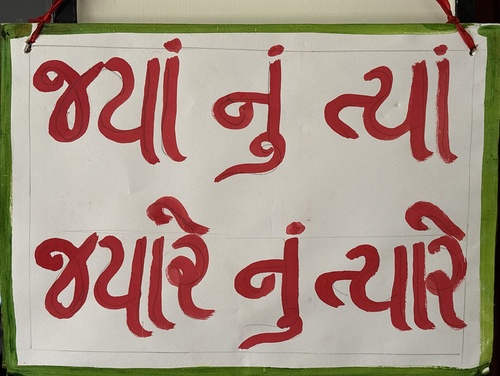

Working with clients in other countries can open new professional opportunities. Whether you are a graphic designer in Medellín, a software developer in Bogotá, or a remote assistant in Cali, international clients allow you to expand your reach beyond local markets. Once you secure a client abroad, the next step is deciding how you will receive payment.

For many freelancers in Colombia, international payments can feel complex. The process may involve banking codes, currency exchange rates, and transaction fees. Understanding how cross-border payments work can help you make informed decisions and manage your income more effectively.

This guide outlines the most common ways freelancers in Colombia receive payments and explains how Remitly for Freelancers supports international transactions.

The Growth of Freelancing in Colombia

Colombia has experienced steady growth in remote and freelance work. Many professionals now provide services to clients abroad and may receive payments in foreign currencies such as U.S. dollars or euros.

When money moves between countries, it often goes through multiple banking systems and may require currency conversion. Additional processing steps may occur along the way. Being aware of these factors can help you better plan for your income and expenses.

Common Challenges With International Payments

Challenge Impact
Exchange Rates Fluctuate over time. If your payment is converted immediately upon receipt, the amount you receive in Colombian pesos will depend on the rate at that moment.
Transaction Fees Different payment methods may involve various fees, including sender fees, intermediary bank processing fees, and receiving fees. The total cost depends on the payment method used and the institutions involved.
Payment Visibility With some traditional international transfer methods, it may not always be clear when funds will arrive. Total fees and exchange rates may also not be fully visible until the transaction is complete.

Options for Receiving Payments in Colombia

Freelancers in Colombia commonly use several methods to receive international payments.

Traditional Bank Transfers

Clients can send funds directly to a local bank account using international wire systems.

Consideration: These transfers may pass through intermediary banks, which can add processing time and additional fees.

Digital Wallets

What is a digital wallet: person using a digital wallet

Some freelancers use online payment platforms to receive funds.

Consideration: Transferring money from a digital wallet to a local bank account may involve extra steps or additional costs.

Remittance Services

Certain services specialize in international money transfers and can deliver funds to a bank account or through other payout methods.

Not all remittance services are designed for business or freelance payments, so it is important to review the provider’s terms and features.

Introducing Remitly for Freelancers

Remitly for Freelancers is designed for freelancers, contractors, and remote professionals who receive payments from international clients.

The platform allows users to create payment requests and receive funds directly into a local bank account, mobile wallet or into a USD wallet within Remitly. Funds held in the USD wallet can be converted or withdrawn, subject to applicable rules, product features, and availability in the user’s country.

Key Features

USD Wallet

Payments received through Remitly are held in a USD wallet on the platform. Users can choose when to convert or withdraw funds, depending on local availability and applicable terms.

Payment Requests

Freelancers can generate a payment request through Remitly and send it directly to their client using a secure payment link.

Direct to local bank account

If freelancers want to skip a USD wallet entirely, Remitly for Freelacers offers the option to get paid directly to your bank account in your local currencies.

How the Process Works

Steps Description
Request Funds The freelancer creates a payment request within Remitly and shares the link with the client.
Client Completes Payment The client completes the payment using the secure link.
Receive Funds Once the transaction is processed, the funds are credited to the freelancer’s local bank account, mobile wallet or USD wallet with Remitly.

Important Considerations for Freelancers in Colombia

Tax Registration

Individuals providing services in Colombia may need to register with the national tax authority (DIAN), depending on their specific circumstances. Requirements can vary based on income level and type of work performed.

Record Keeping

Maintaining accurate records of services provided and payments received can support financial management and tax compliance.

Social Security Contributions

In Colombia, independent workers are generally responsible for managing their own social security contributions. These payments are typically calculated based on declared income.

Regulations and requirements may vary depending on your situation. Consulting a qualified accountant or tax advisor in Colombia can help ensure compliance.

Frequently Asked Questions (FAQs)

Can I hold funds in U.S. dollars with Remitly for Freelancers?

Yes, with Remitly For Freelancers and a Remitly USD wallet you can hold funds in U.S. dollars. Available features and services may vary depending on your country of residence.

How does a client pay me in Colombia?

You create a payment request within Remitly and share the link with your client. The client uses the link to complete the transaction.

Do I need to pay taxes on international income in Colombia?

Tax obligations depend on factors such as residency status and income level. Regulations may change over time, and each individual’s situation is different. A certified tax professional in Colombia can provide guidance specific to your circumstances.

Is Remitly for Freelancers a bank account?

No. Remitly for Freelancers is not a bank account. It is a payment solution that lets you receive funds directly to your local bank account or mobile wallet (like Nequi or Bancolombia) — or hold them in a Remitly USD wallet if you prefer.

What information do I need to give my client?

When using Remitly for Freelancers, you generate a payment request and share the secure link with your client. You do not need to provide traditional bank account details directly.

Managing Your International Income

Freelancers working with international clients can benefit from understanding how cross-border payments operate and what options are available.

By choosing a payment method that aligns with your financial goals and operational needs, you can maintain greater stability in managing your income.

Remitly for Freelancers provides a way to request and receive international payments through a USD wallet within the Remitly platform, subject to applicable rules and availability.

Legal Disclaimer

Product availability may vary by jurisdiction and is subject to change. Not an offer or solicitation where Remitly or its affiliates are not licensed or otherwise authorized. Availability and use of the products and services is subject to compliance with applicable law.

June 30 marks a proud and historic moment for the Democratic Republic of the Congo (DRC). On this exact date in 1960, the nation officially gained its independence from Belgian colonial rule. In 2026, the country and its global diaspora will celebrate the 66th anniversary of this hard-won sovereignty.

This annual holiday serves as a powerful reminder of the country’s resilience, vibrant culture, and enduring community spirit. Citizens gather to honor the leaders who fought for freedom and to recognize the progress the nation continues to make. It is a time for reflection, joy, and unity among Congolese people everywhere.

Understanding the history behind this national holiday helps us appreciate its deep cultural significance. You can learn a lot about a nation by the way it honors its past. We will guide you through the origins of the DRC’s independence, the traditional ways people celebrate, and what this important date means for Congolese communities around the world.

The Path to Congolese Independence

The journey to independence for the Democratic Republic of the Congo was long and challenging. Understanding this history is essential to grasping the full meaning of the June 30 celebrations.

Early Colonial Rule

The region that is now the DRC was originally colonized in the late 19th century. King Leopold II of Belgium established the Congo Free State in 1885, claiming it as his personal property. This period was marked by severe exploitation of the region’s people and natural resources, particularly rubber and ivory.

In 1908, international pressure regarding human rights abuses forced the Belgian government to take official control. The territory was renamed the Belgian Congo. While the administration changed, the local population continued to face systemic inequality and strict colonial governance. Congolese people were largely excluded from political participation and higher education.

The Rise of the Independence Movement

Following World War II, a strong wave of anti-colonial sentiment swept across the African continent. The Congolese people began to organize and demand political rights. By the late 1950s, several political parties had formed to push for self-governance.

Patrice Lumumba emerged as a prominent leader during this time. He founded the Mouvement National Congolais (MNC) and became a passionate advocate for a united, independent Congo. Another key figure was Joseph Kasa-Vubu, who led the ABAKO party and advocated for the rights of the Bakongo people.

In January 1959, widespread protests broke out in the capital city of Léopoldville (now Kinshasa). The Belgian government realized that maintaining colonial rule was no longer possible. After a series of rapid negotiations in Brussels, Belgium agreed to grant the Congo full independence on June 30, 1960. Joseph Kasa-Vubu became the first President, and Patrice Lumumba served as the first Prime Minister.

How the DRC Celebrates Independence Day

Independence Day in the DRC is a national public holiday filled with vibrant cultural expressions. The celebrations are a mix of solemn remembrance and joyful festivities.

Official Ceremonies and Parades

The day usually begins with official government ceremonies in Kinshasa and other major cities. Political leaders deliver speeches reflecting on the nation’s history and future goals. These events often include military parades and a public raising of the national flag.

The flag of the DRC holds deep symbolic meaning. The sky-blue background represents peace. The red stripe signifies the blood shed by the country’s martyrs, while the yellow borders represent the nation’s wealth. The yellow star in the upper left corner stands for a radiant future for the country. Seeing the flag raised on Independence Day brings a strong sense of pride to the people.

Music and Dancing

Music is a central part of Congolese culture and plays a huge role in Independence Day celebrations. The DRC is famous for its influential music styles, particularly Congolese Rumba and Soukous. During the holiday, streets and neighborhoods come alive with music. Local bands play live concerts, and people dance to celebrate their freedom and cultural heritage.

One of the most famous songs associated with the country’s independence is “Indépendance Cha Cha” by Le Grand Kallé and l’African Jazz. This song was written in 1960 to celebrate the nation’s new freedom. It remains a beloved anthem that you will hear playing constantly during the June 30 festivities.

Family Gatherings and Traditional Food

Like many important holidays, Independence Day is a time for families and friends to gather. People host large meals at their homes, sharing traditional Congolese dishes. Preparing and eating food together is a way to strengthen community bonds.

A typical celebratory meal might include dishes like fufu (a starchy dough made from cassava), pondu (a stew made from cassava leaves), and moambe chicken (chicken cooked in a rich palm nut sauce). Grilled fish and plantains are also popular additions to the holiday table. Sharing these familiar flavors helps keep cultural traditions alive for younger generations.

What the 2026 Anniversary Means for the Diaspora

Millions of Congolese people live outside the borders of the DRC. For the diaspora, Independence Day is a crucial moment to reconnect with their roots. The 2026 anniversary will see Congolese communities in Europe, North America, and other parts of Africa hosting their own celebrations.

These international events often include cultural festivals, educational workshops, and traditional music performances. They provide a safe and welcoming space for expats to celebrate their identity. It is also an opportunity to teach children born abroad about their heritage.

Frequently Asked Questions (FAQ)

When is the Democratic Republic of the Congo Independence Day?

The DRC celebrates its Independence Day every year on June 30. This date commemorates the country’s official independence from Belgium in 1960.

How old will the DRC be in 2026?

On June 30, 2026, the Democratic Republic of the Congo will celebrate its 66th anniversary of independence.

Who was Patrice Lumumba?

Patrice Lumumba was a key figure in the Congolese independence movement. He served as the first Prime Minister of the independent DRC in 1960 and remains a national hero and symbol of the fight for freedom.

Is Republic of the Congo the same as the Democratic Republic of the Congo?

No. The Democratic Republic of the Congo (often called DRC or Congo-Kinshasa) is a large nation in Central Africa. The Republic of the Congo (often called Congo-Brazzaville) is a smaller, separate neighboring country. The DRC celebrates its independence on June 30, while the Republic of the Congo celebrates its independence on August 15.

Honoring the Spirit of the DRC

The Democratic Republic of the Congo Independence Day is a deeply meaningful holiday that honors the sacrifices of past generations. As the 2026 celebrations approach, citizens and diaspora members alike will prepare to celebrate their rich heritage and shared history.

Taking the time to learn about these cultural milestones helps us foster a more inclusive and understanding world. If you have Congolese friends or colleagues, wishing them a happy Independence Day on June 30 is a respectful way to acknowledge their heritage.

Every year on June 27, the people of Djibouti celebrate their independence. In 2026, the country marks 49 years as a sovereign nation. This day is a time for family gatherings, national reflection, and deep cultural pride.

Many people living abroad use this occasion to connect with their loved ones back home. Sending a message or a financial gift bridges the distance between countries. This guide explains the history behind the holiday, how citizens celebrate, and how you can reliably support your family during the upcoming 2026 festivities.

The Road to June 27, 1977

From French Territory to an Independent Republic

Djibouti officially gained its independence from France in 1977. Before achieving self-rule, the region was known as French Somaliland, and later as the French Territory of the Afars and the Issas. The journey to freedom required years of political negotiation and democratic participation.

On May 8, 1977, the population voted overwhelmingly for independence in a historic referendum. A few weeks later, on June 27, the nation celebrated its newfound freedom. Hassan Gouled Aptidon became the country’s first president. The new republic quickly established itself as a vital economic and cultural hub in the Horn of Africa.

How People Celebrate Independence Day in Djibouti

Official Parades and Public Events

The government organizes large military parades and patriotic events in the capital city. National leaders deliver speeches to honor the historical figures who championed freedom. Citizens line the streets wearing the national colors: light blue, green, white, and a bright red star. The atmosphere is joyful and inclusive.

Family Gatherings and Traditional Meals

Independence Day is a national public holiday. Families use this time off to gather, share meals, and pass down stories to younger generations. Traditional dishes take center stage at these celebrations. You will often find skoudehkaris, a flavorful lamb and rice stew, proudly served at the dinner table. People also enjoy sweet treats and spiced tea as they spend quality time with their relatives and friends.

Frequently Asked Questions (FAQ)

When is Djibouti Independence Day?

Djibouti celebrates its Independence Day on June 27 every year. The 2026 holiday will take place on a Saturday.

How many years of independence will Djibouti celebrate in 2026?

In 2026, the country will celebrate exactly 49 years of independence.

Is June 27 a public holiday in Djibouti?

Yes, June 27 is a recognized national public holiday. Schools, government offices, and most private businesses close down so that citizens have the opportunity to celebrate with their families.

Honoring Djibouti’s 49th Anniversary

Djibouti Independence Day 2026 is a momentous occasion that highlights the enduring strength and unity of the Djiboutian people. Whether you are watching the lively parades in Djibouti City or calling your relatives from across the globe, the holiday focuses on connection and national pride.

Millions of people leave their homes every year due to conflict, persecution, or natural disasters. They seek safety, security, and a better life for their families. Leaving everything behind takes immense courage. Building a new life in an unfamiliar place takes incredible strength.

World Refugee Day is a time to honor that strength. Observed globally on June 20 every year, this day recognizes the resilience of displaced people. It also serves as a call to action. Communities around the world come together to advocate for the rights, safety, and inclusion of those forced to flee.

Understanding the challenges refugees face is the first step toward making a difference. Providing support does not have to be complicated. Simple actions can bring hope and stability to those who need it most.

This guide explains the importance of World Refugee Day 2026. You will learn the history behind this global event, understand the unique challenges displaced families navigate, and discover clear, actionable ways to offer your support this year.

What is World Refugee Day?

The United Nations established World Refugee Day to celebrate the courage of people forced to leave their home countries. The first official observance took place globally on June 20, 2001. This date marked the 50th anniversary of the 1951 Refugee Convention, a key legal document that defines who a refugee is and outlines their basic rights.

The primary goal of World Refugee Day is to build empathy and understanding. It encourages governments, organizations, and individuals to stand in solidarity with displaced populations. Every year, the UN Refugee Agency (UNHCR) announces a specific theme for the day. These themes often focus on inclusion, education, and the right to seek safety.

For 2026, the focus remains on creating inclusive communities. Refugees bring diverse skills, rich cultures, and new perspectives to their host countries. When they are welcomed and supported, entire communities grow stronger.

The Unique Challenges Displaced Families Face

Leaving home is rarely a choice. People flee out of absolute necessity. Once they reach safety, the journey is far from over. Starting over in a new country involves navigating complex and often overwhelming obstacles.

Language barriers make simple tasks difficult. Finding a job, enrolling children in school, or visiting a doctor can feel impossible without proper translation or support. Financial instability adds to this stress. Many refugees leave with very little money. They must find affordable housing and secure employment quickly to support their loved ones.

Legal challenges also cause significant anxiety. The asylum process can be long and confusing. Families wait months or even years for a decision on their legal status. This uncertainty makes it hard to plan for the future. Recognizing these challenges helps us understand why community support is so essential.

How to Support Refugees in 2026

You have the power to make a positive impact. Supporting refugees is about offering practical help and showing compassion. Here are clear, effective ways to get involved on World Refugee Day 2026 and beyond.

Donate to Trusted Organizations

Financial contributions provide immediate relief. Organizations like the UNHCR, the International Rescue Committee (IRC), and local non-profits rely on donations to fund their work. These funds supply emergency food, clean water, medical care, and temporary shelter.

Even a small donation makes a difference. Many organizations allow you to set up monthly contributions. This provides steady, reliable support for long-term programs like language classes and job training.

Volunteer Your Time and Skills

Your time is highly valuable. Local resettlement agencies always need volunteers. You can offer your skills in many different ways.

If you speak a second language, you can volunteer as a translator. If you have a background in education, you can tutor children or teach adult English classes. Many agencies also need volunteers to help newly arrived families navigate public transportation, shop for groceries, or fill out job applications. Check with community centers in your city to find local volunteer opportunities.

Amplify Refugee Voices

Listening is a powerful tool. Take time to read books, watch documentaries, or listen to podcasts created by refugees. Learning about their lived experiences broadens your perspective.

Share these stories with your network. Use social media to raise awareness about World Refugee Day 2026. Advocate for policies that protect the rights of asylum seekers. When you speak up, you help build a more welcoming and inclusive society.

Frequently Asked Questions (FAQ)

When is World Refugee Day 2026?

World Refugee Day takes place on Saturday, June 20, 2026. This global event is observed on the same date every year.

What is the difference between a refugee and an asylum seeker?

A refugee is someone who has been forced to flee their country due to war, violence, or persecution, and has been officially granted refugee status. An asylum seeker is someone who has fled their country and is seeking international protection, but their request for refugee status has not yet been processed or approved.

How can I help refugees in my local community?

You can help by volunteering with local resettlement agencies, donating household items or clothing, and advocating for inclusive policies. Simply offering a warm welcome to new neighbors also makes a significant difference.

Stand Together for a Brighter Future

World Refugee Day 2026 is an opportunity to reflect on the resilience of displaced families. It is a reminder that everyone deserves a safe place to call home. Navigating a new country is incredibly difficult, but strong, welcoming communities ease that burden.

You can take action today. Whether you choose to donate, volunteer, or simply educate yourself, your efforts matter. Together, we can create a world where refugees are respected, protected, and empowered to rebuild their lives.