Laos Currency: A UK Traveller’s Guide to the Lao Kip
When travelling to the beautiful Asian country of Laos, expect to find a cash-dominant economy that relies on the kip currency. While tourism areas welcome US dollars and Thai bhat, it is advisable to have the kip currency on hand, exchanged upon arrival in Laos at reputable banks and exchange offices only.

All the facts in a glance
- Laos is a very cash-dominant country.
- Kip cannot be obtained in the UK. It will need to be exchanged from US dollars upon arrival in Laos.
- All kip is in note-form. Coins have been discontinued.
- Kip currency is perfect for small, day-to-day purchases, not larger purchases.
- ATMs are available in the city and less so in rural areas.
- Kip is most useful for tipping, food, drinks, transport, markets and small purchases.
- Use reputable banks and exchange offices when exchanging US dollars or Thai baht into kip.

What Is the Currency in Laos?
While the Lao kip (LAK) is the only official Laos currency, it’s only available inside the country and not obtainable in the UK before you fly. Visitors to Laos often use a mix of kip, U.S. dollars (USD), and Thai baht for cash transactions and coins are no longer in circulation for those that have older currency. Whether you’re planning a visit or sending money, understanding how Laos’ currency works can make your experience much smoother.
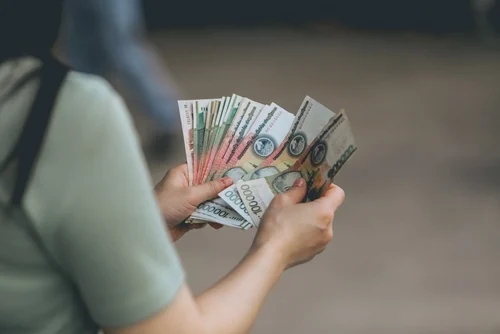
Lao Kip Denominations: What Laos Currency Banknotes Are in Circulation?
The Lao kip’s latest note denominations are as follows:
- ₭1,000 – good for public toilet use and religious offerings
- ₭2,000 – low-value items
- ₭5,000 – local transportation
- ₭10,000 – smaller low-value snacks, tips
- ₭20,000 – good for snacks and light food, tips
- ₭50,000 – suitable for tourism gifts, street vendors
- ₭100,000 – suitable for mid-range restaurant eating and service
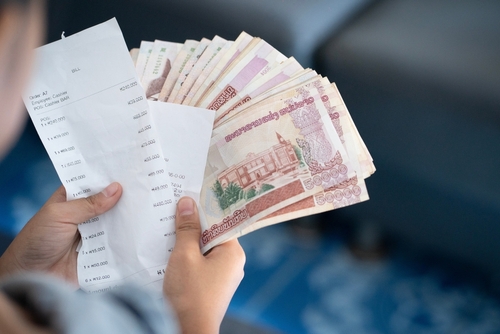
Even the smallest transaction in Laos uses banknotes these days, whether tipping a porter or paying for a tuk-tuk around town. The bank note designs are distinctively Lao, with national symbols printed on each denomination.

A Brief History of the Lao Kip
Laos gained independence from France in 1953, and shortly after, the Lao kip replaced the Indochinese piastre as the country’s official currency.
- 1945: The Free Lao government introduced the Free Lao kip.
- 1952: The Royal kip became the official currency.
- 1975: After becoming the Lao People’s Democratic Republic (Lao PDR), the country transitioned to the Lao PDR kip issued by the Bank of the Lao PDR.
Today, the kip is recognised by its currency code LAK and symbols ₭. Like most of the world’s modern monetary systems, and unlike currencies once tied to a fixed value such as gold, the kip today operates as a fiat currency. The history of the kip explains much of the currency’s limited tradability today, with decades of economic isolation leaving the kip purely a domestic currency. For this reason, it is most often traded though international currencies such as the US dollar, Chinese yuan or Thai baht.

Using Cash in Laos: What UK Travellers Need to Know
Laos still remains a predominantly cash-based economy, particularly outside major tourism areas or hotels. The kip (LAK) is the currency travellers should expect to use for smaller, everyday purchases. US dollars and Thai baht are also welcomed for tourism services, larger transactions and tourism services.
- Kip: Useful for tips, street food, markets, local restaurants, transportation such as scooters and tuk-tuks and small corner shops. This will be the day-to-day currency to carry.
- US dollars: Not reliable for everyday purchases with the locals, but great for tour guides, hotels and the bigger purchases.
- Thai baht: Very useful near the Thai border and often accepted by tourism-based companies and hotels.
- GBP: British pounds are not an accepted currency in Laos. Exchange your GBP into another widely accepted currency before your trip.
- ATMs: The major tourism areas are well facilitated with ATMs but in rural areas they become further apart and less available. Ensure you have cash before venturing too far.
- UK bank cards: Check your bank’s cash-withdrawal and foreign transaction fees before travelling. The fees will vary considerably between UK banks and account types.
- Wise: Wise is a useful option for card spending and ATM withdrawals as the company will allow you to choose local currency as opposed to conversions, saving you fees.
- Starling: Starling currently charges no foreign transaction fee for card spending nor foreign ATM withdrawals, although the local ATM operator may still charge a fee.

Getting Kip: ATMs, Exchange Offices, and What to Expect
Before setting off on your Laos adventure, it’s advisable to structure your trip into a three-stage checklist.
Before Travel:
- Open a Starling or Wise travel card as well as a second bank card for cash withdrawals in Laos.
- While ATMs will charge their own fees, you can be guaranteed no fees from Starling cards and mid-rate fees from Wise.
- Wise is a good option, with a simple, transparent withdrawing and sending structure, as well as being compatible with major Lao networks like BCEL and JDB.
On Arrival:
- As Laos is so cash-dominant, it is advised to withdraw kip from an ATM either at the LJATS Wattay Airport or a local reputable bank. This will help you with taxi fare, tips and small snacks immediately upon arrival, making you less reliant on your hotel.
- ATM operators will have their own respective fees which are between ₭50,000–₭80,000 per withdrawal. Therefore, drawing a larger amount may make sense to avoid repeat fees.
- When exchanging UK currency into kip, use an official bank or exchange office as opposed to informal exchanges, regardless of the quoted rate.
Before Departure:
- Ensure you have enough kip for the airport and your final meals or transport but avoid leaving the country with large amounts of the currency.
- Exchanging all kip can be done at either a bank or the airport, but will be difficult to exchange back into a UK currency once you have left.

Tipping and Payment Etiquette in Laos
Of course, tipping is a polite way to thank the locals for service. While it is not expected, it is always appreciated. But how much is enough?
Eating Out:
- Generally, a street vendor or corner store would not expect a tip, but in a sit-down restaurant environment you may want to leave something for your server. The norm is usually approximately ₭50,000 (roughly £1.75) left on the table after eating. If the bill states a service charge is included, it will not be necessary to leave more.
Hotel porters and Housekeeping Staff:
- This is a common tipping scenario, particularly in mid to luxury hotels. The average is between ₭10,000 to ₭20,000 (approximately 35p to 70p) per encounter.
Local Transportation:
- As tuk-tuks have a pre-established fare, generally tipping is not expected. However, should you feel the need, the driver is particularly helpful or must navigate a tricky route, an extra ₭10,000 to ₭20,000 (approximately 35p to 70p) would be appreciated.
Tour Guides and Drivers:
- Tourism drivers rely heavily on tips as they are paid a set wage. This particularly context is a good one for tipping and the average amount is between ₭100,000 and ₭150,000, equating to £3.50 to £5.25 for the trip. This can be for either a tour guide or a personal driver that will be with you for several hours.

Sending Money to Laos from the UK
Take note that when you send money to Laos from the UK you cannot send kip. The transaction will need to take place through a GDP-in to USD-out corridor, and then exchanged into kip upon the money’s arrival in Laos.
The UK sender flow works like this:
- Your UK bank will convert British currency into US Dollars in preparation for international transfer.
- Once the dollars arrive in Laos, it could be paid out as US dollars if you choose, or further converted into kip, using the daily exchange rate.
- The US dollar is highly favoured as a currency, but it will be useful only in luxury hotels and high-end purchase scenarios, so it is advisable to get kip too.

FAQ: Laos Currency — Frequently Asked Questions
What is the highest note denomination of kip and how does that translate into approximate GBP?
The highest available bank note denomination of kip is ₭100,000, which as of August 2026 was worth approximately £3.30.
How do I purchase a high-value gift worth £500 with kip?
For an item with such a high value, it would not make sense to use kip, as it would translate to roughly ₭15,000,000, making carrying cash currency cumbersome. In a case that involves larger amounts, it is advisable to pay either with US dollars or with a pre-loaded Starling card.
What do I do with my left over kip after my trip?
It is very important to note that kip is not exchangeable in the UK. Therefore it is advised that you spend all your kip before leaving the country. Plan your holiday so that your cash currency runs out timeously.
Should I consider tipping even when staying at a luxury hotel?
Yes, if you feel it is appropriate. Regardless of the expense of the establishment, the locals will all be paid a wage, and tips are always appreciated, even if not expected. A hotel porter or housekeeping staff member generally get tipped ₭10,000 to ₭20,000 (approximately 35p to 70p) per encounter, regardless of the establishment they are working in.
What can I do with small amount left over such as ₭1,000?
As ₭1,000 is the smallest note and worth approximately 3p, you will find very few uses for it other than ‘loose change’ scenarios. It is good for using public bathrooms that charge as much as when wanting to leave a small offering when visiting a local temple. You can add it to tips or pay for your bicycle parking fees.
Where is the safest place to exchange my USD when I arrive in Laos?
While airports are immediate, the rates may not be favourable for large US dollar exchanges into kip. For the best rates and the most legally compliant route, try state-run commercial banks such as Banque Pour Le Commerce Extérieur Lao or the Lao Development Bank. Both are found in the capital city of Vientiane.
Key takeaways for using Laos kip currency:
- You cannot exchange GBP into kip, or use it in Laos
- The kip currency is the most widely used for smaller purchases
- US dollars are safer for larger purchases
- ATMs are more metropolitan based, so keep cash if you are travelling rurally
Remitly can help with all your Laos currency needs. Work out pricing with this handy UK to Laos rates guide. You can read more about the Laotian kip as well as many other Asian currencies too.
Last reviewed: August 2026