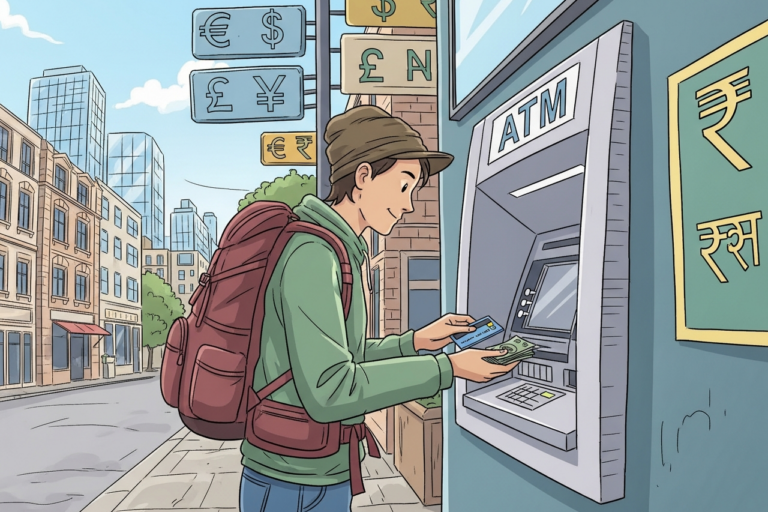
Key Highlights
-
Learn how you can stay away from high fees when you take out cash overseas.
-
Know how atm fees and exchange rates affect your money.
-
You should always pick to pay in the local currency because you can get a better deal.
-
Try using a debit card or a travel card that works well in other countries.
-
Look for atms that are part of your bank’s network. This way, you can avoid extra charges.
-
If you take out more cash at one time, you don’t have to pay fixed atm fees as often.
Introduction
Heading overseas is exciting, but looking after your money can be tough. If you use your everyday debit card or credit card to take out cash, you might face high ATM fees. You might also get poor exchange rates. It is easy to spend more than you should. This guide shows you simple steps to get cash from an ATM when you are abroad. You will learn how to avoid high fees, so you can keep more money for what matters most on your holiday.
Key Things to Know Before Withdrawing Cash Abroad
Before you pack your bags for a trip, it is good to know some basics about international ATM withdrawals. Getting foreign currency from an ATM may seem easy, but there can be costs you do not see at first. Things like atm fees and poor exchange rates can take more money from your travel budget than you think.
A small amount of planning can help you save money while you travel. If you know how these atm fees work and learn what to look out for, you will be able to make better choices with your money while you are away. Let’s go over the details of atm withdrawals, dealing with foreign currency, and ways to protect your budget when using an atm in another country.
Understanding International ATM Fees and Exchange Rates
When you use an ATM in another country, you might have to pay more than just the amount you take out. Your own bank could charge you a fee for using your card in a foreign spot. This fee is usually a percent of what you withdraw. The ATM you are using can also charge its own fee, even if some New Zealand banks, like ANZ, do not have an overseas ATM fee. You could still pay that other fee from the foreign bank’s ATM.
The exchange rate is very important, because it decides how much money you get in the foreign currency for your New Zealand dollars. If the exchange rate is not good, you will get less cash. If the rate changes from the time you use the ATM to when your bank sorts out the payment, the amount taken from your account might change a bit.
It is best to try and get the most fair exchange rate you can. The closer the exchange rate is to the mid-market rate, the better it is for you. The mid-market rate is what banks use when they swap money with each other. This way, you make the most out of your New Zealand money when you are overseas using foreign currency with your ATM card.
Common Pitfalls for New Zealand Travellers (Dynamic Currency Conversion, Local Withdrawal Limits)
One thing many travellers run into is Dynamic Currency Conversion, or DCC. When you use an ATM, you may see a question asking if you want to pay in your home currency (NZD) or the local currency. It can feel easy to pick New Zealand dollars, but that will likely cost you more.
If you pick your home currency, the ATM sets the exchange rate. This rate is not as good and can have hidden extra charges. To dodge those extra charges and get a better deal, you should always choose the local currency. This is an easy way to lower atm fees when you take out cash overseas.
There is also the question of how much cash you take out at once. Most banks and ATMs in other countries have set withdrawal limits. The things to keep in mind include:
-
Dynamic Currency Conversion (DCC): Always say no when asked to convert your transaction to your home currency.
-
High Local ATM Fees: Some ATMs ask for more money than others; look for partner banks if you can.
-
Daily Withdrawal Limits: Know what your bank allows so you do not get caught out when you need cash.
Be smart about the exchange rate and use the local currency. It will save you trouble and extra charges on your trips outside New Zealand.
What You’ll Need to Get Started
Getting your finances set for a trip overseas starts by picking the right tools. You will need a card that lets you get your money without high fees. The main choices are a debit card, a credit card, a travel card, or an ATM card.
Every card comes with its own good points and not-so-good points for using in other countries. What matters is to pick one made for travel that gives you low overseas fees. We will talk about how to choose the best card for you and how to set up digital banking. With this, things can be easier when you are away.
Choosing the Right Bank Card or Travel Card
The best bank card for cash withdrawals abroad is usually a debit card or a specialised travel card. While credit cards are great for purchases, using them for cash withdrawals often triggers high cash advance fees and interest charges from the moment you take out the money. For this reason, it’s best to avoid using them at ATMs.
A Visa debit card, for example, can be used at millions of ATMs worldwide that display the Visa or Plus logo. Some banks, like ANZ, offer cards with low currency conversion charges and no overseas ATM fee from their end. Prepaid travel cards are another excellent option, allowing you to load multiple currencies and lock in exchange rates before you travel.
Certain bank cards definitely work best for cash withdrawals abroad. Look for cards with low or no foreign transaction fees and partnerships with international banks. Here’s a quick comparison:
|
Card Type |
Best For |
Potential Downsides |
|---|---|---|
|
Debit Card |
Everyday cash withdrawals |
Can have foreign transaction fees and local ATM charges. |
|
Travel Card |
Locking in exchange rates and managing a budget |
May have loading fees and less favourable rates than the mid-market. |
|
Credit Card |
Purchases and emergencies |
High fees and interest for cash advances. |
Setting Up Mobile Banking and App-Based Options
In today’s world, it is important to have a mobile banking app set up before you travel. Your bank’s mobile app lets you check your transaction history and your balance at any time. You can also use the app to block your card if it is lost or stolen. This gives you peace of mind because you have control over your money, no matter where you go.
More travellers are now choosing app-based cards from fintech companies instead of using their regular bank cards. These digital cards often give you a better exchange rate for cash withdrawals when you are overseas. They also have lower fees, and everything about the charges is clear. You can use the mobile app to keep track of your account, which makes managing your spending simple and convenient.
Services like Apple Pay and Google Pay are a good, easy way for you to make contactless payments. You can link your travel card to these mobile wallets, which is helpful. It is smart to take your real card as a backup, just in case you need it. Make sure you do these things before you go:
-
Have your bank’s mobile app installed and set up.
-
Turn on notifications for your transactions.
-
Check out app-based cards that offer better rates.
Step-by-Step Guide: Withdrawing Cash Overseas Without High Fees
Now that you are ready, let’s go over what steps to take when you need some cash overseas. If you follow this, you can avoid high fees and make your atm withdrawals cheaper. It’s best to think about where, how, and when you use an atm.
Look for the right atm first. Then choose the correct options on the screen. Each part of this is important. If you pay attention to these things, you can skip the usual problems and keep more of your money for yourself.
Step 1: Find ATMs in the Interbank Network or Partner Banks
The best and least expensive way to take out cash when you travel overseas is to use an ATM that is part of an interbank network or connected with your own bank. You will often see networks like Plus for Visa or Cirrus for Mastercard. These networks connect banks around the world, which can help you pay lower fees. If you use a partner bank, you may not pay any local ATM fee.
Before your trip, ask your bank if it has partner banks in the country you are going to visit. You can also try online ATM locators, like Visa’s global ATM locator, to spot ATMs that are in your bank’s network. These apps and websites are great tools to make your cash withdrawals better and cheaper.
Once you arrive, it is smart to use only these ATMs. This way, you can avoid big or hefty fees, which are most common with independent or out-of-network ATMs. These costlier machines are often in convenience stores or spots filled with tourists. To help you get the right ATM for your cash withdrawals:
-
Use your bank’s app or website to check for partner banks.
-
Find network logos—like Plus or Cirrus—on the back of your card and see if the ATM matches them.
-
Choose ATMs at big, well-known banks for more safety and fairer fees.
Step 2: Select the Best Card for Overseas Withdrawals
Picking the right card at the ATM helps you keep the costs down. Most people should use their debit card or a travel card for cash withdrawals. These connect right to your money and they are made for this job. You will find they often come with lower fees than a credit card does.
It might look easy to use your credit card, but you should really only use it if you have no other way to get money. When you use a credit card to get cash, your credit card provider counts it as a cash advance. This means you will have a cash advance fee and have to pay interest right away. The rate won’t be small, either, so you could spend a lot just to get some local currency.
To make the best choice, always keep your main debit or travel card ready for ATM withdrawals. Save your credit card for times you want to buy something or when you have a real emergency. Before you leave New Zealand, be sure to look over the fees of all your cards. This way, you will know which one gives you the best value for cash at the ATM.
Step 3: Choose to Be Charged in Local Currency
When you use an ATM and it gives you a choice, always pick the local currency. You will see a question asking if you want the transaction to be in the local currency or your home currency (NZD). This is called Dynamic Currency Conversion (DCC). Choosing NZD might look easy. But it lets the ATM set the exchange rate, which is usually worse than what your own bank gives.
If you pick the currency of the country you are in, your bank or card network (like Visa or Mastercard) does the conversion. Their exchange rate is almost always better, and close to the fair mid-market rate. This one choice can save you a lot of money every time you take out cash.
It is a simple step, but it matters. To get the best deal:
-
Always select the button for the local currency (such as euros, USD, or baht).
-
Say no if you are given a choice to change the transaction to your home currency (NZD).
-
Be careful, because ATM screens can sometimes try to trick you into picking the costlier option.
Step 4: Maximise Withdrawal Amounts and Track Limits
To keep atm fees lower, it is usually best to take out a bigger amount of cash less often. If there is a flat fee, like $5 for each transaction, one withdrawal of $300 costs less than three withdrawals of $100. In that case, you just pay $5. If you take out money three times, you pay $15 in atm fees.
But, you also need to know the rules on how much you can take out. The own bank may have a daily limit, and the atm you use can also have a maximum amount you can take out each time. Look up your own bank’s daily limit before you go away. When using the atm, try to get the maximum amount allowed in one go, but only if you feel safe with that much cash in your bag or pocket.
This can help you cut down on atm fees. Still, your safety should always come first. Here are some tips:
-
Check your own bank’s daily withdrawal limit before your trip.
-
Take out the maximum amount the atm will allow to bring transaction fees down.
-
Only take out an amount of cash you feel good about having on you.
Conclusion
To sum up, taking out cash overseas as a New Zealander does not need to be expensive. If you know about atm fees, avoid mistakes like dynamic currency exchange, and pick the best cards, you can save a lot on charges. Always choose to pay in the local currency at the atm, and watch the maximum cash withdrawals you can make, so you get the most out of your money. With these tips, you can feel sure when using an atm and handling cash withdrawals overseas. If you want advice made just for you on looking after your money when you travel, get in touch for a free chat.
Frequently Asked Questions
Is it better to use ATMs or currency exchange services to get cash abroad?
Using an ATM is usually the best way to get cash. The exchange rate is often better when you take cash out from an ATM. Services that swap money, like at airports, often have bigger fees and a not so good rate. Even with atm fees, cash withdrawals from an atm tend to cost less in the end. This way is easy and costs you less most of the time.
What should I do if my card doesn’t work in an overseas ATM?
First, try not to panic. Next, go to another ATM. It is best to use one from a big bank nearby. If your debit card or credit card still does not work at the ATM, you should call your bank’s help number. The bank might have blocked your debit or credit card to keep it safe. When you do any international travel, it is good to have a backup card from another bank.
Do app-based cards or mobile banking offer better deals for New Zealanders abroad?
Yes, they often do. App-based cards are made to work for people who go overseas. These cards usually let you get the mid-market exchange rate and pay lower foreign transaction fees than you would with most banks in New Zealand. If you travel, you can save a lot of money on ATM withdrawals and shopping with these cards.
Are there countries where withdrawing cash from ATMs is not recommended?
ATMs are safe and can be trusted in most countries. But, if you are in a place where the economy is unstable or there is a high risk of card skimming, you should be more careful. It is a good idea to find out about your destination before you go. In some countries, it may be smarter to use pre-ordered foreign currency or travel cards. This can help you avoid big atm fees or other problems with atm safety.