Key Highlights
Here are the main points from our guide to Puanga and the winter solstice:
-
The winter solstice is the shortest day of the year in New Zealand. It is a big sky event.
-
Some iwi use the rising of the star Puanga, not Matariki, to mark the Māori new year.
-
Puanga celebrations stand out in places like Whanganui and Taranaki, as Matariki is harder to see there.
-
The Puanga time is when people reflect, remember family and friends, and get ready for the coming year.
-
At this time, people take part in community gatherings, eat good food, and share stories during the winter months.
Introduction
When the winter months arrive in New Zealand, the winter solstice means we get the shortest day and the longest night of the year. The winter solstice is not just about the change in weather. It has an important place in the culture of Aotearoa. For many Māori, this time of year is not marked by the Matariki star cluster, but by the rise of another star called Puanga. This is the time when the old year ends and the new one starts. It’s a time to think about the year that has gone, enjoy moments with loved ones, and look forward to what comes next.
The Winter Solstice in New Zealand: Understanding the Shortest Day
The winter solstice in the Southern Hemisphere is a special time of year. It is when the sun is in its most northern spot. This means we get the shortest days and the longest nights during the winter months. For Māori, this time is important because it matches with signs in the night sky that tell us the old year is ending and a new year is starting.
These events up in the sky are linked with the first sighting of bright stars. Stars like Puanga and Matariki are seen just after the winter solstice and they show the start of the new year. This shows how the year and many cultural ways in Aotearoa are guided by what happens in the night sky.
Astronomical Significance and Seasonal Changes
Astronomically, the winter solstice is a key time. After this day, in the Southern Hemisphere, daylight hours start to slowly grow. Still, the winter months stay cold. These long nights are great for watching the night sky. When the first new moon comes after the solstice, it is a time for people to look back and have a time of reflection. This is when stars like Puanga and Matariki set.
About two weeks later, people see these stars come up again in the eastern sky. This is when new year celebrations start. The timing often links to different moon phases, for example, the nights of abundance after the full moon, called the nights of Rākau or Tangaroa.
This timing helps make sure there is enough food for big meals, called hākari. When the season shifts, there are short days and long nights. During this period, people say Tamanuiterā (the sun) goes back to his first wife, Hinetakurua (the winter maiden). He stays there until Māui brings him back out for the longer days of summer.
Traditional Māori Perspectives on the Winter Solstice
For many Māori in Aotearoa New Zealand, the time of year around the winter solstice is special. It marks the new year and brings deep meaning. While a lot of people know about Matariki, not everyone uses it as their main way to mark the start of the year.
There are some iwi, including the tribes of Whanganui, the Taranaki area, parts of the Far North, and some parts of the South Island, who follow another star for this event. For these groups, Puanga is the star that shows the new year has arrived. This is not a rejection of Matariki. It just shows that the way people mark the new year can be different, based on what the people see in the sky and the ways that have been passed down to them.
This time is not finished in just one day. Instead, the new year celebrations last longer. People spend the time thinking, remembering, and coming together as a community. It is important to honour those who have gone, with some thinking that their spirits become stars. People use wānanga for learning, share stories with each other, and make plans for what is coming in the year ahead.
Puanga: The Star That Heralds New Beginnings
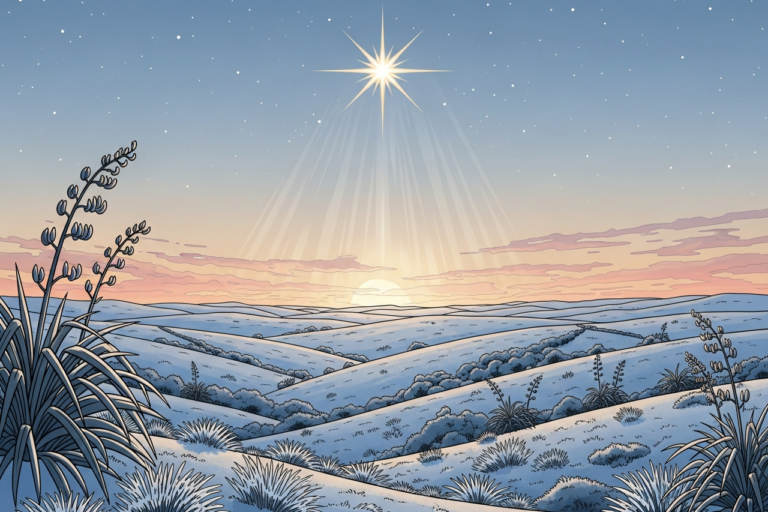
Puanga is the brightest star that many iwi in Aotearoa use as a sign for the Māori new year. In astronomy, people call it Rigel. It stands out in the Orion group of stars, and you can spot it in the winter night sky. Its rise marks a time to let the old year go and get ready for the new one.
In some places, people find it hard to see the Matariki stars. Instead, they look for Puanga. The bright star is easy to see and helps guide the people to when the new year starts. When you see Puanga in the eastern sky around June or July, it’s a sign to come together. The people use this time to reflect and start again. We will look at how Puanga has its own place in Māori culture and how it is not the same as Matariki.
Understanding Puanga’s Role in Māori Culture
In Māori culture, Puanga is seen as a key guide for the new year. For the people who live in Whanganui and Taranaki, Puanga is known as the star of the year. This is because big mountains, like Taranaki and Ruapehu, make it hard to see the Matariki cluster when it comes up on the horizon. So, iwi in these areas look for the next bright star, which is Puanga.
When Puanga shows up in the sky, it lets the people know the rainy season will come soon. It also marks the time to let go of the previous year. This is a time when people come together, talk and listen, share stories, and speak about their whakapapa, or family history. They use this time to plan for the year ahead.
Puanga, much like the single stars of Matariki that each have their own special talents, is joined with ideas of plenty and harvest. When it rises, it tells people to get ready for what is to come, so the community can look after its well-being.
How Puanga Differs from Matariki as a New Year Marker
While both Puanga and Matariki show the Māori New Year, there are some clear differences between the two. These mainly come from regional variations in the way people see stars in the sky and local customs. Many people use Puanga, not Matariki, because it can be hard to spot the Matariki cluster of stars from some places.
Puanga is easier to see because it is one bright star in the sky. This makes it the main sign of the new year for iwi living on the west coast and some other places in Aotearoa. Choosing Puanga is not a rejection of Matariki. Matariki still has an important part in tribal stories.
Here are the key differences:
-
Visibility: Puanga, also called Rigel, is one bright star. Matariki is a faint cluster of stars.
-
Location: Matariki might be blocked by mountains or stay low on the horizon in places like Taranaki and Whanganui.
-
Observation: Iwi from these places watch for Puanga as the main sign for the new year. Many also watch out for Matariki, too.
These regional variations show how Puanga and Matariki both have meaning in the way different groups look for the new year in Aotearoa.
Puanga Celebrations in Whanganui, Taranaki, and Beyond
Puanga celebrations in Whanganui, Taranaki, and other places show the strong bond of tradition and the people here. This time is not just a one-day event. Puanga celebrations go for about a month. There are many activities that help everyone honour the past and get ready for the new year.
The celebrations are held during the nights of abundance, so there is always plenty of food for everyone.
This is a time to see the result of hard work from earlier in the year. People come together to share kai, tell stories and learn from each other. Here’s a look at the main things people do and prepare for Puanga celebrations.
Key Traditions and Community Gatherings
A central part of Puanga celebrations involves community gatherings where people share food, stories, and knowledge. The timing of these feasts, or hākari, is crucial, often planned for the nights of abundance (the nights of Rākau or Tangaroa) to ensure a plentiful supply of food. This practice is encapsulated in the whakataukī (proverb): “Puanga kai rau,” which speaks of the abundant harvest of Puanga.
During this time, communities come together to reflect on the past year and remember loved ones. It is a period for wānanga (learning forums), where whakapapa is recited and plans are made for the coming year. One of the most important foods during Puanga celebrations was the kererū.
The kererū, having fattened up on miro and tawa berries, was considered one of the most nutritious foods. It was a delicacy shared among the whānau, with special significance placed on providing for elders and expecting mothers.
|
Tradition |
Description |
|---|---|
|
Hākari (Feasts) |
Community feasts held during the “nights of abundance” to share the harvest. |
|
Wānanga (Learning) |
Gatherings to share knowledge, recite whakapapa, and plan for the future. |
|
Mahara (Remembrance) |
A time to remember loved ones who have passed away during the year. |
|
Kai (Food) |
Sharing of special foods like kererū, representing the “puanga kai rau” or abundant harvest. |
Family Preparations and Shared Activities for Puanga
Family preparations for Puanga start early. They include practical and cultural actions. Many get ready for months before. People pay a lot of attention to the māra (garden). The cold from winter frosts helps clear weeds and get the dirt ready for new plants. This follows the creation story: from Te Kore (the start or potential), to Te Pō (the planting), then to Te Ao Mārama (things growing).
Gathering and saving food is also a big job for everyone. The kererū is a food of choice at this time. The bird eats a large amount of berries in the winter months. These berries then ferment in its stomach, making the kererū easy to catch. This is why many like to serve it during Puanga feasts.
Families make plans so all will be looked after. The stomach of the kererū was given to expectant mothers to help with food cravings and to make sure they had the most nutritious foods. This helps both the mother and her unborn child.
-
Preparing the māra (garden) for the next planting season.
-
Harvesting and preserving food for the winter months.
-
Gathering together to share stories and recite whakapapa.
-
Remembering and honouring whānau who have passed.
Conclusion
To sum up, the winter solstice and Puanga are important parts of New Zealand’s culture. The shortest day of the year is not just about the stars or the night sky. It is also a time for Māori people to look back, think, and start fresh. Puanga stands for new beginnings. It is a time when people come together. Families and friends celebrate so they can feel close and share happy moments.
As you get ready for this time of year, you might want to join local events. You can also see how different parts of New Zealand celebrate Puanga. When you give time to these special ways, you learn more. You also help keep the spirit of New Zealand’s culture bright and strong.
Frequently Asked Questions
Why is Puanga celebrated in some regions instead of Matariki?
Puanga is marked in place of Matariki in some places because of regional variations in the land. For the iwi who live near high mountains, like those in Taranaki, it is hard to see the Matariki star cluster. Instead, they look for Puanga, which is the star Rigel. This star is brighter and more easy to spot, so they use it to say when the new year starts. The choice to use star Rigel is practical. It is not a rejection of Matariki.
When does Puanga typically appear in relation to the winter solstice?
Puanga, known as the star Rigel, is easy to see in the night sky during late autumn and early winter. Once the first new moon after the winter solstice has set, you will see Puanga rise again about two weeks later in the eastern sky. It is this rising that shows when the Māori New Year celebrations begin.
What are some unique ways New Zealanders celebrate Puanga and the winter solstice?
Puanga celebrations have many traditions that make them special. People gather for feasts that have the most nutritious foods from the harvest. There are wānanga, which are times to learn from each other and share special talents. People also get their gardens ready for the coming year. The month of Pipiri is a time to think about the past and get ready for what is ahead.