Key Highlights
Here are the main things to know about public holidays in New Zealand for 2026:
-
New Zealand has 11 public holidays across the country. This now includes the new public holiday, Matariki.
-
A lot of public holidays in 2026 give people long weekends. It is a good time to plan a trip or a break.
-
Every region in New Zealand also has its own anniversary day to celebrate.
-
If a public holiday comes on the weekend, it will usually be moved to Monday for people who do not work on weekends.
-
People who work on a public holiday have special rights and get certain pay and time off.
-
Matariki, which is the new public holiday, will be on Friday, 10 July 2026.
These points can help you get ready for all the long weekends and the new public holiday in New Zealand.
Introduction
Are you thinking about the year ahead? It helps to know the dates for NZ public holidays. This can make it easier for you to plan trips, set up events, or give yourself a break when you need one. In New Zealand, public holidays include both important national days and special days for different towns and regions. This guide will show you all the big dates for 2026, so you can enjoy every part of your time off. Let’s get ready to plan your breaks and good times for the year.
Overview of New Zealand’s Public Holidays in 2026
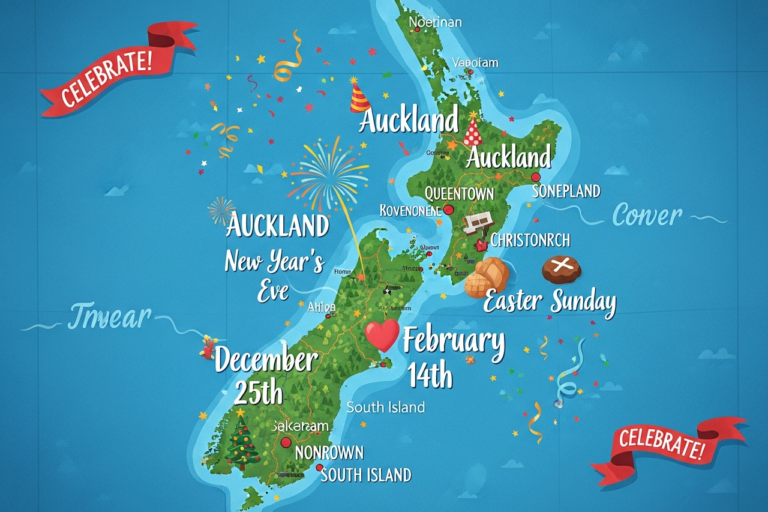
New Zealand’s public holidays in 2026 give people the chance to enjoy long weekends and fun days all year. There are 11 public holidays that everyone in the country takes part in, starting from New Year’s Day and ending with Christmas Day.
Besides these, every province gets its own anniversary day. This brings a local touch to the list of holidays. To get the most out of new zealand’s public holidays and long weekends, it’s good to know how national holidays and regional holidays work and when they happen. This helps you understand your days off and what you can plan with your family and friends during new year or christmas day.
What Makes a Day an “Official” Public Holiday in New Zealand?
For a day to be a public holiday in New Zealand, it must be named in the law. The main law that lists these days is the Holidays Act 2003. This law also gives the rules about public holiday entitlements for people who work. These days off are not just informal or made up; the law asks all working people to get them.
Some people might call these days bank holidays, but in New Zealand, the right term is public holiday. A few days, like Waitangi Day and ANZAC Day, each have their own act in the law. These are called the Waitangi Day Act 1976 and the ANZAC Day Act 1966. These laws make sure these days are special all over the country.
There are also other public holidays, like Easter and Christmas, that come from religious ideas. Some holidays, known as Provincial Anniversary Days, are picked by things like local custom and councils. Every public holiday means workers have some rights for rest and pay, which gives these days an important place in the world of work in New Zealand.
National vs. Regional Public Holidays Explained
In New Zealand, public holidays are split into two main types: national and regional. A national public holiday, like Labour Day or King’s Birthday, is a day off for everyone across the country at the same time.
Regional holidays are called provincial anniversary days. These days are special to each area, and they celebrate when the first provinces of 19th-century New Zealand began. For example, Auckland has its own anniversary day. Wellington has a different one.
So, where you live or work in New Zealand decides if you get a certain day off. If you work in Canterbury, you can have Canterbury Anniversary Day. Someone working in Otago does not get this day off. This way, the public holiday schedule in New Zealand matches both national events and local history.
Complete List of Public Holidays in New Zealand for 2026
To help you plan, here is a complete list of the national NZ public holidays for 2026. These dates are fixed for the whole of New Zealand, making it easy to mark them in your calendar. An annual public holiday provides a great opportunity to recharge and spend time with loved ones.
Remember that when some dates like ANZAC Day or Boxing Day fall on a weekend, the public holiday is often observed on the following Monday to ensure everyone gets their day off.
|
Holiday |
Observed Date in 2026 |
|---|---|
|
New Year’s Day |
Thursday, 1 January |
|
Day after New Year’s Day |
Friday, 2 January |
|
Waitangi Day |
Friday, 6 February |
|
Good Friday |
Friday, 3 April |
|
Easter Monday |
Monday, 6 April |
|
ANZAC Day |
Monday, 27 April |
|
King’s Birthday |
Monday, 1 June |
|
Matariki |
Friday, 10 July |
|
Labour Day |
Monday, 26 October |
|
Christmas Day |
Friday, 25 December |
|
Boxing Day |
Monday, 28 December |
Major National Holidays and Their Dates
New Zealand has some big national holidays that people all across the country enjoy together. These holidays mark important times in the year, and everyone gets a day to take it easy. Each one comes from the country’s history, shared moments, or old traditions. The holidays are a great way for people to spend time with family and friends, or just relax.
The new year starts with New Year’s Day. People also have ANZAC Day to look back and remember those who served. Good Friday and Easter Monday are religious holidays. They come around in autumn, and people get a long break then. At the end of the year, Christmas Day brings a lot of joy for many people. Another holiday that stays on one date is the King’s Birthday. Every year, this holiday is on the first Monday of June.
Here are the main national holidays for 2026:
-
Good Friday: Friday, 3 April
-
Easter Monday: Monday, 6 April
-
ANZAC Day: Monday, 27 April (observed)
-
King’s Birthday: Monday, 1 June (this is the first Monday of June)
-
Christmas Day: Friday, 25 December
New and Recently Added Public Holidays
New Zealand has added a new public holiday to the year, called Matariki. People in New Zealand now celebrate the Māori New Year with this day. The Te Kāhui o Matariki Public Holiday Act 2022 made it official. The first time the country marked this new public holiday was in 2022.
Waitangi Day is always on the same date, but Matariki is not. The date for Matariki changes every year because it follows the lunar calendar. This day happens when the Matariki star cluster shows up in the sky in mid-winter. In 2026, people in New Zealand will have this public holiday on Friday, 10 July.
The start of Matariki is an important time. It gives New Zealand a special new public holiday that lets all New Zealanders come together to take part in a tradition from this country.
Regional Anniversary Days in 2026
Besides the national holidays, new zealand has its own regional anniversary days. These are called provincial anniversary days. Each area has its own day that links back to the old provinces. The people there feel proud of these local days.
Because of this, someone living in Auckland could be taking time off. At the same time, people in Wellington might be at work. These regional anniversary days are on different dates. So, it is best to ask your local council when the day is for your area. The next parts look at their past and show how these days are not the same.
The History and Significance of Anniversary Days
Anniversary days are an important part of New Zealand’s past. These public holidays go back to when New Zealand was first settled by the British. Each area marks the date it was founded, so different regions have their own anniversary days.
Local custom plays a big part in these holidays. Even though each date is set by history, the actual public holiday will often be moved to the nearest Monday. This is done so people can have a long weekend.
This mix of history and what works well for people today makes anniversary days a special thing in New Zealand. These public holidays help people remember where they come from, but they also fit in well with how we live now.
How Regional Dates Differ Across New Zealand
The dates for regional anniversary days in New Zealand are not the same in every place. Each local council picks their dates, often based on old events or ways people are used to. A lot of anniversary days are set on the Monday closest to the date, but others have their own rules.
For example, the Hawke’s Bay anniversary is on the Friday before Labour Day. This gives people there a four-day weekend. Sometimes, the exact date changes so the holiday does not fall on the same day as something else like Easter. One good example is South Canterbury Anniversary. People in South Canterbury celebrate it on Dominion Day, which is the fourth Monday in September.
Because local councils decide when these regional anniversary days will be, there are many different dates. Here are a few ways that some of these dates are set:
-
Taranaki Anniversary: This moves to the second Monday in March so it does not happen at the same time as Easter.
-
Southland Anniversary: Most years, people have this on Easter Tuesday.
-
Marlborough Anniversary: The date for this one is the first Monday after Labour Day.
-
Canterbury Anniversary: In Christchurch City, the date is set as the second Friday after the first Tuesday in November.
Public Holiday Rules and Employee Rights
When there is a public holiday in New Zealand, you need to know about your rights as an employee. The law covers what you get on these days. If the public holiday is on a day you would usually be at work, you get a paid day off.
You will find more details in your employment agreement. But the main rules are the same for every employee. These rules say how you get paid if you work public holiday shifts. They also show how public holidays link with your annual leave. The next section will tell you more about your entitlements.
Entitlements, Pay, and Special Conditions for Working on Public Holidays
According to Employment New Zealand, public holiday entitlements help make sure workers are treated the same. If a public holiday falls on a day you usually work, you get paid your normal daily pay for that day, even if you do not work at all.
If you have to work on a public holiday, you must get paid at least one-and-a-half times your normal pay for those hours. You also get an alternative holiday, which is a day you can take off at another time. This is to say thanks for working when most people do not have to work.
Here are the main points about your public holiday entitlements in New Zealand:
-
If a holiday falls on your workday, you get a paid day off.
-
If you work on a public holiday, you must get at least 1.5 times your normal pay.
-
If you work on a public holiday, you get an alternative day off as well.
-
These rules make sure that your annual leave does not get used for public holidays.
This is how public holiday entitlements work for you under Employment New Zealand.
Conclusion
To sum up, knowing about public holiday dates in New Zealand for 2026 helps both locals and visitors. This guide shows the main dates and explains how national and regional holidays are different. It also covers why anniversary days matter in the country. Plus, being aware of what employees get during public holidays, like time off and pay, lets people plan better and enjoy their break. Whether you travel or stay at home, understanding the public holiday and anniversary days across New Zealand can make your time better. If you want more help with your plans, you can ask for a consultation.