Key Highlights
-
Pride Month in the month of June highlights the 1969 stonewall uprising. This was a big step for LGBTQIA+ rights.
-
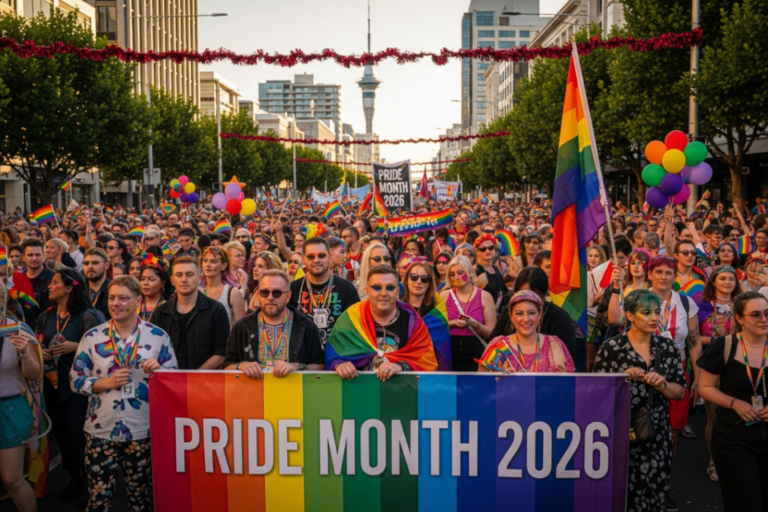
He, she, and they in Aotearoa New Zealand join in with big happenings. The Auckland and Wellington pride festivals are well known, and they bring people together for pride parade walks and other pride celebrations.
-
The month of June and pride is a time for the rainbow community to enjoy who they are. It is a time to stand for each other and to think about the steps taken to reach full equality.
-
You can get involved in pride celebrations. Take part in events, learn about the stories, and help rainbow voices get heard.
-
The rainbow flag shows the many faces of the rainbow community. It is put out in all places in the month of June as a symbol for all.
-
Look out for community-led shows and helpful groups around the motu in the month of June. They are there for the rainbow community and also for allies.
Introduction
Welcome to Pride Month 2026! All over Aotearoa New Zealand, June is the time for bright pride celebrations. These events honour our many rainbow communities. This month is not just about the fun or any parties. It is about people showing everyone where we are with acceptance, equality, and love.
During this LGBTQ Pride Month, we will look at how pride started, talk about the big events coming up across the country, and show you ways to get involved. These things can help you show that you care, too. Let’s enjoy the good things that have happened. There is still more to be done, and we can do this together.
Pride Month in Aotearoa New Zealand: Origins and Global Context
Have you ever thought about where Pride started? The history of the global Pride movement comes from one strong event in New York City. The Stonewall Uprising in June 1969 was a big moment for gay rights in the United States and in other places too. It started a new time for people to show up and stand together.
This event is the reason we celebrate LGBTQ Pride Month across the world. The Stonewall Riots pushed people to hold the first Pride marches. These marches grew into a tradition that is now seen in many countries. Let’s look at where it all began and see why June was picked for LGBTQ pride and this monthly celebration.
The historical beginnings of Pride Month
The story of Pride Month starts in June 1969. It happened at the Stonewall Inn, which was a gay bar in New York City’s Greenwich Village. Back then, the police often raided these places. But on this night, the people in the bar decided to fight back. This sparked what we now call the Stonewall Riots.
Their strong reaction turned into the Stonewall Uprising. There were protests and clashes that went on for six days. These events became a big turning point for the gay liberation movement. The uprising led people to stand up and organise for LGBTQ+ rights. It was a brave move to fight against unfair treatment and demand basic human rights.
The next year, people wanted to remember the Stonewall Uprising. So, they held the first Pride march. It was called the Christopher Street Liberation Day march. This event began a yearly tradition. Now, these pride celebrations happen all over the world. They honour the courage of those who stood up at the Stonewall Inn in New York.
Why June is celebrated as Pride Month worldwide
June is seen as Pride Month because it marks the anniversary of the Stonewall Riots. The riots happened in the month of June in 1969. This moment was key for starting the modern LGBTQ+ rights movement. The first marches in the united states took place on the last weekend of June in 1970. These events set the stage for future celebrations.
The tradition of observing Pride in the month of June was later made official in the united states. President Bill Clinton called June “Gay & Lesbian Pride Month” in both 1999 and 2000. Then, President Barack Obama expanded this by declaring June as LGBT Pride Month during his time as president.
This recognition helped to mark June as the official Pride Month all over the world. Now, many countries, like New Zealand, join in celebrating during this month. It is a time to raise awareness, remember history, and stand up for equality.
The Significance of Pride Month for New Zealand’s Rainbow Communities
For the LGBTQ+ community in New Zealand, Pride Month means a lot. It’s a time to celebrate who we are, to honour how strong we can be, and to help the feeling of belonging grow for all people, no matter their sexual orientation or gender identity. It’s a big reminder that everyone is different, and that makes us special. We all should feel safe and accepted for just being ourselves.
This month is a way to support diversity, inclusion, and fairness. Here, you will see what Pride means to LGBTQIA+ whānau and why it matters so much for making society better for everyone.
Pride Month’s meaning for LGBTQIA+ whānau
For people in the LGBTQIA+ community, Pride Month is bright and full of energy. It is an important time for everyone. People come together, talk about their own lives, and celebrate the many ways we are different. Pride helps build a place where all feel welcome and safe to be who they are.
It is also a good time to think back. Many take this month to remember those who worked hard for the rights you have today. People remember the hard times and the leaders who changed things for the better. This is a moment to feel proud of who you are, to show your true self, and share your love with everyone around you.
In the end, Pride is all about togetherness and joy. It is a strong, clear way to show that your life is important, and love and who you are should be honoured, not hidden. For many, this month is their first time walking with their community in a public way. It is a time to feel strong, supported, and not alone.
Why Pride Month matters for fostering inclusion and belonging
Pride Month helps make our society more welcoming to everyone. When we hold events like marches and public celebrations, we show support for LGBTQ+ identities. We show that rainbow communities belong here. This lets young people see themselves in the spotlight. It’s good for them to know they are seen and celebrated.
The month is a strong way for the LGBTQ+ rights movement to keep going. We have come a long way, but our fight for full equality is not finished yet. Pride reminds us that there is still discrimination and unfair treatment. This happens in New Zealand and all over the world. It is a time to speak out for human rights, making sure everyone is treated fairly.
When we come together for Pride, we help people learn more about gender and sexuality. This helps those who might not get it. Our aim is to spread love and make sure that no one faces abuse or unfairness because they are different. It is about letting everyone be themselves and live free from harm.
Celebrating Pride 2026: Major Events Across New Zealand
Are you ready for the pride celebrations? Across New Zealand, towns and cities glow with colour and energy during Pride. There be big pride festivals and small community gatherings. You can get involved, show your support, and join in with the rainbow community.
The main cities host the biggest pride parade events, but the spirit of Pride can be found in every part of the motu. Here’s the major events coming up in 2026.
Auckland and Wellington Pride festivals: Dates and highlights
Auckland and Wellington are epicentres for some of New Zealand’s most spectacular Pride events. These cities host vibrant pride festivals that draw huge crowds, featuring everything from dazzling parades to live music and community markets. These major events are a cornerstone of the country’s Pride calendar.
While specific dates for 2026 are often confirmed closer to the time, the pride parades in both Auckland and Wellington are not to be missed. They are joyous, colourful spectacles of community, activism, and celebration, attracting thousands of participants and spectators.
To give you an idea of what to expect, here is a look at typical Pride festival timing in other major centres, which often aligns with New Zealand’s summer festival season.
|
City/Region |
Typical Festival Dates |
Key Event |
|---|---|---|
|
Dublin |
Saturday, 27 June |
Pride Parade |
|
Galway |
2 August – 8 August |
Galway Pride Festival |
|
Limerick |
6 July – 11 July |
Limerick Pride Parade |
|
Belfast |
17 July – 26 July |
Belfast Pride Parade |
|
Cork |
1 August – 3 August |
Cork Pride Parade |
|
Waterford |
27 May – 6 June |
Waterford Pride |
Note: The table reflects international examples to illustrate festival structures. Local dates for Auckland and Wellington 2026 will be announced by organisers.
Community-led celebrations throughout the motu
Beyond big city festivals, the heart of pride celebrations stays strong in the smaller places all around Aotearoa. These local pride celebrations are put together by people who care and want to help. They give you a closer, friendlier way to get to know the rainbow community and their friends.
In cities like Ōtepoti Dunedin, groups like Dunedin Pride run regular pride celebrations that help people connect and support each other. These pride celebrations are often good for families and welcome people of all ages. You will feel a warm and open vibe every time. It is a place where you can be yourself, to be with others or come by yourself.
These pride celebrations show how strong and tough the community is. Some pride celebrations that you might find again and again are:
-
Monthly Pride Nights: Friendly meets in different local spots.
-
Family-Friendly Picnics: Relaxed events in parks where families can chat and hang out.
-
Panel Discussions and Workshops: Sessions to learn more on LGBTQIA+ topics and history.
Ways to Participate and Show Support During Pride Month
Feeling inspired to be a part of it? Taking part is important to make Pride Month work, and there are many ways the people can support the LGBTQ+ community. If you are in the community or are an ally, what you do can really help.
You can go to events. You can also take small steps every day. Each time, you show your support, you help build a world that is more open and accepting. Let’s see how people and groups can help, and ways allies can lift up rainbow voices.
How individuals and organisations can get involved
Getting involved with Pride celebrations can be a great way for you to show you care. If you are someone who wants to help, you can go to a local Pride parade or join a Pride event. It gives you the chance to stand with others, mark diversity, and find out more about the LGBTQ+ community.
Organisations can be a big part of this too. They can give money to sponsor a Pride event. They can make and use workplace rules that are fair for everyone. They can also create support for LGBTQ+ people at work. When you do these things, it shows your place of work cares about human rights and all people.
Here are some ways you can join in:
-
Attend a Pride Parade: Go march with your friends, family, or your team at work.
-
Volunteer: Give your time to help a local Pride group or a LGBTQ+ charity.
-
Educate Yourself: Read about LGBTQ+ history and what the community deals with now.
-
Donate: Give help to groups that fight for LGBTQ+ rights and give needed services to the community.
Actions allies can take to uplift LGBTQIA+ voices
Being an ally means more than just turning up for one month in the year. It’s about showing support and including LGBTQ+ people all the time. Pride Month is a good chance for allies to use their voices and help get the stories out for those in the LGBTQ+ community.
The most important thing you can do is to listen. Make sure you hear what LGBTQ+ people have to say and follow their lead. You can show support by calling out homophobia, biphobia, and transphobia anytime you spot it. This could be an off comment or if you see someone being treated unfairly.
Here are some simple things you can do:
-
Educate yourself and others: Share resources and articles from trustworthy LGBTQ+ sources.
-
Amplify, don’t overshadow: Use your social media to help spread content from LGBTQ+ creators and activists.
-
Use inclusive language: Always use the right pronouns and think about the words you use.
-
Support LGBTQ+-owned businesses: Where you spend money can show support for the community.
The Rainbow Flag: Meaning and Representation in Aotearoa New Zealand
The rainbow flag is one of the most well-known symbols of Pride. You often see it at parades, pride celebrations, and on buildings. The flag stands for the many people who make up the LGBTQIA+ community. It also shows how people in the community come together as one. Each colour on the flag means something on its own. Still, when you see them all as one flag, they share a strong message of hope, pride, and being included.
Here in Aotearoa New Zealand, the rainbow flag shows up a lot at pride celebrations and other events. It reminds people to keep working for everyone to be seen and accepted. Let’s take a look at how the rainbow flag began and why it matters so much in our pride celebrations today.
The evolution of the rainbow flag
The rainbow flag has a long history that tells the story of the gay rights movement. Before the rainbow flag, people used the pink triangle as a symbol. The pink triangle started as a mark put on homosexual men by the Nazis in concentration camps, but then activists took it and turned it into a sign to remember those times and to protest.
In 1978, an artist and activist from San Francisco named Gilbert Baker made the first rainbow flag. He did this because Harvey Milk, who was one of the first openly gay people to be elected in the US, asked him to. The first flag had eight colours. Each colour showed a different part of the community.
Later, the look of the flag changed. It was made simpler and had six stripes instead of eight. This was done so it could be made in large numbers more easily. Now, the rainbow flag is a strong and bright sign of LGBTQ+ pride. It took the place of the pink triangle, which had a sad history. The flag now sends a message of hope and shows how different and special the community is.
Its place in New Zealand’s Pride celebrations
In Aotearoa New Zealand, the rainbow flag is a big part of all pride celebrations. You can see it on public buildings. Marchers wave it in parades. People put it in their home and shop windows. This lets everyone know it is a safe and welcoming place for rainbow communities.
The rainbow flag also shows people are there for each other. When someone sees this flag in their city or town, they know their identity is seen and people are proud of them. The flag helps turn a space into one where everyone can belong and take part in LGBTQ+ pride.
The flag is more than just a sign of joy. It tells New Zealand’s story of working for more equality and to include everyone. It reminds us there is still more to do. Every member of the LGBTQIA+ community should be able to live openly and not face unfair treatment.
Conclusion
As we celebrate Pride Month in 2026, it is important to know why we need to include and support the rainbow communities in Aotearoa New Zealand. This month is a special time for us all, not just for parties and events. It reminds us about the long way we have come and that we still need to stand for fairness and being accepted. If you join in local events, support LGBTQIA+ voices, or help people feel they belong, you help make our society a better place for everyone. You might go to a parade in Auckland or just take part in something with your friends and others. Your support means a lot. Let’s get together, feel proud, and show unity this June. Happy Pride!
Frequently Asked Questions
How can I find local Pride events in my area?
The best way to find pride celebrations near you is to follow local Pride groups on social media. For example, you could follow Dunedin Pride on Instagram. You can also look on community noticeboards or check local event websites. These are good ways to find out what pride celebrations are happening in your area during Pride Month.
What support resources are available for LGBTQIA+ people and allies?
New Zealand has many great groups that offer support. There is help from groups like LGBT Ireland, Transgender Equality Network Ireland, and Belong To. These groups have resources, support groups, and help for the LGBTQ+ community and people who are friends or family. These organisations are there so you can get help and feel like someone is with you.
How can schools and workplaces observe Pride Month respectfully?
Schools and workplaces can show support during Pride Month by making sure they talk about both education and inclusion. They can do this by having speakers, sharing useful information, going over their rules to make sure everyone is welcome, and making safe spaces for people in the LGBTQ+ community. What matters is to put LGBTQ+ voices at the heart of it and make a place where people feel they are truly supported.