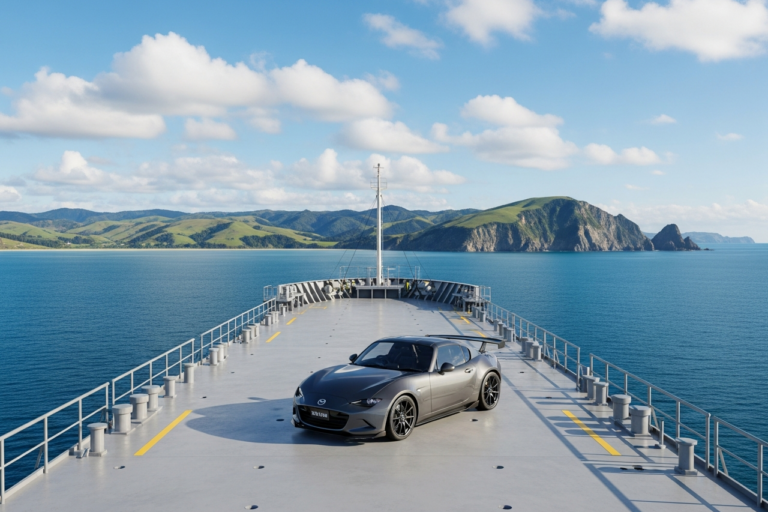
Key Highlights
Here are the main points for your car import journey to New Zealand:
-
Make sure you know about New Zealand’s import regulations, like emission standards and safety rules, before you buy a car.
-
The import process works with a few agencies, such as NZTA, MPI, and New Zealand Customs.
-
Have important papers ready. This includes an export certificate, proof of ownership, and a bill of sale.
-
Be ready to pay costs like shipping, GST, customs clearance, and entry certification.
-
Your vehicle must go through a biosecurity check and an NZTA border inspection once it gets to New Zealand.
-
When your car clears these checks, you need entry certification, registration, and a Warrant of Fitness before it can go on New Zealand roads.
Introduction
Are you thinking about getting your dream car from Japan? You are not the only one. A lot of people in New Zealand want Japanese vehicles because they are good and different. The import process can look hard at first. But this guide will show you each step in a simple way. You will see what rules to follow, what paperwork you need, and how to get your car on the road. We will help you understand everything about the new zealand import process from the japanese market. Now, you can bring your car from Japan without stress.
Understanding Car Imports from Japan to New Zealand
Bringing in a car from the Japanese market to New Zealand is common. But, you need to pay close attention to each step. You’ll have to make sure your car meets all rules set by the New Zealand government, so you can drive it here without any trouble.
Before you buy a car, it’s important to know the import regulations in New Zealand. This can help you avoid many problems and extra costs later on. Let’s look at why people often choose to get cars from Japan, and the main rules you should know about vehicle import.
Why Import a Car from Japan?
Japan has a big range of cars to choose from. Many Japanese vehicles come with better features and be in good condition compared to the ones you often get in New Zealand. These cars are reliable and full of great features, which is why a lot of people in New Zealand like to buy them.
There is also a lot to pick from. You will see many different models, and some of them were never sold new in New Zealand. It does not matter if you want a small sporty car, a van that does the job, or something different like a kei car. The used vehicle market in Japan has something that will fit what you want. If you use a model code, you will find it easier to get the exact model you like.
Japan has strict rules for vehicle inspection. Because of this, most used cars there are looked after well. This can help you feel better about the car’s history and shape before you start the import process.
Overview of New Zealand Import Regulations
The New Zealand government has rules that you must follow to bring a vehicle into the country. These import regulations help make sure all vehicles on the road are safe and do not harm the environment. If you import a car, it is up to you to check that your vehicle meets the right vehicle standards. These rules are looked after by a few groups, like the NZ Transport Agency (NZTA), the Ministry for Primary Industries (MPI), and the New Zealand Customs Service.
Each group has its own job. For example:
-
NZTA checks for safety, emissions, and proof of ownership.
-
MPI looks after biosecurity. They make sure the vehicles are clean and have no pests.
-
Customs makes sure GST and other fees are paid.
If you do not follow these import regulations, your vehicle may not be let into New Zealand. You might also have to pay extra for changes to your car. It is a good idea to learn about these rules or ask a customs broker to help you handle the process.
What You Need to Get Started
Are you ready to start the import process? The first thing you need is the right knowledge and the right paperwork. When you get prepared, the whole job becomes much easier. You will also steer clear of common mistakes. You should have all the important papers that show you own your car and what its story is.
There are some main things on your list. These are your proof of ownership and the export certificate from Japan. You cannot begin without these. Next, we will talk about how to choose the best car and look closely at what paperwork you need.
Choosing the Right Japanese Vehicle
Picking the right car can be a fun step. There is a big choice of Japanese vehicles, so it is good to do some research first. Start by finding out about models you like, and see if they can be used on New Zealand roads. You can use a model code in your search. This helps you get the specs you want.
When you look at a vehicle to buy, be sure to check the vehicle condition. Sellers in Japan, who you can trust, often give clear auction sheets and photos. These show any problems the car might have. Think about these things:
-
Does the car meet New Zealand’s rules for emissions and safety?
-
Has the odometer been checked as real?
-
Is there any sign of old structural damage?
At the end, before you pay, check that the car can be brought to New Zealand legally. Some Japanese vehicles cannot be used on New Zealand roads. This might be because of how old they are, or because of emissions or safety features. You can ask a compliance centre for help so you do not make a big mistake.
Essential Documents and Paperwork
Having the right paperwork is one of the most important things when you want to import a car. The New Zealand officials need a clear trail of papers to show who owns the car and if it meets rules. If you do not have the correct original documents, your car could get stuck at the border for a long time.
The two main papers you need are the original Japanese export certificate and the bill of sale. The export certificate shows the car has been taken out of use in Japan and can now go overseas. The bill of sale shows you are now the owner.
Along with these, you should also have:
-
A full purchase invoice.
-
Proof you paid for the car.
-
Any other papers that show you owned the car the whole time.
Keep all your original documents safe. You will need to show them when you go through customs clearance and the entry certification process in New Zealand.
Restrictions and Compliance Requirements
Bringing a car into New Zealand is not just about getting it shipped here. The car also has to meet some strict rules. It must follow the required standards that the NZ Transport Agency sets if you want to drive it on the road. These standards are there for things like keeping people safe and looking after the environment.
One of the big things the rules cover is emissions standards. This is a main part of the Clean Car Programme. There are also rules for how safe the car needs to be. It’s important that you know about these standards before you buy a car. This will help you avoid getting a car that you cannot use in New Zealand. Now, let’s take a better look at what age, emissions, and safety standards you need to meet.
Age and Emissions Standards for Imported Cars
New Zealand has some clear rules for the age and emissions standards of cars that come into the country. The main rule is called the Clean Car Standard. This aims to lower the amount of CO2 let out by cars that enter New Zealand. What rules your car needs to follow will depend on the year your car was made and the kind of fuel it uses.
There is no hard age limit for all cars in New Zealand. But, many older cars can find it hard to meet the emissions standards. It is a good idea to check if the car you want to bring in has the right model code or a statement of compliance with these rules.
If your car does not meet these emissions standards, you could be charged fees, or sometimes the car may not be allowed on the road at all. Make sure to look up the latest information on the NZTA website before buying. The rules can change, so it is smart to keep up to date.
Vehicle Safety and NZTA Compliance
Vehicle safety is very important for the NZ Transport Agency. Before you can drive your imported car on New Zealand roads, the car must first pass an entry certification check. This check makes sure that the car meets all the needed safety rules.
This is a bigger process than the normal Warrant of Fitness (WOF) check. The inspector will check some important safety parts and rules, like:
-
Frontal impact and how the car protects people inside.
-
Electronic stability control (ESC) for many types of cars.
-
The car’s overall strength, making sure there are no bad repairs or rust.
When your car passes this entry certification, you can then register it and get a Warrant of Fitness. You have to make sure your car can meet these strong vehicle safety rules before bringing it to New Zealand.
Step-by-Step Guide to Importing a Car
Getting a car from Japan to New Zealand can feel hard. But if you follow a few simple steps, the whole import process gets easier. Start from picking out your car in Japan. Then, move on to getting it on the road in New Zealand. Taking things step by step helps a lot.
In this guide, you will find what you need to know about the vehicle import process. You will learn how to do research, make your purchase, deal with shipping, get through customs, and finish your entry certification. If you use these steps, you can make sure your car gets from Japan to New Zealand without too much trouble.
Step 1: Research and Select Your Vehicle
The first thing you should do is find the car that’s right for you. The Japanese market has many choices, so you need to take your time and pick wisely. Pick the make and model you want. Then, use the model code to look for cars that match New Zealand standards.
When you look at listings for Japanese vehicles, check the details about vehicle condition with care. Focus on:
-
If the car meets New Zealand emissions and safety rules.
-
Verified mileage and service records.
-
No structural damage or major rust.
Before you make up your mind, talk to a New Zealand compliance centre. They will let you know if the car can be brought in, and what the compliance costs will be when it arrives.
Step 2: Arrange Purchase and Export in Japan
Once you pick your car, you need to sort out buying it and get ready for export. At this stage, you have to show proof of ownership and collect the right paperwork. Working with a good export agent in Japan makes everything much easier.
You need to get clear proof you own the car. The main documents you will need from the seller are the bill of sale and the original export certificate from Japan. This certificate, called the deregistration document, is very important for customs in Japan and New Zealand.
Make sure you have these before the car leaves Japan:
-
A bill of sale that shows your name and the car details.
-
The original export certificate.
-
Receipts that show the purchase.
If you don’t have these documents, you cannot prove ownership, and your car will be stopped at the New Zealand border.
Step 3: Shipping Options and Booking Transport
With your car purchased and paperwork in order, the next step is getting it to New Zealand. You’ll need to choose from several shipping options and book transport to one of the major ports like Auckland, Wellington, or Lyttelton. The two primary methods are Roll-on/Roll-off (RoRo) and container shipping.
RoRo is typically the most cost-effective option, where your car is driven onto a specialised vessel. Container shipping offers more protection, as your vehicle is secured inside a standard shipping container. This is a good option for valuable or non-running cars. Once you book, your shipping agent will provide a Bill of Lading, which is your contract for the transport and is required for customs clearance.
Here’s a quick comparison of the main shipping options:
|
Shipping Option |
Description |
|---|---|
|
Roll-on/Roll-off (RoRo) |
The vehicle is driven directly onto the vessel and secured. This is generally the cheapest and most common method. |
|
Container Shipping |
The vehicle is loaded into a 20ft or 40ft container. It offers better protection from the elements and is ideal for high-value cars. |
Step 4: Customs Clearance and Arrival in New Zealand
When your car comes into New Zealand, it has to pass customs clearance and biosecurity checks before you can take it. The New Zealand Customs Service will look at the import entry and collect GST and duties if you have to pay them. It is best to get a customs broker, as the process can be tough.
At the same time, the Ministry for Primary Industries (MPI), which used to be called MAF Biosecurity, will check the car for biosecurity clearance. They will look for soil, plant bits, or bugs. To stop delays or extra cleaning costs:
-
Make sure the car is well cleaned before you ship it.
-
Check the engine bay and under the car, so there is no dirt.
-
Take out all personal things from inside the car.
Your car can only move to a compliance centre for the next step when both New Zealand Customs and MPI say it is okay. The whole process can take a few days or up to a week, based on how busy the port is and the planned inspections.
Step 5: Entry Certification, Registration, and Licensing
The last step is getting your car approved to drive on New Zealand roads. This is called entry certification. An agent who is approved by the NZ Transport Agency does this job. They carry out a full vehicle inspection to make sure your car is safe, meets emissions rules, and other standards.
The agent checks that your car meets every requirement. If it passes, you will get a Warrant of Fitness (WOF). After that, you can register your car. The main steps include:
-
The vehicle gets a close look at its structure and safety.
-
They check proof of ownership and if the car meets the right standards.
-
The vehicle will get a compliance plate.
When entry certification is done, you are able to finish the registration and licensing steps. You pay the registration fee and get your new license plates. When the plates are on and rego is paid, your imported car is set to drive on New Zealand roads!
Costs and Taxes Associated with Importing
Importing a car is not only about paying for the car and shipping it. You also have to plan for many import fees, taxes, and other costs. All of these charges need be paid when your car gets to one of New Zealand’s major ports.
It helps to know about these costs early. this way, you can put together a good budget and not be caught off guard later. The main things you have to pay are Goods and Services Tax (GST), customs duties, and lot of port and clearance fees. Here is how these costs work and what you will need to pay.
Import Fees, GST, and Other Charges
Yes, you will almost always need to pay Goods and Services Tax (GST) on your imported vehicle. GST is worked out at 15% of the ‘landed value’ of the car. The landed value is the purchase price, shipping costs, and the marine insurance all added together. The GST is the biggest tax you have to pay.
On top of GST, you also get a few other import fees and taxes. These can change, but will mostly include:
-
Customs clearance fees charged from your broker.
-
Port service charges for handling your vehicle.
-
MPI biosecurity inspection and cleaning fees if they are needed.
-
Clean Car Standard fees or rebates, based on what the emissions of your vehicle are.
You should add all these possible costs to your budget. An experienced shipping agent or customs broker can give you a full quote. This quote shows all the expected taxes and charges, so you know what the total cost could be before you start the process.
Conclusion
Importing a car from Japan to New Zealand can be easy if you follow the right steps. It helps to know the rules and requirements, so you can go from choosing your car to driving it on the road without problems. Make sure to research well, keep all your papers ready, and always follow local rules. No matter if you want a good family car or something sporty, taking time to use this guide will help you make smart choices on your way. If you want to start the import process, feel free to ask for a consultation and get help to make things even simpler.
Frequently Asked Questions
Can I import a used Japanese car directly without a New Zealand dealer?
Yes, you can bring a used vehicle from Japan to New Zealand on your own. To do this, you have to show an unbroken ownership trail. You must prove that you are the legal owner of the vehicle. You will need to look after every step in the import process, including buying it, shipping it, going through customs, and meeting rules in New Zealand.
How long does the import process usually take?
The whole import process usually takes about 6 to 10 weeks. Shipping a vehicle from Japan to main ports in New Zealand takes around 3 to 4 weeks. After that, the car will go through customs clearance, biosecurity checks, and the entry certification process. This part can take another 2 to 4 weeks. How long it takes in this step can depend on when your checks are booked and what is found during inspections.
What are common mistakes to avoid when importing?
Some common mistakes people make when they bring in a car to New Zealand are not checking if the car meets the needed standards and losing the original export certificate. Many also don’t work out all the costs, which can be a problem. Watch out for cars that have structural damage they do not tell you about. These cars will not pass the final vehicle inspection and so you can’t get them registered for use here.
Do I need to pay GST or other taxes when importing a car?
You need to pay GST at 15% on the full value of the car when it lands. You also pay other fees, like charges for customs clearance, port services, and biosecurity. The New Zealand Customs Service asks you to pay these taxes before they let your car go.