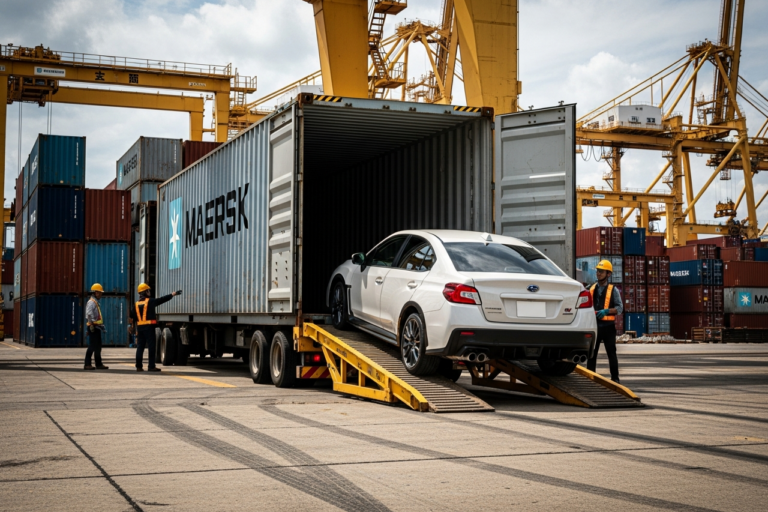
Key Highlights
Here’s a quick look at what you need to know to bring a Japanese car to Canada:
-
The jdm import process has many steps. You start by buying your car in Japan. After that, you move towards registering it in Canada.
-
Your Japanese car must be at least 15 years old if you want to bring it into Canada.
-
You have to follow the rules made by Canada Customs and Transport Canada during the import process.
-
You need to plan your money well. You pay for the car, moving it, duties, taxes, and any changes needed for it.
-
The car has to fit with vehicle safety standards in Canada. Sometimes, you will need to make extra changes for this.
-
The import process can be easier if you get help from skilled vehicle importers.
Introduction
Have you ever wanted to have your own special Japanese car, one that looks different and cool on roads in Canada? For many Kiwis who move to Canada or live there already, this dream can come true. The import process can look hard the first time you see it. But, with the right information, you can handle it. This guide gives you everything you will need to know. You will learn about motor vehicle safety rules, the import process, and how to find your way in the Canadian market. All this will help to make sure your dream car will get to your new home without trouble.
Understanding the Basics of Importing Cars from Japan to Canada
Bringing a Japanese Domestic Market (JDM) car to Canada is something many people look forward to. The import process is simple to follow. You first need to find the motor vehicle you like, often by looking at Japanese auctions. Then, you buy it, make sure it ships across the Pacific, and get it cleared by Canadian customs once it arrives.
For New Zealanders, this is not new. Many know the quality of used Japanese vehicles, so this can help you get a good car that few others have. That is why many people like this option. It gives you the chance to own a well-kept and unique car. Now, let’s see what the journey of your JDM car from Japan will be like.
Why New Zealanders Are Interested in Importing Japanese Cars to Canada
Many people in New Zealand already see the value and choice in the Japanese car market. The thought of getting a dream car from Japan to Canada can be very exciting. This is even more true if you want a car that you just cannot find in your area. The strong link between the New Zealand and Japanese used car markets means some already know how the import process works.
People who have been through this before often tell new buyers to take time for good research. It is important to know the characteristics of the vehicle you want. They also say working with a trusted import service is a good idea. Doing this helps a lot, as rules and paperwork in the Canadian market can be confusing if you do not know them.
The fact that you might already know a bit about this process is a big help. It’s not only about getting a japanese car. You get to bring over something that you like and know well. This way, you make sure that your new vehicle fits your taste and needs in every way.
Overview of the JDM Import Process
The JDM import process from Japan to Canada has a simple path. It all starts when you find and buy your car. Many people get help from vehicle importers. These importers can look at Japanese auctions and visit dealers for you.
After you own the car, you need to sort out the next steps. You have to move the car to a port in Japan. The car must get export clearance, and then it is put on a ship to Canada. Trusted vehicle importers can handle these things and make the paperwork and plans easier for you.
When the car gets to Canada, there is more to do. Your car has to pass through customs. It also needs to go through checks there. The main steps to follow are:
-
Purchasing the Vehicle: Find and buy your car in Japan.
-
Shipping: Arrange and pay for sending the car from Japan to Canada. This will be a main part of the shipping costs.
-
Customs and Registration: Take the car through customs, pay any fees and taxes, and then get it registered so you can drive it in Canada.
This is a basic outline of the import process and what you need to know if you want to bring a JDM car into your country.
Common Reasons for Choosing Japanese Cars
One of the main reasons people like to buy a Japanese car is the good quality and care these cars get. In Japan, there is a strict check system called the “Shaken.” Because of this, cars in Japan are usually kept in great shape. They also often have less miles on them than cars in North America.
To make sure you do not pay too much, you should find out the market value and work with an auction house or agent you trust. It is important to set your budget before you join any auction. You have to think about all the costs, not just the price of the car. This helps you understand what you will spend and stops surprises when it comes to money.
Also, many people in Japan care a lot about their cars. The roads in Japan do not have salt like in Canada, so the cars stay in better shape underneath. This makes a Japanese car a good buy, because they last longer and stay in nice condition.
Canadian Regulations for Importing Used Cars from Japan
Going through Canadian import regulations is a key thing you need to do. Every car that comes in has to meet rules set by Transport Canada. These cars also need to be cleared by Canada Customs. The reason for these import regulations is to make sure the cars on the road are safe.
It is important to know what you need for this before you buy a car. This helps you not make mistakes that could cost a lot of money. The main things you need to think about are the age of the vehicle, if it can come into the country, and if it meets vehicle safety standards in Canada. We will talk about these important points more in the next parts.
Age and Eligibility Requirements for Imported Vehicles
The main rule you need to know when you bring a car from Japan to Canada is the 15-year age requirement. The car has to be at least 15 years old. This means you have to look at the month and model year when the car was made. Only then can the car be brought into Canada. This is a big part of Canadian import laws for vehicles that were not built for the Canadian market.
There is a reason for this rule. Older cars do not have to follow all the tough, new motor vehicle safety regulations that new cars must follow. Transport Canada says that when a car gets this old, it does not need to meet all the latest motor vehicle safety standards. This makes it easier to import the car as long as it is safe to drive.
Before you try to buy or bid for a car, you have to check the date when it was made. If the car is even a day younger than 15 years at the time of importation, it will not be allowed to enter Canada. Always check the model year closely to be sure the motor vehicle you want is old enough.
Import Restrictions and Permitted Models
The 15-year rule means you can bring in many types of Japanese vehicles. But not every type of vehicle will be allowed in Canada right away. These vehicles are often called grey market vehicles. There are rules for what you can bring in, so you need to check which types are ok.
Most cars, trucks, and SUVs that come from Japan and are over 15 years old can be brought in. But some vehicles may not be allowed. For example, if a car was not first made for the Japanese market but is being sold from Japan, like a German car, you may have to pay 6.1% in applicable duties.
Key things to remember about these restrictions are:
-
Most JDM passenger cars over 15 years old can come in.
-
If a vehicle is not made for Japan first, then you may have to pay duties.
-
Some rules are different for agricultural vehicles and some commercial trucks.
It is a good idea to check if your model can come in before you buy it.
Compliance with Transport Canada Standards
Yes, Canada has rules for bringing in used cars, and it is a must to follow them. Transport Canada is in charge here. The rules are set by them under the Motor Vehicle Safety Act. The main idea is to keep all cars on Canadian roads safe, even the ones being imported.
If the car is 15 years old or more, it does not have to meet every new law. Still, the car must pass a safety check in the province or area before you can register it. You cannot skip this step. The check looks at important things like the brakes, lights, tyres, and strength of the car.
You may need to change some things on the car to meet these motor vehicle safety standards. This could mean putting on daytime running lights or using tyres that fit Canadian rules. Getting ready for these changes is an important part of the import process. It also helps make sure your car is safe and legal to use on Canadian roads.
What You Need to Get Started as a Beginner
If you are new to bringing something into the country, getting your paperwork sorted is the first step to having things go well. You will need some key documents for customs clearance, like the bill of sale and a filled-out vehicle import form (Form 1). You must show these to the Canada Border Services Agency.
It is very important to have all of your documents ready and correct for things to go smoothly with border services agency staff. Here you will see what you need, who can give you a hand with the whole thing, and how to make room in your budget for all the costs that come with it.
Essential Documents for Importing a Vehicle
When your car gets to Canada, you need to have a folder with all your key papers ready for customs. The most important paper is the original title, also called the ownership document. If you are bringing in a car from Japan, this will usually be the Export Certificate. The Export Certificate can also work as the certificate of origin or statement of origin.
The shipping company will give you the Bill of Lading. The Bill of Lading is the contract for moving your car. It also shows you have the right to pick up your car. You will also have to show a bill of sale, or a commercial invoice, to prove how much you paid for the car.
Here are the main papers you must have:
-
Export Certificate: This is the Japanese title, and it can also be used as a certificate of origin or a statement of origin.
-
Bill of Lading: This will come from the shipping company.
-
Bill of Sale: This shows your proof of purchase and how much the car is worth.
Some people will also need a translation of the Export Certificate, because it will be written in Japanese. At times, you might also need a certificate of no.
Choosing Reliable Import Services and Shipping Providers
If you are new to bringing JDM cars to Canada, people who have done it before often say it is best to work with people who know what they are doing. Good vehicle importers can really help you. They walk you through every step, from bidding at a Japanese auction house to getting through Canadian customs. These people have done it many times and know how to make the whole shipping process smooth.
When you pick someone to help you, you should make sure they are open about their services and prices. A good importer will tell you about all the costs, including fees for their help and the broker fees for customs clearance. It is also smart to look at what other people have said. Reviews and stories from their other customers can help you feel better about your choice.
These vehicle importers look after all the big jobs and paperwork for you. This saves you time and stress. While it costs more upfront, having your shipping process and customs clearance done the right way is worth it, especially if it is your first time.
Budgeting for Costs and Fees
Having a clear budget is important if you want to bring in a car from overseas. The final price you pay is not just the price you pay for the car. You also need to think about other extra costs to know what the real price will be.
Shipping costs often make up a big part of the total. The shipping method you pick and the port you use will change how much you pay. On top of shipping costs, there are customs clearance fees, taxes like GST, and maybe broker fees. You should also think about the registration fee, plus the cost of the provincial safety check when you get the car into Canada.
Here is a list of costs you should plan for:
-
Vehicle Purchase Price and Auction Fees
-
Inland Transport in Japan and Ocean Shipping Costs
-
Canadian Duties, Taxes, and Customs Clearance Fees
-
Registrar of Imported Vehicles (RIV) program fee, inspection, and final registration fee.
When you add up all these additional fees, you get a true idea of the final price you will pay for the car.
Step-by-Step Guide to Importing a Car from Japan to Canada
The import process is made up of a few easy steps. If you follow a clear guide, you will not miss any important details. This goes from checking if your car is allowed, to making sure it meets Canadian safety standards. This way, you can keep things organised and feel sure about the outcome.
When you pick your car in Japan and want to drive it in Canada, there will be tasks you need to do at each step. Let us go through the whole trip together. You will see what to do when you are dealing with the Border Services Agency and making sure your car follows all the motor vehicle safety standards and Canadian safety standards.
Step 1: Research and Select the Right Japanese Car
The first step in your import journey is to pick your car. This is an exciting part. Japanese auctions and dealer websites give you lots of options. You can find well-kept cars and some that are a bit different from what you see every day. Take your time to research. You want to be sure the car fits your needs and your budget.
Look closely at the characteristics of the vehicle. You should go through detailed photos. Check the auction sheet, as this will tell you how the car is doing. It shows if any flaws or repairs are there. The auction sheet gives a good view of the car’s overall shape, including if there is any damage.
It is also very important to check the model year and the month the car was made. This info is needed for Canada’s 15-year age rule. If you choose a car that shows it clearly meets this rule, you will avoid big problems later.
Step 2: Verify Canadian Import Eligibility
Once you have chosen a car, the next thing to do is check if you can import it into Canada. This step is very important. There is a main rule for this. The car must be at least 15 years old. This rule is set by Transport Canada and they make sure people follow it.
It is a good idea to look at the Registrar of Imported Vehicles (RIV) program’s list of allowed cars. This list talks a lot about cars from the United States, but it will help you know what Transport Canada looks for in a motor vehicle. If you are looking at motor vehicle options from Japan, you should first make sure of the car’s age.
You should not just think a car can be imported because you have seen the same type on the road. The rules for import under the motor vehicle safety act can be tricky. Check the car’s year by looking at when it was made. Compare it with the date now. This is important to avoid buying a motor vehicle that you can’t bring into Canada.
Step 3: Secure Purchase and Obtain a Proforma Invoice
After checking that your chosen car can be imported, it’s time to buy it. If you are going to use an auction house or an import service, they will sort out the transaction for you. When you buy the car, you need to get the right papers.
Ask the seller or your agent for a proforma invoice or a bill of sale. This is important because it has the car details and how much you paid. You’ll need this when going through customs and for taxes. It is also the proof of your purchase.
You should also make sure the seller gives you the original Export Certificate at this point. This is like the Japanese version of a car title. It’s a certificate of origin, showing where the car comes from. It proves you own the car and tells the car’s story. You can’t import the car without it.
Step 4: Arrange Shipping from Japan
After you buy the car, the next thing is to move it from Japan to Canada. The shipping process has a few steps. First, the car is taken from the dealer or auction house to a port in Japan. There, it is cleared for export. After that, its spot on a ship gets booked.
You have to pick how you want to ship your car. The two main ways are Roll-on/Roll-off (RORO) or container shipping. The one you pick changes the shipping costs and how much care your car gets on the way. Most people go with RORO. It is the cheaper option.
When your car is set up for shipping, the freight company will give you a Bill of Lading. This is an important paper. It works as a receipt to show you own the car, and as a contract for the shipping job. You must have the original Bill of Lading to get your car when it gets to Canada.
Step 5: Prepare Documents for Customs Clearance
While your car is making its way across the Pacific, you should use this time to get all the documents ready for when it gets there. To have a smooth customs clearance, you need to have your paperwork organised for the Canada Border Services Agency.
You need to fill out a Vehicle Import Form (Form 1). You can do this online through the RIV portal before your car arrives. If you get this form done and sent in ahead of time, it can make the clearance go much faster at the port.
Here is your checklist for the border services agency:
-
The original Bill of Lading
-
The original Export Certificate (and a certified translation)
-
The Bill of Sale showing the vehicle’s value
-
A completed Vehicle Import Form (Form 1)
If you have these documents ready, you will find it much easier to get through customs clearance.
Step 6: Pay Duties, Taxes, and Registrar of Imported Vehicles (RIV) Fees
When your vehicle gets to Canada, you need to pay some fees before you can take it. These costs are a big part of what you will spend, so it is good to know about them before you get your car. The Canada Border Services Agency will collect any duties and taxes that apply.
For most JDM cars made for Japan, you do not have to pay duty. But, you still need to pay a $100 excise tax for air conditioning and a 5% Goods and Services Tax (GST) on what the car is worth in Canadian dollars. When you pay these, you can then move forward with the RIV program.
You will have to pay a RIV registration fee. This is for the program that makes sure your vehicle meets Canadian standards. This fee is not the same as your local registration fee, and all imported cars must pay it.
Step 7: Complete Modifications to Meet Canadian Standards
Yes, you will most likely need to do some necessary modifications to your imported Japanese car. Even though cars that are over 15 years old are not covered by a lot of the new rules, they still need to meet the basic motor vehicle safety standards if you want to drive them on Canadian roads.
Some of the most common modifications include adding daytime running lights. These lights must be on all the time while driving in Canada, but cars from Japan might not have them. You should also look at your tyres to check if they are DOT-approved for the roads in Canada. An inspection centre that is registered with the riv program can tell you what needs to be done and do all these changes for you.
Once the riv program sees proof that your car has passed all its checks and all the necessary modifications are finished, they will give you a Canadian certification label. You need to put this label on your car. It shows that your Japanese car follows all the motor vehicle safety standards in Canada and the car is ready for the last steps.
Step 8: Pass Safety Inspection and Register the Vehicle
The last thing you need to do is get your motor vehicle checked with a safety inspection in your province or area. This test is not the same as the RIV inspection. It is a normal check that all cars need to pass in that place to make sure of motor vehicle safety.
The check looks at important safety parts on your car such as brakes, suspension, steering, lights, and tyres. They do this to see if your car is safe and meets vehicle safety standards for your area. If your Japanese car passes the inspection, you will get a certificate. This lets you go on to the next step.
You now need to bring the safety certificate, the RIV sticker, your proof that you own the car, and proof of insurance to the nearest vehicle licensing office. You then pay the registration fee. After this, you get your licence plates. Now, your imported Japanese car can be used on Canadian roads and you are all set!
Shipping Options for Importing Japanese Cars
Choosing the right shipping method is important in the import process. The option you pick can change the shipping costs, how long it takes, and the way your vehicle is kept safe as it goes from Japan to Canada. You can use Roll-on/Roll-off (RORO), or container shipping.
Both ways have their good and bad points when it comes to cost and security. Knowing these differences helps you make a good choice for your budget and the value of your car. This also lets you handle port clearance and border protection with less trouble.
Roll-On/Roll-Off (RORO) Shipping Explained
Roll-On/Roll-Off, or RORO, is the most used and most affordable way to move cars by ship. You can think of a RORO vessel as a very big parking building that floats on water. Your car will be driven right onto the ship at the port in Japan, and it will stay inside beside many other cars until it gets to the next port.
The shipping process for RORO is easy to follow. When the ship gets to Canada, they drive your car off and then it is set for port clearance. Because this way is so fast and costs less, RORO shipping is often picked over using a container. Most people use RORO when it comes to regular car imports.
But, you should know that your car can be out in the weather while it is being loaded or unloaded. You cannot pack personal things in your car before shipping, either. Still, this method is a good and safe choice for anyone who wants to get a car from one port to another.
Container Shipping and Its Benefits
Container shipping gives your vehicle better safety. Your car goes into a 20-foot or 40-foot steel container, and then workers seal it before putting it on the ship. This gives good border protection from bad weather and damage during the trip.
This way works well for high-value, exotic, or classic cars that need some extra care. Container shipping costs more than RORO shipping. But, you might get to share a 40-foot container with other cars to help lower shipping costs. This can make using a container a good choice for some people.
One more good thing is you can often put spare parts or your personal items inside the container with your car. You need to tell customs everything that is in it. This makes things more handy, and RORO shipping does not let you do this.
Comparing Shipping Methods for Cost and Security
When deciding between shipping methods, you need to weigh cost against security. RORO is the budget-friendly champion, but container shipping provides a fortress for your vehicle. Your choice depends on your car’s value and your personal risk tolerance.
The difference in shipping costs can be substantial. For a standard car, RORO might cost around $1,850, whereas a dedicated container could be several thousand dollars more. It’s a trade-off between saving money and gaining peace of mind. Both methods are reliable and used daily for international car shipping.
Consider the following when making your decision, as both methods will require clearance by the Canada Border Services Agency upon arrival.
|
Feature |
Roll-On/Roll-Off (RORO) |
Container Shipping |
|---|---|---|
|
Cost |
Lower; typically the most economical option. |
Higher; especially for a single vehicle in a container. |
|
Security |
Secure once on the ship, but exposed during loading/unloading. |
Very high; sealed inside a steel container from start to finish. |
|
Best For |
Standard, daily-driver vehicles and budget-conscious importers. |
High-value, classic, exotic, or multiple vehicles. |
|
Flexibility |
Cannot ship personal items inside the vehicle. |
Can often include spare parts or personal effects in the container. |
Costs Involved in Importing a JDM Car to Canada
Setting up your budget the right way is a key part of the import process. The price of the car in Japan is just where it starts. You must think about some other costs, like shipping costs, auction fees, and sometimes broker fees.
If you do not plan for these costs, the dream car you want could end up being a problem for your money. Here, we look at the main things you will have to pay. These range from buying the car to paying the final registration fee. With this, you can set a good budget and not be caught out later.
Vehicle Purchase Price and Auction Fees
The first big cost you will face is the vehicle purchase price. This is what you pay for the car. It does not matter if you buy from a dealer or win the car in one of the many Japanese auctions. The price will change a lot based on the make, model, year, and condition of the car.
If you get your car from an auction, you also have to pay auction fees. The auction house charges these fees because they handle the sale. Most fees are a few hundred dollars. If you work with a bidding agent or import service, they will also charge a fee for their help getting the car for you.
Remember, these starting costs are just the first step. All other costs you need to import your car will be added on top. The total will give you the final price for getting your car on the road in Canada.
Shipping, Customs, and Duty Charges
After you buy your car, you need to think about the next big costs. These are about getting the car to Canada and getting it through the border. Shipping costs can go up or down. It depends if you pick RORO or container shipping. You should plan to pay at least $1,800 to $2,500 for a normal-sized car.
When your car gets here, the Canada Border Services Agency will check the car for taxes and any applicable duties. Most JDM cars are not charged a big part of duties, but you do need to pay 5% GST on what your car is worth in Canadian money. You also have to pay a $100 federal excise tax if your car has air conditioning.
To make it clear, your main costs for getting your car moved and cleared are:
-
Ocean Freight: This is the main bit of your shipping costs.
-
Taxes: There will be a 5% GST on the car’s value.
-
Customs Fees: You may need to pay fees for customs clearance, like brokerage fees, which are usually around $300.
This is how the costs add up with the border services agency and customs clearance for your car.
Modification, Inspection, and Registration Expenses
The last lot of costs comes after your car goes through customs. To get your car fully legal, you have to pay for any necessary modifications, checks, and the registration fee. Many people forget about these parts, but they are key steps if you want to finish the job.
First, put aside money for any extra requirements, like the need for daytime running lights to follow Canadian standards. You will need to pay the Registrar of Imported Vehicles (RIV) fee after that. Next, your car has to go through a provincial safety inspection. Some places charge more for this inspection than others, so the cost can change from one spot to the next.
When your car passes these checks and you have sorted all extra requirements, you will pay the provincial registration fee so you can get your licence plates. Each of these costs might look small on its own. Still, when you add them up, they can be a lot, so be sure to set money aside in your budget.
Conclusion
Bringing a japanese car from Japan to Canada can be a really good idea, especially if you want a unique car. If you are thinking about doing this, you need to know the rules, costs, and the steps you should take. It is important to make sure the car meets all canadian standards. When you use a step-by-step guide and do your research, things will go smoother. Planning ahead will help you get your dream car without any trouble. If you want to start your journey, or if you have questions, ask for help when you need it. Your dream car could be closer than you think!
Frequently Asked Questions
Do I need to modify a Japanese-imported car to register it in Canada?
Yes, there will often be some necessary modifications to make sure your car meets Canadian safety standards. You might have to add daytime running lights, and the tyres need to be DOT-compliant. The car will also need to pass an inspection to check that it meets vehicle safety standards before you can finish the registration and pay the fee.
What is the age requirement for cars imported from Japan to Canada?
Cars brought into Canada from Japan must be at least 15 years old. The age is counted from the month and model year the motor vehicle was made. If a car is this old or older, it does not have to follow newer motor vehicle safety regulations. This means it is allowed under Canadian import regulations. The right model year helps the motor vehicle meet these rules.
How much does it generally cost to import a JDM car into Canada?
The final price can change. On top of what you pay for the car, there will be shipping costs, which are about $2,000 or more. You also need to pay auction fees. There might be some applicable duties as well. You have to pay 5% GST, and you will also pay fees for the registration fee and inspection. All these costs can add a few thousand dollars to the first price you pay for the car.
Can I import any Japanese car model into Canada, or are some restricted?
Most Japanese cars that are over 15 years old are allowed under Canadian import laws. But there are some limits on grey market vehicles. It is important to check the characteristics of the vehicle you want to bring in. Make sure it follows the Canadian import laws before you buy it. This will help you stay away from any trouble.