Key Highlights
Here are the key takeaways for your car imports from America to New Zealand:
-
Start by looking at New Zealand’s vehicle standards. This will help you know if your car can come in.
-
Get a trusted car shipping agent. He can handle the shipping steps, customs clearance, and all needed papers.
-
Pick a good shipping method. You can use container shipping or Roll-on/Roll-off. It depends on your budget and your vehicle type.
-
Gather all the needed documents, such as proof of ownership and an export certificate.
-
Your car has to pass biosecurity checks. It will also need entry certification right after it arrives.
These steps will help you with car shipping, vehicle standards, and customs clearance for your car imports.
Introduction
Are you thinking about bringing a car from America to New Zealand? It might look like a big job, but with the right info, you can make it much easier. No matter if you have found your dream classic car or you are moving back home, this comprehensive guide is here to help you. It will take you through each step of car shipping.
You will learn about the rules in New Zealand, see which shipping method you can use, and find out how to handle all the paperwork and what costs to expect. We will cover everything you need, so you can have a good car shipping experience and get your car over here without trouble.
Main Steps to Import a Car from America to New Zealand
Bringing a car into New Zealand from the USA is done in a few clear steps. First, pick the car you want and check if it is allowed to come into New Zealand. Make sure your car matches the rules set for new zealand import rules. Next, pick a shipping company that you trust. They will help with all the car shipping work.
When your car gets to New Zealand, it has to go through customs and a check for biosecurity. After that, you must make sure it is checked and approved by the transport agency. You also need to get your car registered before you can drive it on new zealand roads. Each step is important and you will need some paperwork. Now, let’s look at these steps in more detail.
Initial Planning and Research
Your journey into importing a vehicle to New Zealand starts with good planning and research. Before you get started with shipping, make sure your car can legally come into New Zealand. You need to check that the car passes the entry certification rules, because not all used vehicles can be brought in.
Think about things like the car’s age, its engine size, and if it meets New Zealand’s manufacturing standards. These rules in New Zealand can be strict, so it’s good to look into them early. When you check these things before shipping, you will not have problems later when trying to use your car on New Zealand roads.
You should know about requirements such as needing a structural inspection. Doing your research early will let you see the whole process, including what you need to check and what it could cost. This groundwork makes the import process easier. It also helps make sure your vehicle can be used safely on New Zealand roads.
Selecting the Vehicle for Import
Picking the right car is one of the most important steps when you want to import a car to New Zealand. The vehicle type you choose has a big impact on the rules and checks you will need to follow. For example, classic cars can often follow different rules than newer vehicles. Newer cars might need to meet stricter safety standards and rules for what they put out into the air.
If you want a newer vehicle, you should make sure it fits with current New Zealand regulations. This can mean showing a fuel consumption certificate or proof that your car is safe and meets what is needed today. Lots of people in New Zealand like to bring in American muscle cars like the Mustang or Corvette. But, you have to make sure these cars pass the rules.
Classic cars could get around some of the more rigorous standards that new cars have to follow. Still, they must meet some rules before they are allowed in. So, always check the rules for your car type before you do anything. This way, you won’t have problems later on.
Engaging a Licensed Car Import Agent or Shipping Company
Partnering with a reliable car import agent or shipping company can help make the whole process much smoother. These experts take care of the tricky parts of international shipping. They handle the paperwork and deal with customs. You can have peace of mind knowing there are people with years of experience and strong networks to guide vehicle imports. This support helps when the details start to feel hard to follow.
When you look for car shipping services for New Zealand, pick a company that offers everything you need and is known for good customer service. A good agent will guide you at each step. They should answer your questions fast and show a clear breakdown of costs. They work as your trusted partner. Their goal is to get your car to New Zealand in a safe way, ready for New Zealand roads.
When picking a shipping partner, be sure to think about the following:
-
Their years of experience in shipping cars from the USA to NZ.
-
Positive customer testimonials and reviews.
-
A reliable global network and relationships with shipping lines.
-
End-to-end service, from pickup to compliance.
-
Clear and responsive communication.
Understanding Import Regulations and Vehicle Standards
Before you ship your car, you need to know about New Zealand’s import rules and vehicle standards. Your car must meet these to enter and go on the road. The rules are strict and cover things like safety and emissions standards.
When your car gets to New Zealand, an entry certifier will check it. They want to make sure it follows all New Zealand regulations. If your car does not meet these standards, you may have to pay to fix it. Sometimes, you might not be able to register it at all. Let’s take a closer look at what the New Zealand Transport Agency (NZTA) and other rules say you need for your car.
New Zealand Transport Agency (NZTA) Requirements
The New Zealand Transport Agency sets the main rules for any car, truck or motorbike that people bring into New Zealand. If you want to drive your car here, you must show that it meets NZ standards. This must be done if you are importing a car. You have to give all the proof for this step.
You have to show that your car is safe, meets all emissions rules, and is good to be on the road. The New Zealand Transport Agency gives lots of helpful details on what you need. It is a good idea to read these rules before you buy or send a car into the country. These rules cover things like brakes and how clean the car’s exhaust is.
The entry certification process is how the transport agency checks your car. An approved person will go over the vehicle and check everything, making sure it matches their rules. Your car must pass every check in the entry certification before it can be registered to drive on New Zealand roads.
Right-Hand Drive vs Left-Hand Drive Regulations
In the USA, cars are left-hand drive. In New Zealand, roads use right-hand drive vehicles. There are important rules for bringing left-hand drive cars into New Zealand. You need to check if your car meets special rules. You can’t just bring over any LHD car and expect to drive it here.
You must get a special permit for LHD vehicles. Permits are given to certain groups. These might be classic cars that are at least twenty years old, special work cars, or cars for diplomats. If you don’t have a permit, you can’t register your LHD car to use it on New Zealand roads.
These rules are there because of safety. New Zealand roads are made for right-hand drive cars. Driving an LHD car in New Zealand can be risky. If you want to bring one into the country, make sure you get the permit from the NZTA before you book shipping.
Compliance Inspections and Certification
When your car gets to New Zealand, it needs to go through a set of checks. These checks help make sure the car is ready and safe to be driven. An entry certifier does these checks, and they are very important before your car can be registered and used. The inspections look into many parts of the car, and they do not miss much.
The certifier will look at the car compared to the safety standards in New Zealand. They check that the car fits rules like frontal impact, emissions standards, and electronic stability control if you have a newer vehicle. You need to bring papers that show your car meets these safety standards. So, make sure you have them ready.
The main things checked during compliance inspections in New Zealand are:
-
A general safety check of brakes, lights, and tyres.
-
Verification of compliance with frontal impact and emissions standards.
-
A structural inspection to check for any previous damage or rust.
-
Confirmation of ownership and vehicle identity.
Required Documents for Car Importation
Having the right paperwork is important for smooth customs clearance. If you want to bring a car into New Zealand from the USA, you will need several documents. These show the car is yours, what it’s worth, and that you meet export rules. If you miss a document or use the wrong one, you might face big delays and extra costs. So, it’s best to get everything sorted from the start.
You’ll need key papers like the bill of sale, the US title, and an export certificate. These are needed for both US customs and New Zealand customs. They help you send the car out of the US, and they help with customs clearance when your car gets to New Zealand. You’ll also need them to work out any customs duties when the car arrives. Let’s look at what you need, step by step.
Bill of Sale and Ownership Proof
A clear and real bill of sale is your main proof that you own the car. This paper needs to show that you did buy the car the right way. It should have the sale price, the date you got the car, and the names and addresses of the buyer and the seller. You cannot avoid this step if you want to get through customs in New Zealand or in the country you send your car from.
If you are importing older vehicles or other used vehicles, having a record showing who has owned the car is very good to have. The bill of sale is at the heart of this record. It shows you are the rightful owner. New Zealand Customs also uses it to know what the car is worth for set taxes and duties.
Check that the Vehicle Identification Number (VIN) on the bill of sale is the same as the VIN on the car and on your other papers. If the numbers do not match, it can cause big problems and hold up your new zealand customs clearance. Keeping your documents locked in and matching means you have a far better and easier time getting your car through customs.
Export Certificate and USA Title
The original USA Title is a key document you need for any vehicle imports from the United States. It is the main certificate of ownership, made by a state’s Department of Motor Vehicles (DMV). If you do not have the original title, you can’t prove that the car is yours, and US Customs will not let you export the vehicle. Make sure you have this paper before you start the international shipping process.
As well as the USA Title, you also need an export certificate to get your car out of the United States. Most times, your shipping agent will help you organise this. The export certificate shows the car is ready for international shipping and that everything is fine with US export laws.
You should also be ready to show evidence of fuel consumption and emissions standards. You can usually find this info with the USA Title papers, or you can ask the maker for it. Having these details will help you meet emissions standards in New Zealand once your car gets there, and the compliance process will go much smoother.
Customs Declaration and Shipping Papers
When your vehicle is set to go, you will have to fill out some customs forms and shipping papers. These papers give New Zealand Customs all the details they need about your vehicle and where it will go. It is important to be right with your details. Any mistake can hold things up or cause trouble when they check your car at New Zealand customs.
The shipping company will make a Bill of Lading. This shows the deal between you and the company that will carry your car. The Bill of Lading lists the shipping method, the starting point, the end place, and also other things about how your car will get there. It also works as a receipt for your car and you will need it for customs clearance at the port in New Zealand.
Your papers for the shipping line should have:
-
The finished Customs Declaration form.
-
The Bill of Lading from your shipping company.
-
A full list of any personal items going with the vehicle (if allowed).
-
Any other papers needed by the shipping line or New Zealand customs authorities.
Shipping Methods for Importing Cars
Picking the right shipping method is a big step when you want to bring a car into New Zealand. The two main ways to do car transport from the USA to New Zealand are container shipping and RoRo (Roll-on/Roll-off) service. The one you pick will come down to your budget, what your vehicle type is, and what you personally like.
Container shipping is a good choice if you want more security for your car. Your car is placed and sealed in a container for the whole trip. With shared container shipping, you can lower the cost by having your car go in with others. RoRo is the cheaper shipping method most of the time, but your car does not get as much protection. We will look at these two main ways, plus air freight for the times when you need a really fast or special option. That way, you get all the info to decide what works best.
Container Shipping Services
Container shipping is a common and safe way to move your car to New Zealand. With this, your vehicle goes inside its own steel container. This keeps it safe from the weather and from any damage. You can pick a container just for your car (20ft or 40ft), or you can use a shared container service with other cars.
Big ports, like Los Angeles, act as main points for container shipping lines sending cars to New Zealand. Your car gets loaded and tied down inside the container at a warehouse. After this, the container goes to the port. You can also put some of your own things in your car, but there are some rules about what you can send.
If you use container shipping, you know your car will get the extra care it needs while it goes overseas. This is a good choice to make you feel relaxed, knowing your car is secure the whole time. It does cost more than other ways, but for classic cars or cars with high value, the extra safety is often worth the money.
Roll-on/Roll-off (RoRo) Transport
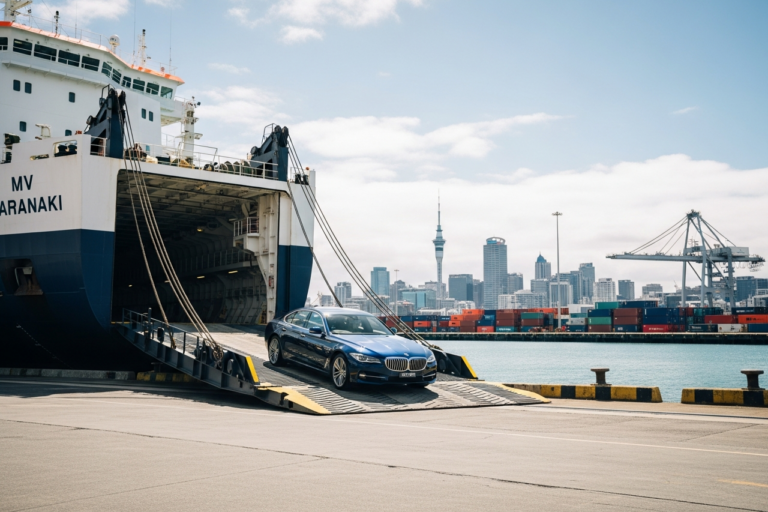
Roll-on/Roll-off, known as RoRo, is a common way to move cars. It is like a big floating car park. At the starting port, your car gets driven onto the ship. At the end, it is driven off again. This is often the cheapest way to send a car because the handling costs are lower.
RoRo shipping is easy to use and works well, but there are some downsides. Your car will be open to weather while it is on the ship, though it is strapped down and will not move around. You cannot put any personal items inside the car because it needs to be empty for safety and for new zealand customs rules.
When the ship gets to new zealand, someone will drive your car off and put it in a safe area. It will stay there until new zealand customs clears it. RoRo is good for cars that work and can take a few knocks, and it suits people who want a low-cost car transport choice.
Air Freight for Special Vehicles
Air freight is the top option for people who want their car delivered fast or have a classic car that is worth a lot. It is the most costly choice by far, but nothing else matches it for speed and safety. Transit times drop from weeks to just a few days, so your car can get to you very fast.
Most people pick air freight when the car is either very special or time matters a lot. People often use this for high-end classic cars, rare cars, or if the car is needed at a race or special event. The car is put safely on a cargo plane and workers take great care of it the whole time.
Consider air freight if:
-
You are shipping a high-value or rare vehicle.
-
You need the vehicle to arrive as quickly as possible.
-
Your car is for commercial use and needs to be deployed immediately.
-
The cost is not a primary concern compared to speed and security.
Cost Breakdown for Importing a Car
Knowing the total cost when you import a car is very important for your budget. The cost is not only about the shipping fee. You have to think about other charges as well, like costs for moving the car, taxes, and steps to make sure the car is allowed on the road. You should ask for a full list of all costs. This will help you not get surprised by extra fees.
Things that change the total cost are the car’s value, the shipping method you choose, and whether you can get any gst exemptions. You also need to think about the shipping fees, customs duties, gst, and costs you might pay when your car gets into the country. Let’s go over what makes up these costs.
Shipping Fees and Logistics Charges
The primary cost you’ll encounter is the shipping fee itself, which covers the international vehicle shipping from the US port to New Zealand. This fee varies widely based on the shipping method you choose. For example, Roll-on/Roll-off (RoRo) is generally cheaper than container shipping, which offers more security.
Beyond the ocean freight, you’ll also have various logistics charges. These can include land transport to get the car to the US port, port handling fees, and documentation processing. A good shipping agent will provide a quote that itemises all these charges, so you know exactly what you’re paying for.
Here is an example of what typical logistics charges might look like. Please note these are indicative and you should always get a specific quote for your shipment.
|
Charge Type |
Description |
|---|---|
|
Ocean Freight |
The cost of shipping the vehicle from the US to NZ. |
|
US Port Handling & Export Fees |
Charges at the departure port for loading and processing. |
|
NZ Port Service Charges |
Fees at the arrival port for unloading and handling. |
|
Biosecurity & Customs Fees |
Charges for MPI and Customs inspections. |
|
Agent Fees |
The service fee for the company managing your import. |
Import Taxes, GST, and Duty Costs
When you bring a car into New Zealand, you will most likely have to pay Goods and Services Tax. This tax is set at 15% of the car’s landed value. The landed value includes the car’s price, the marine insurance, and the cost to ship it (CIF).
One thing to note, New Zealand does not usually charge customs duties on cars. But Goods and Services Tax is almost always there, unless you fit into an exemption. These exemptions can be for new immigrants or people coming back to New Zealand who have owned and used the car for at least one year before moving home.
Here’s a quick look at the import charges for your car:
-
Goods and Services Tax: 15% of the landed value (CIF price).
-
Customs Duties: Not usually applied to cars, but be sure to check.
-
Exemptions: Some new immigrants and those returning may be able to get one.
-
Always use a GST calculator or ask your agent to work out the costs.
Biosecurity & Cleaning Requirements
New Zealand has very tough rules to protect its special environment. The country wants to keep out bad pests and diseases, so your car must be very clean before it comes in. Every car coming into New Zealand must be checked by the Ministry for Primary Industries (MPI). The car has to be in good condition for these checks.
If your car is not clean enough, you might have to pay more money or wait longer because your car could need professional cleaning or fumigation. If they find any soil, plant bits, or insects, the car will not pass this check. It is important to get your car ready before it gets shipped. In the next sections, you will see what you need to do to get ready.
Ministry for Primary Industries (MPI) Biosecurity Checks
The Ministry for Primary Industries (MPI) works to keep New Zealand safe from foreign bugs and sicknesses. Because of this, every used vehicle that comes into the country must go through a strong border check. It is not a step you can skip in the import process—all used vehicles have to have this check.
MPI inspectors will look over your car with care, inside and out. They want to find any bit of dirt, plants, bugs, or things like that. Your used vehicle might look clean, but it may not meet the high rules that new zealand has set. About 80% of these vehicles do not pass the first check.
If you have a “Cleaning Certificate” from somewhere else, MPI will still check your car. What matters is what your used vehicle looks like when it is at the border check in new zealand. Cleaning your car well before importing is the best way to help it get through the inspection fast.
Cleaning Procedures for Imported Vehicles
If you want your car to meet New Zealand’s cleaning rules, it needs to be very clean. This is even more important for used vehicles, as they can carry things that might be unsafe. Before you ship your car, you should get it cleaned by a professional. Make sure they clean inside and outside, not missing places that are hard to get to.
The undercarriage, wheel wells, and engine bay are places dirt and bits from plants often build up. When you clean inside the car, vacuum the carpets, seats, and boot really well. You must also take out all your personal items because these can hide bugs or bring in other unwanted things.
To help your vehicle pass the MPI check, do these cleaning steps:
-
Steam clean the whole outside of the car, including the engine bay and undercarriage.
-
Give the inside a good vacuum, including the boot and any storage spots.
-
Take out all personal items, as well as rubbish and bits of food.
-
Be sure to clean grills, vents, and places where debris might get stuck.
Meeting New Zealand Environmental Standards
As well as safety and biosecurity, your imported vehicle has to meet New Zealand’s environmental standards. This is mostly about the vehicle’s emissions. The NZTA gives the rules for emissions standards that all cars coming into the country need to follow before they can get entry certification and be used on the road.
You must show proof that your car fits these emissions standards. You can often find this proof as a label under the bonnet or get it from the car’s maker. Remember, New Zealand has made the rules harder over the years, so what was fine ten years ago might not work for your car now.
If you have a newer vehicle, the standards are even tighter. If you cannot show your car follows the latest emissions standards, you will not pass entry certification. It’s important to check this before you send your car, as changing it to meet current standards can either cost a lot or not be possible at all.
Customs Clearance Process
When your car gets to New Zealand, it has to go through the proper customs clearance steps. This means you must send the right import papers to New Zealand Customs, pay any customs duties and GST, and arrange for a customs inspection of the car. Most of the time, your shipping agent will handle this work for you.
The reason for customs clearance is to make sure your car meets all legal rules before it can be used in the country. Customs inspection also checks the car’s details and condition, and the people at New Zealand Customs match it with the papers. Here’s what you can expect when your car gets to a port in New Zealand.
Arriving at New Zealand Ports
Your car’s trip does not end when it gets to one of the main ports in New Zealand like Auckland, Wellington, or Christchurch. After the car comes off the ship, it is taken to a safe spot that is managed by the port authority. It will stay there until it passes customs and biosecurity checks.
While your car is in this spot, you cannot get to it. Everything is done by the port staff, New Zealand Customs officers, and MPI inspectors. Your shipping agent will talk with these people to help move things along as quick as they can.
The next steps are important to get done. The car needs to go through an MPI biosecurity check. After that, it must get official clearance from New Zealand Customs. Once your car passes both, it will be ready for the next part, which is entry certification. The whole thing is set up to work in a clear and careful way.
Completing Customs Inspection
The customs inspection is an important step during the border check. A New Zealand Customs officer will look at your car and check the papers that come with it. They need to make sure everything is right. The main reason for this check is to confirm the car’s details and to see if taxes and duties are paid as they should be.
The officer will look at the Vehicle Identification Number (VIN) on your car and match it to the number in the papers you give. If the numbers don’t match, this can cause big delays. The officer will also look at the car’s state and price to check if it fits what you said in your documents.
Key parts of the customs inspection include:
-
Verifying the VIN on the car matches the paperwork.
-
Making sure the information on the customs declaration is correct.
-
Checking for anything not declared or for changes made to the car.
-
Confirming the right amount of GST and duties (if any) have been paid for new zealand customs clearance.
These steps are important to help with customs clearance in new zealand. This is to make sure all rules are followed during the border check.
Release for Entry Certification
Once your vehicle gets through biosecurity and customs checks, and you have paid all customs duties and GST, it will be released. But this does not mean you can drive it yet. The vehicle is free from the port’s control. It can now move to the next step: entry certification.
Your shipping agent or a car transporter will take your vehicle from the port. They will bring it to an authorised testing station. At this station, a licensed entry certifier will do the last checks on your car.
This step is big in bringing your car into New Zealand. It shows that you got through the tough parts of international shipping and border checks. Now, you need to show your car is safe and okay for New Zealand roads. That is what the entry certifier will do.
Registering and Certifying Your Imported Vehicle
The last chapter in bringing your car into New Zealand is to have it checked and registered. You need to do this so the car can be driven on public roads in the country. This step is called entry certification. It makes sure your car is safe, meets all the rules, and is ready for you to use. After this, you get a Warrant of Fitness (WoF) or a Certificate of Fitness (CoF).
If your car does not pass these checks, then it cannot be used—it’s just sitting there and you can’t drive it. This step is the last one you have before you can use your imported car and enjoy it in New Zealand. In the next parts, you will see how to get through entry certification, registration, and putting plates on your car.
Entry Certification at Authorised Testing Stations
Entry certification in New Zealand must be done at a testing station that the NZTA has approved. You can’t just go to any local garage for this check. These testing stations have the right tools and people with the knowledge to look at your car and make sure it meets New Zealand’s safety standards.
An entry certifier, who is accredited for this work, will do a full check of your car, from bumper to bumper. They will check if your car meets all the legal needs. This includes looking at the brakes, steering, lights, frame, and emissions. The certifier will also check the car’s identity again to stop any fraud.
This kind of inspection is more detailed than a simple Warrant of Fitness. The entry certifier has to be sure that a car made for another country is safe to drive on New Zealand roads. If the certifier finds anything wrong, you must get it fixed before your car will be certified for New Zealand.
Warrant of Fitness and Registration Steps
After your car passes the entry certification check, the certifier will give you a Warrant of Fitness (WoF) if it is one of the light vehicles. If your car is a heavy one, or used for business, you will get a Certificate of Fitness (CoF). This shows that your car was safe to drive when it was checked.
When you have the WoF or CoF, you are ready for the last steps to register your car. You need to take all your papers to an NZTA agent, the AA, or VTNZ. There you can put the car in your name. If you are a New Zealand citizen, or live here, you must give proof of who you are, plus your address.
The last steps are:
-
Showing your entry certification papers that say the car passed.
-
Filling out the MR2A form to register your car.
-
Paying for the car registration and the licensing fees.
-
Getting your new number plates for your car.
Plating the Imported Vehicle
The last thing you need to do to make your imported car ready to drive in New Zealand is to put the licence plates on. This is called “plating.” You fit the new New Zealand plates to your car. After this, your car is now registered, and you are free to drive it on public roads.
When you finish the steps at an NZTA agent, you get a set of standard licence plates. The agent puts your car’s details into the national vehicle list. They connect your new plate number with your car’s VIN and your name.
This step brings the whole import process together. You have done the research and shipping. You dealt with customs and entry certification. When you get your plates, you reach the last part of the job. With your new plates on, you can drive off and enjoy your car on the beautiful roads in New Zealand.
Timeline and Shipping Duration
You will need patience when you import a car from the United States. This is because the whole process takes time. The time from booking your shipment to driving your car in New Zealand can be very different each time. Many things affect how long it takes, like the shipping method, the route, and the shipping line schedules.
Most of the time, you can expect this to take many weeks, or even a couple of months. The transit times for sea freight are only part of what you need to think about. Customs clearance and getting your car to meet the rules in New Zealand are also important steps. Let’s go through some usual timelines.
Estimated Transit Times from USA to New Zealand
The time your car spends at sea, called transit time, is a big part of how long car shipping takes. If you want to ship a car from the USA to New Zealand, sea freight usually takes about 45 to 50 days. This is just an average and may change.
These transit times start from when the ship leaves the US port. The times end when it arrives at the New Zealand port. Large ports such as Los Angeles have ships that leave often. Still, the shipping line route will change how long transit takes.
Remember, this is only the time between the two ports. It does not include time moving your car to the first port, waiting for a ship, or the time needed for customs and checks in New Zealand. Always ask your car shipping agent for clear answers about the full timeline for your car.
New zealand car shipping transit times can change, so also check with your shipping line for the latest updates.
Factors Affecting Delivery Speed
Many things can change how fast your car shipping goes from start to finish. The time your vehicle spends on the ocean mostly stays the same, but things can slow down at other points in the process. It helps to know where these hold-ups happen so you can plan better.
One big thing that can slow you down is how fast customs clearance is. If your forms are missing, wrong, or someone finds a reason to check your car more closely, then you could be waiting. If the car does not pass a biosecurity check and needs to be cleaned, be ready for more waiting.
There are a few main things that can change how quick your delivery is:
-
Shipping Method: Sometimes RoRo is the faster choice because the car has to be touched less often than with container shipping.
-
Port Congestion: When ports are full and busy, your car can get held up in both the US and NZ.
-
Customs Clearance: Problems with paperwork or long inspections can add days or weeks.
-
Compliance Failures: If you do not meet biosecurity or entry certification rules, it takes extra time to sort things out.
Choosing a Reliable Car Import Agent
Choosing the right car import agent is a big step. The right agent will be your partner and help you with all parts of car shipping. They make things easier for you, use their years of experience, and work with the best shipping lines.
You want a company that puts customer service first and offers a wide range of car shipping services. They should always be clear about how much things cost and the time it will take. The agent must also manage everything, from when they pick up your car until final compliance is done. Here is what you should know about finding a good shipping partner.
What to Look for in a Shipping Partner
When you look for a shipping partner, don’t just focus on the price. The quality of their customer service and their years of experience matter more. Good knowledge of vehicle imports between the USA and NZ is very helpful. They will know what can go wrong and how to fix it fast.
Great customer service is a must. You need to feel like you can ask any question and always get clear answers back on time. Companies with many years of experience often show this through customer reviews. These reviews help you know what to expect. Your shipping partner should give you an easy, full service from start to finish, including entry certification.
Here’s a quick checklist for what to look for in a shipping partner:
-
Deep Experience: You want someone with years of experience in vehicle imports.
-
Excellent Customer Service: The team should be helpful, open, and quick to reply.
-
Global Network: They should have strong links with agents and shipping lines around the world.
-
End-to-End Service: They must look after all steps from pick-up to entry certification.
-
Positive Reviews: Always check what past clients say about them.
Common Mistakes to Avoid
Bringing a car into New Zealand can be hard and there are things that many people get wrong. These mistakes can slow everything down and cost you more money. One of the biggest problems is not doing the right research at the start. You cannot just buy any car and bring it in, because each car must meet New Zealand’s rules and standards.
People also often forget to add up every part of the total cost. They might look at just the price to ship their car and not think about other things. You need to have money set aside for GST, fees for checking if your car fits the rules, and cleaning if needed. It also matters to have your car in good condition and clean before it goes on the ship. If your car is not clean enough, you can run into biosecurity trouble.
If you want the process to go well, stay away from these common mistakes:
-
Not checking first if you can bring your car in and if your car matches the rules before you buy it.
-
Not getting all your paperwork ready for customs clearance.
-
Not adding in all costs like GST, fitting the rules, and biosecurity charges.
-
Picking a shipping agent just because the price is low, not looking at their skill or the service they give.
Potential Challenges & Risk Management
Shipping a car overseas can come with a few risks, even if you use a good import agent. You may face things like unexpected delays, possible damage while your car is moved, or trouble with rules that are hard to follow. The best way to deal with these risks is to know about them before they happen and have a plan.
Make sure you have proper insurance that can protect your car while it is shipped. Be ready in case there are any last-minute changes to the shipping plan. If you know what problems could come up before you start, you can make better choices and look after your car. Let’s see how you can deal with these challenges.
Handling Unexpected Delays
Unexpected delays can happen in international shipping. This is just something people have to deal with. There are many reasons for this, and a lot of the time, you and your agent cannot control them. Bad weather can slow down a ship. The port may also be busy, making everything move slower.
Customs clearance often causes delays too. Sometimes, your shipment is picked for a closer look. If there is a problem with your paperwork, your car might get stuck for days or even weeks. This shows why it is so important to have all your documents sorted out before you send anything.
The best way to get through these delays is to allow some extra time in your plan and talk often with your shipping agent. They can keep you updated about what is happening at the shipping line and customs. Patience and being ready for changes will help you a lot.
Insurance and Cargo Protection
Protecting your investment with full marine insurance is a must when it comes to vehicle imports. Shipping companies do a lot to keep your car safe, but there is still a chance your car could get damaged. In very rare cases, you might even lose the whole car during international shipping. Standard carrier liability does not cover the true value of your vehicle.
Marine insurance can help cover your cargo from many types of risks. These include damage when loading or unloading, movement while the car is being shipped, and other things that can happen out of the blue. With this insurance, you do not have to worry as much since you know you will get money back if something goes wrong.
When you are looking at insurance for international shipping and your vehicle imports:
-
Always go for a full “all-risk” policy.
-
Check the policy covers what your vehicle is worth, plus what you paid for shipping.
-
Go through the policy carefully to see what they do cover and what they don’t.
-
Take a lot of good photos of your car before shipping so you have proof of how it looked.
Navigating Restrictions on Imported Vehicles
You can’t just bring any car from the USA into New Zealand. The government has set some rules to make sure the cars on the road are safe and good for the environment. These rules are checked as part of the entry certification process. If your car doesn’t meet them, you will not be able to register it.
New Zealand regulations look at many different vehicle standards. This includes things like frontal impact safety, emissions, and how safe it is to drive on the road. For example, there are tough rules about bringing in left-hand drive vehicles. Newer cars need to have features like Electronic Stability Control. It is up to you to make sure your car will pass all the checks and rules.
Before you buy a car or ship one in, you must look into these new zealand entry certification and vehicle standards. The NZTA website is the best place to find the latest and most correct information. It can also be a good idea to talk with an experienced import agent. They know all about the new zealand regulations and entry certification process, and they can help you understand if your car is able to be brought into New Zealand.
Conclusion
Bringing a car into New Zealand from America can be a good experience, but you need to plan it well. It helps to know the steps in the process. First, you have to do research and pick the right car. After that, you need to look at the import rules and customs clearance. Every part of this matters if you want things to go well.
You also must make sure the car meets New Zealand’s vehicle standards and biosecurity rules. This is important, so you follow the law and keep the environment safe. If you stick to the steps given and know that some things might be hard, you can make the work easier and soon be driving your car here.
If you have questions or need help, ask someone. The car you want could be closer than you think.
Frequently Asked Questions
Can I import any type of car from the USA to New Zealand?
No, not every car can be brought in. Your car must meet the set New Zealand vehicle standards for safety and how much it gives off to pass entry certification. There are also big rules about bringing in left-hand drive cars. It is important to look into new zealand regulations before you start car shipping. This is to make sure your car will be allowed in.
How much does it typically cost to import a vehicle from America to NZ?
Bringing a car from America to New Zealand usually costs between NZD 3,000 and NZD 10,000. This covers shipping, customs duties, checks to make sure the car meets all rules, and registration fees. The value and condition of your car can also change the total cost.
How long does it take for an imported car to arrive in New Zealand?
It usually takes about 6 to 12 weeks for an imported car to get to New Zealand. The time depends on the shipping method and customs clearance. Where the car comes from, how it is moved, and possible delays can also change how long it will take.