A cheque number is a unique 6-digit number printed on every cheque in your chequebook. It appears in the bottom-left and the top-right corner, helping banks identify, trace, track, or stop a specific cheque. It is separate from your sort code and account number.
All the facts in a glance
- A cheque number is a unique 6-digit serial number printed on each cheque that serves to identify, track, trace, or cancel an individual payment.
- UK cheques contain four key sets of numbers: the sort code (bank branch), account number (your account), cheque number (the individual cheque), and a legacy fractional bank number.
- If you lose or need to stop a cheque, you’ll usually need the cheque number. You can find it on the cheque stub in your chequebook, or by contacting your bank.

What is a cheque number? (Quick answer)
Each cheque in your chequebook has its own unique sequential identification number. Think of it as a serial number that helps you and your bank to verify, track, and manage each transaction.
There are also other numbers on your cheque, including the sort code, and account number. They all help to ensure your payment is processed correctly. These are the key numbers on a cheque:
- Sort Code: Identifies the specific branch of your bank.
- Account Number: Links the cheque to your personal bank account.
- Cheque Number: A unique identifier for each cheque.
- Fractional Bank Number: Represents the issuing bank in a legacy format.

The numbers on a UK cheque: What each one does
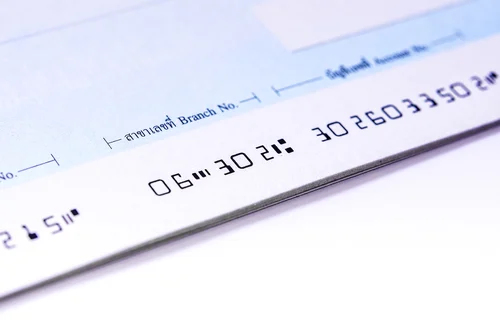
If you want to know how to read a cheque in the UK, then first find the line of numbers along the bottom of the cheque. These include the sort code, account number, and cheque number. There’s also the fractional bank number at the top.
The sort code, account number, and cheque number are part of the MICR line on a UK cheque. MICR stands for Magnetic Ink Character Recognition.
Pay.UK is the recognised operator and standards body for the UK’s interbank payment systems. According to them, MICR technology reduces data entry errors because it allows high-speed sorting machines to read and process cheques instantly.
Sort code
The sort code is the first set of numbers at the bottom of a cheque, on the MICR line. This six-digit number is listed as three hyphenated groups of two digits, for example: 40-56-43. It identifies the branch of your bank and is essential for routing payments through Faster Payments, BACS and CHAPS to the correct institution. It doesn’t identify your account.
Account number
The account number is the second set of numbers printed at the bottom of your cheque on the MICR line on a UK cheque. It has a standard 8-digit format, which is mandatory across all UK banks in 2026. It’s unique to your bank account and is used to identify the account from which funds should be withdrawn when the cheque is processed.
If you suspect fraudulent activity in your account, contact Action Fraud UK, the UK’s national fraud and cybercrime reporting centre.

Cheque number
Each cheque in your chequebook has a unique 6-digit number to help you and your bank track payments. This number appears twice, at the top and bottom of the cheque.
When you open a new account, your cheques usually start with a number like 0001, and each subsequent cheque increases sequentially.
The cheque number is useful if you need to trace or cancel a specific cheque. To stop a payment, follow these steps:
- Find the cheque number.
- Contact your bank.
- Provide the cheque number, amount, date and payee.
- Follow any instructions from your bank.
Fractional bank number
The fractional bank number, found near the top of the cheque, appears as two numbers separated by a forward slash (e.g., 12-34/567). This number is an older method of identifying the issuing bank. While it is no longer used in most payment processes, fractional bank numbers are still printed as a legacy feature and can be used as a back-up if the other numbers are damaged or illegible.

How to find your cheque number without a chequebook
If you haven’t got your chequebook to hand and so you can’t see the cheque number on the chequebook, but you need to know a specific cheque number, there are several options:
- Mobile banking app – search transaction history
- Online banking website – look through digital statements
- Paper or PDF printed statements – previously debited cheques will list serial numbers
- Call the bank’s customer service – speak with an advisor to try and identify the relevant cheque number
Cheques in the UK in 2026: What you need to know
Cheques are becoming less common, but Pay.UK data shows that the number of cheques processed in Q4 of 2025 was 19.6 million. Security can be a concern if you pay by cheque. The latest UK Finance fraud report explains that cheque-related scams are real risks.
To help combat cheque fraud, banks use the Image Clearing System (ICS). Implemented in 2019, it allows banks to exchange digital images of cheques, rather than transporting physical cheques around the country.

What happens when you switch bank accounts?
You can switch your bank account using the Current Account Switch Service (CASS). If you switch to a new bank account, you’ll receive new cheques with updated sort code and account numbers. Shred or void any unused cheques from your old account to prevent potential fraud.
Frequently asked questions about cheque numbers in the UK
What and where is a cheque number?
A cheque number is a 6-digit number written on both the top and bottom of each cheque which serves to identify the cheque. Cheques are numbered in sequence.
Is a cheque number different from a sort code and account number?
Yes. A sort code is three double-digit numbers linked by hyphens, and it identifies the bank branch where your account is registered. Your account number is an 8-digit number that identifies your specific account. The cheque number is unique to each separate cheque, and it identifies the cheque.
How do I stop a cheque?
To stop a cheque, contact your bank either on their app, website, or by phone, and give them the cheque number, amount written on the cheque, the date, and payee name. You can find the cheque number on the stub in your chequebook.
Can I use cheques with low numbers?
Some businesses may be cautious about accepting cheques with very low numbers, as these can indicate a newly opened account. This concern is more common for larger transactions, as low cheque numbers may raise fraud concerns.
How long does a cheque take to clear?
A cheque in the UK will take one working day to clear under the Pay.UK Image Clearing System (ICS). Your cheque may be delayed if you miss the bank’s daily cut-off time, if you pay the cheque into the Post Office, or if the cheque is in a foreign currency.
How can I verify my cheque details without a chequebook?
If you don’t have your chequebook handy, you can find your sort code and account number by logging into your bank’s online or mobile banking service. Alternatively, check a recent bank statement or contact your bank directly.
What do I do if I’ve lost my cheque book?
To prevent fraudulent use of your lost chequebook, call your bank and report its loss. The bank can cancel the chequebook and issue you with a new one containing new cheque numbers. Be sure to give the bank your correct mailing address.

Facts about cheques
Understanding the numbers on your cheques can make it easier to manage payments or stop cheques. Knowing what the numbers on your cheque mean can help you bank with confidence and protect yourself from fraud.
Key takeaways:
- A cheque number is a one-off 6-digit identifier on every cheque in your chequebook.
- The cheque number is located in both the top-right corner and in the MICR line at the bottom of the cheque.
- Your cheque number is different from your sort code and account number.
- If you need to stop or trace a cheque, contact your bank and provide the cheque number along with details such as the amount, date, and payee.
- If you’re sending money overseas rather than making a payment within the UK, Remitly offers a fast and secure way to make international transfers. You can also learn more about cheque expiry, UK payment methods, and protecting yourself from payment fraud in our related guides.