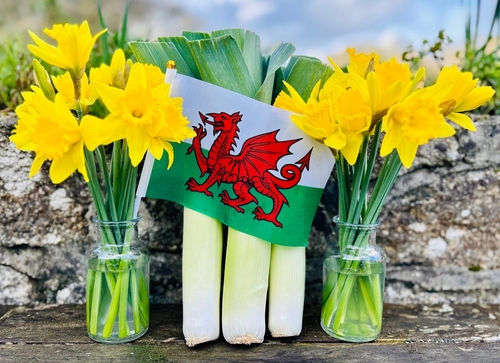

For people in Wales and Welsh communities around the world, 1 March is a significant date. It marks St David’s Day, or Dydd Gŵyl Dewi Sant in Welsh. It is a time to celebrate Welsh culture, history, and identity.
Whether you are living in Wales, have Welsh heritage, or simply want to learn more about this vibrant celebration, this guide covers the essentials. We will look at who St David was, how the day is marked in 2026, and the symbols you might see worn with pride.
Who was Saint David?
Saint David is the patron saint of Wales. He lived during the 6th century and was a Celtic monk, abbot, and bishop. Unlike many other patron saints, David was actually born in the country he represents. Tradition states he was born on the cliffs of Pembrokeshire during a fierce storm.
He spent his life spreading Christianity across Wales and founded many religious centres, including the famous monastery at St Davids (Tyddewi). He was known for his simple life and his ability to inspire others. His most famous teaching is still quoted in Wales today: “Do the little things in life” (Gwnewch y pethau bychain).
Saint David died on 1 March, 589 AD. This date has been commemorated as St David’s Day for centuries.
How St David’s Day is celebrated in Wales
On Sunday, 1 March 2026, towns and cities across Wales will come alive with red, green, and white. While it is not a bank holiday, the celebrations are widespread and enthusiastic.
Parades and concerts
The National St David’s Day Parade takes place in the centre of Cardiff. It is a colourful procession featuring flags, dragons, and traditional performances. Other towns, such as Wrexham, Swansea, and Aberystwyth, often host their own parades.
Many communities also hold an Eisteddfod. This is a festival of literature, music, and performance. Schools often hold their own mini-Eisteddfodau, where children recite poems, sing traditional songs, and perform folk dances.
Traditional dress
It is common for school children to dress up on this day. Boys often wear rugby shirts or distinctive flat caps. Girls frequently wear traditional Welsh costume, which includes a red shawl and a tall black hat.
Traditional food
Food plays a central role in the festivities. On 1 March, many families enjoy traditional Welsh dishes:
- Cawl: A hearty soup or stew made with lamb, leeks, and root vegetables.
- Welsh Cakes: Small, sweet round cakes cooked on a griddle, containing sultanas and spices.
- Bara Brith: A rich fruit loaf made with tea and dried fruits.
The symbols of St David’s Day
You will notice two main symbols worn on lapels across Wales on 1 March: the daffodil and the leek.
The Leek
The leek is the oldest emblem of Wales. Legend says that St David advised Welsh soldiers to wear leeks in their caps during a battle against the Saxons so they could distinguish themselves from the enemy. Today, it remains a proud symbol of Welsh identity. You might see soldiers in Welsh regiments eating a raw leek on St David’s Day as part of a traditional ceremony.
The Daffodil
The daffodil is the national flower of Wales. It typically blooms in early spring, coinciding perfectly with St David’s Day. It is often preferred over the leek as a buttonhole accessory because it is vibrant, cheerful, and smells much sweeter. Interestingly, the Welsh word for leek (cenhinen) and daffodil (cenhinen Bedr) are very similar.
The Red Dragon
The Red Dragon (Y Ddraig Goch) appears on the national flag of Wales. While not exclusive to St David’s Day, you will see the flag flying from public buildings, private homes, and even cars on 1 March.
Frequently Asked Questions
Is St David’s Day a bank holiday?
No, St David’s Day is not currently a bank holiday in Wales or the rest of the UK. Businesses and schools remain open, although schools often have special schedules for celebrations. There have been many petitions and political campaigns to make it a public holiday in Wales, but the law has not changed yet.
How do I say “Happy St David’s Day” in Welsh?
The phrase is “Dydd Gŵyl Dewi Hapus”.
- Dydd (Day)
- Gŵyl (Festival/Feast)
- Dewi (David)
- Hapus (Happy)
Phonetically, it sounds a bit like “Deethe Gweel De-wee Hap-is”.
Why is 1 March the chosen date?
This date marks the death of Saint David in 589 AD. It has been a day of commemoration since his canonisation by Pope Callixtus II in the 12th century.
Celebrating wherever you are
Whether you are in Cardiff, London, or on the other side of the world, St David’s Day is a moment to connect with Welsh heritage. It is a day defined by community, history, and doing the “little things” that make a difference.
For those living away from home, 1 March 2026 is a great opportunity to call family members, cook a pot of Cawl, or simply wear a daffodil with pride.