
The changing of seasons often feels like a gradual shift in temperature, but the official start of spring happens at a precise astronomical moment. In 2026, the Spring Equinox marks the end of winter and the beginning of longer, brighter days.
If you are looking ahead to mark your calendar or simply want to understand the science behind the season, this guide covers the essentials of the 2026 Spring Equinox. We will explain exactly when it happens, why day and night become equal, and what this day signifies around the world.
When Is the Spring Equinox in 2026?
The Spring Equinox, also known as the Vernal Equinox, will occur on Friday, March 20, 2026.
This specific date serves as the astronomical start of spring in the Northern Hemisphere. While the meteorological start of spring is fixed to March 1st for record-keeping purposes, the astronomical date relies on the Earth’s position in relation to the sun.
Is It a Public Holiday?
In most countries, including Canada, the United States, and the United Kingdom, the Spring Equinox is not a public holiday. Businesses, schools, and government offices remain open as usual. However, it is a significant date for many cultures and religions, often coinciding with festivals like Nowruz (Persian New Year) or impacting the dates of movable holidays like Easter.
What Happens During the Equinox?
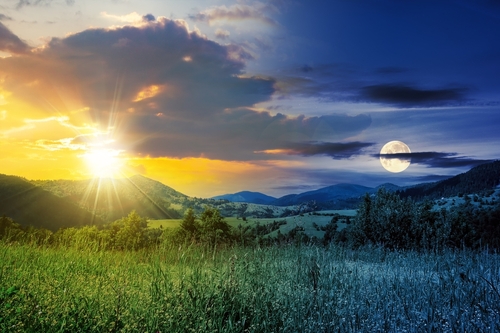
The word “equinox” comes from the Latin words aequus (equal) and nox (night). It describes the phenomenon where day and night are approximately equal in length all over the world.
The Science Behind the Balance
The Earth orbits the sun on a tilted axis. For most of the year, this tilt causes either the Northern or Southern Hemisphere to receive more direct sunlight, creating our seasons.
During an equinox, the Earth’s axis is not tilted toward or away from the sun. instead, it is perpendicular to the sun’s rays. This results in nearly 12 hours of daylight and 12 hours of darkness everywhere on Earth.
After the Spring Equinox in March, the Northern Hemisphere begins to tilt toward the sun. This leads to:
- Earlier sunrises
- Later sunsets
- Warming temperatures
- The blooming of plants and flowers
Conversely, for those in the Southern Hemisphere, this date marks the Autumnal Equinox, signalling the beginning of fall and shorter days.
Cultural and Environmental Significance
While modern life often revolves around clocks and calendars, the equinox reminds us of our connection to the natural world.
Seasonal Changes
Environmentally, this date acts as a turning point. It signals to animals and plants that winter is retreating. You might notice birds migrating back north or buds appearing on trees. It is a time of renewal and growth.
Educational Opportunities
For students and educators, the equinox provides a tangible way to learn about astronomy and geography. It is a perfect time to discuss:
- The Earth’s orbit and axial tilt.
- The difference between astronomical and meteorological seasons.
- How sunlight affects climate and agriculture.
Frequently Asked Questions
Does the Spring Equinox always fall on March 20?
Not always. While March 20 is the most common date, the equinox can occur on March 19 or March 21. This variation happens because our calendar year (365 days) does not perfectly match the time it takes Earth to orbit the sun (about 365.25 days). Leap years help correct this drift.
Can you balance an egg on its end during the equinox?
This is a popular myth. You can actually balance an egg on its end any day of the year if you have steady hands and a little patience. The gravitational pull of the sun on the equinox does not make it any easier.
Why are day and night not exactly 12 hours?
Although “equinox” means equal night, daylight is actually slightly longer than 12 hours on this date. This is due to atmospheric refraction, which bends sunlight so we see the sun before it physically crosses the horizon, and because we measure sunrise from the moment the top edge of the sun appears, not the center.
Welcoming the New Season
The Spring Equinox in 2026 is more than just a date on the calendar; it is a moment of balance and a promise of warmer days ahead. Whether you use March 20 to start your garden, teach a science lesson, or simply enjoy the extra sunlight, it marks a refreshing shift in the year.
As we approach this date, take a moment to notice the changing world around you. Winter is behind us, and the season of growth has officially begun.