

Twice a year, millions of Canadians lose sleep—sometimes literally—over a clock change that many consider outdated. The spring-forward in March disrupts sleep schedules, and the fall-back in November cuts short the already-short winter daylight. For many British Columbians, the question isn’t whether to end the clock change, but when.
British Columbia has already taken a legal step toward ending it. The province passed legislation in 2019 to adopt permanent daylight saving time, which would mean staying on Pacific Daylight Time (UTC-7) year-round instead of switching back to standard time each fall. But as of 2025, nothing has changed yet. The clocks still move twice a year, and the legislation remains on hold.
So what’s the holdup? And what would permanent Pacific Time actually mean for daily life in B.C.? This explainer breaks it all down—the legislation, the timeline, the health debate, and what it would take for the change to finally happen.
Quick Answer: Is British Columbia permanently on daylight saving time?
No. B.C. passed the Time Amendment Act in 2019 to move to permanent daylight saving time. However, the change has not taken effect. Implementation is conditional on coordinated action with U.S. West Coast states—and that coordination has not occurred.
What Does “Permanent Pacific Time” Actually Mean?
The phrase “Pacific Time” is used loosely in everyday conversation. Technically, it refers to two distinct time standards depending on the time of year.
The Difference Between PST and PDT
- PST (Pacific Standard Time) = UTC-8. This is winter time, observed from the first Sunday in November to the second Sunday in March.
- PDT (Pacific Daylight Time) = UTC-7. This is summer time, observed from March through October.
Permanent DST means B.C. would stay on UTC-7 all year—no “fall back” in November, no darker evenings starting in late autumn.
Why the Terminology Causes Confusion
When people say “Pacific Time,” they usually mean the general time zone—not a specific standard. But legal and technical time standards are precise. The B.C. legislation specifically targets permanent daylight saving time, not permanent standard time. That distinction matters, particularly for health researchers, as explained later in this post.
Why British Columbia Decided to Make the Change
The push for permanent time didn’t happen overnight. It grew from a combination of public frustration, economic logic, and quality-of-life arguments that resonated across the province.
Public Support in B.C.
In 2019, the B.C. government conducted a public consultation on the issue. The results were clear: the vast majority of respondents wanted to stop changing the clocks. While the province hasn’t released the full consultation figures publicly, officials cited strong and consistent public support as a driving factor behind the legislation. Most people simply didn’t want to deal with the disruption anymore.
Economic Alignment
British Columbia’s economy is tightly linked to the U.S. West Coast. Washington State, Oregon, and California are major trading partners. The Vancouver-Seattle technology corridor is one of the most active cross-border business regions in North America.
When B.C. is on a different time than its southern neighbours—even by one hour—it creates friction. Financial market hours shift. Coordinating meetings across the border becomes awkward. Cross-border commuters have to recalculate schedules twice a year. A permanent, shared time standard would smooth out these inefficiencies and keep B.C. aligned with one of its most important economic zones.
Quality of Life Arguments
The most commonly cited reason for the change is straightforward: people want more evening daylight. Longer evenings support outdoor recreation, retail activity, and general wellbeing. They also remove the twice-yearly adjustment period—the foggy Monday after the clocks spring forward, the week of waking up too early after they fall back.

The 2019 Legislation Explained
The Time Amendment Act (2019)
In November 2019, the B.C. Legislative Assembly passed the Time Amendment Act. The legislation amended the Interpretation Act to allow B.C. to adopt permanent Pacific Daylight Time—effectively eliminating the seasonal clock change.
Crucially, the act included a condition: the change would only take effect once the U.S. West Coast states of Washington, Oregon, and California also adopted permanent DST. B.C. would not move alone.
Why B.C. Chose Conditional Implementation
This condition wasn’t a sign of hesitation—it was a practical governance decision. If B.C. moved ahead independently, it would be one hour ahead of Washington State for approximately five months each winter. That misalignment would create real problems: trade complications, transportation scheduling headaches, and confusion for the thousands of people who cross the border regularly.
British Columbia has the legal authority to change its clocks. But economic integration makes coordination essential. The conditional clause ensures the province doesn’t gain permanent DST at the cost of disrupting its most important cross-border relationships.

Why the Change Hasn’t Happened Yet
Dependence on U.S. Federal Law
Here’s where it gets complicated. In the United States, states cannot independently adopt permanent daylight saving time under the federal Uniform Time Act. They can opt out of DST entirely—which some states like Arizona have done—but to stay on DST permanently, they need congressional approval.
The U.S. Senate unanimously passed the Sunshine Protection Act in March 2022, which would have made DST permanent across the country. However, the bill stalled in the House of Representatives and was never signed into law. It was reintroduced in subsequent sessions but has not passed as of 2025. Until U.S. federal law changes, Washington, Oregon, and California cannot legally adopt permanent DST—and B.C.’s legislation remains dormant.
What Happens If B.C. Moves Alone?
The concern isn’t hypothetical. A one-hour winter gap between B.C. and Washington State would affect:
- Trade logistics: Shipment timing, delivery windows, and supply chain schedules would need recalibrating.
- Transportation: Ferry, rail, and trucking schedules across the border would become misaligned.
- Business communication: The tech corridor between Vancouver and Seattle would face scheduling complications every winter.
Officials in B.C. have consistently indicated that going it alone is not the preferred path.
How Would Permanent DST Affect Daily Life in B.C.?
Winter Mornings
This is the clearest trade-off. Under permanent DST, winter sunrises in Vancouver would arrive noticeably later. In December, sunrise would come closer to 9:00 a.m. instead of around 8:00 a.m. under standard time.
For school commutes and early-morning workers, this means more dark mornings throughout December and January. In northern B.C., where winter days are already short, the impact would be more pronounced.
Evenings
On the flip side, evenings would stay brighter longer. After-work activities—running, cycling, shopping, family time outdoors—would benefit from an extra hour of daylight in the fall and early winter months. Retailers and the hospitality sector generally see this as a positive.
Rural vs. Urban Considerations
Urban residents tend to have more flexibility in their schedules, making the adjustment to later sunrises easier to manage. Agricultural communities and rural areas in northern B.C. are a different story. Farming schedules often align with natural light, and darker mornings can affect everything from livestock management to harvest timing. Any provincial time change would affect communities very differently depending on their location and way of life.

What Do Sleep Experts Say?
Any discussion of permanent time is incomplete without addressing the health angle—and this is where the scientific community offers a note of caution.
Many sleep researchers and circadian rhythm scientists actually favour permanent standard time, not permanent daylight saving time. The Canadian Sleep Society and organizations like the American Academy of Sleep Medicine have argued that standard time more closely aligns with natural solar time—the position of the sun relative to the clock—which has direct effects on the body’s internal clock.
Permanent DST, by contrast, pushes artificial light later into the evening, which can suppress melatonin production and delay sleep onset. Over time, chronic sleep disruption has been associated with increased risks of physical and mental health challenges.
This doesn’t mean permanent DST is harmful outright—many experts agree that any permanent time is better than the biannual switching. But the medical community’s preference for standard time adds a layer of complexity to B.C.’s current plan.
How Does B.C.’s Plan Compare to Other Provinces?
Yukon’s Permanent Time Change
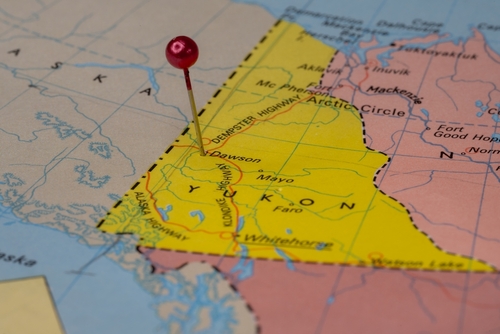
Yukon is the most relevant Canadian comparison. In November 2020, Yukon stopped changing its clocks entirely—and it has stayed that way since. The territory now observes Mountain Standard Time (UTC-7) year-round, which aligns with what would be permanent DST for B.C.
The change in Yukon was implemented unilaterally, without waiting for U.S. coordination. This was feasible partly because Yukon’s economy and cross-border activity differ significantly from B.C.’s.
Alberta and Ontario
Both Alberta and Ontario have introduced legislative efforts to end the clock change, and both have included conditional language similar to B.C.’s—waiting for neighbouring provinces and U.S. states to move first. Neither has implemented a change as of 2025. The pattern across Canada is consistent: the political will exists, but coordinated action has been slow.
Frequently Asked Questions
Is B.C. on permanent daylight saving time now?
No. The legislation has passed, but the change has not taken effect.
When could the change take effect?
Only once U.S. West Coast states adopt permanent DST—which requires changes to U.S. federal law.
Would B.C. ever move independently?
Provincial officials have indicated that coordinated action is strongly preferred, given the economic ties with Washington, Oregon, and California.
What time zone would B.C. be on permanently?
Pacific Daylight Time (PDT), UTC-7.
Has any Canadian province already stopped changing clocks?
Yes. Yukon adopted a permanent time in 2020 and now observes Mountain Standard Time year-round.
Pros and Cons of Permanent Daylight Saving Time
Potential benefits:
- No twice-yearly clock disruption
- Longer evening daylight in fall and early winter
- Better economic alignment with U.S. West Coast states
- Reduced scheduling friction for cross-border businesses
Potential drawbacks:
- Darker winter mornings, especially in northern B.C.
- Sleep and circadian health concerns raised by medical researchers
- Uneven impact across the province’s diverse geography
What Happens Next for B.C.?
The path forward depends largely on Washington, D.C., not Victoria. If the U.S. Congress passes a version of the Sunshine Protection Act and it becomes law, U.S. West Coast states could move to adopt permanent DST—and B.C.’s conditional legislation would be poised to activate.
In the meantime, B.C. remains ready. The legislation is in place. Public support is strong. The provincial government has done its part. What’s missing is the trigger.
Key takeaways:
- B.C. passed legislation in 2019 to adopt permanent daylight saving time
- The change has not taken effect
- Implementation depends on U.S. West Coast states making the same move
- The issue involves economics, public opinion, sleep science, and practical governance
- Yukon has already adopted a permanent time model, without waiting for cross-border coordination