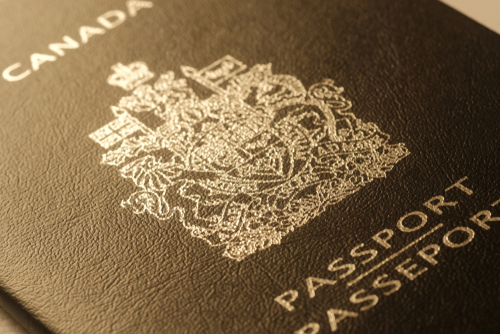

At Remitly, we know our customers are world travelers who love exploring other cultures through international travel. If you’re looking to travel internationally, you’ll need a valid passport.
In Canada, the passport application process can seem complicated and can sometimes require a guarantor. In this post, we’ll explain what a guarantor is and what responsibilities they have in the passport application process. Once you understand the requirements, you’ll feel more comfortable and equipped to apply for a Canadian passport.
Read on to learn about who can be a guarantor for a passport in Canada, and what to do if you can’t find one.
What’s a passport guarantor?
If you’re applying for a Canadian passport for the first time—or you’ve been unable to renew an existing passport and you have to reapply—you’ll need a guarantor. The guarantor is a trusted individual who confirms the passport applicant’s identity. They do this by signing off on the documents and photos required for a Canadian passport application.
A guarantor is not needed for passport renewals apart from in certain very specific circumstances like changing your name, date of birth, place of birth, or gender identity. In those cases, you’re effectively going to be applying for a new passport anyway.
Increased security
The Canadian government relies on guarantors to make the passport application process more secure. This helps prevent fraud and identity theft by ensuring that the person who’s submitting the passport application is who they say they are.
Financial responsibility to the applicant
It’s important to note that the only responsibility a guarantor has to an applicant is to confirm their identity and sign off on their application form and passport pics. Guarantors are not allowed to ask for money or receive payment for their involvement in the application process. Likewise, guarantors are not financially responsible for the applicant in any way.
Who can be a guarantor for a passport in Canada?
For a regular, blue Canadian passport, the guarantor can be any Canadian citizen over the age of eighteen as long as they have a valid passport and meet the following requirements:
Personal connection
The guarantor must know the applicant for at least two years. In the case of a child passport application, the guarantor must know the parent completing the application on behalf of the child for at least two years and know the child personally.
Guarantors must be available for contact related to the application if necessary.
The person acting as a guarantor does not need to have a close or intimate relationship with the applicant. They just have to be able to confirm your name and identity. You might consider asking neighbours or people in the community like mail carriers, grocery store clerks, teachers, bank tellers, etc., to serve as your guarantor. Alternatively, you can ask a family member to be your guarantor as long as they meet the requirements.
Professional and citizenship status
In the past, guarantors were required to have certain professional credentials in addition to being a Canadian citizen. For example, medical doctors or lawyers could serve as guarantors. These requirements have changed and there are currently no professional requirements for guarantors related to passport applications within Canada.
If you’re submitting a passport application from outside of Canada, the Canadian government understands that it might be more difficult to find a Canadian citizen to serve as your guarantor. In this case, you can use an occupation-based guarantor who isn’t a Canadian citizen, providing they do meet all the other requirements we mentioned before.
The occupations accepted in this specific circumstance are:
- Judge
- Dentist
- Pharmacist
- Veterinarian
- Police Officer
- Notary Public
- Lawyer/Notary
- Medical Doctor
- Dean/Head of University or College
- Signing officer of a bank or financial institution
Special cases
If your guarantor is young, make sure that they were at least sixteen years old at the time of their own passport application.
If you’re a two-parent household and one parent is applying for a child’s passport, the other parent can serve as the guarantor on the application, as long as they meet all other requirements.
What are the guarantor’s responsibilities?
The responsibilities of the guarantor are fairly simple. Once you have all of your passport application materials gathered, the guarantor must:
- Complete the “Signature of the guarantor,” “Signed at,” “Date,” and “I have known the applicant for (number of years)” sections of the passport application form.
- Write on the back of one of your passport photos: “I certify this to be a true likeness of (applicant’s full name).” They must also sign the back of this photo. Write and sign in permanent ink.
- For adult applications, sign and date any photocopies of supporting identification documents that are being submitted with the application.
Provide passport information
Guarantors must have their own valid 5- or 10-year Canadian passport. They must be willing to provide their passport details for completion of the applicant’s form.
Availability for contact
Passport Canada may reach out to guarantors regarding any applications they’ve sponsored. As such, your guarantor should be someone who’s responsive and open to contact if necessary.
What if you don’t have a guarantor?
If you’ve just arrived in Canada and don’t have a wide social network yet, you may find it difficult to find someone who meets the requirement of knowing you for at least two years. If this is the case for you, don’t worry. There’s an alternative application form that you can fill out if you can’t find a suitable guarantor.
Alternative application method
Applicants without a guarantor can fill out the “Statutory Declaration in Lieu of Guarantor” (Form PPTC 132). This form allows an applicant to officially swear that their identity is genuine. This document must be signed in front of an authorized official, like a notary public or lawyer. These officials will often charge a fee for their services, which potentially makes this method more expensive than using a guarantor.
Although you can see examples of it to see what it looks like, the “Statutory Declaration in Lieu of Guarantor” isn’t available to fill in and submit online. That’s because the primary and preferred method for application is to use a guarantor. However, it is a standard and accepted part of the passport application process where it’s needed: the Canadian government understands that not absolutely everybody will be able to find a guarantor.
If you need to use this method, visit a passport service location or the nearest Canadian consulate or embassy. You can also contact Passport Canada to get a copy.
How to complete Form PPTC 132
Once you obtain the “Statutory Declaration in Lieu of Guarantor” form, follow the instructions below to complete the document properly:
- Fill out the form with all of the requested information, but do not sign it.
- Find an authorized official.
- Present your identification and sign the form in their presence.
- The official will then sign and certify the form.
- Submit the completed form with your passport application.
Travel-ready next steps
Now, you know that a guarantor is a person who confirms your identity during the Canadian passport application process. To recap briefly, in order for someone to serve as your guarantor they must meet the following criteria:
- Be a Canadian citizen.
- Be at least 18 years of age.
- Have known you for at least two years.
- Be available for contact from Passport Canada.
- Hold a valid 5- or 10-year Canadian passport.
If you don’t know anyone who fits the bill as a guarantor, you can always apply through the alternative route.
The guarantor process is designed to help make Canadian passport applications more secure, while also being accessible for all applicants, including immigrants and new residents. Even if you’ve just moved to Canada, you might know someone who could serve as your guarantor for your passport application.
With all of this information you can move forward with your Canadian passport application with confidence. If you’re looking for even more insight into the process, visit the official Passport Canada website.
FAQs
Can a family member be my guarantor?
Yes, as long as they meet all of the eligibility requirements.
Can my guarantor live in a different province?
Yes, the guarantor can live anywhere in Canada or even abroad, as long as they’re a Canadian citizen and meet all other criteria.
Does my guarantor need to be a professional like a doctor or lawyer?
If you’re applying from within Canada, no. This requirement was changed and your guarantor can have any professional status as long as they’re a Canadian citizen and they meet all the requirements.
However, if you’re applying for a passport from outside of Canada and you can’t find a guarantor who’s a Canadian citizen, you can use an occupation-based guarantor. In lieu of being a Canadian citizen, this guarantor has to work in one of certain specified professional fields as well as fulfill the other criteria such as having known you for two years. Find the list of approved occupations here.
What happens if my guarantor’s passport has expired?
Your guarantor can have a passport that’s expired for less than a year on the day that you submit your own passport application. However, it’s a best practice to have a guarantor who holds a passport that’s valid for the entirety of your own application process.
Is there a fee to have a “Statutory Declaration in Lieu of Guarantor” signed?
Probably, yes. The official signing the document, like a notary or lawyer, will likely charge a fee for this service. This fee varies as it’s set by the officials themselves, not by the Canadian government. You can expect to pay somewhere between $30 and $50 CAD, maybe more in one of the larger cities.