
At Remitly, we know that our customers are global citizens. Many of you move around the world and acquire different immigration statuses, meaning you’ll have different requirements to complete in your new home country.
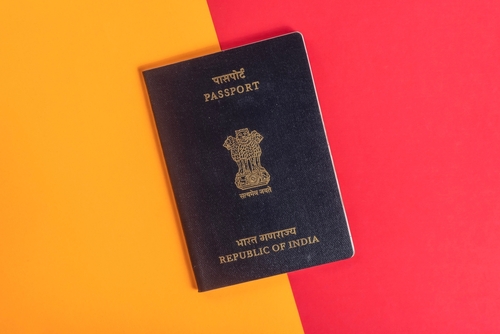
If you’re an Indian citizen who has recently achieved or is about to gain Canadian citizenship, you’ve reached a significant milestone in your immigration process: congratulations. A key step moving forward will be to surrender your Indian passport, a mandatory requirement set forth by the Indian government that must be completed after acquiring any foreign citizenship.
The process may seem daunting and complex, and we understand it could be emotional. As you get ready to surrender your Indian passport, this guide will provide clear, step-by-step instructions. We’ll explain why you need to surrender your Indian passport, the documents required, and the process to follow. Plus, we’ll answer some common questions at the bottom of the article.
Why you must surrender your indian passport
With Canada being such a safe and welcoming country, it’s understandable that it’s an attractive place for newcomers. We also understand that you might not want to let go of the citizenship you were born into. But Indian law does not allow dual citizenship with any foreign countries.
Any Indian citizen who voluntarily acquires citizenship in another country automatically loses their Indian citizenship. As a result, once a person acquires citizenship in Canada, they must formally renounce their Indian citizenship and surrender their passport.
Overseas Citizen of India Program
Although the Indian government does not recognize dual citizenship, they do provide the Overseas Citizen of India (OCI) Program. This program recognizes foreign nationals of Indian origin by providing long-term benefits in India without full citizenship. The OCI Program does not cover individuals who are or have been citizens of Pakistan or Bangladesh, or other countries the government may specify.
Avoid potential penalties
If you don’t surrender your Indian passport promptly upon gaining citizenship in another country, you could have bureaucratic difficulties. For example, you might have trouble getting an Indian visa or your OCI card. There are also monetary penalties for holding onto your Indian passport, which can increase if you try to travel with it, or try to renew it after gaining foreign citizenship.
While they’re not imposed in every single case, and many Indian missions cap them at Rs 50,000 INR total (about $772 CAD at time of writing) and/or provide a grace period before fines apply, these potential penalties can be quite high:
| Scenario | Fee |
| Travelling using your Indian passport up to three years after gaining foreign citizenship. | Rs. 10,000 INR, about $155 CAD at time of writing, for each incident of travel |
| Travelling using your Indian passport after three years of gaining foreign citizenship. | Rs. 10,000 INR for keeping your passport + Rs. 10,000 INR for each incident of travel |
| Attempted renewal of Indian passport after gaining foreign citizenship. | Rs. 25,000 INR, about $385 CAD at time of writing |
Once issued, these penalty fees cannot be waived or reduced. To learn more about the penalties for not surrendering your Indian passport, check the official BLS website for your jurisdiction. However, you can avoid them completely by following the procedure for turning in your Indian passport. Let’s go through that.
Required documents
Most immigrants are probably aware of the paperwork required to apply for visas and citizenship in a foreign country. But the paperwork and processes associated with surrendering your citizenship might come as a surprise. Quite a few documents are needed, in the case of surrendering an Indian passport:
Surrender Certificate application form
The primary application form must be completed online. Access the Passport Seva website and create an account. From there, fill out the Surrender Certificate form accurately and print a completed copy.
Original Indian passport and copy
Prepare your last-held Indian passport for surrender. Also prepare a copy of the first page, where your photo and personal information appear; the last page, showing the details of your parents; and any other pages that have been “endorsed” with additional information.
Proof of Canadian citizenship
Enclose copies of your Canadian Citizenship Certificate and a self-attested copy of your Canadian passport. If you’re surrendering your Indian passport in-person, you should also take your Canadian passport in its original form.
Proof of address in Canada
Provide a copy of your driver’s licence, photo ID issued by the Provincial Government, or a utilities bill that shows your current address in Canada. Note that phone bills and bank statements do not serve as proof of address in this case. Make sure that your proof of address must exactly match the address you give on the application form.
Fee-payment receipt
At time of writing, the fee for surrendering your Indian passport if you gained foreign citizenship on or after June 1, 2010 is $117.70 CAD.
Photographs
Include photographs that meet Passport Seva specifications. This is a headshot looking straight at the camera, your mouth closed, no smile, a plain white background, and no shadows.
Step-by-step guide to surrendering your passport
If you’re ready to surrender your Indian passport, follow the steps below to make the process as straightforward and easy as possible.
Fill out the online application
Create an account on the Passport Seva website and fill out the Surrender Certificate form.
Pay the required fees
Pay the required fees online at the BLS website. A receipt of payment will be generated. Save this for your passport surrender process and your records. Depending on how you want to submit your application, these fees can also be paid in person (debit card or the exact cash total) or by mail (Demand Draft/Money Order). Personal checks are never accepted.
Gather and organize your documents
Print the completed application form and fee receipt. Then, gather all of the documents outlined in the previous section.
Submit your application
You can submit your application in one of two ways:
- In person: If you’d like to process your passport surrender in-person, you can make an appointment online on the BLS website.
- By mail/post. Alternatively, you can submit all of your documents by post. It’s a good idea to use a trackable shipping service. If you’re submitting by mail, remember that you should never mail cash. Instead, pay your fees online or enclose a Demand Draft/Money Order.
Track your application.
Once your application is submitted, BLS will provide a tracking number for your process. You can use this number to monitor the status of your application online.
Receive your surrender certificate
Once your application is processed, an official Surrender Certificate and the cancelled Indian passport will be returned to you. This is done via post or pickup, depending on the preference you stated at the time you made the application.
What happens after you surrender your passport?
The Surrender Certificate you receive at the end of the process is a crucial document. This certificate recognizes your Indian origins. It’s a required document when applying for your OCI card, which will provide benefits in India for foreign citizens of Indian origin. So keep it safe.
Welcome to Canada!
Surrendering your Indian passport is a necessary step after gaining Canadian citizenship, and if you follow the steps we’ve outlined in this article, the process should be straightforward and manageable.
You’ve come this far in your immigration process. Surrendering your Indian passport is one of the final steps. Congratulations on your new Canadian citizenship and best of luck as you continue with your final bureaucratic to-dos.
FAQs
How long does it take to get an Indian passport surrender certificate?
You should plan for the process to take between eight and 10 weeks after your submission. Refer to your local BLS website for the most current timelines for your jurisdiction.
Can I hold dual citizenship with India and Canada?
No. India does not recognize dual citizenship with any foreign countries. As soon as you voluntarily become a citizen of another country, you’re obliged to give up your Indian citizenship.
What countries recognize dual citizenship with Canada?
Although India is not one of them, many countries recognize dual citizenship with Canada, including the United States, the United Kingdom, many countries in the European Union and Latin America, plus Australia, New Zealand, Pakistan, the Philippines, Nigeria, and South Africa. For more information about dual citizenship with Canada, check out the Canadian government’s website.
Is the Canadian passport stronger than the Indian passport?
The Canadian passport is much stronger than the Indian passport, based on visa-free entry to foreign countries. On the Henley Index, the Canadian passport is ranked ninth, while the Indian passport is ranked 85th.
What if my Indian passport is lost?
If you’re trying to formally renounce your Indian citizenship, but you’ve lost your passport, you should contact your local consulate or BLS office. Typically, you’ll be asked to provide a copy of your passport. An example of this process for Toronto can be found at the bottom of this instruction page.
Can I travel to India on my Canadian passport without surrendering my Indian one?
No. This is against Indian law. If you do attempt to travel using an Indian passport that was not surrendered after acquiring foreign citizenship, you will probably receive a fine.