

If your dream is to immigrate to Switzerland, you’re not alone. This country is known for its stunning alpine landscapes, world-class infrastructure, and exceptional quality of life. At the same time, Switzerland has a well-earned reputation as one of the most expensive countries in the world.
At Remitly, we want to demystify immigration and explore the true cost of moving somewhere new. In this guide, we’re going to break down the real numbers behind visa fees, housing deposits, health insurance, and the proof of financial means you’ll need for your application. By the time we’re done, you’ll have a much better understanding of what a move to Switzerland will cost you.
1. Visa and permit fees: the paperwork phase
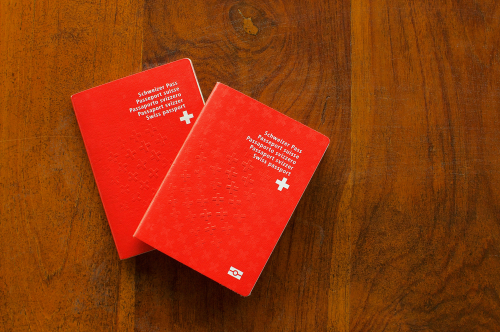
The first thing you need to know about the cost of moving to Switzerland is the visa and Swiss residency permit fees. After all, you can’t even go there until your visa is settled.
If you’re from a non-EU country like Canada, you’ll need a national long-stay visa, known as a type D. Canadians can stay in Switzerland without a visa for 90 days, but to stay longer than that, or to work, you need this visa.
The cost for anyone 12 years and older to get this visa is $149 CAD. For children between the ages of 6 and 11, it’s $75. Anyone younger than that is free.
It’s also free if you’re the spouse or a child of a Swiss or EU citizen, and free if you’re going to study.
Naturally, that doesn’t include the cost of the documents you’ll need to apply for and obtain your visa. You’ll need to have passport photographs taken, and you may need official copies of birth or marriage certificates, which can increase the cost.
Of course, if you’re one of millions of Canadians with European ancestry, you may be entitled to an EU passport, which would allow you to live and work in Switzerland without requiring a visa.
Residence permit on arrival
Under Swiss law, all foreign nationals staying for more than three months need a permit. These are issued by the cantonal authorities in the canton where you live.
There are a couple of different common permit types available to immigrating Canadians:
- Permit B: This is a five-year residence permit issued to people working in Switzerland.
- Permit L: This short stay permit is valid for up to one year.
- Permit C: This is known as a settlement permit. You can only get this permit after five or ten years’ residence in Switzerland.
The cost for these permits varies according to the canton in which you live. In Zürich, for example, there is a 40 CHF administration fee and a 142 CHF issuing fee for the residence permit. That’s around $315 CAD.
All in all, you can expect to pay around $475 to $500 CAD for a single adult to get your visa and residence permit.
2. The big move: logistics and travel

A far greater cost than your paperwork is the cost of getting yourself and your belongings to Swiss soil. This will be the first of your sunk costs: unavoidable upfront expenses you need to pay before your new life can begin.
Transportation
Obviously, this is going to vary a lot depending on where you fly from and where you’re going. It also depends on your timing. The summer holidays are always the most expensive time to fly, but because of Switzerland’s many ski resorts, winter can also be pricey. If you have a choice, you may be better off flying during spring or fall.
It also pays to book ahead. Booking your flight in advance lets you shop around and find the best deal.
It’s possible to find fares for $1,000 CAD or even cheaper. Surprisingly, it’s sometimes more cost-effective to book a return ticket, even if you don’t intend to take the flight home.
You may also be able to save some money if you’re willing to take a non-direct flight. Airfares in Europe are extremely competitive, so it might make more sense to fly to a major hub like London, Paris, or Frankfurt, then take a European flight from there.
Shipping versus selling
If you’re planning to live in Switzerland permanently, you may have lots of possessions you want to bring with you. However, international shipping can quickly get expensive. For large items like furniture, it’s often better to sell your existing furniture in Canada and use the money you make to buy new stuff in Switzerland.
If the item doesn’t have any sentimental value, consider selling it off before you immigrate and buying something new when you arrive in Switzerland.
For personal items, you may be able to bring them with you by buying additional suitcases on your flight. If not, there are shipping services that allow you to fill a shipping container, or only a portion of one. These often cost thousands of dollars, so make sure the things you’re bringing are worth it.
Customs duties
Another problem with shipping your belongings to Switzerland is the import charges.
Luckily, for most household items, you’ll be allowed to ship them to Switzerland duty-free, as long as the articles have been used by you personally for at least six months before the move. You’ll need to provide a detailed inventory of everything you’re shipping and fill out the Swiss customs declaration form 18.44.
This also applies to your vehicle. However, to import a vehicle to Switzerland, you’ll need to have a full inspection done and clear customs when the vehicle first crosses the border into Switzerland. You also need to apply for new plates and pass inspection to make sure your car complies with European requirements.
Ultimately, unless your car is very special to you, it’s usually not worth the hassle. Most people are better off selling their car in Canada and buying a new one in Switzerland.
3. Housing: your largest upfront expense

Just like in Canada, housing is likely to be your single biggest financial burden in Switzerland. The Swiss rental market is highly competitive and fast-moving, especially in major cities.
In Zurich, Geneva, Basel, Lausanne, and other popular cities, finding an apartment can feel like a full-time job. Viewings are often conducted in groups, and landlords tend to favour tenants who appear financially stable and well-prepared. This competitive environment leaves little room for negotiation.
You need to act fast if you find a place that works for you. You may also need significant liquid cash available upfront to make sure you get the apartment you want.
Deposit
Swiss landlords generally require a security deposit of up to three months’ rent, known as the ‘mietkaution’ or ‘dépôt de garantie.’ You’ll need to pay this before you sign the lease.
By law, it’s held in a blocked Swiss bank account in your name, so you won’t be able to access that money while you live in the rental property. However, if you return the property without damage at the end of your lease, you should get this money back.
First month’s rent
Along with the deposit, you’ll need to pay the first month’s rent in advance. If you’re already paying a ‘mietkaution’ of up to three months, that makes the day you sign the lease a very expensive day.
For example, let’s say you found a one-bedroom apartment in Zürich for 2,200 CHF ($3,815 CAD) per month. Your security deposit will be 6,600 CHF ($11,446 CAD), and your first month’s rent will be 2,200 CHF. So you’ll be handing over 8,800 CHF ($15,240 CAD) to get the keys to a new place.
That doesn’t include the cost of moving, either.
It’s easy to underestimate this upfront cost. Make sure you factor it into your budget so it doesn’t come as a shock.
4. Mandatory health insurance

Switzerland’s health system works quite differently from Canada’s, and it’s another unavoidable cost that you need to be aware of.
Every Swiss resident is legally required to take out basic health insurance (‘krankenkasse’ or ‘caisses maladie’). You have three months from the date of your arrival to purchase a policy, but the coverage is retroactive to your arrival date. That means that when you sign up, you’ll be billed for the previous weeks or months in a lump sum.
This insurance is private, but the prices the companies can charge are strictly regulated by the government. You can’t be rejected for basic coverage, regardless of your age or medical history.
Average cost
The average cost of health insurance is 393 CHF ($680 CAD) per month. Naturally, premiums vary according to your age, health, and where you live. You may end up paying as much as 500 or 600 CHF per month ($867 or $1,040 CAD), which is probably a lot more than you pay for your provincial health care plan in Canada.
Basic health insurance also requires an annual deductible, called a ‘franchise.’ This can be anywhere from 300 to 2,500 CHF ($520 to $4,300 CAD) for adults, but the higher the deductible you choose, the lower your monthly premiums will be.
To get a clear idea of what you may have to pay, you can check the government’s premium calculator here.
5. Official proof of financial means
If you’re moving to Switzerland to work, proving your income will be part of your visa application. But if you’re moving to retire or to study, you need to show that you have enough money to support yourself without relying on the Swiss welfare system.
The amount this requires varies a little from one canton to another, so there’s no fixed amount. However, it needs to be enough to support you at a decent standard of living in Switzerland. For a student, the amount may be around 1,500 to 2,500 CHF ($2,600 to $4,330 CAD) per month, which gives you some idea of the costs you can expect. For a retired person or someone not intending to work, they may want to see something closer to 3.000 CHF ($5,200 CAD) per month, especially in more expensive cities.
You need to demonstrate that you have this money sitting in a bank account that you can access. You may have to show that you have enough for a year, so you could be looking at over 30,000 CHF ($52,000 CAD).
6. Daily living: the first month’s budget
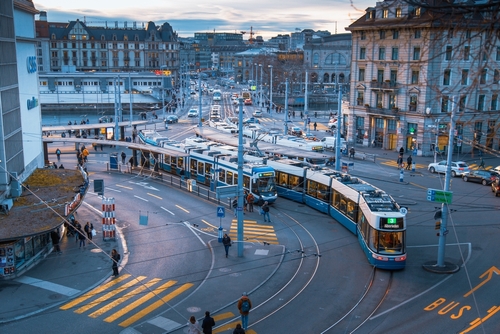
On top of all these expenses, there are the actual costs of living in Switzerland. Let’s look at some of the monthly costs you can expect:
Groceries and essentials
Food prices in Switzerland are famously high, even compared to other Western European nations. Spending 600 CHF ($1,040 CAD) per month on groceries for one person isn’t unusual. Eating out is even more expensive. A simple meal can easily cost CHF 30 or more.
Transport
Swiss public transport is great, and often cheaper than renting a car. Still, regular use can add up. A monthly public transit pass covering buses, trams, and city transport can cost around 80 to 120 CHF ($140 to $208 CAD), depending on the city.
Train travel is more expensive still. Many residents buy a demi-tarif card, which, from 2026, costs 150 CHF ($260 CAD) a month and gives you 50% off most train and bus fares.
Connectivity
Setting up Internet and mobile phone plans is another thing you’ll have to pay for right away. Typical Internet plans cost around 40 to 80 CHF per month ($70 to $140 CAD), while basic mobile phone plans with data and calls could be 20 to 70 CHF ($35 to $120 CAD) per month.
Monthly budget estimate
Put all that together, and you’re looking at a cost of 700 to 800 CHF a month
just for essentials. That’s close to $1,400 CAD. Remember, this doesn’t include housing and insurance.
Factor those in, and the monthly budget of around 3.000 to 3,500 CHF/$5,200 to $6,000 CAD starts to seem unavoidable. That’s before you’ve gone out and done anything fun.
The cost of living in Switzerland

Switzerland is not a cheap place to live. This is a country that deserves its reputation for high prices. However, it’s worth remembering that often, Swiss salaries reflect this. While you may be spending more, you’ll hopefully also be earning more, allowing you to maintain a good quality of life.
Knowing the numbers up front helps you to plan and know what you’re getting into. Compare your expected income to your expenses, and you’ll have a good idea of whether life in Switzerland is worth it for you.
FAQs
Is it cheaper to live in the countryside than in the cities?
Yes and no. Rent is typically lower in rural areas and smaller towns than it is in cities. However, you may lose the money you save on high commuting costs and longer travel times. The reduced selection of stores in more rural areas also means groceries and other essentials may cost more.
Do I need to pay taxes immediately upon arrival?
No. If you’re a foreign employee, you’ll usually be subject to source tax. That means your income taxes are automatically deducted from your salary by your employer. Self-employed individuals may need to register and file taxes separately, depending on their residence permit type and the canton they live in.
How much savings should I have before moving?
A good rule of thumb is to have three to six months of living expenses saved before you arrive. That could mean having 15,000 to 30,000 CHF in the bank ($26,000 to $52,000 CAD) to cover your upfront costs.
Can I send money to Switzerland easily?
Yes. Remitly makes it easy to send money to Switzerland, with transparent exchange rates and low fees. This is especially useful when covering high upfront costs like rent deposits before your Swiss bank account is set up.
Exchange rate valid as of 22 December 2025.