
Key Highlights
- Central Asian cuisine comes from the area’s nomadic past. People there use a lot of meat and dairy in the food.
- Dishes like Plov, which is a rice pilaf, are seen as a national dish in Uzbekistan. Plov is enjoyed all over central asia.
- The silk road helped bring new things to eat and new tastes. This changed asian cuisine in many ways and made it the way it is now.
- You can get big bowls of noodle dishes like Lagman and Beshbarmak in this part of asia. These dishes show the strong cultural roots of the region.
- Some well-known street food options are shashlik, which are grilled skewers, and samsa, which are baked meat pies.
- Central asian food will make anyone who loves meat happy, but there are also good vegetarian options you can try.
Introduction
Welcome to the rich and tasty world of Central Asian cuisine. This place, shaped by many years of nomad life, gives us asian cuisine full of filling foods made to help people going on long trips or facing tough weather. The food here shows the touch of Turko-Mongol roots, the silk road, and Russian ways. Get ready to find a cuisine where meat and dairy be the most important. Every meal lets you see the land and the people, from busy markets to quiet valleys.
Exploring Central Asian Cuisine: Nomadic Traditions and Hearty Dishes
Central Asian cuisine is different from other Asian cuisine in a few big ways. The main reason is its nomadic roots. The food here is not like the dishes in South Asia that use a lot of spices, or the food from Southeast Asia that is balanced and light. Instead, it uses a lot of meat and dairy. People made these meals to be filling and easy to cook because nomads lived off the animals they raised.
These nomadic food traditions lead to simple but tasty meals. The aim is to bring out the real taste of the main ingredients. As you travel more to the south of central asia, near Afghanistan and Tajikistan, you will notice more use of spices. In places like Kyrgyzstan, there is more of a Chinese feel because they enjoy a lot of noodles. Now, let’s look at some of the top dishes you can find in these central asian countries.
1. Plov – The Iconic Uzbek Pilaf and Its Variations
Plov is known as the most popular dish from Central Asia. It is a big part of Uzbek cuisine. This well-loved rice dish started in Uzbekistan, but now people across Asia enjoy it. Locals in each place have their own way to make plov. They often talk about which version is the best, like people do with pizza or chili.
The simple recipe has rice cooked with fried carrots, onions, and meat. People usually use lamb or beef. The spices, like caraway seeds, give it a special smell. People often cook it in a big pot called a kazan, sometimes over an open fire. This helps the spices and flavours come together well.
In Uzbekistan, plov is the national dish. It is at the heart of the country’s food and is part of the culture. This dish is served at all big gatherings and parties. If you want to know true Uzbek cuisine, or even the taste of Central Asia, you must try plov.
2. Beshbarmak – Kyrgyz and Kazakh Hearty Noodle Dish
Beshbarmak is a special meal in both Kazakhstan and Kyrgyzstan. This dish is part of the deep nomadic roots of these people. The name “beshbarmak” means “five fingers,” because people used to eat it with their hands. It is made for important guests and at big times in life.
The dish has chopped boiled meat, which could be horse meat, but now people use mutton or beef more often. The meat gets mixed with thin sheets of egg noodles. This makes the meal rich and filling.
Beshbarmak comes with a tasty onion broth served on the side. It might look simple, but it brings warmth and comfort. This is a good example of the old way of living of both the Kazakh and Kyrgyz people. It shows how their cuisine is shaped by history and the land.
3. Lagman – Hand-Pulled Noodle Soup Across the Steppe
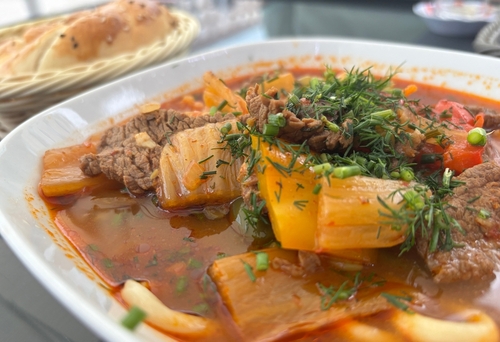
Lagman is a tasty and well-loved noodle meal you can find all over Central Asia. It first came from China. This dish is very flexible. You can have it as a soup or as a stir-fry. The soup style is very comforting, and it’s perfect on cold days. The most important part is the homemade noodles, which you make by hand. These noodles have their own feel and taste good.
The homemade noodles sit in a rich tomato broth. There are chunks of beef or lamb in it and lots of vegetables. You usually spot tomatoes, onions, and peppers in the soup. These all make lagman full of flavour, and also give it everything you need for a good meal.
People enjoy lagman everywhere in Central Asia. You can eat it in busy city cafés or at roadside tea houses, known as chaikhanas. A dash of hot pepper on top makes it even better if you like a little heat. Making the hand-pulled noodles for lagman really is a skill, and it is fun to watch.
Lagman is not just another dish in Asia; it’s a big part of food and culture, bringing people together over a warm bowl of noodles, broth, and lamb.
4. Shashlik – Grilled Meat Skewers, a Street Food Staple
When you walk the streets in any Central Asian city, the strong smell of shashlik will greet you. This street food is loved by many people and is a staple for locals. The idea is easy to understand: chunks of meat are cooked over hot coals until they are just right.
The meat is often lamb or mutton. It gets soaked in a mix to make it soft and full of taste. Then, the meat is put on long metal skewers, sometimes with pieces of fat that help keep it juicy. Now and then you see vegetables like onions or peppers, but most times, it is just all about the meat.
Shashlik is at its best when you eat it hot from the grill, when the taste is the greatest. For lots of people, this simple and good meat dish is the main Central Asian street food. It really shows the way people in the region love lamb, mutton, and all kinds of meat cooked on skewers.
5. Manty – Steamed Dumplings Stuffed with Savory Fillings
Manty are big, steamed dumplings that people all over Central Asia like to eat when they want some comfort food. This dish is a staple in central asian food, and you will see it at family meals and parties. They are a lot like dumplings from other parts of Asia, but they have their own special touch.
You usually find ground meat like lamb or beef inside, with chopped onions for moisture and flavour. Sometimes, people use pumpkin for a new taste. These dumplings are folded by hand and steamed on several layers in a steamer.
Manty are served with sour cream or a garlic yogurt sauce for dipping. If manty use mutton fat, it can harden fast, so it’s best to eat them hot, right out of the steamer.
6. Samsa – Flaky Meat Pies Baked in Tandoor Ovens
Samsa are tasty, flaky meat pies you can find everywhere as a street food in Central Asia. The name may make you think of the Indian samosa, but these are different. Here in Asia, samsa are baked and not fried. The way to make them also stands out.
The best part of samsa is how people put them together. The dough is shaped into a pocket or like a triangle or circle. People fill it with lamb, onions, and spices. After that, they press it on the side of a tandoor oven. This is a big clay oven. The pies bake until they turn golden and crispy.
It is common to fill samsa with meat, but you can also find some with pumpkin or cheese sometimes. If you walk in Kazakhstan markets like the Zelyony Bazaar, you may get different fillings. Eating a hot samsa fresh from the tandoor oven is a simple, delicious snack. These pastries are a great way to taste street food in the region.
7. Kuurdak – Rustic Fried Meat and Potato Specialty
Kuurdak is a simple and filling dish that shows what Central Asian cuisine is all about. It is a classic meal made of fried meat and potatoes which many people in Kyrgyzstan and Kazakhstan love. The word “kuurdak” is from the Kyrgyz language, and it means “fried.” That tells you a lot about how this dish is made.
People used to make it right after an animal was slaughtered, using the freshest meat and all parts so that nothing would get thrown out. These days, Kuurdak is often made with lamb or beef. You fry the meat with onions and then mix it with fried potatoes.
This is a real comfort food in the world of asian cuisine. It will show you how just a few simple things in the kitchen can come together to make a good meal. Kuurdak is a staple in many homes and a great way to learn about the tasty and smart ways people cook in kyrgyzstan and kazakhstan.
8. Lepyoshka & Tandyr Nan – Traditional Breads of Central Asia
No meal in Central Asia is finished without the bread called lepyoshka or nan (non). This kind of bread is an important food for the people, and it means a lot to them and their way of life. The bread is usually round and flat, and bakes in a tandoor oven. That oven gives it a taste and feel you do not find anywhere else.
The way bread looks can be a bit different, based on where you are in Asia. People often put a simple stamp on top of the round loaf to show where the bread came from. Some are soft and airy, but others—like the nan from Karakalpakstan, which is in the west part of Uzbekistan—are known for being quite hard and can last for a long time.
The bread is a big part of daily life and when people welcome others in their home. Here are some things you should know:
- Bread is always at the table for every meal.
- People bake the bread fresh each day in tandoor ovens.
- Every part of Central Asia has its own special look or stamp on the bread.
- It is seen as rude to set the bread with the bottom up or put it on the floor.
9. Boorsok – Airy Fried Dough Bites Served at Gatherings
Boorsok are small pieces of fried dough. People in Kyrgyzstan and nearby places make and eat them at all kinds of celebrations and get-togethers. These bite-sized snacks are shaped like diamonds or squares. They are easy to make, but people really love them once they start eating.
To make boorsok, you mix flour, water, salt, and yeast. Then, you cut the dough into little pieces and fry them in oil until they turn golden brown. As they fry, they puff up. The outside becomes crunchy while the inside stays soft and chewy.
At any big event, from weddings to holidays, you will always see big bowls of boorsok on the table. People in Kyrgyzstan enjoy them on their own as a snack or they dip them in honey or jam. They also use them to scoop up other food. This snack is more than just good to eat. It shows welcoming spirit and brings people together.
10. Kurut – Tangy Dried Yogurt Balls for Snacking
Kurut is a snack from Central Asia that shows how important dairy is in the life of nomads. These small, hard balls are made from dried and salted yogurt or sour milk. They have a strong, sharp, and salty taste that not everyone may like right away.
Nomads came up with the way to make kurut so they could keep milk for long trips across the open land. First, the yogurt is strained to take out the whey. Then, it is salted, rolled into small balls, and left out in the sun until it is hard as a rock.
This snack is well known in Kyrgyzstan, and you will see it in many markets in the area. Kurut has a strong flavour, so it may surprise you if you try it for the first time. Still, it is a good way to get a taste of Kyrgyz nomad life and its dairy traditions.
11. Chak-Chak – Sweet Honey Treat Popular at Celebrations
Chak-chak is a top dessert in Central Asia. People from Tatar and Bashkir communities love it. You will see chak-chak at weddings and during holidays, but people in the whole area enjoy it. It sticky and sweet. Some say it is great for special times.
You make chak-chak by using small bits of dough with no yeast. Deep-fry the dough until it is crispy. Next, mix these bits with hot honey syrup. This is what makes the pieces stick to each other. The mix is shaped into a mound or something like a pyramid.
When chak-chak cools, you can add nuts or candies on top. Some people use sesame seeds. It gives more taste and texture. Chak-chak is simple, tasty, and brings people together to celebrate.
12. Chuchuk & Kazy – Horse Sausage and Cold Cuts
Horse meat is an important part of food in Kazakhstan and Kyrgyzstan. One well-known dish made with it is kazy, also called chuchuk. Kazy is a sausage. It is made by using horse meat and fat. People season it with garlic, salt, and pepper.
This sausage is thought to be a “hot” food. Many eat it in the cold winter months. They believe it helps give warmth and energy. You can boil kazy and eat it hot as a main course. You can also slice it and eat it cold, either as an appetizer or with other cold meats on a platter.
Eating horse meat helps set Central Asian cuisine apart. Here are some important things about kazy:
- Kazy is a national specialty in Kazakhstan and Kyrgyzstan.
- It is made using the ribs of the horse.
- It is usually an important part of a dish called beshbarmak, which is often served during celebrations.
These facts show how horse meat is special in asian cuisine and how kazy holds a place in the food of Kazakhstan and Kyrgyzstan.
13. Shurpa – Fragrant Meat and Vegetable Soup
Shurpa is a filling and tasty soup. It is a main dish for many people across Central Asia. This soup is simple and has a lot of flavour, with a clear broth that shows off big pieces of meat and root vegetables. You can eat it to warm up on a cold day or when you want real comfort food.
The usual way to make shurpa is to boil lamb or mutton on the bone first. This helps make a good, rich broth. After that, you add large chunks of root vegetables. Most people use potatoes, carrots, and turnips. You let everything cook together until the vegetables and meat are soft and ready to eat.
What makes shurpa special is how simple it is. The taste comes from the meat, the vegetables, and not too many spices. This soup lets the simple things shine. You can find shurpa in homes and in restaurants around Asia. It brings a real taste of family, tradition, and care with every bowl.
14. Dried Fruits and Nuts – Essential Snacks in Nomadic Diet
Meat and bread are big in central asia food, but there is also a lot of dried fruits and nuts. This is a big part of the cuisine here. People used to eat them when they were nomads in asia. These foods give energy and good things for the body during long trips. Now, you will find them at every market in central asia.
When you walk into the market, you will see rows full of bright dried fruits and nuts. There are sweet dried apricots, juicy raisins, pistachios, and walnuts. The choice is big, and it’s hard to pick just one.
These foods are more than just something to snack on. You will find them in lots of the dishes in central asia. They give food sweetness and a nice bite, like in pilaf or sweets. Travellers and people who live here both eat them every day. They are healthy and taste good.
- Dried apricots and raisins are eaten a lot.
- They gave nomads lots of vitamins.
- You can find a great pick of dried fruits and nuts at markets from turkmenistan to tajikistan.
- It is also normal here to serve nuts and dried fruits with tea when there is a guest.
15. Tea Culture – Chai Rituals and Central Asian Hospitality
Tea, called chai by many, is a big part of life in Central Asia. People serve it to guests, and it is found in almost every home and gathering. There is something called a chaikhana, or tea house, where people meet to drink tea, talk, and spend time together.
You can have green tea or black tea, but no matter what, you get a cup of tea. There are ways that people serve tea here. For example, the person who hosts will pour tea into a little bowl and then back into the teapot three times first. This is done to show respect.
Giving tea in this way is how hosts say welcome and show they are glad you came. The bowl is not filled up to the top. A half-full bowl shows the host wants you to sit and stay awhile, as they will pour you more many times. This lovely way of serving makes every cup of tea feel special and warm.
16. Special Drinks – Kumis, Ayran, and Traditional Refreshments
Central Asia is known for its special and old-fashioned drinks. Many of the drinks are made from dairy, which comes from the farming way of life here. The most well-known drink is kumis. This is fermented mare’s milk, and it is often called the “king” of Central Asian beverages. It tastes sharp and sour and has a little bit of fizz.
Kumis is very common in both Kyrgyzstan and Kazakhstan. Because mare’s milk has more sugar than cow’s milk, it makes kumis a drink with low alcohol, about 2%. There is another dairy drink people like in Asia called ayran. It is a cool, yogurt-based drink that is also popular in Turkey and the Middle East.
You can also find chal in Turkmenistan. This is a fizzy, sour drink made from fermented camel’s milk. All of these drinks are an important part of food traditions in the area.
- Kumis is fermented mare’s milk, a famous old drink from Central Asia.
- Ayran is a popular, cool drink made from yogurt.
- Chal is a fizzy and sour camel’s milk drink from Turkmenistan.
17. Vegetarian-Friendly Dishes: Salads, Lentil Soups, and Grain Pilafs
While Central Asian cuisine is known for the meat, you don’t need to skip every dish if you are not eating meat. If you look around, you can find a few tasty options for vegetarians, mostly in markets and bigger cities.
The salad that you will see the most is Svezhiy Salat. It has simple, fresh things like tomatoes, cucumbers, and onions. People usually add oil, salt, or pepper on top. In some places, you also get lentil soups or bean porridges. There is one called Gandush Kuga in Tajikistan. You can sometimes find oromo, which are steamed dough rolls. The rolls can have cabbage and onion stuffed inside instead of meat.
Eating as a vegetarian can be hard here, but you have a few dishes that you can eat. Look out for:
- Pumpkin-filled samsas (these are pies without any meat inside).
- Cheese samsas, and you will find these all around, especially in Almaty’s Green Bazaar.
- Kurtob, which is a dish from Tajikistan, made with bread strips, fresh vegetables, and yogurt.
- Other salads and vegetable side dishes made fresh every day.
18. Pelmeni – Dumplings with Russian Influence
Pelmeni show the Russian touch in Asian cuisine. These are small dumplings, a lot like ravioli from Italy. Many travellers see pelmeni as a good choice because they know what to expect. People love them, especially when the weather gets cold.
The dumplings are filled with ground meat, and often ground beef. There are onions and spices in the mix, too. The meat is always ground finely, so you won’t find big strange bits in your food like in other dishes.
People usually boil pelmeni. They can be served in clear broth, or just on a plate with a big scoop of sour cream. You will see pelmeni in lots of cafes and places to eat. They give you a simple meal that brings together Russian and Central Asian cuisine with every bite.
19. Kotlety – Minced Meat Patties with Regional Flavours
Another dish with Russian roots in Central Asia is kotlety. These are ground meat patties. They might look simple, but they are very important in home cooking and local spots across Asia. People often change up the spices to match what is common in their area.
To make these patties, people use ground meat, most often beef or a mix of beef and pork. They add breadcrumbs, onions, and some seasonings with the meat. Then, they fry the patties in a pan until they turn golden brown and are cooked inside. You can serve them many ways, like with potatoes, rice, or fresh salad on the side.
Kotlety make a filling meal. The ground meat makes them easy for anyone to enjoy. They also give you a texture that is different from stewed or grilled chunk-meat dishes found in the region.
20. Irimshik & Other Dairy Delicacies
Dairy is a big part of Central Asian cuisine. There are more products to try than just yogurt and milk. One interesting dairy food is irimshik, which is a dried cheese or curd. Irimshik, like kurut, was made as a way to keep dairy good for a long time. This was important for people who moved around a lot.
Irimshik feels crumbly when you eat it. The taste can be a little sweet or quite tangy. It depends on how you make it. It is just one more way people use all parts of the milk from their animals in asian cuisine.
Kaymak is another dairy product that matters in this cuisine. This is a type of clotted cream. Kaymak is a little bit fermented, so it has a strong and tangy taste. You can use kaymak in many ways. Try it spread on bread, put it inside pastries, or use it as a topping with other dishes. This makes dairy a key part of every meal in Central Asian cuisine.
Core Ingredients and Signature Flavours in Central Asian Cuisine
The main part of Central Asian cuisine is a small group of key ingredients. Meat is common—many dishes use lamb and mutton. Dairy foods are also in a lot of meals. Rice and wheat are important, too. People use these to make foods like plov and bread. The flavours are simple, so the taste of each ingredient stands out.
The food in this type of cuisine is not very spicy. The strong tastes come from a short list of spices. Cumin and coriander are used a lot, and fresh herbs are common, too. Black pepper, dill, and parsley give the food a fresh and savoury flavour.
This way of cooking shows how important each part is in asian cuisine. Using lamb and mutton, dairy, spices like cumin, coriander, and black pepper, plus dill, parsley, and other fresh herbs makes these meals stand out. Plov is a good dish that shows all these flavours working well together.
Commonly Used Meats, Grains, Vegetables, and Dairy Products
The ingredients used in Central Asian cooking are a direct reflection of the region’s geography and nomadic history. The pastoral lifestyle meant that meat and dairy from livestock were abundant and formed the backbone of the diet.
Lamb, mutton, and beef are the most common meats, with horse meat being a specialty in Kazakhstan and Kyrgyzstan. Rice is the star grain for plov, while wheat is used for the endless variety of noodles and breads. Vegetables tend to be hearty root vegetables that store well, such as carrots, onions, and potatoes. Dairy is used in countless forms, from fresh milk and yogurt to fermented drinks and dried cheeses.
Here is a quick overview of the most common ingredients you’ll find:
| Category | Common Ingredients |
|---|---|
| Meats | Lamb, Mutton, Beef, Horse Meat |
| Grains | Rice, Wheat (for noodles and bread) |
| Vegetables | Onions, Carrots, Potatoes, Tomatoes, Peppers, Turnips |
| Dairy | Yogurt, Sour Cream, Kaymak (clotted cream), Kurut (dried yogurt) |
Essential Spices and Herbs: Cumin, Coriander, Dill, and More
Unlike some other types of Asian cuisine, Central Asian cooking does not use a lot of spices for heat. Instead, the spices are added for smell and a light taste. Most of the time, the food will be mild and savoury, with just a few main spices that work well with both meat and grains.
Cumin and coriander are some of the most important spices in this cuisine. They give dishes like plov a warm and earthy smell. You will also find black pepper in many foods, adding just a little bit of gentle heat. The real fresh taste comes from the use of fresh herbs, like parsley and dill, that are mixed into soups, salads, and main meals.
There are just a few flavourings in Central Asian cuisine, but they really stand out and make the food unique.
- Cumin: Brings a warm, earthy taste to dishes, especially plov.
- Coriander: Gives a little citrus taste to meats and sauces.
- Dill and Parsley: These fresh herbs are added to many plates for a fresh finish.
- Black Pepper: A staple for its mild, easy spice.
Conclusion
To sum up, Central Asian cuisine is full of life and color. It comes from nomadic ways and has bold flavors that show the area’s rich mix of cultures. Every meal, like plov or shurpa, has its own story. These dishes show how people in the region welcome guests, work together, and stay strong. The main things in asian cuisine are meats, grains, and plenty of spices. These simple foods mix well to make meals that taste good and are linked to years of tradition. As you try these foods, remember, sharing a meal is a good way to get to know people and enjoy what makes Central Asian culture special. If you want to try asian cuisine at home, start by cooking some of these recipes. Good luck and enjoy!
Frequently Asked Questions
What makes Central Asian cuisine distinct from its neighbours?
Central Asian cuisine stands out because of its links to nomads. This type of asian cuisine uses more meat and dairy and less of the complex spices you’d find in food from other regions. The Silk Road did bring in some new things for cooking and eating. Still, the food here is simple, filling, and matches the daily life of people who move with their animals.
Are there easy Central Asian recipes for home cooks in Canada?
Yes, you can make many Central Asian food recipes at home. Dishes such as plov, shashlik, and dumplings like manti or pelmeni are pretty easy to cook. Ingredients for these are usually easy to get. This means you can enjoy tastes from central Asian countries right in your own kitchen.
How do people in Central Asia traditionally share their meals?
Hospitality is at the heart of mealtime in Central Asia. People sit together around a low table and share food. Tea is given to every guest as a way to welcome them. It is seen as a big honour to be asked to eat with others. This shows how strong acts of kindness and sharing are in Central Asia and throughout Asia.