English (US) – Page 12

How to Send Money for a Semester at Sea Program

Sending a large payment for your student’s Semester at Sea program? Choose a secure and reliable way to transfer funds internationally.

English (US)

A Semester at Sea program gives students the opportunity to earn academic credit while visiting multiple countries aboard a ship. It is a unique educational experience, but funding it requires careful planning.Unlike many traditional study abroad programs, Semester at Sea involves large upfront payments, strict deadlines, and budgeting across multiple countries and currencies. Missing a payment deadline may result in late fees or cancellation of enrollment. Inefficient transfer methods or poor currency planning can increase overall costs.This guide outlines how to prepare for major payments, manage currency considerations, and budget responsibly for onboard and port expenses.

Understand the Full Cost of a Semester at Sea

Before planning your payments, calculate your total expected cost. Many families focus only on tuition and overlook additional required expenses.

Core Program Costs

  • Program tuition and academic fees
  • Voyage fee (room and board aboard the ship)
  • Port fees
  • Required health and travel insurance
  • Travel to and from the embarkation port

Additional Variable Costs

  • Shore excursions and tours
  • Meals in port
  • Personal travel before or after the voyage
  • Visa application fees
  • Emergency funds

Creating a “Total Voyage Budget” that includes both fixed and discretionary expenses can help prevent financial shortfalls.

Review Payment Deadlines Carefully

Semester at Sea generally uses staged payment deadlines. Always confirm exact dates and policies directly with the Institute for Shipboard Education (ISE) before sending funds.

Typical Milestones

  • Enrollment deposit to secure a place in the program
  • Final payment deadline prior to departure
  • Late fee policies for outstanding balances

Refund and Cancellation Policies

Refund eligibility typically depends on how far in advance you cancel. Refund percentages may decrease as the departure date approaches. Review the official cancellation policy for your specific voyage.

Because policies can change, rely on the program’s official website or direct communication for the most current terms.

Create a Reverse Planning Calendar

Work backward from the final payment deadline:

  • Identify when funds must be available
  • Allow several business days for processing
  • Build a buffer for exchange rate variability
  • Set reminders before each milestone

This approach reduces the risk of last-minute complications.

Comparing Payment Methods

Large international payments can involve fees and exchange rate differences. Review all costs before initiating a transfer.

Bank Wire Transfers

  • May include outgoing and receiving fees
  • Exchange rate margins vary by bank
  • Processing time typically takes several business days

Online International Transfer Platforms

  • Fees and exchange rate margins vary by provider
  • Processing times may differ depending on currency and destination
  • Confirm that the program accepts third-party payments

Program-Approved Payment Partners

  • Some universities partner with specialized education payment processors
  • Fees and exchange rate terms vary
  • Using approved partners may reduce administrative errors

Before sending funds, confirm:

  • Sending and receiving fees
  • Exchange rate margin applied
  • Estimated arrival time
  • Required payment reference information

Managing Currency Across Multiple Countries

Semester at Sea voyages visit multiple countries, each with its own currency. Exchange rates fluctuate based on market conditions, which can affect costs.

Currency Planning Strategies

  • Monitor exchange rates in advance of major payments
  • Convert funds gradually if appropriate
  • Explore multi-currency accounts or travel debit cards
  • Avoid airport currency exchange counters when possible due to higher fees

When withdrawing cash abroad, bank-affiliated ATMs often provide competitive rates compared to currency exchange kiosks. Fees and terms vary by provider.

Budgeting for Onboard and Port Expenses

Onboard Expenses May Include:

  • Internet access packages
  • Laundry services
  • Ship store purchases
  • Optional dining upgrades

Port Expenses May Include:

  • Excursions and guided tours
  • Meals ashore
  • Local transportation
  • Entertainment and attractions
  • Souvenirs

Setting a weekly discretionary spending cap can help manage total voyage expenses.

Financial Aid, Scholarships, and Payment Plans

Students may be eligible for federal financial aid, scholarships, or payment plans depending on their home institution and program policies.

  • Federal aid eligibility depends on consortium agreements with your home institution
  • ISE may offer need-based scholarships or other awards
  • Payment plans may allow costs to be spread over time

Because aid disbursement timing may differ from payment deadlines, confirm documentation requirements early and communicate proactively with financial offices.

Common Planning Mistakes to Avoid

  • Waiting until the final week to initiate payment
  • Underestimating transfer processing times
  • Ignoring exchange rate changes
  • Overlooking transaction limits
  • Relying on a single debit or credit card while traveling

Risk Management and Backup Planning

  • Carry at least two payment cards from separate institutions
  • Keep emergency contact information accessible
  • Save digital copies of important documents
  • Purchase appropriate travel insurance

If you anticipate payment difficulties, contact the Institute for Shipboard Education promptly to discuss available options.

Sample 6–9 Month Planning Timeline

  • 9 Months Before: Confirm total costs and payment schedule
  • 6 Months Before: Begin monitoring exchange rates and scholarship deadlines
  • 3 Months Before: Confirm financial aid disbursement timing
  • 1 Month Before: Initiate final payment transfer
  • Before Departure: Confirm all payments and documentation

Final Payment Checklist

  • Total cost calculated
  • Deadlines confirmed
  • Transfer method selected
  • Exchange rate reviewed
  • Aid timing verified
  • Backup payment option prepared
  • Confirmation of receipt received
  • Bank notified of international travel

Frequently Asked Questions

When is the final payment due?

Payment deadlines vary by voyage. Confirm exact dates directly with the Institute for Shipboard Education.

Can I use federal financial aid?

Eligibility depends on your home institution’s consortium agreement. Contact your financial aid office for details.

What is the most cost-efficient way to send payment?

Costs vary by provider. Compare total fees and exchange rate margins across banks and regulated transfer platforms before initiating payment.

Should I convert all spending money before departure?

Because voyages visit multiple countries, converting funds gradually or using a multi-currency account may offer flexibility. Review provider terms before making decisions.

Important Note

This article is for informational purposes only and does not constitute financial, legal, or tax advice. Program policies, exchange rates, fees, and payment options may change. Always confirm details directly with the Institute for Shipboard Education and consult qualified professionals where appropriate.

Final Thoughts

A Semester at Sea program is a significant financial commitment. Early planning, careful review of deadlines, and informed payment decisions can help reduce stress and avoid unnecessary costs. With preparation, you can focus on the educational experience ahead.

Sources

You’re at the airport. Your phone is at 8%. Every wall outlet within sight has someone camped next to it, and your flight boards in 45 minutes. Now picture this instead: you walk up to a stationary bike, plug in your phone, and start pedaling. No outlet needed. No scramble. Just you, generating your own power.

That’s not a hypothetical. It’s already happening at airports across the world.

Pedal-powered charging stations are one of those rare travel innovations that are both genuinely useful and surprisingly simple. They solve a near-universal travel frustration — the dead battery — without drawing a single watt from the grid. And as airports face mounting pressure to reduce their carbon footprint, these stations are quietly becoming part of a broader shift toward greener, more passenger-friendly design.

This post covers everything you need to know: how these stations work, which airports have them, and why this small idea matters more than it might seem.

What Are Pedal-Powered Charging Stations?

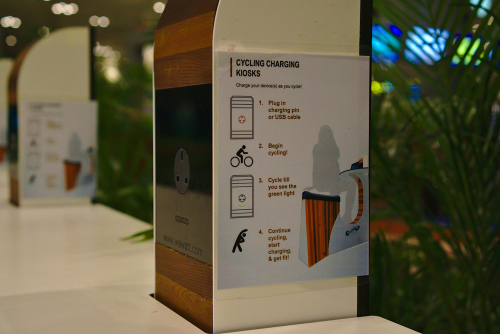
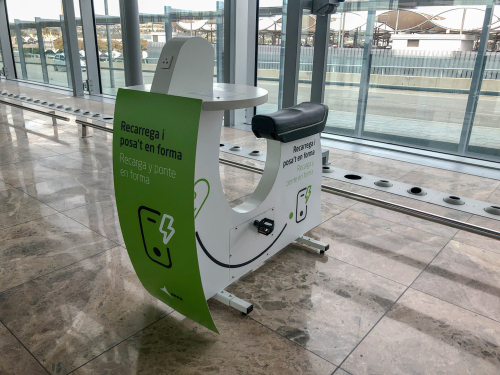
The concept is straightforward. You sit at a stationary bike connected to a dynamo — a small electrical generator — and pedal. The physical energy you produce gets converted into electricity, which flows directly to a USB or wireless charging port where your phone is plugged in.

The same basic technology has powered bicycle lights for over a century. Applied to phone charging, it works just as reliably.

Guanacaste Airport (LIR) in Liberia, Costa Rica, installed pedal stations in its East boarding lounge in January 2023, commissioned by airport operator Vinci Airports. Their stations, installed by Morpho Travel, generate 1% of an average phone’s battery charge per minute of pedaling. Spend 10 minutes on the bike and you’ll also burn up to 100 calories — not a bad use of a layover.

WeWatt, the Belgian company behind many of the world’s most widely deployed pedal charging units, reports that their stations can fully charge a smartphone in under 30 minutes.* According to Fast Company, 30 minutes of easy pedaling on a WeWatt unit takes roughly the same time as charging from a wall outlet. WeWatt has been building this technology since 2011, and their installations now span 20+ countries, with more than 2,000 units deployed worldwide.

Which Airports Have Them?

More airports than most travelers realize. Here’s where confirmed installations exist:

  • Schiphol Airport, Amsterdam — One of the earliest and most prominent adopters. WeWatt’s cycling desks are stationed in waiting areas, letting passengers charge their devices and get light exercise while they wait for their flights.
  • Guanacaste Airport (LIR), Liberia, Costa Rica — Installed by Vinci Airports in early 2023. The stations sit in the East boarding lounge, labeled with the phrase “movement is energy and energy is life.”
  • Indianapolis International Airport (IND) — Features WeWatt human-powered charging kiosks on Concourse B, with four units installed throughout the terminal.
  • Flagstaff Pulliam Airport, Arizona — Also equipped with human-powered charging stations.
  • Long Beach Airport, California — Another US airport that has adopted the technology.

Beyond airports, railway stations across France and Belgium feature WeWatt cycling desks, so travelers on Eurostar or TGV routes may encounter them too.

The pattern is clear: airports with strong sustainability commitments tend to be early adopters. That’s not a coincidence — these stations serve as both a practical amenity and a visible signal of environmental intent.

How Do They Actually Work?

When you pedal, the dynamo converts rotational energy into electrical current. That current travels to the charging ports at the desk surface. The energy transfer is direct and immediate — there’s no storage delay between your effort and your device charging.

Vinci Airports describes their Costa Rica setup as using “dynamos connected to pedals” to generate energy through physical movement. Simple, reliable, and effective.

Some units take this a step further. Rock the Bike’s Recharge Station incorporates an ultracapacitor — a compact energy storage component — that can continue supplying charge for anywhere between 1 and 12 minutes after you stop pedaling, depending on how much surplus energy you put in. It’s a small but practical feature that prevents your device from cutting off the moment you pause to answer a question.

Charging speed is another common question. According to Smart Meetings, when pedaling at a consistent pace, the charging rate is comparable to a standard wall charger. The key word is consistent — pedaling in bursts slows things down. Maintain a steady rhythm, and you’ll match wall outlet speeds.

The physical effort involved is genuinely light. Rock the Bike notes that people can pedal comfortably in business attire without breaking a sweat, and that holding a full conversation while charging eight phones at once is entirely doable.

Why Are Airports Installing These — And Why Does It Matter?

The obvious answer is sustainability. Airports are large energy consumers, and many are under pressure — from regulators, passengers, and their own commitments — to find cleaner alternatives wherever possible.

Vinci Airports explicitly framed their Guanacaste installation as “a green solution to power generation” and a way to promote sustainable tourism. César Jaramillo, General Manager of Guanacaste Airport, put it directly: “We know that cell phones are part of our daily routine and that the time spent waiting for a flight can be used to charge them. This is how we implement innovative projects, as a pillar of VINCI Airports, that can add value to the experience of being in transit in our terminal and plant a seed of why sustainable tourism is the best option.”

WeWatt positions their product as generating real renewable energy on-site — including in off-grid locations where grid power simply isn’t available. That flexibility makes pedal stations relevant beyond airports, but it’s the airport use case that gets the most attention.

There’s also a wellness dimension. Katarina Verhaegen, the engineer who developed the WeWatt cycling desk, cited research in her conversations with Fast Company and NPR: “There are studies proving that gentle exercise while doing computer work, you’re more focused and more creative. Reading and memorizing speed is enhanced. For productivity, and creativity, it’s really good to do this.”

For frequent flyers who spend hours in transit, that’s not a trivial benefit. Light movement during long layovers has real effects on alertness and mood — and these stations make that movement effortless to access.

Airports also benefit from a passenger experience standpoint. The Indianapolis International installation generated notable organic social media attention — one passenger described it as “like fitting in a SoulCycle class while you scroll through Instagram.” That kind of positive word-of-mouth is hard to manufacture.

Practical Takeaways

If you’re passing through Schiphol, Guanacaste Airport, Indianapolis International, or Long Beach Airport, keep an eye out for the pedal stations. They’re worth using if your battery is running low and outlets are scarce.

To get the most from them:

  • Pedal at a steady pace. Consistent pedaling delivers consistent charging. Aim for a relaxed, sustainable rhythm rather than short bursts.
  • Start with a modest goal. If you’re at 20% battery, 15–20 minutes of steady pedaling will make a meaningful difference.
  • Bring your own cable. Most stations offer USB ports, but wireless charging is available on some newer units. Having your cable on hand guarantees compatibility.

The Bigger Picture

Pedal-powered charging stations are a small idea with real staying power. They address a genuine problem — the dead battery scramble — while fitting neatly into airports’ broader sustainability goals and their passengers’ growing interest in wellness during travel.

The technology isn’t new. The application to airports, however, is still spreading. Most travelers haven’t seen one yet. That will change.

Next time you’re stuck at a gate with a dying phone, you might not need to battle a stranger for the last wall outlet. You might just need to start pedaling.

Frequently Asked Questions (FAQs)

How long does it take to charge your phone using a pedal-powered station?

At a relaxed, steady pedaling pace, you’ll add roughly 1% battery per minute. A full charge from zero takes around 30 minutes — similar to a wall outlet. The effort is light enough to read, scroll, or hold a conversation while you pedal.

Which airports currently have pedal-powered charging stations?

Confirmed installations include Schiphol Airport in Amsterdam, Guanacaste Airport (LIR) in Costa Rica, Indianapolis International Airport in Indiana, Flagstaff Pulliam Airport in Arizona, and Long Beach Airport in California. Several train stations across France and Belgium also feature these stations.

Do they charge as fast as a regular wall outlet?

When pedaling consistently, yes — manufacturers and users report comparable charging speeds to a standard wall charger. Maintaining a steady rhythm matters more than pedaling hard.

Are these stations free to use?

In all reported airport cases, yes. They are a free passenger amenity available to anyone in the terminal.

*This article may reference third-party products, services, brands, or websites for informational purposes only. Such references do not constitute an endorsement, sponsorship, or recommendation by Remitly. All third-party names, trademarks, and brands are the property of their respective owners. Remitly is not responsible for the accuracy, legality, or content of external third-party websites or materials.

You’re scrolling through your feed and you keep seeing the same image: a deeply caramelised, golden-fleshed potato split open to reveal a molten, almost custard-like interior. It doesn’t look like any sweet potato you’ve cooked before. It looks like dessert. That’s a Japanese sweet potato — and once you understand what makes it different, the obsession makes complete sense.

Japanese sweet potatoes have been showing up at farmers markets, health food stores, and restaurant menus with increasing frequency. Short-form videos of yakiimo — Japan’s iconic whole-roasted sweet potato street snack — have racked up millions of views. Yet most people outside of Japan still aren’t entirely sure what they’re looking at, or what to do with one once they’ve bought it.

This post breaks it all down: what Japanese sweet potatoes are, how they differ from what you’re used to, why they’ve been beloved in Japan for centuries, and exactly how to cook them at home.

So What Exactly Is a Japanese Sweet Potato?

Japanese sweet potatoes are a specific type of sweet potato — botanically classified as Ipomoea batatas, the same species as standard sweet potatoes — but a very different eating experience from the orange-fleshed varieties common in Western grocery stores.

Known in Japan as satsumaimo, they’re recognizable by their purple-red to reddish-brown skin and creamy white to pale yellow flesh that deepens to a warm golden tone when cooked. The inside is never orange. That surprises a lot of first-time buyers.

The flavour is the real revelation. Subtly sweet, nutty, and slightly floral, Japanese sweet potatoes are often described as tasting like a buttery chestnut — with a drier, starchier texture than orange sweet potatoes and an almost dessert-like quality when baked slowly. Depending on the variety, the texture ranges from soft and fluffy (hokuhoku) to dense and gooey (nettori) to silky and smooth (shittori).

One important distinction worth clearing up: Japanese sweet potatoes are not the same as purple sweet potatoes or taro, both of which are commonly confused with them. A purple sweet potato has purple flesh throughout. A Japanese sweet potato has pale yellow flesh — and the purple-red skin is on the outside only.

A Centuries-Old Staple — The Cultural Story Behind Satsumaimo

Japanese sweet potatoes are not a trend in Japan. They are a centuries-old cultural staple with deep historical significance — and that context matters.

Sweet potatoes arrived in Japan around the year 1600, reaching the Ryūkyū Kingdom (present-day Okinawa) via trade with China, then spreading northward to the Satsuma region of Kyushu — which is exactly how they earned the name satsumaimo (literally “Satsuma potato”). From 1700 onward, cultivation expanded across the country.

In 1732, when the Kyōhō famine struck Japan, a scholar named Aoki Kon’yō submitted a treatise to the ruling shogunate recommending sweet potato cultivation as an emergency food crop. The eighth shōgun, Tokugawa Yoshimune, ordered trial cultivation, and the resulting harvest was distributed throughout Japan as seed stock. Aoki’s contribution earned him the enduring title “Sweet Potato Professor.” The crop’s importance continued well into the 20th century — during World War II food shortages, satsumaimo quite literally kept people alive.

Today, Kagoshima and Ibaraki prefectures are Japan’s two largest sweet potato producers, each accounting for roughly 30% of total production, according to Nippon.com. Kagoshima’s rich volcanic soil and warm climate make it particularly suited to cultivation. Digging for sweet potatoes each autumn is a beloved ritual in Japanese kindergartens and elementary schools — a childhood memory shared by millions.

The international appetite for Japanese sweet potatoes is growing just as quickly. Japan exported 6,200 tons in 2023, and according to The Asahi Shimbun, the shipment value rose nearly tenfold to 2.9 billion yen (approximately $19.1 million) over the past decade. Exports surged especially from 2018 onward, driven in part by the success of Japanese-style baked sweet potatoes at Don Quijote stores in Singapore.

Meet the Varieties — They’re Not All the Same

One of the most interesting things about Japanese sweet potatoes is the range of distinct varieties, each with its own flavour, texture, and best use. Think of this as a quick cheat sheet:

  • Beni Azuma — Firm, slightly less sweet than others, with red skin. The most widely available variety in Japanese supermarkets. Great for roasting or tempura.
  • Beni Haruka — A newer hybrid that became hugely popular for its intense sweetness and soft, gently chewy texture. One of the best choices for yakiimo. Its sweetness actually continues to increase during post-harvest storage.
  • Anno Imo — Originally from Tanegashima island in Kagoshima, this variety is exceptionally sweet with a rich, sticky texture. Eating a baked Anno Imo has been compared to eating dessert.
  • Silk Sweet — Silky, smooth, and very sweet, with higher natural moisture content that produces a soft, fluffy result when baked.
  • Murasaki Imo — The purple sweet potato. Dense, subtly sweet, with striking purple flesh thanks to high anthocyanin content. More commonly used in sweets and processed products than eaten whole.

If you’re trying Japanese sweet potatoes for the first time, Beni Haruka or Silk Sweet are the most forgiving and consistently rewarding.

Yakiimo — The Street Food That Started It All

No discussion of Japanese sweet potatoes is complete without yakiimo. The word means simply “baked potato,” but the preparation is specific: sweet potatoes are slow-roasted in or around hot stones, which allows the heat to gently cook them through, concentrating their natural sugars and creating a deeply caramelised, almost molten interior.

Yakiimo vendors are a sensory icon of Japanese autumn — their carts parked near train stations and shopping streets on cold days, the aroma alone famous for being nearly impossible to walk past without buying something. Today, yakiimo is sold year-round at supermarket entrances across Japan, often with dedicated roasting machines.

The reason yakiimo tastes so good comes down to food science. Sweet potatoes contain beta-amylase, an enzyme that naturally converts starches to sugars during heating. Research published in the Japan Agricultural Research Quarterly (Nakamura et al., 2018) found that maltose concentration in steamed sweet potato storage roots significantly correlates with beta-amylase activity, directly affecting perceived sweetness and texture. The enzyme is most active between approximately 65°C and 80°C (149–176°F), according to food science sources. Slow cooking holds the potato in that temperature range for as long as possible — which is why a rapidly microwaved sweet potato simply cannot match the flavour of one that has been roasted low and slow for 90 minutes.

The result: a naturally sweet, whole, single-ingredient snack that needs nothing added. Yakiimo is increasingly appearing on menus in the US and Europe, and its clean, minimalist appeal — real food, no processing, no added sugar — has introduced millions of Western eaters to the ingredient.

Why Japanese Sweet Potatoes Are Trending in the West Right Now

The timing of this trend isn’t coincidence. Several shifts converged at once.

Social media made the visual appeal undeniable. A perfectly baked Japanese sweet potato, pulled from the oven and split open to reveal its golden caramelised interior, is one of the most satisfying food images circulating right now. Short-form video has done what years of specialist food media couldn’t: put this ingredient in front of mass audiences.

Growing Western interest in Japanese food culture more broadly — driven by travel, restaurant culture, and an appetite for new ingredients — created a ready audience. Japanese sweet potatoes arrived into that interest at exactly the right moment.

They also happen to align with current dietary priorities almost perfectly. A medium baked sweet potato provides 3.8g of dietary fiber and 541.5mg of potassium, along with vitamin C (25% of daily value) and other micronutrients, according to USDA FoodData Central data (FDC ID: 170134). Purple varieties add high anthocyanin levels on top of that. They’re naturally gluten-free, plant-based, and don’t require any nutritional claims — the eating experience makes the case on its own.

American breeders are actively developing new varieties to meet domestic demand. North Carolina State University’s Sweetpotato Breeding and Genetics Program — one of the oldest in the country — is working to develop varieties suited to southeastern US growing conditions, with a focus on expanded germplasm and improved quality traits.

How to Buy and Cook Japanese Sweet Potatoes at Home

Where to find them: Asian grocery stores and Japanese supermarkets carry the widest range of authentic varieties. Health food stores and specialty produce markets increasingly stock them, often labelled generically as “Japanese sweet potato” or by variety name — Murasaki is among the most commonly available in the US. Peak season runs late summer through winter, though they’re typically available year-round.

How to store them: Keep in a cool, dry, dark place with good air circulation. Not the refrigerator. They’ll hold well for up to a week under these conditions.

The best way to cook them — start here:

  1. Wash thoroughly, wrap in foil, and bake whole at 350–375°F (180–190°C)
  2. Bake for 60–90 minutes, depending on size — low and slow is essential
  3. They’re ready when the skin begins to caramelise and the flesh feels completely soft when pressed
  4. Eat as-is, skin on, with nothing added. A pinch of flaky salt is optional

Other uses once you’re comfortable with them:

  • Cubed into soups, stews, or curries
  • Diced and roasted for grain bowls or salads
  • Mashed as a naturally sweet side dish
  • Fried in tempura batter
  • Folded into baked goods for natural sweetness and colour

Start Simple, Then Explore

Japanese sweet potatoes are the rare ingredient that earns its reputation through the eating experience alone. No sauce required. No special technique. Just good produce and a low oven.

They also carry something a little extra — a centuries-old cultural story, a childhood memory for millions of Japanese people, and a vendor cart aroma that apparently nobody has ever been able to walk past without stopping. Once you understand all of that, the obsession makes perfect sense.

Frequently Asked Questions (FAQs)

What is the difference between a Japanese sweet potato and a regular sweet potato?

Japanese sweet potatoes have purple-red skin and white-to-yellow flesh (not orange), a denser, drier texture, and a nuttier, more chestnut-like flavour. They taste noticeably sweeter when slow-cooked.

What does a Japanese sweet potato taste like?

Subtly sweet, nutty, and slightly floral — often compared to a buttery chestnut. When baked slowly, the natural sugars concentrate and the flavour becomes rich and almost dessert-like.

What is yakiimo?

Yakiimo is the traditional Japanese preparation of whole sweet potatoes slow-roasted in or near hot stones. It’s Japan’s most iconic cold-weather street snack — eaten plain, skin on, with nothing added.

Are Japanese sweet potatoes healthy?

Yes. They are a good source of dietary fibre, potassium, vitamin C, and other micronutrients. Purple varieties are particularly high in anthocyanins. They’re also naturally gluten-free and plant-based.

Where can I buy Japanese sweet potatoes?

Look for them at Asian grocery stores, Japanese supermarkets, health food retailers, or specialty produce markets. They’re available year-round in North America, with peak season running from late summer through winter.

Spring break 2026 is here. Whether you’re shaking off a long winter, making the most of a week off, or finally taking that trip you’ve been putting off, one question keeps coming up: where should you actually go?

This year, Americans are traveling in force — and the data backs it up. Warm-weather beach towns, tropical islands, and European cities are all seeing surging search interest right now. The choices can feel overwhelming. That’s why this guide breaks it all down: the top domestic and international destinations Americans are searching, booking, and heading to in 2026 — organized by destination type so you can get straight to what works for you.

By the end, you’ll have a clear picture of where the crowds are going, what each destination offers, and how to match the right place to your travel style.

What’s Trending for Spring Break 2026

Spring break season runs from mid-March through mid-April, with peak travel typically clustering around mid-March. This year, the travel picture is shaped by a few clear patterns.

Florida continues to dominate domestic searches — by a wide margin. Mexico leads internationally, with Cancún sitting firmly at the top. And Europe, particularly Rome, London, Paris, and Greece, is pulling in strong interest from travelers who want culture alongside their sunshine.

The biggest domestic story of 2026? Hilo on Hawaii’s Big Island. According to Google Flights data, Hilo recorded the largest year-over-year percentage increase in flight searches of any domestic spring break destination — making it the single fastest-rising U.S. spring break spot this year. Kayak confirmed the trend independently, finding a 60% jump in spring break searches for Hilo compared to the same period last year.

On pricing, Priceline data reported by Forbes in March 2026 shows domestic round-trip airfare averaging $340 per trip this March and April — down 7% from spring 2025. International round-trip airfare sits at an average of $703, down 8% year over year. Flight search data from Points Path adds more detail: transatlantic routes to Rome (-13.76%), Tokyo (-12.62%), Vail (-13.91%), and Paris (-12.24%) are all seeing notable year-over-year declines in economy fares.

One more practical note: Google Flights recommends booking at least 28 to 61 days before departure for the best domestic deals — putting travelers in what Google called “the sweet spot right now” for late March and early April trips, as of its February 2026 report.

Top Domestic Spring Break Destinations for 2026

Florida — Still the Undisputed Champion

No state comes close to Florida when it comes to spring break search volume in 2026. According to a state-by-state analysis by Upgraded Points — using Google Trends data from January 2025 through January 2026 — Florida destinations account for 37 of the 51 top domestic search results across all 50 states and Washington, D.C.

Key West sits at the top of the domestic rankings, leading search interest in 17 states and Washington, D.C. (18 total) — pulling in travelers from the Northeast, the Pacific Northwest, and almost everywhere in between. Destin follows closely, ranking first in 15 states, particularly across the South and Midwest. Combined, the two cities account for 33 of the top-searched domestic results.

But Florida’s spring break appeal runs much deeper than two cities. Sarasota ranks third on Google Flights’ top 10 trending domestic destinations list, with Panama City at fifth, Fort Myers at eighth, and Tampa at ninth. Airbnb data cited by Timeout points to Fort Walton Beach, New Smyrna Beach, Treasure Island, Bradenton, and Venice as trending short-term rental destinations — smaller coastal towns offering more space and a lower-key experience.

Best for:

  • Families: Orlando, Tampa
  • Beach party crowds: Fort Lauderdale, Panama City
  • Laid-back escapes: Key West, Sarasota, Clearwater
  • Water sports and outdoor exploration: Destin, Fort Myers

Florida is not one destination. It’s five completely different trips depending on where you land. Matching your vibe to the right part of the state makes all the difference.

Hawaii — The Fastest-Rising Destination of 2026

Hilo is the headline, but the whole state of Hawaii is having a moment.

Hilo on the Big Island leads Google Flights’ top 10 trending domestic destinations list for spring break 2026 — the result of its largest year-over-year search growth of any domestic destination. It’s easy to see why. Hilo offers the Hawaii experience without the resort crowds: volcanic landscapes, rainforests, waterfalls, black-sand beaches, and easy access to Hawai’i Volcanoes National Park. Kayak also noted that airfare to Hilo is down 26% year over year, signaling genuine value compared to more established Hawaiian destinations.

Best for: Nature lovers, couples, families who want something beyond the standard beach-resort circuit.

Practical note: Spring break aligns with Hawaii’s shoulder season — weather is generally excellent, but demand is high. Book as early as possible for better pricing and accommodation options.

Las Vegas, Nevada — Desert Sun and High Energy

Las Vegas is a perennial spring break favorite and consistently ranks among the top domestic destinations for travelers flying from the West Coast. Warm Mojave Desert weather, world-class entertainment, resort pools, and everything from major concert events to acclaimed dining make it a strong all-in-one option. Hertz rental car data highlights Las Vegas as one of the top spring break road-trip destinations alongside Orlando, Phoenix, Atlanta, and Los Angeles.

Best for: Groups, adult travelers, and anyone who wants a high-energy destination with maximum flexibility.

Other Domestic Destinations Worth Considering

  • Asheville, North Carolina — ranks second on Google Flights’ 2026 trending domestic list; attracts outdoor and cultural travelers with its mountain scenery, Biltmore Estate, and growing food scene.
  • Vail, Colorado — appears at No. 10 on the Google Flights list; offers spring skiing alongside hiking. Last year, Vail Mountain remained open to skiers through late April.
  • South Padre Island, Texas — a budget-friendly beach alternative that ranks as the top domestic destination in five states, particularly popular across the South and Midwest.
  • San Diego, California — beaches, near-perfect spring weather, a strong food and craft beer scene, and family-friendly attractions.
  • Scottsdale/Phoenix, Arizona — desert warmth, resort pools, and outdoor activities; also popular as a road-trip base.
  • New Orleans, Louisiana — live music, a world-class food scene, and a festival calendar in full swing through spring. Best for travelers who want culture and nightlife over beaches.

Top International Spring Break Destinations for 2026

Mexico — The Closest International Escape

Mexico’s resort regions are the most popular international spring break destinations for Americans in 2026 — and it’s not particularly close. According to Upgraded Points’ analysis of Google Trends data, Cancún ranks as the top-searched international spring break destination, leading in 13 states — more than any other international destination in the dataset.

Los Cabos follows as another top international choice, topping search interest in states including California, Nevada, and Oregon. Puerto Vallarta also ranks highly, particularly in the western US.

  • Cancún: White-sand beaches, turquoise Caribbean water, a wide range of all-inclusive resorts, close proximity to archaeological sites like Chichén Itzá and Tulum, and one of the most active nightlife scenes in the region.
  • Cabo San Lucas / Los Cabos: Sea of Cortez coastline, dramatic desert-meets-ocean scenery, sport fishing, whale watching in early spring, and resort options across multiple price points.

Best for: Budget-conscious travelers (all-inclusive options), beach lovers, groups, couples.

Practical note: Travel conditions in Mexico vary significantly by region. Before booking, check the U.S. Department of State’s official travel advisory for Mexico at travel.state.gov for the latest guidance on specific areas.

The Caribbean — Sun, Sand, and Short Flights

The Caribbean remains one of the most popular international destinations for spring break, and several islands are consistently appearing in 2026 booking data.

Punta Cana, Dominican Republic is a leading choice for resort-focused relaxation, with all-inclusive properties dominating search interest. It ranks as the top international resort destination in 12 states, according to Upgraded Points’ data.

Puerto Rico stands out for a different reason: it’s a U.S. territory, so no passport is required. San Juan blends beach access, vibrant nightlife, and genuine cultural depth — and search volume has grown meaningfully year over year. Nassau, Bahamas rounds out the short-haul options, offering direct flights from most major U.S. cities and proximity that makes it one of the most accessible Caribbean destinations available.

Best for: First-time international travelers, families, couples, groups who want resort-style relaxation without a long-haul flight.

Europe — For the Culturally Curious

Spring is one of the best times to visit Europe — warmer temperatures, smaller crowds compared to peak summer, and major attractions operating at full capacity. And the data suggests Americans are noticing.

Greece is the standout rising international destination of 2026. It ranks second overall among all international destinations in Upgraded Points’ state-by-state search analysis — trailing only Mexico — and tops search interest in eight states, including Arkansas, Indiana, Kentucky, Louisiana, Massachusetts, Pennsylvania, Tennessee, and West Virginia. Interest is being driven in large part by social media visibility of island destinations like Santorini, alongside growing appetite for cultural and historical travel.

Rome consistently ranks as the top European city for American spring break travelers. Spring in Rome is widely considered the best time to visit — the crowds haven’t arrived yet, the weather is mild, and everything from the Colosseum to the Vatican is fully accessible. London and Paris follow closely, combining iconic landmarks, food culture, and nightlife. Airfare data from Points Path shows Rome down 13.76% year over year and Paris down 12.24% — meaningful savings for travelers who move quickly.

Best for: Cultural travelers, history enthusiasts, foodies, couples, students studying abroad.

Practical note: According to Priceline data, international hotel rates are averaging $242 per night this spring break — compared to $216 domestically. That gap is smaller than many travelers expect, and lower transatlantic airfares help offset it.

Asia — The Emerging Frontier

Tokyo, Japan continues its rise as one of the top international spring break destinations for American travelers — and this year the timing is hard to beat. Cherry blossom season (late March to early April) aligns almost exactly with spring break, creating one of the most visually stunning travel experiences in the world. Points Path data shows Tokyo airfare down 12.62% year over year in economy class — a notable drop for what has historically been one of the more expensive long-haul routes.

Best for: Adventure travelers, culture seekers, foodies, and anyone looking for a genuinely immersive experience far outside the typical resort circuit.

Practical note: Japan is a significant time-zone shift from the U.S. — plan for jet lag and book accommodations early. Cherry blossom season is one of the most competitive travel windows of the year, and popular areas fill up fast.

Practical Takeaways Before You Book

  • Check travel advisories first. For any international destination — particularly Mexico — visit travel.state.gov for the U.S. State Department’s latest guidance. Conditions vary significantly by region.
  • Prices are lower this year. Both domestic and international airfares are down compared to 2025. If you haven’t booked yet, that’s good news. But popular routes and resorts still sell out — don’t wait too long.
  • Mid-week travel reduces costs. Peak spring break week falls around mid-March. Traveling a few days earlier or later can reduce both airfare and hotel costs noticeably. Hertz data also points to Wednesdays and Sundays as the cheapest days to pick up a rental car.
  • Match your destination to your travel style. Florida for the classic beach experience, Mexico for warmth and value, Europe for culture and history, Hawaii for nature and scenery, Asia for a truly different kind of trip.

Where Will You Go?

Spring break 2026 offers a genuinely strong lineup — affordable airfares, a wider range of trending destinations than in recent years, and enough variety to suit every type of traveler. Florida and Mexico remain the clear volume leaders, but the real story is how much the field has opened up. Hilo is trending. Greece is surging. Tokyo is more accessible than it’s been in years.

The best destination isn’t the most popular one — it’s the one that fits how you want to spend your time.

Where are you heading for spring break 2026? Drop your plans in the comments, or share this with the group chat that still hasn’t made up its mind.

Frequently Asked Questions

What is the most popular spring break destination in 2026?

Key West, Florida is the top-searched domestic spring break destination, leading search interest in 17 states and Washington, D.C. Internationally, Cancún, Mexico leads, topping searches in 13 states.

What is the fastest-rising spring break destination for 2026?

Hilo, Hawaii — it recorded the largest year-over-year increase in domestic spring break flight searches of any U.S. destination in 2026, according to Google Flights data.

Where do Americans go for international spring break?

Mexico leads by a wide margin — Cancún and Los Cabos are the top two international destinations. Europe is close behind, with Rome, London, Paris, and Greece all seeing strong interest. Tokyo is the top trending long-haul destination.

When is spring break 2026?

Spring break generally runs from mid-March through mid-April. Peak travel week typically falls around mid-March, but exact dates vary by school and university.

Is it too late to book spring break 2026?

Last-minute options do exist. However, popular destinations, resorts, and peak-week flights fill up quickly. The earlier you book, the better your options and pricing.

You’re at a café, scanning the menu, and there it is: a glowing purple latte staring back at you. It looks incredible. You want to order it. But you have absolutely no idea how to say it out loud without sounding foolish.

That’s ube—and you’re far from alone in that moment of hesitation.

The vibrant purple ingredient has spread to café menus, grocery store shelves, TikTok feeds, and brunch spots across the country. Grocery stores stock ube spreads and mochi pancake mixes. A popular coffee shop launched an Ube Brûlée iced latte in the US and Europe in May 2025. And the hashtag #UbeEverything has surpassed 500 million views on TikTok. Yet most people still aren’t entirely sure what ube actually is, where it comes from, or how to say it correctly.

This post covers all of that. By the end, you’ll know exactly what ube is, why it matters culturally, how to pronounce it, and where to try the real thing.

First Things First — How Do You Actually Pronounce Ube?

Let’s get this out of the way: ube is pronounced “oo-beh.” Two syllables. Not “yoo-bee.” Not “oob.” Just “oo-beh.”

The word comes directly from Tagalog, the national language of the Philippines, where it simply means “tuber.” Getting the pronunciation right is a small but meaningful way of respecting the culture that has carried this ingredient for generations.

Now that you’ve got that, let’s talk about what it actually is.

So What Is Ube, Exactly?

Ube is a purple yam — scientifically known as Dioscorea alata — native to the Philippines and Southeast Asia. It’s not a purple sweet potato. It’s not taro. This distinction confuses a lot of people, and it’s worth clearing up.

Taro has a more neutral, starchy flavor and a different cultural origin. Purple sweet potato is denser and sweeter. Ube has its own distinct profile: subtly sweet, nutty, and mildly earthy, often compared to a cross between vanilla and a hint of pistachio. It’s approachable rather than overpowering, which is a big part of why it works so well in drinks, desserts, and baked goods.

What gives ube its deep violet flesh — not just the skin, but the entire interior — is a class of natural antioxidants called anthocyanins. These are the same pigments found in blueberries and blackberries. No food dye required. That natural vibrancy is a significant part of its appeal for a generation paying close attention to what’s in their food.

Nutritionally, ube is a solid ingredient. It’s a natural source of potassium, vitamin C, prebiotic fibre, and anthocyanins, which may help reduce blood pressure, blood sugar, and inflammation, according to research cited by Perfect Daily Grind.

Ube Has Been a Filipino Staple for Centuries — This Isn’t New

Here’s what often gets lost in the trend coverage: ube is not a discovery. For Filipino families, it has been a beloved and deeply familiar ingredient for as long as anyone can remember.

“Ube is more than just a trendy flavor. It’s a part of us Filipinos growing up in the Philippines,” said Eric Valdez, executive chef and partner at Naks, a Filipino restaurant in New York City, in an interview with The Food Institute. “Seeing it embraced here feels like a piece of home finally being understood and celebrated.”

Traditional Filipino applications of ube include:

  • Ube halaya — a rich, velvety jam made from purple yam, coconut milk, condensed milk, and butter, slow-cooked until thick and deeply violet
  • Halo-halo — a layered shaved ice dessert with ube halaya as a signature component
  • Puto bumbong — steamed purple rice cakes traditionally served during Christmas celebrations

Ube halaya, in particular, carries meaning that goes beyond taste. It’s served at family gatherings and special occasions as a symbol of togetherness and celebration. For Filipino-Americans watching ube go mainstream, the moment is emotional.

“As a Filipino-American who grew up eating ube as a kid, it’s been incredibly exciting to see the rise of ube in the mainstream. It’s more than just a trend; it’s a powerful connection to our culture, heritage, and storytelling through food,” said Billy Dec, CEO and founder of Sunda New Asian, speaking to The Food Institute.

That context matters — especially because many mass-market ube products use artificial coloring and flavoring rather than real ube. Chef Maricel Gentile, who runs a New Jersey restaurant focused on authentic Filipino cuisine, has been direct about this: if you want to understand what ube actually tastes like, seek out Filipino bakeries, Filipino grocers, or Asian food stores. Don’t judge it by a supermarket product that substitutes food dye for the real thing.

How Ube Went From Filipino Kitchens to Your TikTok Feed

The story of ube’s rise in Western culture is, at its core, a story about social media and a generation that actively seeks out global flavors.

Ube first went viral around 2016 with Manila Social Club’s purple doughnuts in New York City — one of the earliest examples of the ingredient capturing attention through visual appeal alone. It made its way into US cafés by around 2020 and has been building momentum ever since.

The numbers since then are striking. Ube was named Flavour of the Year for 2024 by T. Hasegawa, a major global flavour and fragrance company. Datassential predicted ube would outperform 88% of all other foods, beverages, and ingredients from 2024 through 2027, with its presence on US menus projected to grow 48% in that period. According to Monin’s 2024 research, 67% of consumers said they were likely to purchase an ube-flavoured beverage or dessert.

You’ll now find ube in iced lattes, cheesecake, mochi pancakes, cocktails (the Ube Espresso Martini at Sunda New Asian has reportedly gone viral twice), and ready-to-drink canned lattes. Pret A Manger brought it to mainstream café menus in the US and Europe in May 2025.

The comparison to matcha is a useful one. Matcha followed a nearly identical trajectory — niche, then viral, then ubiquitous. Ube is following the same path, and for similar reasons: striking visual appeal, genuine nutritional credentials, and a flavor that feels simultaneously familiar and new.

“Ube stands out visually and feels fresh to those markets,” said Andre Chanco, co-founder of Filipino specialty coffee roaster Yardstick Coffee, in an interview with Perfect Daily Grind. “For café operators, it’s also a smart way to add variety without straying too far from familiar flavour profiles.”

The rise of ube isn’t just a food story. It’s part of a broader shift toward Filipino cuisine receiving the global recognition it has long deserved — driven, in no small part, by Gen Z consumers who are genuinely curious about where their food comes from.

What Does Ube Actually Taste Like — and How Do You Try It?

The flavor is worth describing carefully, because it’s not what most people expect. Ube is subtly sweet. It has a nutty warmth and a mild earthiness, with a vanilla-like undertone that makes it feel comforting rather than challenging. It pairs naturally with coconut, cream, and chocolate. It also works in savory applications, though sweet preparations remain the most common.

For first-timers, here are the best ways to try it:

  • Ube latte at a specialty café
  • Ube ice cream — genuinely purple, genuinely delicious
  • Ube halaya on toast — simple and surprisingly satisfying
  • Ube mochi or ube-filled pastries from a Filipino bakery

That last option is the most important recommendation. If you want to understand what ube actually tastes like — not an artificial approximation of it — visit a Filipino bakery or Asian grocery store. Mass-market products often substitute artificial flavoring for real ube, and the difference is significant. The real thing has a depth and complexity that a food-dyed product simply can’t replicate.

Frequently Asked Questions About Ube

How do you pronounce ube?

“Oo-beh” — two syllables, from the Tagalog word for tuber.

Is ube the same as taro or purple sweet potato?

No. Ube is a distinct species (Dioscorea alata). Taro has a different flavor and origin. Purple sweet potato has a sweeter, denser taste. Ube has its own nutty, vanilla-like profile that sets it apart from both.

Why is ube purple?

Its deep violet color comes from anthocyanins — the same natural antioxidant pigments found in blueberries. No artificial dye needed.

Where can I buy real ube?

Filipino bakeries, Asian grocery stores, or specialty food shops. Many mainstream supermarket products use artificial ube flavoring rather than the real ingredient.

Ube Is a Story Worth Knowing

Ube is not a trend that appeared out of nowhere. It’s a centuries-old ingredient from the Philippines that is finally receiving global attention — and the people who grew up with it have complicated, often deeply personal feelings about watching it go mainstream.

Approaching ube with some awareness of that history makes the whole experience richer. Knowing that the jam in your pastry has been made the same way in Filipino homes for generations, or that the flavor in your latte connects to a culture with its own celebrations and traditions — that’s the difference between eating something because it’s purple and actually appreciating what you’re tasting.

Have you tried ube yet? Drop your favorite ube find in the comments below, or share this with someone who’s been asking about that purple drink on the menu.

Key Highlights

Here’s a quick look at what you need to know about direct deposit:

  • Direct deposit is an electronic method for transferring money directly into your checking account or savings account.
  • The system operates through the Automated Clearing House (ACH) network, ensuring secure and reliable payments.
  • Setting up your payments is a simple, one-time process using a direct deposit form from your employer or payer.
  • It eliminates the need for paper checks, saving you trips to the bank and reducing the risk of lost or stolen payments.
  • Funds are often available faster than with traditional checks, sometimes even a day or two early.

What Is Direct Deposit?

Have you ever wondered how your paycheck magically appears in your bank account? The answer is direct deposit, a convenient way to receive electronic payments without handling any physical cash or checks. This system allows payers, like your employer, to send money from their account directly to yours. It’s a seamless and popular method for getting paid.

The magic behind this process is the Automated Clearing House (ACH) network. This is the system that financial institutions use to move money across the country. Instead of printing and mailing paper checks, organizations use the ACH network to send secure electronic payments, ensuring your funds arrive safely and on time.

Definition and Key Features of Direct Deposit

Direct deposit is simply an electronic transfer of funds from one bank account to another. It’s the standard for many types of payments because it is efficient and secure. Instead of you needing to deposit a check, financial institutions handle the entire transaction behind the scenes. All you need to do is provide your account details once using a direct deposit form.

The system is defined by several key features that make it a go-to choice for both payers and recipients. These features streamline the entire payment process.

  • Speed: Deposits typically take one to three business days to process, and funds must be available by the next business day after the deposit is made.
  • Security: Electronic payments reduce the risk of lost or stolen checks, as the money moves directly between secure financial institutions.
  • Convenience: Once set up, payments arrive automatically, so you don’t have to worry about visiting a bank or ATM.

To get started, you just need to provide basic information like your bank’s routing number and your account number. This simple setup unlocks a much easier way to manage your incoming funds.

How Direct Deposit Differs from Traditional Payment Methods

The biggest difference between direct deposit and traditional methods like paper checks is the elimination of the physical check itself. With a physical check, you have to receive it, take it to the bank, and wait for it to clear before you can access the money. This process can take several business days and requires extra effort on your part.

Direct deposit simplifies everything. Your direct deposit funds are sent straight to your bank account, often becoming available for you to spend with your debit card much faster. There’s no risk of a check getting lost in the mail or stolen. According to the American Payroll Association, an overwhelming 93% of U.S. workers now use direct deposit, highlighting its reliability and convenience. [1]

Here’s a quick comparison:

Feature Direct Deposit Paper Checks
Speed Funds are often available in 1-3 business days. Requires a trip to the bank and a clearing period.
Security Secure electronic transfer reduces fraud risk. A physical check can be lost, stolen, or forged.
Convenience Automatic deposit into your chosen bank account. You must manually deposit the check at a bank or ATM.

How Direct Deposit Works

So, how does the transfer of funds actually happen? When your employer or another payer wants to send you money via direct deposit, they submit a payment instruction to their bank before your scheduled payday. This instruction includes your bank account number and the amount to be paid for that pay period.

Their bank then sends this information to the Automated Clearing House (ACH) network, which acts as a central hub for processing transactions. The ACH routes the payment to your bank, which then credits your account with the specified amount. It’s a highly organized and automated process designed for speed and accuracy.

The Direct Deposit Process Step-by-Step

Understanding the journey your money takes can give you peace of mind. The direct deposit process is straightforward and involves a few key steps that happen automatically once you’re enrolled. You can even choose to have your money deposited into a checking account or a savings account.

Here is a simple breakdown of how your payment gets to you:

  • Enrollment: First, you fill out a direct deposit form from the payer, providing your bank details. Some payers may run a small test transaction, called a prenote, to verify your information.
  • Payment Initiation: On payday, the payer’s bank sends a request to the ACH network to transfer the funds.
  • ACH Processing: The ACH network processes the request and directs the funds to your financial institution.
  • Deposit: Your bank receives the funds and deposits them into your account. The money is usually available within one to three days, and often by 9:00 a.m. on your scheduled payday.

This efficient system ensures you get paid on time without any extra steps.

Key Parties Involved in Direct Deposit Transactions

Several key players work together to make direct deposit transactions happen smoothly. The process starts with the “Originator,” which is the person or company sending the money, like your employer. They use their business bank account and payroll system to initiate the payment.

Next is the Originator’s bank, known as the Originating Depository Financial Institution (ODFI). This institution sends the payment instructions into the ACH network. The Automated Clearing House then acts as the central processor, sorting and transmitting the payment data to the correct destination. The final party is your bank, the Receiving Depository Financial Institution (RDFI), which accepts the funds and credits your account.

Generally, anyone with a bank account is eligible for direct deposit. As long as you can provide valid bank account information, you can receive payments electronically from an employer or government agency. This accessibility is a major reason for its widespread adoption.

Setting Up Direct Deposit

Ready to make the switch? Setting up direct deposit is a simple, one-time process. The first step is to get a direct deposit authorization form from your employer or the organization that will be paying you. This form gives them permission to send money directly to your account.

You’ll need to fill out the form with your bank account details. Once you submit the completed form, your employer will input your direct deposit information into their payment system. After that, your payments will start arriving automatically. Let’s look at the specific information you’ll need to provide.

Required Information to Enroll in Direct Deposit

To enroll in direct deposit, you’ll need to gather a few pieces of key information. This ensures your money goes to the right place without any hitches. Your employer will typically provide a direct deposit form for you to fill out with your personal information.

Make sure you have the following details handy:

  • Your Bank’s Information: This includes the official bank name and its routing number, a nine-digit code that identifies the financial institution.
  • Your Account Details: You’ll need your account number and to specify the type of account (usually checking or savings).
  • A Voided Check: Some employers may ask for a voided check. This isn’t for payment but to confirm the routing and account numbers are correct. To void a check, simply write “VOID” in large letters across the front.

Once you provide this information, your employer can finalize the setup, and you’ll be ready to receive electronic payments.

How to Set Up Direct Deposit with an Employer or Bank

Setting up direct deposit is usually a quick and painless task. The most common method is to get a new direct deposit form directly from your employer’s HR or payroll department. After you fill it out with your bank account information, you simply return it to them, and they handle the rest.

Many companies and financial institutions now offer modern direct deposit services through an online banking account or employee self-service portal. In this case, you can log in, navigate to the direct deposit section, and enter your details electronically. This method can be even faster and reduces the chance of manual errors.

Regardless of the method, the core task is the same: securely provide your account details to the payer. Once your information is in their direct deposit program, you can sit back and let the automated payments roll in.

Benefits of Direct Deposit

Opting for direct deposit offers a host of advantages over traditional paper checks. Perhaps the biggest benefit is the speed and accessibility of your money. Funds are often available for immediate use, eliminating the waiting period associated with check clearing. This can help you better manage your finances and avoid potential overdraft fees.

By ditching paper checks, you also add a layer of security and convenience to your financial life. There’s no need to worry about a check getting lost or making a special trip to the bank. Below, we’ll explore the specific benefits for both employees and employers.

Advantages for Employees

For employees, the benefits of direct deposit are immediate and impactful. It simplifies how you get paid and gives you more control over your money. If you open a new account, setting up direct deposit is a great first step.

Here are some of the top advantages you can enjoy:

  • Faster Access to Funds: Your direct deposit funds are available for immediate use, often on the morning of payday. Some banks even offer access to your money up to two days early. This means you can use your debit card or pay bills without delay.
  • Enhanced Security: Electronic transfers eliminate the risk of a paycheck being lost, stolen, or damaged. Your money goes straight into your checking account or savings account safely.
  • Greater Convenience: You no longer need to plan your day around bank hours. Payments arrive automatically, whether you’re at work, on vacation, or at home. You can even split your deposit between multiple accounts to automate your savings goals.

Benefits for Employers and Businesses

It’s not just employees who benefit; employers and businesses also gain significant advantages from using electronic payments. Adopting direct deposit can streamline the entire payroll system and improve financial management. It’s a modern solution that offers measurable returns.

Here’s why businesses prefer direct deposit:

  • Cost Savings: Businesses save money on printing paper checks, postage, and envelopes. According to the Association for Financial Professionals, the median cost of an ACH transaction is significantly lower than processing a paper check. [2]
  • Increased Efficiency: Direct deposit reduces the administrative burden on HR and payroll staff. They no longer have to print, sign, and distribute checks, freeing up time for other important tasks.
  • Improved Cash Flow Management: With direct deposit, employers know exactly when funds will be debited from their business bank account. This predictability helps avoid cash shortages and makes bookkeeping simpler, removing the uncertainty of a clearing wait period.

Common Questions and Issues with Direct Deposit

While direct deposit is highly reliable, issues can occasionally arise. You might find yourself wondering why a transfer of funds hasn’t appeared in your account on the expected day. These situations can be stressful, but they are usually caused by simple, fixable problems.

Most of the time, delays are due to processing schedules, bank holidays, or minor direct deposit errors. The good news is that there’s a clear process for figuring out what went wrong and getting it corrected within a few business days. Let’s examine some common causes and solutions for these delays.

Addressing Direct Deposit Errors and Delays

If your direct deposit is late, don’t panic. There are several common and easily explainable reasons for a delay. The first thing to consider is timing. If your payday falls on or just before a weekend or one of the federal bank holidays, processing may be pushed to the next business day.

Here are a few potential causes for direct deposit errors and what to do:

  • Incorrect Account Information: A simple typo in your account or routing number is a common cause of failure. Double-check the information you provided to your employer.
  • Payer-Side Issues: The delay might be on the sender’s end. They may have submitted the payroll information late.
  • Bank Processing Time: Your deposit might arrive at different times if the sender doesn’t always deposit the money on the same date or time.

If you’ve experienced a waiting period beyond the expected time frame, the best first step is to contact your employer’s payroll department. They can confirm when the deposit was sent and verify that your information is correct.

Conclusion

In conclusion, direct deposit offers a seamless and efficient way to manage your finances. By understanding its workings, benefits, and the steps to set it up, you can make informed decisions that enhance your financial management. Whether you’re an employee looking for convenience or an employer aiming to streamline payroll processes, direct deposit is a valuable tool that ensures timely payments with minimal hassle. If you have any questions or need assistance setting it up, feel free to reach out for a free consultation. Embrace the ease of direct deposit and take control of your financial future today!

Frequently Asked Questions

Is direct deposit safer than receiving a paper check?

Yes, direct deposit is significantly safer. Since the electronic transfers move directly between secure financial institutions, there is no physical paper check that can be lost, stolen, or fraudulently altered. This eliminates the risk of your sensitive bank account information falling into the wrong hands.

Can direct deposit be used for payments other than paychecks?

Absolutely! Direct deposit is used for a wide range of payments beyond salaries. You can receive government benefits like Social Security and Supplemental Security Income, as well as your annual tax refund, child support payments, and even stock dividends directly into your account.

What should I do if my direct deposit doesn’t arrive as expected?

If your direct deposit is missing, wait one business day, as processing times can vary. If it still hasn’t appeared, contact your employer or the paying organization to confirm they sent the payment and that your bank account details in their direct deposit program are correct.


Citations: [1] https://www.nacha.org/news/american-payroll-association-and-nacha-survey-finds-93-us-workers-receive-payment-direct [2] https://www.nacha.org/news/ach-costs-are-fraction-check-costs-businesses-afp-survey-shows

Key Highlights

Here’s a quick look at what you need to know about your annual income:

  • Your annual income is the total money you earn in a year from all income sources before any deductions.
  • There’s a key difference between gross income (total earnings) and net income (your take-home pay after taxes and deductions).
  • Calculating your annual salary is simple: multiply your weekly pay by 52 or your monthly pay by 12.
  • Remember to include additional income like bonuses, overtime, and side hustles for a complete picture.
  • Understanding your annual income is essential for budgeting, tax planning, and making smart financial decisions.

Introduction

Have you ever wondered how to get a clear picture of your finances? Understanding your annual income is the first and most important step. It’s more than just a number on a paycheck; it’s the foundation of your entire financial life. Knowing your total earnings helps you manage your money, save for a house, or plan for other major goals. This guide will break down everything you need to know about annual income, helping you build a solid base for all your financial planning.

Understanding Annual Income

Your annual income is the total amount of money you make in a single year from all your income sources. This figure gives you a comprehensive view of your financial inflow for the year, helping you manage your finances and make informed decisions. It’s the starting point for creating a budget, setting financial goals, and planning for the future.

This total income includes everything from your primary annual salary to earnings from a side gig. It’s a critical number because it determines your capacity to save, spend, and invest. Grasping what your annual income truly represents is the key to taking control of your financial journey and working toward the life you want.

Definition and Basic Concept

So, what exactly is annual income? In simple terms, it’s the total earnings you receive over a one-year period, often a fiscal year. This includes all the money you make before anything is taken out for taxes or other deductions. Think of it as the grand total of your income from every source combined.

Yes, your annual income is essentially the same as your total yearly earnings. It’s a comprehensive annual figure that represents your entire financial inflow for the year. This isn’t just your salary; it also covers bonuses, commissions, tips, and any other compensation you might receive on an annual basis.

Having this number gives you a complete overview of your earning power. It serves as a benchmark for understanding your financial standing before any obligations are met. This total income figure is what lenders look at and what your taxes are initially based on, making it a cornerstone of personal finance.

Why Annual Income Matters in Everyday Life

Knowing your annual income is incredibly important because it impacts nearly every aspect of your financial life. It is the foundation for effective financial planning, helping you create a realistic budget, manage your expenses, and save for your financial goals. Your income level directly influences the amount of money you have available for both needs and wants.

A clear understanding of this figure empowers you to make smarter decisions. Are you thinking about applying for a loan or a mortgage? Lenders will use your annual income to determine your eligibility and how much you can borrow. It provides a snapshot of your ability to handle repayment.

Ultimately, your annual income is a critical tool for:

  • Setting financial goals: Whether you’re saving for a home, retirement, or a vacation, your income dictates how much you can set aside.
  • Budgeting: It helps you create a feasible spending plan.
  • Investment planning: It determines how much you can afford to invest to build long-term wealth.

Components That Make Up Annual Income

To get a true sense of your annual income, you need to look beyond your regular paycheck. It’s a combination of different sources of income that together form your total earnings. These components are added up to calculate your gross income, which is your income before any taxes or deductions are taken out.

Understanding these various parts helps you see the full scope of your compensation. From your fixed salary to variable bonuses and side gigs, each piece contributes to your financial picture. Let’s explore the key components that make up your annual income and what they mean for your gross and net income.

Salary, Wages, and Hourly Pay

The most common component of your income is what you earn from your job. For a salaried employee, this is your fixed annual salary, which is the amount agreed upon in your employment contract. It’s a predictable sum paid out over regular pay periods, making it the bedrock of your gross income.

If you are paid an hourly wage, your income is based on the rate you earn per hour multiplied by the number of hours you work. To find your annual earnings, you would calculate your weekly pay and then multiply that by 52. For instance, earning $20 per hour for 40 hours a week results in an annual salary of $41,600 before any deductions.

For those with a monthly salary, calculating your annual income is straightforward. You simply multiply your monthly gross pay by 12. This gives you the annual figure that forms the base of your financial calculations.

Bonuses, Overtime, and Commissions

Your income isn’t always limited to a fixed salary or wage. Many people receive additional compensation that can significantly boost their gross pay. These variable earnings are an important part of your total financial picture.

Yes, your annual income absolutely includes things like bonuses and overtime pay. These are often tied to performance or extra hours worked and are added to your base pay to determine your total gross income for the year. Since this money is part of your earnings, it is also subject to income tax.

Common forms of this additional compensation include:

  • Bonuses: Often paid annually or quarterly based on company or individual performance.
  • Overtime pay: Extra pay for hours worked beyond the standard workweek.
  • Commissions: Payments earned based on sales or achieving specific targets.

Factoring in this extra cash gives you a more accurate idea of your annual earnings.

Additional Sources: Freelancing, Side Hustles, and Investments

In today’s economy, it’s common to have multiple income streams. If you’re wondering how to figure out your annual income with multiple jobs, the key is to track and add up all your different sources of income. This includes earnings from freelance work, side hustles, or part-time jobs.

Beyond active work, your financial situation might include passive income as well. Additional income can come from various places, like interest earned on savings, dividends from stock investments, or rental income from a property you own. Each of these streams contributes to your total annual earnings.

To get a complete view, you must account for every dollar you earn throughout the year. Summing up your primary salary, freelance earnings, and investment returns gives you a comprehensive understanding of your financial power and helps you plan more effectively.

Gross vs. Net Annual Income

When talking about income, you’ll often hear the terms “gross” and “net.” Understanding the difference between gross and net annual income is crucial for effective budgeting. Your gross income is the total amount of money you earn before any deductions are taken out. This is your top-line earnings figure.

Your net income, on the other hand, is what you actually take home. It’s the amount left after taxes, insurance premiums, and retirement contributions are subtracted. This annual net income is the money you have available for spending and saving. Let’s look closer at each of these important figures.

What Is Gross Annual Income?

Your gross annual income is the total amount of money you earn in a year from all sources of income before a single penny is taken out for deductions. It’s the big number you see on an offer letter or what you calculate when you add up all your annual earnings.

This figure includes your base salary or wages plus any additional income like bonuses, overtime, commissions, and investment returns. For example, if your salary is $50,000 and you receive a $5,000 bonus, your gross annual income is $57,000, assuming you have no other income.

Think of gross income as the starting point. It’s the figure that lenders often use to determine loan eligibility and what tax authorities look at to determine your tax bracket. It represents your total earning power before any obligations are met.

What Is Net Annual Income?

Net annual income is the amount of money you’re left with after all deductions have been taken from your gross income. This is often called your “take-home pay” because it’s the actual amount that lands in your bank account. It’s your disposable income for budgeting and daily expenses.

These deductions include mandatory payroll taxes like federal and state income tax, Social Security, and Medicare. They also include voluntary tax deductions you might choose, such as contributions to a 401(k) retirement plan or premiums for health insurance.

Essentially, net income provides a realistic picture of the money you have available to manage your life. While your gross income might look impressive, your net annual income is the number that truly matters for creating a budget, paying bills, and saving for your goals.

Key Differences and Real-Life Examples

The core difference between gross and net income is simple: deductions. Gross income is your total earnings before anything is removed, while net income is what remains after deductions like income tax and insurance premiums are subtracted. Your annual gross income is always higher than your annual net income.

Imagine your annual gross income is $57,000. After all deductions—such as federal and state taxes, Social Security, and health insurance premiums totaling $12,000—are taken out, your annual net income would be $45,000. This is the actual amount you have for your expenses.

Here’s a simple breakdown to illustrate the difference:

Category Description Example Amount
Annual Gross Income Total earnings before deductions $57,000
Deductions Taxes, insurance, retirement, etc. -$12,000
Annual Net Income Take-home pay after deductions $45,000

Calculating Your Annual Income

Now that you know what annual income includes, it’s time to figure out your own. An accurate annual income calculation is essential for smart financial management. Whether you have a steady yearly salary or multiple income streams, getting to a final number for your total earnings is a manageable process.

There are a few simple methods to do this, from basic multiplication for regular pay to adding up various income sources. You can do it manually or use an annual income calculator to speed things up. Let’s walk through the steps to get a clear picture of your income.

How to Convert Monthly or Weekly Pay into Annual Income

Converting your regular pay into an annual income figure is quite simple. The method just depends on how you get paid. For most people with a consistent job, you can use a basic formula to find your annual gross pay before any deductions.

If you’re paid an hourly wage, start by figuring out your weekly earnings. Multiply your hourly rate by the number of hours you work each week. Then, multiply that weekly amount by 52 (the number of weeks in a year) to get your annual income.

Here are the most common conversion formulas:

  • Hourly: Hourly Wage x Hours Worked Per Week x 52 = Annual Income
  • Weekly: Weekly Pay x 52 = Annual Income
  • Monthly: Monthly Salary x 12 = Annual Income

This calculation gives you a baseline annual figure from your primary job.

Factoring in Irregular and Multiple Income Sources

If you have multiple income streams, calculating your total annual income requires a bit more organization. The first step is to list all your additional income sources. This can include anything from part-time jobs and side hustles to freelance projects and investment returns.

Once you have a list, calculate the annual earnings for each one. For irregular income, like from freelance work, you can estimate by averaging your monthly earnings over the last several months and multiplying by 12. For one-time payments like a bonus, simply add the full amount.

After you have the annual total for each of your income streams, add them all together with your primary salary. This final sum will be your total annual income. This comprehensive number is vital for accurate financial planning, ensuring you account for every dollar you earn.

Using an Online Calculator vs. Manual Calculation

When it comes to your annual income calculation, you have two main options: doing it by hand or using an online tool. An online annual income calculator is a fast and easy way to get an estimate. You can quickly plug in your numbers to see your gross income and, in some cases, your potential net income.

However, doing the calculation manually gives you a deeper understanding of where your money comes from and where it goes. It forces you to look closely at your pay stubs and identify all your earnings and deductions, which can be an enlightening process for financial planning.

So, which should you choose?

  • Online Calculator: Best for a quick, convenient estimate.
  • Manual Calculation: Ideal for a detailed understanding of your finances.

Many people find it helpful to do both: use a calculator for a quick check and then do the math themselves for a thorough review.

The Importance of Annual Income for Financial Decisions

Your annual income is more than just a number; it’s a powerful tool that shapes your financial future. Nearly all major financial decisions hinge on this figure, from getting a loan to planning for retirement. It provides a clear measure of your financial capacity, influencing what opportunities and financial benefits are available to you.

Lenders use it to approve loan applications, insurers might use it to set premiums, and you’ll use it to map out your long-term goals. Understanding its importance helps you leverage it effectively to build a secure financial life. Let’s look at how it specifically impacts borrowing and taxes.

Applying for Loans, Mortgages, and Credit Cards

When you fill out loan applications for a mortgage, car loan, or credit card, one of the first questions you’ll be asked is about your annual income. Why do lenders need this information? They use it to assess your ability to repay the money you want to borrow. It’s a key indicator of your financial stability.

Your income sources and overall financial situation help lenders determine your credit risk. A higher and more stable income generally suggests you can handle monthly payments, which can lead to better loan terms and higher credit limits. Lenders need this assurance before they extend credit.

By providing a clear picture of your annual income from all sources, you demonstrate your financial capacity. This makes you a more attractive borrower and increases your chances of getting approved for the credit you need to achieve major life goals, like buying a home.

Impact on Taxes and Tax Planning

Your annual income has a direct and significant impact on how much you pay in taxes. Your gross income determines your tax bracket, which is the rate at which your income is taxed. As your income increases, you may move into a higher tax bracket, meaning a larger portion of your earnings goes to taxes.

Understanding this connection is essential for effective financial planning. By knowing your annual income, you can anticipate your tax liability and look for ways to lower your taxable income. This can be done by maximizing tax deductions and credits you’re eligible for.

Here’s how income affects your taxes:

  • Determines Tax Bracket: Your income level places you in a specific federal tax bracket.
  • Identifies Deductions: You can lower taxable income with deductions like student loan interest or retirement contributions.
  • Qualifies for Credits: Certain income levels may qualify you for tax credits that directly reduce your tax bill.

Conclusion

Understanding annual income is crucial for making informed financial decisions. Whether you’re calculating your gross or net income, recognizing the various components that contribute to your earnings can empower you to manage your finances more effectively. By knowing how to accurately calculate your annual income, you can plan for taxes, apply for loans, and set financial goals with confidence. Remember, your annual income is not just a number; it reflects your hard work and financial wellbeing. If you’re unsure about how to further enhance your financial literacy, don’t hesitate to get in touch for a free consultation. Taking that step can lead you to a brighter financial future!

Frequently Asked Questions

Does annual income include bonuses and overtime pay?

Yes, your annual income includes all forms of compensation. Things like bonuses, overtime pay, and commissions are considered additional compensation and are added to your base salary to calculate your total gross income for the year. This gives a complete picture of your total earnings.

How is annual income relevant for freelancers and self-employed individuals?

For freelancers and self-employed individuals, tracking annual income is critical. Since their income can be irregular, calculating their total income from all income sources helps with budgeting, tax planning, and proving their earnings for loans. It provides a clear overview of their financial stability throughout the year.

Why do banks and lenders require my annual income information?

Banks and lenders ask for your annual income on loan applications to assess your ability to repay debt. Your income level is a primary factor in their financial decisions, as it helps them gauge your capacity to handle monthly payments and determines how much credit they can safely extend to you.


Key Highlights

  • A fixed expense is a predictable cost that stays consistent month to month, like rent or a car payment.
  • Common examples include mortgage payments, insurance premiums, and loan payments.
  • Understanding these costs is fundamental to successful financial planning and creating a realistic budget.
  • Unlike variable expenses, fixed costs don’t fluctuate with your usage or lifestyle choices.
  • Categorizing your expenses helps you identify where to automate payments and find potential savings.
  • Knowing your fixed expenses provides a stable foundation for managing your money effectively.

Introduction

Have you ever wondered where your money goes each month? A big piece of the puzzle is understanding your fixed expenses. These are the consistent, predictable costs that form the backbone of your monthly budget. Getting a handle on these recurring payments is the first step toward effective financial planning. By identifying what a fixed expense is and how much you owe, you can gain better control over your finances, make smarter decisions, and build a solid plan for your future.

Understanding Fixed Expenses in Personal Finance

A fixed expense is a cost that recurs at regular intervals and generally remains the same amount each time. Think of it as the financial bedrock of your budget—the costs you can count on paying month after month. This predictability makes them easier to plan for than expenses that change.

Proper financial planning relies on knowing exactly what these costs are. Once you identify them, you can build a budget that ensures your essential bills are always covered. Let’s explore what truly defines a fixed cost and why this knowledge is so powerful for your financial health.

What Defines a Fixed Expense?

So, what makes an expense “fixed”? The primary characteristic is consistency. A fixed expense is a cost you pay at regular intervals, such as monthly or annually, and the amount doesn’t change based on your day-to-day activities. For example, your rent or mortgage payment is due every month for the same amount, regardless of how much time you spend at home.

This consistency distinguishes it from other types of expenses, like variable costs, which can fluctuate. Expense management becomes much simpler when you have a clear list of predictable payments. These costs are often contractual, meaning you’ve agreed to pay a set amount for a specific period.

This predictability is the key. While there are different kinds of expenses to track, fixed ones provide the stable framework you need to build a reliable budget and plan your finances with confidence.

Why Knowing Your Fixed Expenses Matters

Understanding your fixed costs is crucial for effective financial planning. Because these expenses are predictable, they provide a clear baseline for your monthly budget. When you know the exact amount of money you need for essentials each month, you can better manage your cash flow and avoid coming up short.

This knowledge empowers you to make informed financial decisions. It helps you determine how much is left for variable spending, savings, and investments. Without a firm grasp of your fixed obligations, it’s easy to overspend on non-essentials, potentially leading to debt or an inability to cover your most important bills.

Ultimately, strong expense management starts here. By accurately accounting for these recurring costs, you create financial stability, reduce stress, and can more easily work toward your long-term financial goals.

Common Examples of Fixed Expenses

Most household budgets are built around a handful of common fixed expenses. These are the bills that show up like clockwork and are often the largest portion of your spending. Typical examples include housing costs, such as your monthly rent or mortgage.

Other predictable payments are car payments and various insurance premiums. Even some subscriptions can be considered fixed. Recognizing these costs in your own budget is the next step toward mastering your finances. Below, we’ll look at some of the most frequent examples in more detail.

Housing Costs: Rent and Mortgage Payments

For most people, the single largest fixed expense is housing. Whether you pay a monthly rent to a landlord or have mortgage payments on a home you own, this cost is typically consistent and predictable. This makes it a cornerstone of any personal budget.

If you are a homeowner, your fixed housing costs may also include other predictable items. For instance, property taxes and real estate taxes are often paid annually or semi-annually. While not a monthly bill, they are a foreseeable expense that you can budget for by setting aside a certain amount of money each month.

Because rent and mortgage payments are contractual obligations that remain the same over a set period, they are considered core fixed expenses. Budgeting for them first ensures your most critical bill is always covered.

Insurance Premiums

Insurance premiums are another classic example of a fixed expense. Whether you pay for them monthly, quarterly, or annually, these costs are set for the duration of your policy. This predictability makes them a stable component of your financial planning.

Common types of insurance with fixed premiums include health insurance, car insurance, homeowners or renters insurance, and life insurance. You agree to a certain rate with your provider, and that is the amount you pay at each interval. This consistency helps you budget accurately without worrying about unexpected fluctuations in these essential protections.

Because the cost is predetermined, insurance is almost always a fixed expense. While premiums can change upon renewal, they remain constant throughout the policy term, allowing you to easily incorporate them into your monthly budget.

Loan Payments and Debt Obligations

If you have debt, your loan payments are a significant fixed expense. This category includes payments for student loans, car loans, and personal loans. The repayment terms for these debts usually involve a set monthly payment over a specified period, making them easy to budget for.

Even some credit card payments can be treated as fixed. While your total balance may change, the required minimum payment is a predictable obligation you must meet. Paying your loans on time is crucial, as it helps you avoid late fees that can add unexpected costs to your budget.

Just like individuals, businesses also have fixed costs such as rent for office space, salaries, and insurance. For personal finance, treating your debt obligations as non-negotiable fixed expenses helps you prioritize repayment and maintain a healthy financial standing.

Fixed vs Variable Expenses: Key Differences

To truly master your budget, you need to understand the two main types of expenses: fixed and variable. A fixed cost, like your rent, remains consistent. In contrast, a variable expense changes from month to month based on your choices and consumption.

Grasping this distinction is fundamental to effective budgeting. It allows you to see which costs are stable and which ones offer flexibility. Let’s examine how each of these categories behaves and what that means for your financial decisions.

How Fixed Expenses Stay Consistent

The defining feature of a fixed cost is its stability. These expenses remain constant regardless of your level of activity or consumption. For example, your car payment is the same amount every month whether you drive it across the country or leave it parked in your garage. This consistency is because fixed expenses are typically tied to a contract or agreement.

In a business context, a fixed cost doesn’t change with production levels. The rent for a factory is the same whether it produces 100 units or 1,000. This principle applies to personal finance as well—your internet bill doesn’t change based on how many movies you stream.

This predictability makes financial planning much more straightforward. You can allocate funds for these costs at regular intervals with confidence, knowing the amount of money required won’t suddenly change.

How Variable Expenses Fluctuate

Unlike fixed costs, variable expenses change from month to month. These costs are directly influenced by your daily choices, consumption, and lifestyle. Think about your grocery bill—it can go up or down depending on whether you plan your meals, eat out, or buy premium items.

Many variable costs are also considered discretionary expenses, meaning they are wants rather than needs. This includes spending on new clothes, entertainment, and travel expenses. Other variable costs are necessities, such as gasoline for your car or your electricity bill, which fluctuates based on usage.

Because of their fluctuating nature, variable expenses change and require more attention in a budget. You have more control over this spending, but it also means you need to track it carefully to stay on track with your financial goals.

Identifying Fixed Expenses in Your Budget

Now that you know what a fixed expense is, how do you find them in your own budget? The process is simpler than you might think. Identifying these costs gives you a clear understanding of your core financial commitments and is a vital step in effective expense management.

By reviewing your spending habits, you can create a complete list of your predictable payments. This clarity helps you build a budget that is both realistic and easy to follow. Here are some simple ways to spot your fixed costs.

Simple Steps to Spot Fixed Costs

Pinpointing your fixed costs doesn’t have to be a tedious task. A great place to start is by reviewing your bank and credit card statements from the last few months. Look for recurring payments that are the same amount each time.

To make it even easier, follow these simple steps to get a clear picture of your fixed cost obligations:

  • Scan your statements for automatic withdrawals or recurring charges.
  • List any payments that occur on the same day each month, like your monthly rent.
  • Identify bills for services with set fees, such as your internet service, cable bill, or cell phone bill.
  • Include any subscriptions or memberships with a consistent monthly or annual fee.

By compiling this list, you establish the baseline for your budget. These are the expenses you need to cover no matter what, providing a solid foundation for all other financial planning.

Are Fixed Expenses Always the Same Amount?

While the term “fixed” implies that these expenses never change, that’s not always the case. A fixed expense is predictable, but it can experience small changes over time. For example, your landlord might raise your rent once your lease is up for renewal, or your car insurance premium could increase based on your driving record from the previous year.

Similarly, some subscription services may adjust their pricing annually. These types of costs are still considered fixed because they remain consistent for a set period, typically a year. The key is that you are usually notified of these changes in advance, allowing you to adjust your budget accordingly.

So, while a fixed expense provides stability, it’s wise to review these costs periodically. This ensures your budget remains accurate and you aren’t caught off guard by any small changes to your recurring bills.

Budgeting Tips for Managing Fixed Expenses

Once you’ve identified your fixed expenses, you can start managing them strategically. Effective budgeting isn’t just about tracking costs; it’s about optimizing them. If your fixed costs take up too much of your income, it can be difficult to save or handle unexpected expenses.

Proper financial planning involves finding ways to control these predictable payments. Even small reductions can free up significant cash over time. If you’re unsure where to start, a financial advisor can offer personalized guidance. Let’s look at some strategies to adjust these costs.

Strategies to Adjust and Control Fixed Expenses

Even though fixed expenses are consistent, they aren’t completely out of your control. With a few lifestyle adjustments, you can lower your overhead costs and improve your financial health. Reducing these expenses provides automatic savings each month, which you can redirect toward an emergency fund or paying down debt.

Consider these strategies to take control of your fixed spending:

  • Shop around for better insurance rates annually.
  • Refinance high-interest loans to secure a lower monthly payment.
  • Negotiate with service providers for your cable or internet bill.
  • Bundle services like home and auto insurance for a discount.
  • Cancel any subscriptions or memberships you no longer use.
  • Consider a cheaper gym or streaming service.

Failing to account for fixed expenses in your financial planning can lead to budget shortfalls. By actively managing them, you build a more resilient financial future.

Conclusion

In conclusion, understanding fixed expenses is crucial for effective personal finance management. By identifying and categorizing these costs, you can create a more accurate budget that reflects your true financial situation. Fixed expenses, such as rent, insurance premiums, and loan payments, provide stability in your financial planning, allowing you to make informed decisions about your spending. With the right strategies in place, you can better control these costs and ensure that you are prepared for any fluctuations in your variable expenses. Take the time to evaluate your fixed expenses today, and you’ll pave the way for a healthier financial future. If you’re looking for personalized budgeting advice, don’t hesitate to reach out for a consultation!

Key Highlights

Here are the key takeaways about your bank statement:

  • A bank statement is a summary of your account activity from your financial institution for a specific statement period.
  • It details your beginning and ending account balance, all transactions, fees, and any interest earned.
  • You can access statements through online banking, mobile apps, or by requesting paper copies.
  • Regularly reviewing your statement helps you track spending, spot errors, and identify potential fraud.
  • Understanding your account activity is crucial for budgeting and managing your finances effectively.

Introduction

Have you ever wondered what a bank statement is and why it’s so important? In simple terms, a bank statement is a document your financial institution sends you that acts as a report card for your account. It provides a detailed record of all the money that moved in and out over a set time. For any account holder, this document is a key tool for understanding your financial health, tracking your spending, and ensuring your money is secure.

Understanding Bank Statements

A bank statement gives you a complete picture of your financial activity during a specific statement period. It’s more than just a list of numbers; it’s an official record from your bank that confirms your transactions and balances. As an account holder, learning to read this document is a fundamental step toward smart financial management.

It’s vital to review your statement regularly. Why? It helps you catch errors, notice unexpected fees, and protect yourself from fraud. There are also different types of bank statements, like paper and electronic versions, each offering different levels of convenience. Let’s explore the purpose of a bank statement and how you receive it.

Definition and Purpose of a Bank Statement

A bank statement is an official document provided by a financial institution that summarizes all the financial transactions in your account over a specific time. Think of it as a historical snapshot, showing every deposit, withdrawal, transfer, and fee that has cleared. It provides a transparent and detailed view of your account activity.

The main purpose of a bank statement is to help you track your finances. By reviewing your statement, you can monitor your spending habits, see where your money is going, and check for any discrepancies. It helps you verify that your own records match the bank’s records, a process known as account reconciliation.

This document is also essential for other financial tasks. You might need it for budgeting, filing taxes, or applying for a loan, as it serves as verifiable proof of your income and financial standing. It’s a critical tool for both personal and business financial management.

Who Issues Bank Statements and How Often

Your financial institution, whether it’s a bank or a credit union, is responsible for issuing your account statement. This service is a standard part of holding an account, providing you with a regular summary of your financial activities. The statement is generated after a specific time period has concluded.

For most checking and savings accounts, bank statements are issued monthly. This regular cycle allows you as the account holder to stay consistently updated on your finances. The statement period typically covers one full month, for example, from the first to the last day of the month, but it can vary depending on the institution.

You can choose how you receive your statements. Many people opt for digital statements to reduce paper clutter, which are accessible through online or mobile banking. However, you can also request to have traditional paper copies mailed directly to your home.

Key Components of a Bank Statement

When you first look at your bank statement, it can seem like a lot of information. However, it’s organized into distinct sections to make it easier to understand. The two main parts are the summary of your account information and the detailed list of your account activity. These components work together to provide a full overview of your bank account.

Understanding these sections is the first step to using your statement effectively. Your financial records are laid out clearly, so you can quickly get a sense of your financial position. Let’s break down the key information you will find, starting with the account summary.

Account Summary and Identifying Information

The top of your statement usually features an account summary. This section contains your essential personal information and account details. It will clearly list the name of the account holder and the bank account number. It’s important to verify that this information is correct to ensure you’re reviewing the right document.

This part of the statement also provides a high-level overview of your finances for the statement period. It gives you a quick snapshot without having to go through every single transaction. You’ll find your starting and ending balances here.

Here’s a simple breakdown of what you might see in the summary section:

Information Type Description
Account Holder Your full name and mailing address.
Bank Account Number Your unique account identifier (often partially hidden for security).
Statement Period The date range the statement covers (e.g., October 1 – October 31).
Beginning Balance The amount of money in your account at the start of the period.
Ending Balance The amount of money in your account at the end of the period.

Transaction Details and Descriptions

The transaction details section provides a chronological list of all your account activity. This is where you can see every single debit and credit that occurred during the statement period. Each entry includes the date, a description of the transaction, and the amount.

Reading this section carefully helps you understand your spending habits. You can see exactly where your money went, from coffee shop purchases with your debit card to automatic bill payments. It will list all deposits, withdrawals, and transfers, making it easy to track your cash flow.

Common types of transactions listed include:

  • Deposits: Money added to your account, like a paycheck.
  • Withdrawals: Money taken out, such as at an ATM.
  • Outgoing Payments: Payments made using your account, like a check or an electronic fund transfer.
  • Debit Card Purchases: Transactions made using your debit card at stores or online.

Fees, Charges, and Interest Information

Your bank statement will also have a section dedicated to any bank fees, service charges, or interest your account has incurred or earned. It’s crucial to review this part to understand any costs associated with your account. The amount of the transaction for each fee will be clearly listed.

These charges can impact your ending balance, so being aware of them is important. Common fees can include monthly maintenance fees, charges for using an out-of-network ATM, or overdraft fees if you spend more money than you have in your account.

If you have an interest-bearing account, the interest information will show how much you’ve earned. This section typically details:

  • The annual percentage yield (APY) earned.
  • The average balance that earned interest.
  • The total interest paid to you during the period.

How to Read and Interpret Your Bank Statement

Now that you know what’s on your statement, how do you read it effectively? The key is to be systematic. Start by scanning the summary for a general overview, then move to the list of financial transactions. The goal is to perform a simple account reconciliation by checking the bank’s records against your own.

Many people find it easiest to do this through their online banking platform, where statements are readily available. By making this a monthly habit, you can stay on top of your finances and spot issues before they become bigger problems. Let’s look at how to locate key sections and identify potential errors.

Locating Important Sections and Balances

When you first open your statement, your eyes should go to the summary section. Here, you’ll find the most critical numbers: the beginning balance and the closing balance. The beginning balance is what you started with for the statement period, and the closing balance is what you were left with at the end.

Next, find the general information that includes your name, address, and account number to confirm the statement belongs to you. Then, locate the summary of deposits and withdrawals. This gives you a quick total of all the money that came in and went out, which should explain the difference between your starting and final account balance.

Finally, scan the detailed transaction list. This chronological log is the heart of the statement. Following it from top to bottom shows you the flow of money throughout the month, helping you understand how you arrived at your closing balance.

Spotting Errors, Unknown Transactions, or Discrepancies

Regularly reviewing your account statement is your first line of defense against errors and fraud. As you look through your transactions, keep an eye out for anything that seems unfamiliar or incorrect. Even a small error can be a sign of a larger problem.

Pay close attention to unknown transactions, no matter the amount. Unauthorized charges or other suspicious activity can be early signs of fraudulent activity. According to the Consumer Financial Protection Bureau, you should report any errors to your bank as soon as you discover them. [1] Acting quickly helps protect your account from further damage.

Here are a few red flags to watch for:

  • Charges from merchants you don’t recognize.
  • Duplicate charges for a single purchase.
  • Withdrawals or transfers you did not authorize. If you spot any of these, contact your bank immediately to report the issue.

FAQs (Frequently Asked Questions)

Do you have more questions about bank statements? Here are answers to some common inquiries that can help you understand them even better.

Can I get my bank statements online or only on paper?

Yes, you can get your statements both ways! Most banks offer online bank statements through online banking and mobile banking apps. You can view, download, or print these digital statements anytime. If you prefer, you can still opt to receive traditional paper statements in the mail.

What should I do if I find an error or unauthorized transaction?

If you find an error or suspicious activity on your account activity, contact your bank immediately. Report any potential fraudulent transactions right away. The sooner you notify them, the faster they can investigate the issue and help you secure your financial records from further unauthorized use.

Is sharing my bank statement with others safe or recommended?

You should be very cautious about sharing your bank statement, as it contains sensitive personal information. Only share it when necessary, such as for a loan application. Avoid sharing paper copies or digital files with untrusted sources to protect your financial activity from falling into the wrong hands.

Conclusion

In summary, understanding your bank statement is essential for maintaining financial health and making informed decisions. By recognizing the key components and learning how to interpret each section, you empower yourself to manage your finances more effectively. Whether you’re spotting errors, tracking spending, or planning for future expenses, a thorough grasp of your bank statement can lead to better financial outcomes. If you have questions or need assistance, don’t hesitate to reach out for help. Your financial well-being is worth the effort!

Key Highlights

  • A balance transfer involves moving debt from one credit card or loan to a new credit card.
  • The primary goal is to take advantage of a low or 0% introductory APR to save on interest.
  • This strategy can simplify your finances by consolidating multiple debts into one payment.
  • Most cards charge a balance transfer fee, typically 3% to 5% of the amount you move.
  • It’s best for those with good credit who can pay off the transferred balance within the promotional period.
  • Failing to pay the balance in time results in high standard interest rates on the remaining amount.

Introduction

Feeling overwhelmed by high-interest credit card debt? You’re not alone. A balance transfer can be a powerful tool to help you regain control. In simple terms, a balance transfer is the process of moving your existing debt from one or more credit cards to a new one. This new card typically offers a very low, or even 0%, interest rate for a limited time. This gives you a valuable window to pay down your balance without interest charges working against you.

Understanding Balance Transfers on Credit Cards

A balance transfer is a strategic financial move that allows you to manage existing debt more effectively. When you initiate a balance transfer request, you are essentially asking a new credit card issuer to pay off the balance on an old card for you. You then owe the new issuer the amount that was transferred.

This process is most beneficial when moving debt to a special balance transfer credit card designed for this purpose. Let’s explore what a balance transfer is in more detail and how the process actually works.

What Is a Balance Transfer?

At its core, a balance transfer is a way to move existing debt—like a high-interest credit card balance or even a personal loan—to a credit card with a more favorable interest rate. The main attraction is often a promotional offer, such as a 0% annual percentage rate (APR) for a set period.

The goal is to reduce the amount you pay in interest, allowing more of your payment to go toward the principal balance. By moving a transferred balance to a new balance transfer card, you create a breathing room to tackle your debt more aggressively.

Think of it as a tool for debt management. While it doesn’t make the debt disappear, it can make the journey to becoming debt-free much faster and cheaper. It’s a strategic way to use a new line of credit to pay off old, more expensive debt.

How Does a Balance Transfer Work?

Completing a credit card balance transfer is a fairly straightforward process. Once you find a card that fits your needs, you can get started on moving your debt and saving on interest. Do you wonder how to actually get it done?

The typical steps involved in a credit card balance transfer include:

  • Apply for a new card: First, you apply for a new credit card that offers a low or 0% introductory period for balance transfers.
  • Make the transfer request: During the application or after approval, you provide the account information for the old debt you want to move.
  • The new issuer pays the old debt: Your new card issuer will pay off the old balance directly.
  • Start paying the new card: The transferred amount, plus a fee, now appears on your new card. You’ll begin making payments to the new issuer.

It can take a few weeks for the transfer to complete, so continue making payments on your old card until you get confirmation that the transfer is done.

Reasons to Consider a Balance Transfer

The most compelling reason to consider a balance transfer is the potential for significant savings. If you’re carrying credit card debt on a card with a high APR, the interest charges can feel like a heavy weight, making it difficult to make real progress on paying down what you owe.

Moving that debt to a card with a lower interest rate can change the game completely. But is it the right move for your specific financial situation? Let’s look at when a balance transfer makes sense and who is best suited for this strategy.

Is a Balance Transfer Right for You?

A balance transfer can be an excellent idea, but it’s not the right fit for everyone. It’s important to assess your situation honestly to see if you are a good candidate. So, how do you know if it’s a good strategy for you?

Generally, a balance transfer is most beneficial if you meet certain criteria. You might be a good fit if you:

  • Have a good to excellent credit score (often considered 670 or higher).
  • Can realistically pay off the entire transferred amount within the promotional 0% APR period.
  • Will qualify for a high enough credit limit to transfer a significant portion of your debt.

If your credit score isn’t strong enough or you can’t commit to an aggressive repayment plan, other options like a debt management plan or a personal loan might be more suitable.

Common Scenarios When a Balance Transfer Makes Sense

Are you wondering if your specific debt situation is a good fit for a balance transfer? There are several common scenarios where this financial tool can be particularly effective for managing what you owe.

A balance transfer is often a smart move when you are dealing with:

  • High-interest credit card balances: This is the most common reason. Moving a balance from a card with an 18% APR or higher to a 0% APR card can save you hundreds or even thousands in interest payments.
  • Multiple sources of debt: If you’re juggling payments for several credit cards, consolidating that outstanding debt onto one card simplifies your finances with a single monthly payment.
  • Personal or auto loan debt: Some issuers allow you to transfer balances from other types of loans, which could offer a temporary reprieve from interest.
  • A clear repayment plan: You have a budget and know you can pay off the debt before the promotional rate expires.

Main Benefits of Doing a Balance Transfer

The advantages of a balance transfer are primarily centered on saving money and simplifying your financial life. The most significant benefit is accessing a lower APR, which directly reduces the cost of your debt. This can accelerate your repayment timeline significantly.

Another major plus is debt consolidation. By moving balances from several sources to a single credit card account, you streamline your monthly bills. Let’s explore how these benefits work in practice.

Lowering Interest Rates

How does a balance transfer actually help you save money? The secret is in the promotional interest rate. Many balance transfer cards offer an introductory rate of 0% for a period of 12 to 21 months. During this time, you get a break from accumulating new interest charges on your transferred balance.

This means that every dollar of your payment goes directly toward paying down the principal amount you owe. Without high interest working against you, you can make much faster progress on eliminating your debt.

Imagine you have a $5,000 balance on a card with a 20% APR. By moving it to a 0% APR card, you could save around $1,000 in interest over a single year. That’s a significant saving that makes getting out of debt more achievable.

Simplifying Debt Repayment

Juggling multiple credit card bills can be stressful and confusing. Each card has a different due date, minimum payment, and interest rate to track. This is where the power of debt consolidation through a balance transfer comes in handy.

By moving your balances from various credit card issuers onto a single card, you can simplify your financial life. This offers several key advantages:

  • One monthly payment: Instead of several bills, you only have one to worry about.
  • A single due date: This reduces the risk of accidentally missing a payment and incurring late fees.
  • Clearer progress: It’s easier to see how much you owe and track your payoff journey when all your debt is in one place.

This streamlined approach helps you stay organized and focused on your goal of becoming debt-free.

Potential Drawbacks and Risks of Balance Transfers

While a balance transfer sounds like a perfect solution, it’s important to be aware of the potential downsides. The most common cost is the balance transfer fee, which is a percentage of the amount you move. This fee is added directly to your new balance.

Additionally, applying for a new card results in a hard inquiry on your credit report, which can temporarily lower your score. If you don’t pay off the balance before the promotional period ends, you could face high interest charges. We’ll look closer at these risks.

Short-Term Promotional Offers

The biggest catch with balance transfers is that the amazing introductory APR doesn’t last forever. This promotional period is a temporary window, and you need to have a solid plan to pay off your debt before it closes.

Once the apr period ends, the card’s standard APR will apply to any remaining balance. This rate is often quite high, sometimes even higher than the rate on your original card. If you haven’t paid off the debt, you could find yourself back in a cycle of high-interest payments.

Understanding the difference between the promotional rate and the standard rate is crucial.

Feature Description
Promotional Period The limited time (e.g., 12-21 months) when the low or 0% introductory APR applies to your transferred balance.
Standard APR The regular, typically much higher, interest rate that your remaining balance will be subject to after the promotional period expires.

Possible Impact on Your Credit Score

Will a balance transfer hurt your credit? It can have both negative and positive effects on your credit score. When you apply for a new balance transfer card, the lender will perform a hard inquiry on your credit report. This can cause a small, temporary dip in your score.

Opening a new account also lowers the average age of your credit history, which is another factor in your score. However, the long-term impact can be positive. A new card increases your total available credit, which can lower your overall credit utilization ratio—a key factor for a healthy score.

Ultimately, if you use the card responsibly to pay down debt and make all your payments on time, a balance transfer can strengthen your credit over time. The key is to manage the new account wisely and avoid racking up new debt.

Balance Transfer Credit Cards vs. Regular Credit Cards

What makes a balance transfer credit card different from the card you already have in your wallet? While any card might allow a transfer, a true balance transfer credit card is specifically designed for this purpose. It entices you to move debt from other card issuers by offering a very low or 0% introductory APR on transfers.

Your existing credit card likely has a high standard APR for balance transfers, making it a poor choice for this strategy. Let’s examine the specialized features and eligibility requirements that set these cards apart.

Specialized Features and Introductory Rates

The defining feature of a balance transfer card is its introductory APR offer. This balance transfer promotion is the main reason to apply for one. The card company provides this low-interest window—often between 12 and 21 months—to attract new customers and their existing debt.

Some cards extend a promotional APR to new purchases as well, but this isn’t always the case. It’s crucial to read the terms, as carrying a transferred balance can sometimes void the grace period on new purchases, meaning they start accruing interest immediately.

Ultimately, the entire purpose of the card is centered around the APR balance transfer offer. Other features, like rewards or perks, are secondary. Your focus should be on using the promotional period to eliminate as much debt as possible.

Eligibility Requirements and Limits

Not everyone will qualify for the best balance transfer cards. Because lenders are taking on your existing debt, they have specific eligibility requirements to manage their risk. Your credit history is a major factor, with most top-tier offers reserved for applicants with good or excellent credit scores.

Even if you are approved for a new card, the credit limit you receive might be less than your total debt. This could mean you’re only able to transfer a portion of your balance. Card issuers consider several factors when you apply, including:

  • Your credit score and history: A strong record of on-time payments is essential.
  • Your income and housing expenses: Lenders want to see that you can afford the payments.

A good relationship with the issuer from previous accounts can sometimes help your application.

Fees and Costs to Watch Out For

A balance transfer is rarely free. The most common cost you’ll encounter is the balance transfer fee. This is a one-time charge, typically ranging from 3% to 5% of the total amount you transfer. For example, transferring $10,000 with a 3% fee means $300 will be added to your new balance, making your starting debt $10,300. You need to do the math to ensure the money you save on interest outweighs this upfront transfer fee.

In addition to the transfer fee, some cards also come with an annual fee. While many great balance transfer cards have no annual fee, some premium or rewards cards might charge one. Always read the fine print to understand the full cost before you apply, as these fees can impact whether the lower interest rate is truly worth it.

Key Considerations Before Applying

Before you rush to apply for the first 0% APR offer you see, it’s vital to pause and think strategically. A balance transfer is only effective if it aligns with your financial situation and goals. You should carefully consider the length of the introductory rate, the credit limit you’re likely to receive, and how that compares to your total debt.

Comparing multiple balance transfer offers is also a critical step to ensure you get the best possible deal. Let’s break down how to assess your finances and compare offers effectively.

Assessing Your Financial Situation

The first step in any major financial decision is to look inward. Before considering a balance transfer, you need an honest picture of your debt. Ask yourself, “How much debt do I actually have?” Tally up all your outstanding balances to get a clear total.

Next, calculate the monthly payment required to pay off that entire balance before the promotional period ends. For example, if you transfer $6,000 to a card with a 12-month 0% APR offer, you’ll need to pay $500 each month to clear the debt in time. Does that monthly payment realistically fit into your budget?

If the required payment is too high, a balance transfer might not be the right solution, as you risk being left with a large balance when high interest rates kick in. Seeking financial advice might be helpful if you’re unsure.

Comparing Multiple Offers

Not all balance transfer offers are created equal. To find the best deal for your situation, you need to shop around and compare the key features of several different cards. Taking a few extra minutes to do this can save you a lot of money.

When you compare balance transfer offers, look closely at the following details:

  • The introductory APR and period: Is it 0%? How long does the APR offer last? A longer period gives you more time to pay off your debt.
  • The balance transfer fee: Aim for a card with a low fee (3%) or, ideally, no fee at all.
  • The standard APR: This is the rate you’ll pay on any remaining loan balance after the promotional rate expires.
  • The annual fee: Choose a card with no annual fee to maximize your savings.

By weighing these factors, you can select the card that offers the most value.

Mistakes to Avoid During a Balance Transfer

A balance transfer can be a fantastic debt-reduction tool, but simple mistakes can turn it into a financial setback. One of the biggest errors is missing a payment due date. This can trigger penalty APRs and void your promotional rate instantly.

Forgetting to pay at least the minimum payment is another critical error. It’s also important to understand the rules around the grace period, especially if you plan to make new purchases on the credit card account. Let’s look at these common pitfalls so you can avoid them.

Missing Payments or Deadlines

The single most important rule during a balance transfer is to never, ever miss a payment. Your promotional low-interest rate is conditional. If you fail to make at least the minimum monthly payment by the due date, the card company can—and likely will—cancel your introductory offer immediately.

This means your entire balance could suddenly be subject to the card’s high standard APR, erasing all the potential interest savings. All your careful planning will be undone by one late payment.

To avoid this costly mistake, set up automatic payments for at least the minimum amount. Even better, automate the full monthly payment you calculated to pay off the balance in time. This ensures you’re always on time and making steady progress toward your goal.

Overlooking Terms and Conditions

The devil is in the details, and that’s especially true for financial products. It can be tempting to skip the fine print, but you must read the terms and conditions of your balance transfer offer before you commit. This document contains crucial information that can impact your success.

Pay close attention to these key points:

  • The transfer window: Many offers require you to complete transfers within a specific period of time after opening the account, such as the first 60 days.
  • The promotional interest rate details: Confirm the exact rate and how long it lasts.
  • All applicable fees: Note the balance transfer fee and any potential annual fee.
  • Penalty APR: Understand what happens if you make a late payment.

Taking the time to understand these rules can protect you from unexpected costs and complications.

Conclusion

In summary, understanding balance transfers can be a game-changer for managing credit card debt. By taking advantage of lower interest rates and simplifying your repayment process, you can alleviate financial stress and work towards regaining control over your finances. However, it’s crucial to weigh the potential risks, such as impacts on your credit score and the nuances of promotional offers. Always approach a balance transfer with caution, ensuring you understand the terms and conditions associated with your chosen card. If you’re ready to take the next step towards financial freedom, consider reaching out for a free consultation to explore your options and start your journey today!

Frequently Asked Questions

Will a balance transfer affect my credit score?

Yes, a balance transfer can affect your credit score. Applying for a new credit card will result in a hard inquiry on your credit report, which may cause a temporary dip. However, paying down your debt and keeping old accounts with a zero balance open can help improve your score in the long run.

What happens if I don’t pay off the transferred balance in time?

If you don’t pay off the transferred balance by the payment deadline, the promotional offer ends. The credit card company will then apply its standard, much higher interest rate to your remaining credit card debt. This can make paying off the rest of your balance significantly more expensive and take longer.

Can I transfer balances between cards from the same bank?

Typically, no. Most card issuers do not permit a balance transfer between two credit cards they have issued. To take advantage of a promotional offer, you will usually need to submit a transfer request for an account number at a different credit card company or financial institution.

Key Highlights

  • The “pay yourself first” budgeting method prioritizes your savings goals by setting aside money before you pay expenses.
  • This strategy helps you develop strong savings habits and improves your overall financial health.
  • By setting up automatic transfers to a savings account, you can effortlessly build your emergency fund.
  • Unlike traditional budgeting where you save what’s left, this method flips the script by making savings the first step.
  • It’s a flexible approach that helps you achieve your financial goals and is suitable for all income levels.

Introduction

With the cost of living on the rise, does saving money feel like an impossible task? It doesn’t have to be. A simple yet powerful strategy called “paying yourself first” can transform your approach to money management. This method prioritizes your financial goals by making contributions to your savings account the very first thing you do with your income. This post will explore how this concept works and how you can use it to build a secure financial future.

Defining “Pay Yourself First” in Personal Finance

So, what does ‘pay yourself first’ mean in personal finance? At its core, this budgeting method means you allocate a specific portion of your income to your savings account or investment goals before you pay any bills or spend on other things. It’s a conscious decision to make saving your top priority.

Think of it as treating your savings like a mandatory bill. This first method ensures that your financial goals are not an afterthought funded by leftover cash. Instead, you secure your future first, then manage your remaining expenses with what’s left.

What the Concept Means for Your Money

Adopting the “pay yourself first” strategy fundamentally changes your financial decisions. When you move a set amount of money from your paycheck into savings immediately, you learn to live on the rest. This forces you to be more mindful of your spending because your available funds for bills and discretionary purchases are already reduced.

A crucial part of this process is maintaining separate accounts. Your paycheck should land in your checking account, with an automatic transfer then moving your savings portion to a dedicated savings account. This separation creates a helpful barrier, reducing the temptation to dip into your savings for non-emergency spending.

Ultimately, this approach ensures you make steady progress toward your savings goals. Whether you’re building an emergency fund, saving for a down payment, or investing for retirement, setting money aside first guarantees that you are consistently working toward what’s most important for your financial future.

How “Pay Yourself First” Differs from Traditional Budgeting

Conventional budgeting strategies typically have you calculate your income, subtract your essential expenses and discretionary spending, and then save whatever money is left over. The “pay yourself first” method completely reverses this process. For this reason, it’s often called reverse budgeting.

This strategy puts your savings first, making it a non-negotiable line item in your budget. After you’ve paid yourself, you use the remaining money to cover your monthly spending. The primary differences are clear:

  • Priority: Your savings are the top priority, not an afterthought.
  • Simplicity: It focuses on a single action—saving—rather than tracking every single dollar spent.
  • Effectiveness: It automates your progress toward financial goals.

By flipping the traditional budgeting method on its head, you ensure your financial future is always accounted for. You are no longer saving what’s left; you are spending what’s left after saving.

Why Prioritizing Savings Matters

Making savings your number one priority is crucial for building long-term financial stability. When you pay yourself first, you are actively creating a financial cushion. This buffer is your first line of defense against unexpected life events, such as a sudden car repair or medical bill, preventing you from falling into debt.

This proactive approach directly supports your financial health. By consistently growing your savings rate, you build a robust emergency fund and create a strong foundation for financial security. This simple shift in mindset can give you peace of mind and control over your financial destiny. Now, let’s look at how you can make this process even easier.

Building a Habit of Saving Automatically

The easiest way to make paying yourself first a consistent practice is to automate it. Setting up automatic transfers removes the need for willpower and discipline from the equation. When money moves to your savings account without you having to do anything, you begin to build a powerful savings habit effortlessly.

Are you wondering how you can start using the pay yourself first budgeting method? It’s simpler than you might think. Just follow these steps to put your savings on autopilot:

  • Decide how much you want to save from each paycheck.
  • Choose a destination for your funds, like a high-yield savings account.
  • Log in to your bank’s portal or app and schedule a recurring transfer from your checking account to your savings account for every payday.

This “set it and forget it” approach is particularly effective for building an emergency savings fund. You’ll be surprised how quickly your savings grow when the process happens automatically in the background.

Key Benefits of Paying Yourself First

Adopting this savings strategy offers numerous advantages that can significantly improve your financial well-being. By making saving a habit, you are actively taking control of your money instead of letting your spending habits dictate your future. It’s a proactive step toward a more secure life.

The benefits of making pay yourself first a saving habit are substantial and can provide a great sense of relief. Some of the key advantages include:

  • Improved financial security: Consistently building your savings creates a safety net for your future.
  • Greater peace of mind: Knowing you have money set aside for emergencies reduces financial stress.
  • Effortless goal achievement: Automation helps you reach your savings goals without constant effort.

Having a healthy savings account means you are better prepared to handle financial emergencies. Instead of turning to a credit card or a loan when पेड़ falls on your roof, you can use your emergency savings, protecting you from high-interest debt.

Steps to Start the Pay Yourself First Method

Ready to get started? Implementing the “pay yourself first” method is straightforward. The first thing you need to do is calculate your take-home pay for each pay period. From there, decide on a portion of your income you can realistically commit to your savings goals.

Once you have your number, the final step is to automate the process. You can set up a recurring transfer with your bank or, in some cases, split your direct deposit through your employer. Using a budgeting tool or app can also help you track your progress and adjust as needed. Let’s explore how to choose your goals and set up those transfers.

Choosing the Right Savings Goal

Before you start saving, it’s important to know what you’re saving for. Having clear savings goals provides direction and motivation. For most people, the first priority should be establishing an emergency savings fund that can cover three to six months of living expenses. This fund acts as your financial safety net.

Beyond emergencies, your financial goals can be short-term, like saving for a vacation, or long-term, like funding a retirement account or saving for a down payment on a home. You can give examples of how to pay yourself first every payday by allocating funds to different goals. For instance, you might send $150 to your emergency fund and $100 to a separate account for a new car.

The act of paying yourself first is directly linked to these goals. Every time that automatic transfer happens on your pay period, you’re taking a concrete step toward turning those financial dreams into reality.

Setting Up Automated Transfers and Payments

The magic of the “pay yourself first” strategy lies in its automation. The easiest way to set this up is through your bank’s online portal. You can schedule recurring automatic transfers from your checking account to your savings or investment account on the days you get paid. This ensures the money is set aside before you even have a chance to spend it on monthly expenses.

Another option is to check with your employer’s HR department. Many companies allow you to split your direct deposit, sending a fixed amount or a percentage of your paycheck directly into different accounts. This is a fantastic way to automate savings for various goals.

Choosing the right destination for your funds is key. Here’s a simple breakdown of where your automated transfers can go:

Account Type Purpose of Transfer
High-Yield Savings Account Ideal for your emergency fund and short-term goals to earn a higher interest rate.
Retirement Account (401k/IRA) For long-term growth and retirement planning.
Investment Account For mid-to-long-term goals, like building wealth or saving for a major purchase.

Tips for Making Pay Yourself First Work for You

To maximize the effectiveness of this strategy, start with a manageable savings rate. It’s better to save a small amount consistently than to aim too high and fail. As your income grows or your expenses decrease, you can gradually increase the portion of your income you set aside.

Regularly review your budget and monthly spending to ensure your savings plan is still working for you. A budgeting app can be a great tool for tracking your progress and visualizing how your savings are growing. This will help you stay motivated and make adjustments when life changes.

Finding the Best Percentage of Income to Save

A common question is, “What percentage of my income should I pay myself first?” While there’s no single answer that fits everyone, financial experts offer some useful guidelines to help you find your sweet spot. The key is to choose a savings rate that is both ambitious and sustainable for your lifestyle.

Here are a few popular recommendations to consider:

  • Many financial experts suggest saving 10% to 20% of your take-home pay.
  • The 50/30/20 rule allocates 20% of your income to savings and debt repayment.
  • If you’re just starting, even 5% is a great way to build the habit.

Ultimately, the ideal portion of your income to save depends on your financial situation, goals, and timeline. Calculate your essential expenses, see what’s left, and decide on a percentage that challenges you without making it impossible to pay your bills. You can always adjust it later.

Adapting the Method for Different Life Stages and Incomes

The beauty of the “pay yourself first” method is its flexibility. It can be tailored to fit your circumstances, no matter your income level or what life throws at you. You don’t need a high, steady salary to make it work.


Here’s how you can adapt the strategy for different situations:

  • Students and Young Adults: How does pay yourself first apply to students or young adults? Start small. Automate just $20 or $50 per paycheck. The goal is to build the savings habit early.
  • Irregular Income: If you’re a freelancer or have fluctuating pay, save a percentage of each payment instead of a fixed dollar amount. For example, commit to saving 15% of every check you receive.
  • Unexpected Expenses: If you face a job loss or major medical expenses, you can temporarily pause or reduce your savings. The key is to resume your automatic transfers as soon as you’re back on your feet.

This method isn’t rigid. It’s a flexible framework designed to help you prioritize savings मौसम life’s inevitable ups and downs.

Conclusion

In conclusion, adopting the “Pay Yourself First” approach can significantly transform your financial landscape. By prioritizing your savings, you not only cultivate a habit of setting aside money but also build a secure foundation for your future. This method encourages a proactive attitude towards personal finance, allowing you to adapt your savings strategy according to your changing life stages and income levels. Remember, the journey to financial well-being starts with making intentional choices today. If you’re ready to take charge of your finances, don’t hesitate to reach out for a free consultation to explore personalized strategies that work for you!

Frequently Asked Questions

Is “pay yourself first” the same as reverse budgeting?

Yes, “pay yourself first” is essentially the same as reverse budgeting. Financial experts use both terms to describe the same budgeting method. The core idea is to make saving your first priority by moving money to a savings account before you budget for your monthly expenses.

What are common mistakes to avoid when paying yourself first?

Common mistakes include setting your savings amount too high, which can leave you short of cash at the end of the month, and failing to automate transfers. Forgetting to account for all your expenses, like loan payments or a subscription fee, can also derail your budget.

Why is it important to pay yourself first before other expenses?

It’s important because it guarantees you are consistently working toward your future. This approach builds financial security by creating an emergency savings fund for unexpected costs and big savings for long-term goals, ensuring you have enough money when you need it most, instead of just covering everyday expenses.

Key Highlights

  • ATM stands for Automated Teller Machine, an electronic device for self-service banking.
  • These machines let you perform various ATM transactions like cash withdrawals, deposits, and balance checks.
  • ATMs provide 24/7 access to banking services, so you don’t have to visit a financial institution during work hours.
  • Using an ATM is simple: insert your card, enter your Personal Identification Number (PIN), and select your desired transaction.
  • Modern automated teller machines have evolved to offer advanced features beyond basic cash withdrawals.

Introduction

Have you ever needed cash late at night or on a holiday? Chances are, you turned to an ATM. These automated teller machines have become a vital part of our daily lives, offering incredible convenience for essential banking services. They act as mini-bank branches, allowing you to perform transactions like cash withdrawals and check your bank account balance anytime, anywhere. This guide will explain everything you need to know about what an ATM is and how it truly works.

What Is the Full Form and Banking Definition of ATM?

The full form of ATM is “Automated Teller Machine.” This name perfectly describes its function: it’s an automated machine that performs the duties of a bank teller. These teller machines are designed to handle your banking needs without human assistance.

In banking, an ATM is defined as an electronic device that allows customers of a financial institution to perform various financial transactions. Using a debit or credit card and a personal identification number (PIN), you can access a wide range of banking services securely and efficiently. Let’s explore the meaning and role of these machines in more detail.

ATM Meaning and Full Form Explained

When you break down the full form, “Automated Teller Machine,” each word has a specific meaning. “Automated” signifies that the machine operates on its own, without needing a person to guide it through every step. “Teller” refers to the traditional role of a bank employee who handles customer transactions. Finally, “Machine” simply points to the physical device itself.

Together, these words describe a self-service electronic banking outlet. You can interact with these automated teller machines using your debit card and a secure Personal Identification Number (PIN). Your PIN is the key that verifies your identity and authorizes your access to your funds.

Once your identity is confirmed, you can choose from a menu of options to perform a specific transaction type. Whether you need to get cash, check your balance, or move money, the ATM processes your request securely and quickly, making banking more accessible than ever.

Role of ATMs in Modern Banking

ATMs have completely transformed modern banking by offering unparalleled convenient access to financial services. Before ATMs became widespread, you had to visit a bank branch during its limited operating hours to manage your money. Now, these machines provide 24/7 service, empowering you to handle your finances on your own schedule.

The primary role of an ATM is to automate routine ATM transactions. Functions like cash withdrawals and balance inquiries can be completed in minutes without waiting in line for a teller. Some advanced machines even allow you to deposit cash or checks directly into your account, further reducing the need for in-person branch visits.

This automation not only saves you time but also helps banks operate more efficiently. By handling a large volume of simple transactions, ATMs free up bank staff to focus on more complex customer needs. This shift has made banking services more accessible and streamlined for everyone.

A Brief History of Automated Teller Machines

The idea of a self-service banking machine might seem modern, but its roots go back to the late 1960s. The world’s first ATM was introduced by Barclays Bank in London, marking a revolutionary step in customer banking. The goal was to provide banking services outside of traditional hours.

Initially, these machines faced technological hurdles and public skepticism about their security. However, as technology improved, so did the reliability and safety of ATMs. The introduction of PINs was a major breakthrough, and soon, other institutions like Chemical Bank in New York adopted the technology, paving the way for the modern ATMs we use today. Let’s look at how these machines were invented and how they became so popular.

Who Invented the First ATM?

The journey of the ATM began with an idea to make cash available at any time. The first successful automated teller machine was unveiled by Barclays Bank in Enfield, London, in 1967. While several inventors were working on similar concepts, John Shepherd-Barron is widely credited as the inventor of this first ATM.

His invention allowed customers to withdraw cash using special paper vouchers, as plastic cards with a magnetic stripe had not yet been developed. This early machine was a game-changer, proving that self-service banking services were possible. It laid the groundwork for the global ATM network we rely on today.

Shortly after, in 1969, Chemical Bank installed an ATM in Rockville Centre, New York, which was one of the first to use a magnetic-striped card. This innovation, created by Don Wetzel, was a critical step forward, making transactions faster and more secure and setting the standard for future ATM technology.

Key Milestones and Global Adoption

Following their initial introduction, the 1970s and 1980s marked a period of rapid global adoption for ATMs. As ATM technology improved and security features became more robust, financial institutions around the world, including those in the United States, began installing machines in large numbers. People quickly grew to appreciate the convenience of 24/7 access to their money.

This widespread adoption revolutionized banking, making it easier for customers to manage their finances without being tied to branch hours. The number of ATMs grew exponentially, and they became a common sight in cities and towns.

Key developments in ATM technology helped fuel this growth. The shift from paper vouchers to magnetic stripe cards and the introduction of networked machines that could connect to different banks were crucial milestones.

Milestone Description
1967 The first cash dispenser is installed by Barclays Bank in London.
1969 The first networked ATM using a magnetic stripe card is installed in the United States.
1970s ATMs begin to spread across the globe, becoming more common in major cities.
1980s The number of ATMs explodes as they become a standard service offered by nearly every financial institution.
1990s-Present Modern ATMs evolve to include deposits, transfers, bill payments, and other advanced financial services.

Core Functions and Features of ATMs

At their heart, ATMs are designed to handle your most common financial transactions quickly and easily. The most basic and widely used function is cash withdrawals, allowing you to get money from your account whenever you need it. You can also use an ATM to check your account balances to stay updated on your finances.

Many modern machines go beyond these basics, letting you deposit money or transfer funds between accounts. All these actions are initiated using your bank card and a secure PIN, ensuring that only you can access your account. Let’s look closer at these essential functions.

Cash Withdrawals, Deposits, and Transfers

The core purpose of any ATM is to provide instant access to your money. With just a few simple steps, you can perform several key transactions without ever stepping inside a bank.

Cash withdrawals are the most popular transaction type, giving you the freedom to get money from your account 24/7. Similarly, many ATMs are now equipped to accept deposits. This feature lets you deposit cash or checks directly into your account, and the funds are often available quickly. Another useful function is fund transfers, which allow you to move money between your own accounts, such as from your savings to your checking.

Here are the primary functions you can perform:

  • Cash Withdrawals: Get cash from your account.
  • Cash or Check Deposits: Deposit money into your account (at enabled machines).
  • Fund Transfers: Move money between your linked accounts.
  • Bill Payments: Pay utility bills or credit card bills at select ATMs.

Remember that there may be an ATM withdrawal limit set by your bank, which caps the amount of cash you can take out in a single day.

Balance Inquiries and Mini Statements

Keeping track of your finances is easy with an ATM. One of the simplest yet most helpful features is the ability to perform balance inquiries. With just a couple of taps on the screen, you can instantly see your current account balances for both your checking account and savings account.

This feature helps you stay informed about how much money you have available, preventing overdrafts and helping you manage your budget. You can check your balance before making a large purchase or withdrawal to ensure you have sufficient funds.

For a more detailed look at your recent activity, you can request a mini statement. This provides a printed receipt listing your last few transactions, including withdrawals, deposits, and any fees. Mini statements are a great way to quickly review your account history on the go without having to log into your mobile banking app or wait for a monthly statement.

Common Types of ATMs You’ll Find

While all ATMs let you access your money, they aren’t all the same. There are several types of ATMs, each designed for different locations and purposes. The most common distinction is between onsite and offsite ATMs, which determines where they are located and the range of services they offer.

Understanding the different types of ATMs can help you know what to expect. Some offer a full suite of banking services, while others are designed just for quick cash. Let’s explore the differences between these machines and also touch on some specialized ATMs you might encounter.

Onsite vs. Offsite ATMs

The most basic way to categorize ATMs is by their location. An onsite ATM is a machine located at a bank branch, either inside or just outside the building. These ATMs usually offer a full range of services, including deposits and more complex transactions, and are directly maintained by the bank.

In contrast, an offsite ATM is a standalone machine found in convenient public places like grocery stores, gas stations, shopping centers, and airports. Their main purpose is to provide easy access to cash. While they are incredibly convenient, they might offer fewer services than onsite machines and are often operated by third-party companies.

Here’s a quick comparison:

  • Onsite ATM: Located at a bank branch, offers comprehensive services, and provides a high level of security.
  • Offsite ATM: Found in high-traffic public areas for easy cash access.
  • Accessibility: Offsite ATMs are crucial for providing banking access in rural areas or locations far from a bank branch.

Specialized ATMs (e.g., Bitcoin & Full-Service Machines)

Beyond the standard cash-and-balance machines, you can find various specialized ATMs designed for specific financial services. Full-service ATMs, for example, act as mini-branches. This type of electronic banking device allows you to perform a wide range of tasks, such as depositing cash and checks, paying utility bills, and even updating your account information.

In some regions, you might find even more specialized machines. For instance, “Green Label ATMs” are tailored for agricultural transactions, while “Yellow Label ATMs” are designed for e-commerce payments. There are also “Orange Label ATMs” for share-related transactions, giving investors direct access to manage their portfolios.

A newer innovation is the Bitcoin ATM. These machines allow you to buy and sometimes sell cryptocurrencies like Bitcoin using cash. Instead of connecting to a bank, they connect to a digital wallet, offering a physical gateway to the world of digital currency.

Benefits and Limitations of Using ATMs

ATMs offer a wonderfully convenient way to manage your money, providing 24/7 access for ATM withdrawals and other essential services. They save you time by letting you skip the lines at a bank branch for routine ATM transactions. This accessibility is one of the biggest advantages of modern banking.

However, it’s also important to be aware of the potential drawbacks. Depending on your bank and where you make a transaction, you might encounter ATM fees. There are also security risks to consider. Let’s weigh the advantages against the common drawbacks.

Advantages for Customers and Banks

ATMs provide significant benefits for both you and your bank. For account holders, the biggest advantage is convenient access to banking services anytime, day or night. You are no longer restricted by the bank’s operating hours to get cash or check your balance.

This accessibility makes managing routine transactions incredibly efficient. Instead of planning a trip to the bank, you can simply stop at a nearby ATM. This self-service model empowers you to take control of your daily financial tasks quickly and easily.

For banks, ATMs help reduce lobby congestion by automating common ATM transactions. This allows their staff to focus on more complex issues, improving overall customer service. Here are some key benefits:

  • 24/7 availability of banking services.
  • Widespread accessibility in various locations.
  • Faster processing of routine transactions.
  • Reduced workload for bank staff.
  • Enhanced convenience for account holders.

Common Drawbacks and Risks

Despite their convenience, using ATMs comes with a few drawbacks and risks you should be aware of. One of the most common issues is ATM fees. If you use an ATM that isn’t part of your bank’s network, you may be charged a transaction fee by both your bank and the ATM owner.

Security is another major concern. Criminals can attempt to commit ATM fraud by installing skimming devices to steal your card information or using hidden cameras to capture your PIN. It’s crucial to always be mindful of your surroundings and take security measures, like covering the keypad when you enter your PIN.

Finally, there are some practical limitations. Each account has an ATM withdrawal limit, which restricts the amount of cash you can take out per day. Additionally, not all ATMs offer the same services; for example, you might not be able to deposit cash at an offsite machine. Common drawbacks include:

  • Potential for ATM fees and surcharges.
  • Security risks like skimming and ATM fraud.
  • Daily ATM withdrawal limits.
  • Limited services at some machines.

Conclusion

In summary, understanding what ATM stands for and its various functions can significantly enhance your banking experience. Automated Teller Machines have revolutionized the way we handle our finances, offering convenience and accessibility like never before. From cash withdrawals to balance inquiries, ATMs are equipped with features that cater to our diverse banking needs. While they come with undeniable benefits, such as 24/7 availability, it’s essential to remain aware of their limitations and risks. By familiarizing yourself with the different types of ATMs and how they operate, you can make more informed decisions about your banking habits. If you need further assistance navigating ATMs or banking in general, don’t hesitate to reach out for help!

Frequently Asked Questions

What does ATM mean in texting?

In texting and online slang, “ATM” usually means “at the moment.” It’s a quick way to say you’re busy or refer to what you’re doing right now. This is very different from its financial meaning, where ATM stands for Automated Teller Machine, a device used for banking transactions.

Are there fees to use an ATM?

Yes, there can be ATM fees. While using your own bank’s ATM is typically free, you might be charged a transaction fee for using a machine owned by other service providers. This fee can come from both the ATM owner and your own bank for conducting ATM transactions out-of-network.

How can I use an ATM if I lose my card?

If you lose your bank card, you may still be able to withdraw cash using your bank’s cardless withdrawal feature. Many banks allow account holders to initiate ATM transactions through their mobile app, which generates a temporary code. You can enter this code at the ATM to get cash securely.