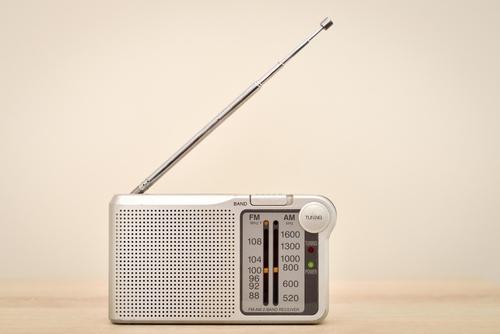

You might think of the radio as a simple box in your kitchen or a button on your car dashboard. Yet, for over a century, it has been one of the most powerful tools for bringing people together. Whether you are listening to breaking news, a hit song, or a community story from halfway across the world, radio creates a shared experience that few other mediums can match.
On February 13, 2026, the world will come together to celebrate World Radio Day. This isn’t just a day to look back at the history of broadcasting. It is a day to look forward. The landscape of audio is changing rapidly, and new technologies are reshaping how we produce and consume content.
This year, the focus is on a topic that is transforming every industry: Artificial Intelligence. However, the message from organizers is clear and reassuring. Technology is here to help broadcasters, not to replace the human connection that makes radio so special.
In this guide, we will explore the theme for 2026, the history behind this global event, and how you can participate in the celebration.
The 2026 theme: Radio and Artificial Intelligence
Every year, UNESCO selects a specific theme to guide the celebrations and discussions surrounding World Radio Day. For 2026, the theme is “Radio and Artificial Intelligence.”
At first glance, mixing a traditional medium like radio with advanced AI might seem contradictory. Radio is often loved for its raw, human quality—the crackle of a voice, the pause before a difficult question, or the laughter between hosts. AI, on the other hand, is built on data and algorithms.
However, the 2026 theme emphasizes a crucial distinction: AI is a tool, not a voice.
The goal is not to hand over the microphone to robots. Instead, the focus is on how ethical and responsible use of AI can support human creativity. UNESCO notes that while technology can innovate, it cannot build trust on its own. Trust is built by the broadcasters who serve their communities. When used correctly, AI can deepen the bond between a station and its listeners rather than breaking it.
How AI is reshaping the airwaves
The intersection of radio and AI offers fascinating possibilities. To help stations and listeners understand this shift, UNESCO has outlined several key areas where technology and broadcasting meet. These concepts highlight how the industry can modernize while keeping its soul.
Increasing accessibility for everyone
One of the most positive impacts of AI is its ability to make radio more inclusive. In the past, radio was purely an auditory experience. If you had a hearing impairment, or if the broadcast was in a language you didn’t speak, you were left out.
Today, AI tools can transcribe speech into text in real-time. This allows hearing-impaired audiences to “read” the radio as it happens. Furthermore, automatic translation tools can instantly convert a broadcast into minority languages. This opens up the airwaves to diverse communities who may have previously felt excluded from the public conversation.
Protecting truth and transparency
We live in an era where misinformation spreads quickly. Radio broadcasters have a responsibility to verify facts before they go on air. AI can assist journalists by quickly cross-checking sources and detecting potential “deepfakes” or false information.
However, transparency works both ways. If a station uses a synthetic voice or an AI-generated script, listeners deserve to know. The 2026 celebration encourages broadcasters to be open about when and how they use these tools. This transparency is essential for maintaining the listener’s trust.
Preserving history and memory
Radio stations possess vast archives of history—thousands of hours of interviews, music, and news reports. Unfortunately, much of this content sits in storage because it is difficult to organize.
AI can act as a super-powered archivist. It can listen to decades of old tapes, identify keywords, and index them. This breathes new life into dormant memories, allowing stations to reshare voices from the past that would otherwise be lost to time.
A brief history of World Radio Day
Understanding the future of radio also means respecting its past. World Radio Day is a relatively young observance for such an established medium, but its roots run deep in the desire for global cooperation.
The proclamation
The journey began in 2011, when the Member States of UNESCO proclaimed February 13 as World Radio Day. The proposal came from the Spanish Radio Academy, which wanted to honor the medium’s unique value.
The following year, in 2012, the United Nations General Assembly formally adopted the day (Resolution A/RES/67/124). This endorsement cemented February 13 as an International Day to be celebrated by all UN member states.
Why February 13?
The date was chosen to commemorate the day United Nations Radio was established in 1946. UN Radio was created to be a voice for peace and equality, broadcasting the proceedings of the UN to the world. Celebrating on this day serves as a reminder that radio was, and still is, a platform for democratic discourse.
The purpose of the day
The main objective of World Radio Day is to raise awareness among the public and the media about the importance of radio. It aims to:
- Encourage decision-makers to establish and provide access to information through radio.
- Enhance networking and international cooperation among broadcasters.
- Celebrate radio as a low-cost medium specifically suited to reaching remote communities and vulnerable people.
Why radio still matters in a digital age
With the rise of streaming services, podcasts, and social media, it is fair to ask: does traditional radio still matter? The answer is a resounding yes.
Crisis and emergency communication
When the internet goes down or power grids fail during natural disasters, radio signals often keep working. Battery-operated or hand-crank radios become lifelines. They provide critical updates on weather, safety instructions, and relief efforts. Radio remains one of the most resilient communication networks in existence.
Community connection
Algorithms on streaming services are great at predicting what song you want to hear next, but they are terrible at telling you what is happening in your local neighborhood. Local radio hosts attend the same town council meetings, shop at the same grocery stores, and face the same traffic jams as their listeners. That shared local experience creates a sense of belonging that a global playlist cannot replicate.
No barrier to entry
Radio is free. You do not need an expensive smartphone, a high-speed data plan, or a monthly subscription to tune in. This makes it a vital source of education and entertainment for people in developing regions or those facing financial hardship. It is the most democratic medium because it is available to almost everyone.
How to get involved
You don’t need to be a DJ or a sound engineer to celebrate World Radio Day. Here are a few simple ways you can participate on February 13, 2026.
For listeners
- Tune in locally: Spend the day listening to a local community station rather than your usual streaming playlist. You might discover a new voice or learn something new about your area.
- Engage with stations: Many stations will run special programs or call-ins for the day. Send a message or call in to share why radio matters to you.
- Explore international radio: Thanks to the internet, you can listen to radio stations from thousands of miles away. Use apps like Radio Garden to tune into a station in a country you have never visited.
For broadcasters and podcasters
- Discuss the theme: Dedicate a segment of your show to discussing Artificial Intelligence. Ask your listeners how they feel about AI voices or automated content.
- Be transparent: If you use AI tools for research or sound design, explain the process to your audience. Show them that the human element is still in charge.
- Collaborate: Reach out to a station in a different region or country. UNESCO encourages cross-border collaborations to exchange programs and sound archives.
Frequently Asked Questions
When is World Radio Day?
World Radio Day is celebrated every year on February 13.
What is the theme for World Radio Day 2026?
The theme for 2026 is “Radio and Artificial Intelligence.” It explores how AI can be used as a tool to support broadcasters, increase accessibility, and manage archives, without replacing the human connection.
Who organizes World Radio Day?
The day is led by UNESCO (United Nations Educational, Scientific and Cultural Organization) in partnership with broadcasters, organizations, and communities around the world.
Is radio listenership declining?
While habits are changing, radio remains one of the most widely consumed mediums globally. It reaches the widest audience of any mass media, especially in remote or developing areas where internet access may be limited.
Tuning in to the future
As we approach February 13, 2026, it is clear that radio is not stuck in the past. It is evolving. The integration of Artificial Intelligence offers exciting new tools for accessibility and creativity.
However, the heart of radio remains the same. It is about the human voice connecting with a human ear. It is about companionship, trust, and community. No matter how advanced the technology becomes, those values are what keep us tuning in, day after day. So, on World Radio Day, take a moment to turn up the volume and appreciate the voices that fill the airwaves.