

If you heard your house needed to “burp,” you might assume your plumbing was acting up. But “house burping” is actually a playful American nickname for a very serious, centuries-old German home maintenance tradition. While the name sounds funny, the results are nothing to laugh at. This simple daily habit can prevent mold, lower your energy bills, and keep your family healthier.
We seal our modern homes tightly to keep heat in during winter and cool air in during summer. While this is great for energy efficiency, it creates a problem: it traps stale air, moisture, and pollutants inside with us. Think of your home like a sealed Tupperware container. Eventually, that trapped air needs to be released.
This guide explains exactly what house burping is, why German households swear by it, and how you can use this technique to improve your own home’s air quality in just a few minutes a day.
What Exactly Is House Burping?
House burping is the practice of completely exchanging the stale, humid air inside your home with fresh, dry air from outside. It is a purposeful, rapid ventilation technique.
In many homes, we rely on slow, passive airflow—like a slightly cracked window or the gaps under doors—to keep air moving. However, this often isn’t enough to combat the daily buildup of moisture from cooking, showering, and even breathing. When this moisture has nowhere to go, it settles on your walls and windows, creating the perfect environment for mold growth.
House burping solves this by flushing the system. It releases the “pressure” of humidity and CO2 buildup, replacing it with oxygen-rich fresh air.
The German Origins: Lüften
While Americans call it house burping, in Germany, it is known as Lüften (to air out). It is deeply ingrained in the culture. If you rent an apartment in Germany, your lease might actually require you to do this to prevent mold damage to the property.
There isn’t just one way to air out a home. The Germans have specific terms for different methods, and understanding the difference is key to doing it right.
Stoßlüften (Shock Ventilation)
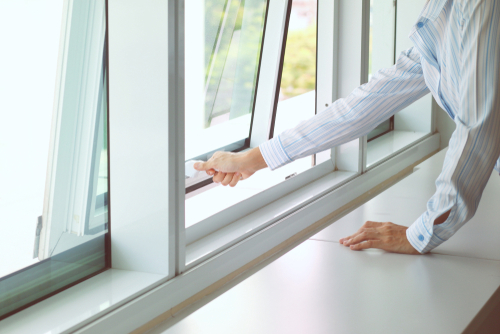
This is the most effective method. Stoßlüften involves opening your windows fully—not just tilting them—for a short burst of time, usually five to ten minutes. This creates a “shock” to the system that rapidly swaps indoor air for outdoor air without giving the walls and furniture enough time to cool down.
Querlüften (Cross Ventilation)
This takes shock ventilation a step further. You open windows on opposite sides of the house or apartment, and open the doors in between. This creates a draft or tunnel effect that flushes out the old air even faster.
Kippen (Tilting)
This is what you want to avoid. German windows often tilt open at the top. While this seems useful, leaving a window tilted for hours is inefficient. It cools down the walls around the window (which can actually invite mold) and lets heat escape without effectively exchanging the air in the room.
Why Your Home Needs to Burp
You might wonder if opening your windows in the middle of winter is a bad idea. It seems counterintuitive to let cold air in when you are paying to heat your home. However, the science behind building maintenance suggests otherwise.
Controlling Moisture and Mold
The average household generates several liters of water vapor every day just by living—boiling pasta, taking hot showers, and breathing. If that moisture stays trapped, it creates condensation on cold surfaces. Over time, this leads to mold and mildew. By “burping” the house, you send that humidity outside.
Improving Air Quality
Indoor air can be up to five times more polluted than outdoor air. Dust, chemical off-gassing from furniture, and carbon dioxide (CO2) build up over time. High CO2 levels can make you feel tired, sluggish, and foggy. A quick exchange of air brings in oxygen and improves your focus and energy.
Heating Efficiency
Here is a surprising fact: dry air heats up faster than humid air. If your home is damp, your heating system has to work harder to warm the water vapor in the air. By replacing humid indoor air with drier outdoor air, your heater may actually run more efficiently once the windows are closed.
How to Burp Your House (The Right Way)
You don’t need special tools or a contractor to do this. You just need a timer and a few minutes. Here is the step-by-step process for effective house burping.
1. Turn down the thermostat
If you have radiators or a smart thermostat located near a window, turn them down briefly so they don’t kick into overdrive when they sense the cold air.
2. Open everything wide
Go room to room. Open the windows fully. If you can, open windows on opposite sides of your home to create that Querlüften cross-breeze. Open the internal doors so air can flow freely through hallways.
3. Set a timer
This is the most important step. You want to exchange the air, not freeze your furniture.
- In winter: Aim for 3 to 5 minutes.
- In spring/autumn: Aim for 10 to 15 minutes.
- In summer: You can leave them open longer, preferably in the cooler mornings or evenings.
4. Close and reheat
Once the time is up, shut all the windows firmly. Turn your thermostat back to its normal setting. You will notice the fresh air feels crisp, and the room will return to a comfortable temperature quickly because the thermal energy is stored in your walls and furniture, not just the air.
Common Signs Your Home Needs Burping
How do you know if your home is gasping for fresh air? Look for these signs:
- Condensation on windows: If you wake up to wet windows in the morning, your humidity levels are too high.
- Lingering odors: If you can still smell last night’s dinner the next morning.
- Stuffy feeling: If the air feels heavy or you wake up with a dry mouth or headache.
- Mold spots: Small black spots appearing in corners or on window sills are a red flag.
Frequently Asked Questions
Will this increase my heating bill?
If done correctly, no. Leaving a window slightly cracked all day wastes significantly more energy than opening them wide for five minutes. The “shock” method changes the air without cooling down the solid structures of your home (walls, floors, sofas). Once you close the windows, the room recovers its warmth quickly.
How often should I do this?
Ideally, you should burp your house twice a day: once in the morning to clear out the humidity accumulated while sleeping, and once in the evening to clear out pollutants from the day.
What if it is raining or snowing?
You should still do it! Even if it is raining, the outside air is often drier than the humid air inside your bathroom or kitchen. Just keep the time shorter—around 3 minutes—to ensure rain doesn’t soak your window sills.
Do I need to do this if I have a modern HVAC system?
It depends. Many modern homes have Heat Recovery Ventilators (HRVs) that exchange air automatically. However, many standard HVAC systems simply recirculate existing indoor air. If you don’t have a dedicated fresh air intake system, manual burping is still highly beneficial.
Improving Your Home Habits
Adopting the habit of Lüften—or house burping—is a low-tech solution to a high-tech problem. As we build our homes to be more airtight and energy-efficient, we inadvertently trap things we don’t want.
Taking five minutes each morning to open your windows connects you to the outside world and resets your home’s environment. It is a simple, free act of care that protects your property and your health. So, go ahead and let your house let it all out.