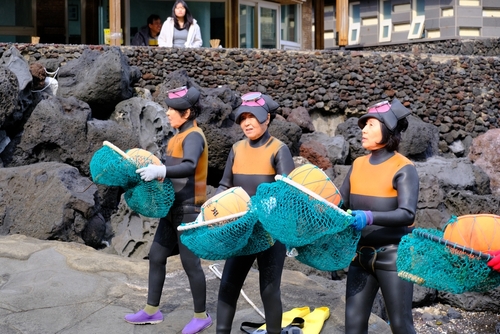

The sun hasn’t fully risen over the black volcanic rocks of Jeju Island, but the work has already begun. On the shore, a group of women are preparing for their day. They aren’t young athletes training for a competition. Many of them are in their 60s, 70s, and even 80s. They pull on thick rubber wetsuits, adjust their heavy lead weights, and double-check their masks.
These are the haenyeo.
For decades, outsiders have romanced them with nicknames like “Korean mermaids.” It paints a pretty picture, but it misses the reality of who they are. The haenyeo are not mythical creatures. They are mothers, grandmothers, and providers who have mastered one of the most difficult professions on earth. They dive into the freezing ocean without oxygen tanks to harvest seafood by hand.
This is a story of resilience, community, and a unique way of life that has survived for centuries—but now faces its biggest challenge yet.
Who Are the Haenyeo?
The word haenyeo translates simply to “sea women.” They are professional female divers living on Jeju Island, off the southern coast of South Korea. Their job is to harvest seafood from the ocean floor.
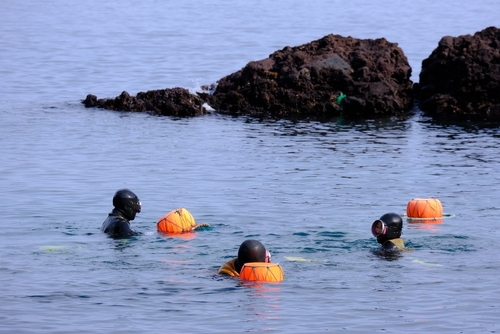
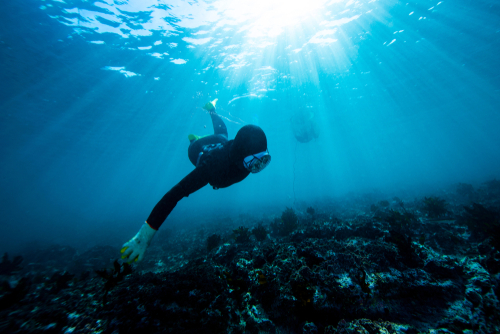
Unlike recreational divers or modern fishermen, haenyeo do not use breathing equipment. They practice muljil, a form of free-diving. On a single breath, they dive as deep as 10 meters (32 feet) to collect sea urchins, abalone, conch, and octopus.
Their work follows the rhythm of nature. They dive only when the tides and weather allow, often staying in the water for up to six hours a day. It is seasonal work, strictly regulated to ensure the ocean isn’t over-harvested. What makes the haenyeo most unique, however, is their demographic. Today, the vast majority of these divers are over the age of 60. It is a profession of endurance, led by the elderly women of the island.
A Brief History of the Tradition
Diving on Jeju wasn’t always women’s work. Historical records suggest that originally, men harvested abalone for the royal court. However, by the 18th century, the balance shifted.
Several factors drove this change. Men were often conscripted into wars or lost at sea during fishing expeditions. Additionally, heavy taxes were levied on male labor. To support their families and avoid these taxes, women stepped into the freezing waters.
Over time, diving became a strictly female profession. During Korea’s most difficult periods, including colonization and war, the haenyeo became the economic backbone of Jeju. Their ability to harvest food from the sea kept their families fed and their children in school. This wasn’t a hobby; it was a survival strategy that reshaped the island’s culture.
Training, Skill, and the “Sumbisori”
Becoming a haenyeo is not something you learn in a classroom. In the past, girls would start training as early as 11 years old. Today, it takes years of practice to master the breath-holding techniques required to work safely.
The most distinct sound on the Jeju coast is the sumbisori. When a diver surfaces after a minute or two underwater, she releases her breath with a sharp, whistling sound. This isn’t just a noise; it is a calculated technique to rapidly expel carbon dioxide and inhale fresh oxygen before diving again.
The Tools of the Trade
While the technique is ancient, the gear has evolved slightly to improve safety:
- Wetsuits: Until the 1970s, divers wore thin cotton swimsuits, offering little protection against the cold. Today, rubber wetsuits allow them to work longer hours.
- Tewak: This is the bright orange float that sits on the surface. It marks the diver’s location and holds the net where the catch is stored.
- Bitchang: An iron tool used to pry stubborn abalone from the rocks.
A Matriarchal Culture Shaped by the Sea
Because the haenyeo were the primary earners, the social structure of Jeju Island developed differently from the Korean mainland. While the mainland followed a strict Confucian patriarchy where men held the power, Jeju developed a semi-matriarchal society.
Women controlled the household finances. They paid for their children’s education and made key community decisions. It was often the fathers who stayed home to care for the children while the mothers went to sea.
This shared labor created a powerful bond of sisterhood. The Bulteok—an open-air stone windbreak with a fire in the center—was their meeting place. Here, they would dry off, change clothes, and discuss village matters. Rank within the haenyeo is determined by skill and experience, not wealth. The most senior divers, the sanggun, offer guidance and safety to the younger or less experienced divers.
Danger, Health, and the Cost of Work
It is important not to romanticize the danger involved in this profession. The ocean is unpredictable, and the physical toll is high.
Haenyeo face the constant risk of currents, jellyfish stings, and shark encounters. But the silent danger is the water pressure. Many divers suffer from chronic headaches, ear issues, and joint pain known as “jamusu-byung” (decompression sickness).
Working in cold water for decades impacts the body. Yet, these women continue to dive. It requires sharp judgment to know when to surface and when to stay down for one more catch. It is a balancing act between earning a living and staying alive.
UNESCO Recognition and Global Attention
In 2016, UNESCO inscribed the culture of Jeju Haenyeo on its Representative List of the Intangible Cultural Heritage of Humanity. This was a major victory for the divers and the Korean government.
The designation recognizes three things:
- The transfer of knowledge from generation to generation.
- The distinct diving technology and environmentally sustainable practices.
- The strong sense of community and women’s status in the household.
This recognition brought global fame. Museums opened, and photographers flocked to the island. However, fame does not always equal security. While the culture is celebrated, the livelihood remains fragile.
The Haenyeo Today: A Tradition at Risk
Despite the international applause, the number of haenyeo is dropping rapidly. In the 1960s, there were over 23,000 divers on Jeju. Today, there are fewer than 4,000.
The decline is understandable. The work is grueling and dangerous. Young women on Jeju now have access to higher education and office jobs that are safer and more stable. Why risk your life in the sea when you can work in a city?
Environmental changes also play a role. Pollution and rising sea temperatures have reduced the shellfish population, making it harder to earn a good wage.
Local governments are trying to help. They provide wetsuits, medical insurance, and subsidies to the divers. They have also established haenyeo schools to train new recruits. But replacing a generation of grandmothers who have known the ocean their entire lives is a difficult task.
Visiting Jeju: How to Engage Respectfully
If you visit Jeju Island, witnessing the haenyeo is a highlight. However, remember that these women are at work. They are not performers.
- Visit the Haenyeo Museum: Located in Gujwa-eup, this is the best place to learn about their history without interrupting their day.
- Keep Your Distance: If you see them on the shore, do not get in their way or touch their equipment.
- Ask Before You Snap: Always ask for permission before taking close-up photos.
- Buy Local: Many haenyeo sell their catch directly at small stalls near the beach. Buying a plate of fresh sashimi directly supports them.
Not Mermaids, But Masters of the Sea
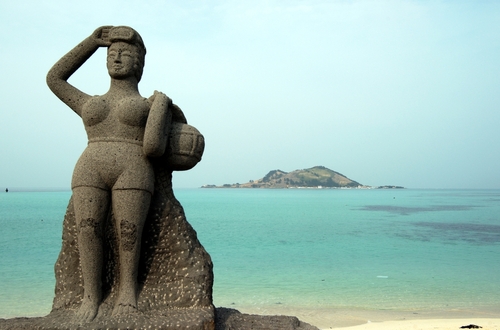
The haenyeo of Jeju are remarkable not because they are like mermaids, but because they are undeniably human. They struggle, they age, and they work incredibly hard.
They represent a harmony between humans and nature that is rare in the modern world. They take only what the sea provides, leaving enough for the ocean to replenish itself. As the number of divers dwindles, their legacy becomes even more important to preserve. They teach us that resilience isn’t just about strength; it’s about community, adaptability, and an enduring respect for the natural world.
Frequently Asked Questions
How long can a haenyeo hold her breath?
Most haenyeo hold their breath for one to two minutes. While this might sound short compared to competitive free divers, they repeat this process hundreds of times over several hours while performing physical labor.
Do haenyeo use oxygen tanks?
No. Using oxygen tanks is strictly forbidden. This rule exists to prevent overfishing. By limited their time underwater to a single breath, the haenyeo ensure the marine ecosystem remains sustainable.
How much do haenyeo earn?
Earnings vary greatly depending on the season, the harvest, and the skill of the diver. For most, it provides a supplementary income rather than a fortune. Many haenyeo also farm small plots of land to make ends meet.
Are there any male haenyeo?
While diving is overwhelmingly a female profession on Jeju, there are a handful of male divers, sometimes called haenam. However, they are very rare compared to the thousands of women who maintain the tradition.