
On February 6, 2026, the Sámi people across Norway, Sweden, Finland, and Russia will come together to celebrate Sámi National Day. This date is more than just a mark on the calendar. It is a powerful symbol of unity, resilience, and cultural pride for the Indigenous people of Sápmi, the region traditionally inhabited by the Sámi.
For those living within Sápmi or those looking to learn more about global Indigenous cultures, this day offers a unique opportunity to recognize a rich history that spans centuries. Whether you are seeing the vibrant colors of the Sámi flag for the first time or joining in the festivities yourself, understanding the significance of this day brings us closer together.
This guide explores the origins of Sámi National Day, the deep meaning behind its symbols, and what you can expect from the celebrations in 2026.
What is Sámi National Day?
Sámi National Day (Sámi álbmotbeaivi) is an ethnic national day celebrated annually on February 6. It honors the Sámi people, who are the Indigenous people of the northern parts of the Scandinavian Peninsula and large parts of the Kola Peninsula.
While national days are often associated with specific countries, this celebration transcends modern borders. It unites the Sámi population living in four distinct nations—Norway, Sweden, Finland, and Russia—as one people. It is a day to celebrate their shared language, culture, history, and future.
In 2026, the holiday falls on a Friday. This timing suggests that celebrations in many towns and villages will likely extend into the weekend, allowing for vibrant festivals, markets, and family gatherings.
The History Behind the Date
The choice of February 6 is not random. It marks a pivotal moment in Sámi political history.
The Trondheim Congress of 1917
On February 6, 1917, the very first Sámi congress took place in Trondheim (Tråante), Norway. This was a historic gathering. For the first time, North Sámi and South Sámi people from different countries gathered to discuss their common challenges and rights.
A key figure in this movement was Elsa Laula Renberg. A fearless political activist and reindeer owner, she was instrumental in organizing the congress. Her work laid the foundation for the cross-border cooperation that defines Sámi politics today.
establishing the Holiday
Although the 1917 congress was the spark, the official holiday came much later. In 1992, at the 15th Saami Conference in Helsinki, a resolution was passed to recognize February 6 as Sámi National Day.
The very first celebration took place the following year, in 1993. This coincided with the International Year of Indigenous People declared by the United Nations. Since then, the day has grown in importance. In places like Norway, it is an official flag day, meaning municipal buildings are required to fly the Norwegian flag, and often choose to fly the Sámi flag alongside it.
Symbols of Unity: The Flag and Anthem
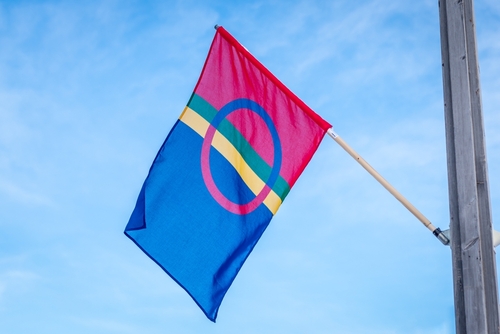
When you see images of Sámi National Day, you will immediately notice the bright, bold colors of the Sámi flag. Every element of the flag and the national anthem holds specific meaning.
The Sámi Flag
The flag was adopted by the Saami Council in 1986 in Åre, Sweden. Designed by Astrid Båhl from Skibotn, Norway, it features the four colors found in the traditional Sámi costume, known as the gákti:
- Red
- Blue
- Green
- Yellow
A circle sits on the division between the red and blue fields. The red half of the circle represents the sun, while the blue half represents the moon. This symbolism connects to the poem “Paiven parneh” (Sons of the Sun), describing the Sámi as children of the sun.
The National Anthem
The Sámi national anthem is called “Sámi soga lávlla” (Song of the Sámi Family or Song of the Sámi People). The lyrics were written by Isak Saba and were adopted as the anthem in 1986. The song speaks to the beauty of the northern landscape and the endurance of the Sámi people.
Celebrating Traditions and Culture
Celebrations on February 6 vary from region to region, but they all share a common theme of visibility and pride.
Wearing the Gákti
One of the most visible traditions is wearing the gákti. This is the traditional clothing worn by Sámi people. It is far more than just a costume; the design, colors, and patterns of a gákti can tell you where a person is from, their family background, and sometimes their marital status. On National Day, seeing hundreds of people wearing their finest gákti creates a stunning display of living history.
Food and Community
Food plays a central role in the celebrations. Traditional dishes often feature reindeer meat, fish, and berries.
- Bidos: In many places, especially in Norway, a reindeer meat stew called bidos is served. It is considered a celebratory meal, often prepared for weddings and special occasions.
- Coffee: No gathering is complete without coffee, often boiled over an open fire.
Official Ceremonies and Events
In administrative centers across Sápmi, such as Karasjok (Norway), Inari (Finland), and Kiruna (Sweden), official ceremonies are held. These often include:
- Flag hoisting ceremonies in the morning.
- Speeches by local leaders and members of the Sámi Parliaments.
- Singing of the national anthem.
- Cultural performances featuring joik, the traditional Sámi form of song.
The Jokkmokk Winter Market
While not exclusively a National Day event, the Jokkmokk Winter Market in Sweden often takes place around the same week as February 6. It has been running for over 400 years and is a major cultural gathering spot where artisans sell traditional handicrafts (duodji), and visitors can experience reindeer racing and cultural exhibitions.
Respectful Celebration for Visitors
If you are visiting Norway, Sweden, Finland, or Russia during this time, you might witness these celebrations. Visitors are generally welcome to observe public festivities.
The best way to participate is to listen and learn. attending a museum exhibition, listening to Sámi music, or trying traditional food are excellent ways to show support. It is a day for the Sámi people to tell their story, making it the perfect time for others to listen to it.
Looking Ahead to 2026
Because Sámi National Day 2026 falls on a Friday, we can expect a particularly festive atmosphere. Schools and kindergartens across the Nordic countries often spend the week leading up to the day learning about Sámi culture.
For the Sámi community, it is a day to assert their presence and rights. For the wider world, it serves as a reminder of the vibrant Indigenous culture that thrives in the Arctic and sub-Arctic regions.
Frequently Asked Questions
Is Sámi National Day a public holiday?
It depends on the country and the specific employment contracts. In Norway, Sweden, and Finland, it is not a general public holiday where all businesses close, but it is an official flag day. However, for many working in Sámi administrative bodies or schools, it is treated as a holiday or a day of special observation.
What do the circles on the Sámi flag represent?
The circle on the flag represents two celestial bodies. The red portion of the circle symbolizes the sun, and the blue portion symbolizes the moon. This reflects the strong connection the Sámi people have with nature and the cosmos.
How do you say “Happy National Day” in Sámi?
There are several Sámi languages, so the greeting changes depending on the region. In North Sámi, which is the most widely spoken, you say: “Lihkku sámi álbmotbeivviin.”
Why is the holiday celebrated in four different countries?
The traditional land of the Sámi people, Sápmi, existed long before the current national borders of Norway, Sweden, Finland, and Russia were drawn. The Sámi people are one nation divided by these borders. The National Day is a way to celebrate their unity across these state lines.
What is a “joik”?
A joik is a traditional form of Sámi song. It is one of the oldest living music traditions in Europe. A joik does not just describe something; it attempts to capture the essence of a person, animal, or place through sound. It is often performed during National Day celebrations.
Honoring a Shared Heritage
Sámi National Day is a vibrant testament to the endurance and spirit of the Sámi people. From the political struggles of 1917 to the colorful celebrations of 2026, February 6 stands as a beacon of cultural pride.
As we approach the 2026 celebration, taking the time to understand the history of the flag, the anthem, and the people enriches our global community. Whether you are in the snowy streets of Tromsø or reading from halfway across the world, honoring this day is a step toward acknowledging and respecting Indigenous history.