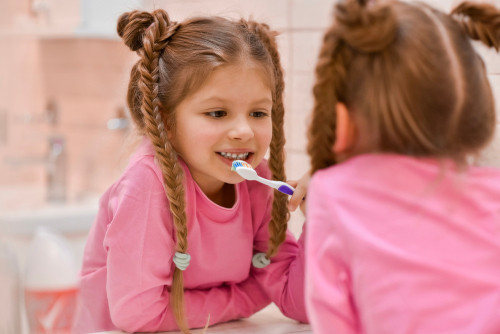

February is a special time for smiles across the country. It marks National Children’s Dental Health Month (NCDHM), a nationwide celebration dedicated to helping children build lifelong healthy habits.
For parents, caregivers, and teachers, this month offers a perfect opportunity to focus on oral hygiene in a fun and positive way. Developing a good routine now can save your family time, money, and stress in the future.
Whether you are looking for free resources, activity ideas, or simply want to understand why baby teeth matter so much, this guide covers everything you need to know about celebrating in February 2026.
What is National Children’s Dental Health Month?
National Children’s Dental Health Month is an annual health observance sponsored by the American Dental Association (ADA). Every February, thousands of dental professionals, healthcare providers, and educators come together to raise awareness about the importance of oral health.
The event has a long history. It began as a one-day event in Cleveland, Ohio, back in 1941. It became a week-long observance in 1955, and finally, in 1981, it was extended to a month-long program.
Today, the goal remains simple: to ensure all children have access to the information and care they need to keep their teeth and gums healthy.
Why Early Dental Care Matters
You might wonder why there is so much focus on baby teeth if they eventually fall out. The truth is that primary teeth (baby teeth) play a crucial role in a child’s development.
Healthy baby teeth help children chew food easily and speak clearly. They also hold space in the jaw for the permanent adult teeth that are growing under the gums. If a baby tooth is lost too early due to decay, it can cause crowding or alignment issues later on.
Furthermore, tooth decay is the most common chronic disease in children. The good news is that it is largely preventable. By establishing a routine during National Children’s Dental Health Month, you are setting the foundation for a lifetime of health.
Using the 2026 Brushing Calendar
One of the most helpful tools available for parents this year is the 2026 Brushing Calendar. The ADA and MouthHealthy.org have released downloadable calendar pages for every month of the year, from January through December.
This tool transforms a daily chore into a fun accomplishment. Here is how you can use it:
- Download and Print: Visit the MouthHealthy website to find the 2026 calendar. Print the page for February (or the current month).
- Hang it Up: Place the calendar in the bathroom at your child’s eye level.
- Track Progress: Every time your child brushes their teeth in the morning and before bed, let them color in the circle for that day.
- Celebrate Success: At the end of the week or month, celebrate their consistency. This positive reinforcement builds confidence and makes the routine stick.
The calendar serves as a daily visual reminder that brushing twice a day is a non-negotiable part of the daily routine.
Simple Steps for a Healthy Smile
You do not need complicated equipment to celebrate National Children’s Dental Health Month. Good oral health comes down to a few simple, consistent habits.
The 2-2 Rule
The ADA recommends the “2min2x” rule. This means children should brush their teeth for two minutes, two times a day.
For young children, two minutes can feel like a long time. Try playing a favorite song or using a timer to make the time pass quickly. Brushing together as a family can also help, as children often mimic what they see their parents doing.
Flossing Fundamentals
Many parents ask when they should start flossing their child’s teeth. The answer is simple: start as soon as your child has two teeth that touch.
Cavities often form between teeth where toothbrush bristles cannot reach. Flossing once a day removes plaque and food particles from these tight spaces. Using handheld flossers designed for kids can make this process easier for small hands to manage.
Smart Snacking
Diet plays a major role in dental health. Sugary snacks and drinks feed the bacteria that cause cavities. Frequent snacking throughout the day keeps the acid levels in the mouth high, which attacks tooth enamel.
Focus on tooth-friendly foods like crunchy vegetables, cheese, and yogurt. Water is always the best drink choice, especially water containing fluoride, which helps strengthen teeth.
Ideas for Celebrating in 2026
There are many ways to make oral health engaging during February. Here are a few activities to try at home or in the classroom.
At Home
- The Science of Stains: Use a hard-boiled egg to show how liquids promote stains. Soak one egg in soda or tea and another in water. Let your child brush the stained egg with a toothbrush to see how cleaning works.
- Read Aloud: Pick up books about visiting the dentist or losing a tooth. Stories can make the unknown feel familiar and safe.
- New Gear: February is a great time to let your child pick out a new toothbrush with their favorite character or color.
In Schools and Communities
Teachers often use this month to invite local dentists for classroom visits. These presentations help demystify the dentist’s office.
You can also download free activity sheets, coloring pages, and posters from the ADA website. These materials usually feature fun characters and easy-to-understand messages about fighting “sugar bugs” and keeping smiles bright.
Planning Your Child’s First Dental Visit
If your child has not visited the dentist yet, National Children’s Dental Health Month is the perfect reminder to schedule that appointment.
The general rule is “First visit by first birthday.” Seeing a dentist by age one allows the doctor to check for early signs of decay and ensure the jaw is developing correctly. It also helps your child get used to the sights and sounds of the dental office before they are old enough to feel anxious.
When you go, keep the conversation positive. Avoid using words like “pain” or “hurt,” even if you are trying to reassure them. Simply tell them the dentist is a friendly doctor who helps keep their teeth strong.
Frequently Asked Questions (FAQs)
When is National Children’s Dental Health Month?
It takes place every year during the entire month of February.
Who sponsors this awareness month?
It is sponsored by the American Dental Association (ADA), the nation’s largest dental association.
Is the NCDHM Brushing Calendar free?
Yes. The ADA and MouthHealthy.org provide the 2026 Brushing Calendar and other activity sheets as free downloads for parents and teachers.
When should my child first see a dentist?
The ADA recommends that a child visit the dentist within six months of their first tooth appearing, and no later than their first birthday.
How much toothpaste should my child use?
For children under three years old, use a smear of fluoride toothpaste the size of a grain of rice. For children aged three to six, use a pea-sized amount. Always encourage them to spit out the toothpaste rather than swallow it.