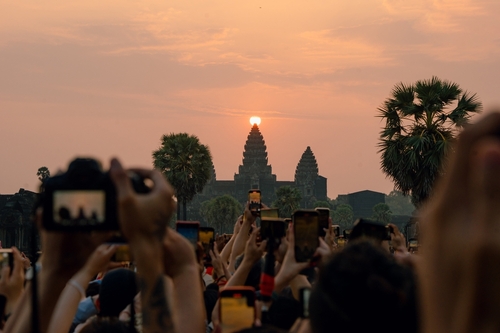

Imagine standing outside in the early morning chill, watching the sun peek over the horizon exactly due east. Around you, the world is waking up. In the Northern Hemisphere, flowers are pushing through the soil, signaling the return of warmth. In the Southern Hemisphere, the air is turning crisp, hinting at the cozy months ahead. Regardless of where you stand, the day and night are almost perfectly balanced in length.
This moment of equilibrium is known as the March equinox. It is an astronomical milestone that happens every year, yet it always feels like a fresh start. For 2026, this event isn’t just a date on the calendar; it is a global signal for renewal and change. It reminds us that our planet operates on a rhythm of cycles, moving from light to dark and back again.
Whether you are looking forward to the first blooms of spring or the golden leaves of autumn, the equinox is a time to pause. It invites us to find balance in our own lives, mirroring the balance we see in the sky. Let’s explore what happens during this unique celestial event, why it matters, and how cultures around the world mark the occasion.
What Is the March Equinox?
The term “equinox” comes from the Latin words aequus, meaning “equal,” and nox, meaning “night.” Put them together, and you have “equal night.” This name perfectly describes what happens during this event. For a brief period, day and night are nearly the same length all over the world.
From a scientific perspective, the March equinox (often called the vernal equinox in the Northern Hemisphere) occurs when the Sun sits directly above Earth’s equator. At this precise moment, the Earth’s tilt is neutral relative to the Sun. Neither the Northern nor the Southern Hemisphere is tilted toward or away from our star. Instead, the Sun’s rays shine equally on both halves of the planet.
This balance is rare. For most of the year, Earth’s tilt causes one hemisphere to receive more sunlight than the other, creating our seasons. The equinox is the tipping point—the moment we switch from one extreme to the other.
When Does It Happen in 2026?
In 2026, the March equinox will take place on Friday, March 20.
While the date usually falls on March 20 or 21, the exact timing of the event depends on the Earth’s orbit around the Sun. At the specific moment of the equinox, the Sun crosses the celestial equator moving from south to north.
This crossing marks the official astronomical beginning of spring for those in the North and autumn for those in the South. It is a shared moment in time, even if our local clocks show different hours.
The Science Behind the Season: Why It Happens
To understand the equinox, we have to look at how our planet moves through space. Earth doesn’t spin upright; it spins on an axis that is tilted at about 23.5 degrees. As we orbit the Sun over the course of 365 days, this tilt points different parts of the planet toward the Sun.
- Solstices: In June and December, the tilt is at its maximum. One hemisphere gets the most direct sunlight (summer), while the other gets the least (winter).
- Equinoxes: In March and September, the planet reaches a point in its orbit where the tilt is sideways relative to the Sun.
Because the tilt is effectively “canceled out” during the equinox, sunlight is distributed evenly from the North Pole to the South Pole. If you were standing on the equator at noon on this day, the Sun would be directly overhead. If you watched the sunrise and sunset, you would see the Sun rise exactly due east and set exactly due west. This is true no matter where you live on Earth, making it a unifying global phenomenon.
Seasonal Significance Around the World
The March equinox is a turning point for nature. The changes in light trigger biological clocks in plants and animals, telling them it is time to transition.
The Northern Hemisphere: The Start of Spring
For countries like the United States, Canada, and nations across Europe and Asia, this event signals the end of winter. The days will start getting longer than the nights. Temperatures rise, snow melts, and dormant plants begin to grow again. It is a season of hope, energy, and rebirth.
The Southern Hemisphere: The Start of Autumn
For countries like Australia, New Zealand, South Africa, and nations in South America, the March equinox signals the arrival of autumn. The intense heat of summer begins to fade. Days start getting shorter, and the natural world prepares for a period of rest. It is a season of harvest, reflection, and cooling down.
Cultural and Traditional Celebrations
Since ancient times, humans have tracked the movement of the Sun. The equinox was crucial for agriculture, telling farmers when to plant seeds or harvest crops. Because of this deep connection to survival, many cultures developed festivals to honor the day.
Nowruz (Persian New Year)
One of the most famous celebrations tied to the March equinox is Nowruz. Celebrated by millions of people in Iran, Central Asia, and the Middle East, Nowruz literally means “New Day.” It marks the beginning of the new year in the Persian calendar.
Families celebrate by cleaning their homes (a practice called “shaking the house”) and setting a special table known as the Haft-sin. This table features seven items starting with the letter ‘S’, each symbolizing concepts like rebirth, love, and health. It is a beautiful example of how the astronomical start of spring aligns with human hopes for a fresh start.
Spring Festivals and Rituals
Historically, societies celebrated the return of the sun with fertility festivals. The Germanic goddess Ostara is often associated with the spring equinox, representing dawn and light. Symbols like eggs and hares—representing fertility and new life—were common in these ancient celebrations and have influenced modern spring traditions.
Modern Earth Celebrations
In recent years, the equinox has become a time to focus on planetary health. Because it is a day of global balance, many people use it to celebrate Earth Day (which is officially in April, but often spiritually linked to the equinox) or simply to acknowledge our connection to nature. It serves as a reminder that we are part of a larger, living system.
Ways to Observe and Celebrate
You don’t need a grand festival to connect with the energy of the equinox. Here are simple ways you can welcome the change of season in 2026.
1. Celebrate Nature
Take a walk at sunrise or sunset. Notice the quality of the light. If you are entering spring, look for the first buds on the trees. If you are entering autumn, look for the changing colors of the leaves. Simply being outside helps you sync your body with the rhythm of the season.
2. Start a Seasonal Project
If it is spring in your area, plant some seeds. Whether it is a full vegetable garden or a single pot of basil on your windowsill, nurturing new life is a powerful way to honor the season. If it is autumn, consider preserving food or preparing your home for the cooler months.
3. Practice Reflection
Use the theme of “balance” as a prompt for journaling or meditation. Are you working too hard? Do you need more rest? Just as the day and night are equal, try to find an equilibrium in your own schedule.
4. Learn and Share
This is a great opportunity to teach children about science and astronomy. Use a globe and a flashlight to demonstrate how the Earth’s tilt works. Share facts about the equinox with friends or host a simple dinner to celebrate the changing season together.
Fun Science and Skywatching Tips
If you enjoy observing the sky, the March equinox offers some unique opportunities.
- Track the Sunrise: Find a fixed landmark near your home. Watch where the sun rises relative to that landmark a few weeks before the equinox, on the day of the equinox, and a few weeks after. You will see a noticeable shift as the sun marches northward across the horizon.
- The “Equal Daylight” Myth: While we say day and night are equal, you might notice your weather app shows slightly more than 12 hours of daylight on the equinox. This is due to atmospheric refraction. The Earth’s atmosphere bends sunlight, allowing us to see the Sun before it physically clears the horizon and after it has technically set. This gives us a few extra minutes of light.
- First Point of Aries: In astronomy, the position of the Sun on the March equinox is used as a reference point for mapping the stars. It is known as the “First Point of Aries,” even though, due to the wobble of the Earth’s axis over thousands of years, this point is currently located in the constellation Pisces.
Frequently Asked Questions
Is the equinox on the same day every year?
Not exactly. The March equinox usually occurs on March 20 or 21, but it can occasionally fall on March 19. This variation happens because our calendar year (365 days) doesn’t perfectly match the time it takes Earth to orbit the Sun (about 365.25 days). Leap years help correct this drift, which shifts the date of the equinox slightly.
Do eggs really balance on their ends during the equinox?
You may have heard the myth that you can stand a raw egg on its end only during the equinox due to special gravitational pulls. The truth is, gravity isn’t significantly different on this day. With patience and a steady hand, you can balance an egg on its end any day of the year!
Is the March equinox the start of spring for everyone?
No. It marks the start of spring only for the Northern Hemisphere (places like Europe, North America, and most of Asia). For the Southern Hemisphere (places like Australia, South America, and southern Africa), the March equinox marks the beginning of autumn.
Why is it called the “Vernal” Equinox?
“Vernal” comes from the Latin word ver, meaning spring. Because much of the early history of astronomy was recorded by civilizations in the Northern Hemisphere, they named it the “Spring Equinox.” However, referring to it simply as the “March Equinox” is more inclusive and accurate for a global audience.
Finding Your Balance This Season
The March Equinox 2026 is a scientific event, but it is also a beautiful reminder of the balance inherent in nature. It marks a point of transition where light and dark stand equal before tipping the scales once again.
Whether you are welcoming the warmth of spring or settling into the comfort of autumn, this Friday, March 20, is an invitation to reset. Look at your own life and see where you can create more harmony. Just as the Earth finds its balance, you can too.
Date to Remember: Friday, March 20, 2026.