
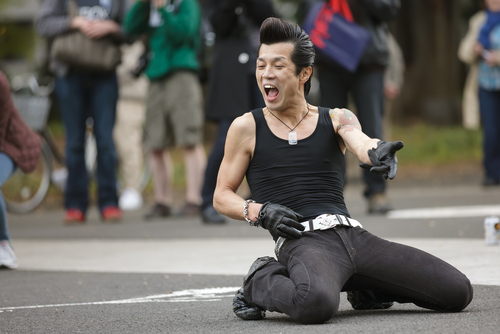
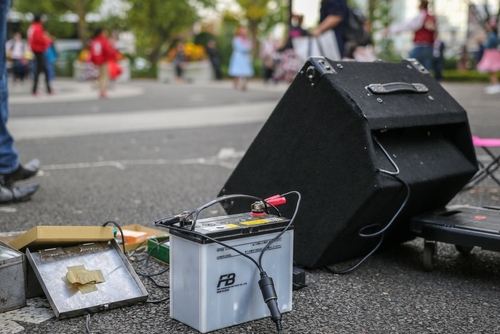
On a Sunday afternoon in Yoyogi Park, the unmistakable sound of Elvis Presley’s “Jailhouse Rock” cuts through the air. Men in their 50s and 60s dance in formation, their towering pompadours catching the sunlight. Leather jackets embroidered with kanji gleam as they execute perfectly synchronized spins. Portable speakers pump out songs from 1950s America while a crowd gathers to watch.
This is Tokyo’s rockabilly scene—a subculture that has thrived in Japan for decades. But why does a music and fashion movement from 1950s America flourish so passionately in modern Tokyo? The answer reveals something deeper about cultural preservation, identity, and Japan’s unique relationship with Western counterculture.
Japan’s rockabilly community isn’t simply imitating the past. It’s preserving it, refining it, and making it their own.
What Is Rockabilly?
Rockabilly emerged in the American South during the 1950s as a fusion of rock and roll and country music (sometimes called “hillbilly” music). The genre was defined by artists like Elvis Presley, Carl Perkins, and Johnny Cash. It became the soundtrack of rebellion for young Americans, embodying a raw energy that challenged the conservative norms of the era.
The style came with its own look: greased-back hair, leather jackets, rolled-up jeans, and an attitude of defiance. Rockabilly represented youth culture breaking free from tradition.
By the 1960s, rockabilly faded in popularity as rock and roll evolved into new forms. But the culture didn’t disappear—it found new life overseas, particularly in Japan.
How Rockabilly Arrived in Japan
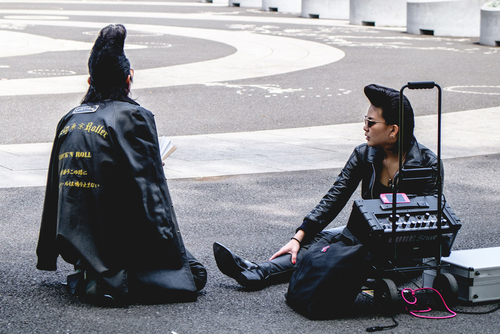
American cultural influence flooded into Japan after World War II. U.S. military bases brought rock and roll records, films, and fashion. Japanese youth, eager to embrace Western culture, absorbed these influences with enthusiasm.
During the 1950s and 60s, rock and roll became popular among Japanese teenagers. Bands like The Strangers and Carol emerged, performing American-style rockabilly in Japanese venues. But it wasn’t until the 1980s that Tokyo’s rockabilly revival truly took hold.
Young Japanese musicians and fashion enthusiasts rediscovered the music and style of 1950s America. They studied old records, films, and photographs with intense focus. What started as a niche interest grew into a dedicated subculture centered around Yoyogi Park.
Japan has a history of adopting and refining Western subcultures—jazz clubs in the 1930s, denim craftsmanship, vintage Americana. Rockabilly followed this pattern. But instead of simply copying the style, Japanese enthusiasts elevated it with their own precision and attention to detail.
Yoyogi Park: The Heartbeat of Tokyo Rockabilly
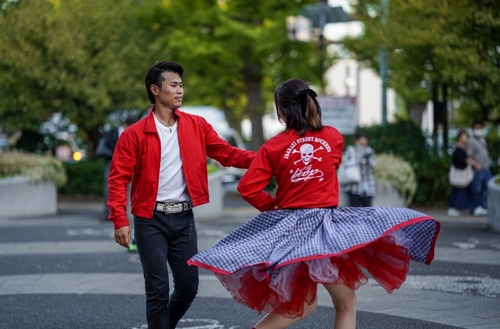
Every Sunday, near the entrance to Harajuku, rockabilly dancers gather in Yoyogi Park. This weekly ritual has continued for decades, drawing both longtime participants and curious onlookers.
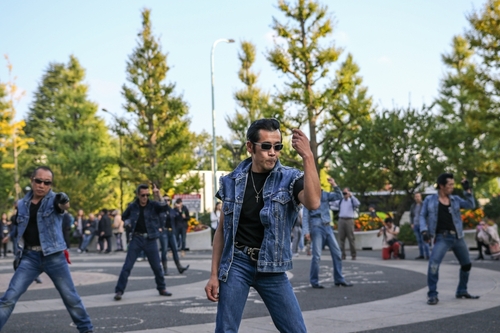
The dancers form circles and perform choreographed routines to classic rockabilly tracks. Their movements are precise, rehearsed, and synchronized. This isn’t spontaneous dancing—it’s a carefully practiced performance.
The fashion is equally deliberate. Men wear towering pompadours that require daily maintenance and generous amounts of styling product. Leather jackets feature embroidered designs, often incorporating Japanese kanji alongside American symbols. Pointed boots and creepers complete the look.
Within these groups, there’s a clear social structure. Experienced members lead the routines while newer participants learn the steps. Respect and discipline define the community. This isn’t casual fun—it’s a serious commitment.
The Yoyogi gatherings serve as both performance and ritual. They’re a space where participants can express an identity that exists outside their everyday lives.
The Fashion: Precision, Pride, and Craft
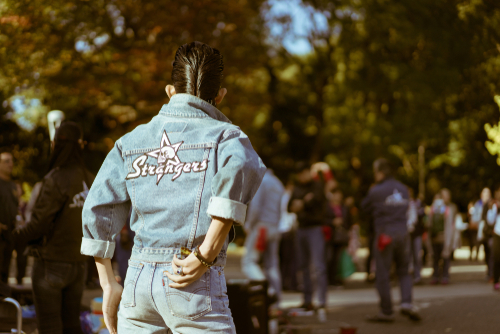
Japanese rockabilly fashion stands out for its meticulous attention to detail. The pompadour alone can take years to perfect. Styling requires skill, patience, and high-quality products. Some participants spend an hour or more each day maintaining their hair.
Leather jackets are often custom-made by Japanese craftsmen. The embroidery is intricate, featuring everything from flames and eagles to Japanese characters and personal symbols. These jackets aren’t just costumes—they’re works of art.
Japanese tailoring brings an extra level of refinement. Seams are perfectly aligned. Leather is carefully selected. Every element is considered.
This dedication reflects a broader cultural value: if something is worth doing, it’s worth doing with excellence. Japanese rockabilly enthusiasts don’t just dress the part—they embody it with precision that often surpasses the original American style.
Why Rockabilly Thrives in Japan
Mastery and Preservation
Japan has a long tradition of preserving cultural practices. Tea ceremonies, calligraphy, martial arts—all require years of study and respect for tradition. Rockabilly fits this pattern. Participants approach the music and fashion with the same dedication they might give to any traditional art form.
For many, rockabilly isn’t just entertainment. It’s a craft to be mastered and a history to be preserved.
Structured Rebellion
Japanese society values conformity and discipline, especially in professional settings. Many rockabilly participants hold conventional jobs during the week. But on Sundays, they step into a different identity.
Rockabilly offers a structured form of rebellion. It’s bold and expressive, but it follows rules. The leather jackets and pompadours signal defiance, yet the choreographed dances and group hierarchy reflect discipline.
This balance makes rockabilly accessible within Japanese culture. It allows individuals to express individuality without completely rejecting societal expectations.
Community and Belonging
The rockabilly scene provides a tight-knit community. Members support each other, share techniques, and pass down knowledge. Some groups span generations, with older participants mentoring younger ones.
This sense of belonging is powerful. In a society where social connections are often tied to work or family, rockabilly offers an alternative space for friendship and identity.
Nostalgia Without Direct History
Japanese rockabilly enthusiasts romanticize a version of 1950s America they never experienced. They engage with the era through records, films, and photographs—creating an idealized vision of rebellion and freedom.
This distance allows for creative reinterpretation. Japanese rockabilly isn’t bound by the lived reality of 1950s America. Instead, it’s a cultural fantasy—one that can be shaped, refined, and made uniquely Japanese.
The Music Scene Beyond the Park
Tokyo’s rockabilly culture extends beyond Yoyogi Park. Live houses and underground venues host Japanese rockabilly bands that perform both covers and original songs. Groups like The 50 Kaitenz and Peachy Keen keep the sound alive.
Vinyl culture thrives within the community. Record collectors hunt for rare American pressings and Japanese reissues. Some enthusiasts own thousands of records, carefully cataloging each one.
Festivals and events bring together rockabilly fans from across Japan. These gatherings celebrate the music, fashion, and community that define the scene.
Some Japanese rockabilly musicians blend the genre with psychobilly and punk, creating hybrid styles that push the boundaries while respecting the roots.
Misconceptions About Japanese Rockabilly
It’s easy to misunderstand Japan’s rockabilly scene. Some outsiders dismiss it as cosplay or parody. But this misses the point entirely.
Japanese rockabilly isn’t imitation for entertainment. It’s a serious cultural practice rooted in respect and dedication. Participants aren’t mocking 1950s America—they’re honoring it.
Questions about cultural appropriation occasionally arise. But the rockabilly community approaches American culture with reverence, not exploitation. They study the history, master the techniques, and preserve the aesthetics with care.
This is intentional cultural exchange. Japanese enthusiasts have taken a piece of American history and kept it alive with a level of commitment that few Americans maintain today.
How Visitors Can Experience It Respectfully
If you’re visiting Tokyo and want to witness the rockabilly scene, Yoyogi Park is the place to go. Gatherings typically happen on Sunday afternoons near the Harajuku entrance.
When you arrive, observe respectfully. Photography is generally allowed, but always ask permission before taking close-up shots of individuals. Respect personal space and avoid disrupting performances.
If you want to support the scene, visit live houses that host rockabilly bands. Purchase records from local shops. Engage with the community thoughtfully, recognizing the dedication behind what you see.
This isn’t a tourist attraction—it’s a living subculture. Approach it with the same respect you’d give any cultural practice.
What Japan’s Rockabilly Scene Teaches Us About Cultural Exchange
Subcultures don’t belong to one nation. They evolve, spread, and transform as they cross borders. Japan’s rockabilly scene demonstrates that cultural reinterpretation can deepen appreciation rather than dilute it.
Japan has become an archivist of Western counterculture. Jazz, denim, vintage motorcycles—all have been preserved and refined in Japan long after their popularity faded in the West.
The paradox is striking: sometimes traditions survive stronger abroad than in their place of origin. American rockabilly has largely faded, but in Tokyo, it thrives with intensity and purpose.
This teaches us that culture is fluid. It belongs to those who care for it, regardless of geography.
A Time Capsule That Refuses to Close
Back in Yoyogi Park, the music plays on. Dancers spin and stomp in perfect rhythm. Their leather jackets catch the light. Their pompadours stand tall.
For decades, this scene has endured. Participants have aged, but the community remains. New members join, learning the steps and styling their hair under the guidance of veterans.
Japan didn’t just adopt rockabilly—it protected it. What began as an American youth rebellion has found a permanent home in Tokyo, preserved with care and celebrated with pride.
The subculture is a time capsule that refuses to close. And every Sunday, it opens again.
Frequently Asked Questions (FAQs)
Where can I see Tokyo’s rockabilly dancers?
The rockabilly dancers typically gather at Yoyogi Park in Tokyo, especially on Sundays. This is where they showcase their dancing and fashion, creating a vibrant and unique atmosphere.
Are visitors allowed to interact with the dancers?
Yes, visitors are welcome to watch and take photos, but it’s important to be respectful. Most dancers are open to conversation and happy to share their passion for rockabilly, though some may prefer to stay focused on their performance.
Is there an entry fee to watch the performances?
No, the performances are free to the public. The dancers gather as part of a long-standing tradition rather than a commercial event.
Can anyone join the rockabilly community in Tokyo?
While becoming part of this community requires dedication to the style and culture, newcomers are usually welcomed if they show genuine interest and respect for the traditions.
How did rockabilly become popular in Japan?
Rockabilly was introduced to Japan in the 1950s alongside American music and films. Over time, Japanese enthusiasts embraced the style and added their own unique flair, leading to the subculture seen today.