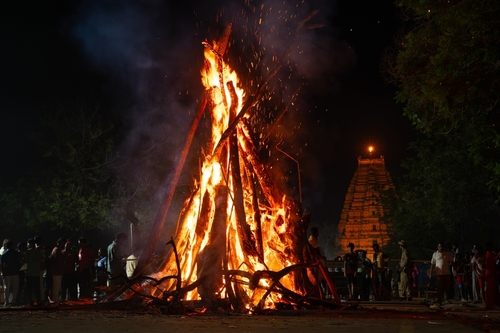

Picture a night illuminated by towering flames. The air is filled with the rhythmic beat of drums, the chanting of prayers, and the warmth of a community gathered together. Sparks dance upward into the darkness, symbolizing something far greater than just burning wood. This is the atmosphere of Holika Dahan.
Celebrated across India and by diaspora communities around the world, Holika Dahan—often called Choti Holi—is a powerful ritual observed the evening before the vibrant festival of colors. On March 3, 2026, millions will gather around bonfires to mark a spiritual victory. It is a night dedicated to burning away negativity and ego, making space for the joy and renewal that follows the next morning.
What Is Holika Dahan?
Holika Dahan is a significant Hindu festival celebrated annually on the night of the full moon (Purnima) in the month of Phalguna. While many people around the world are familiar with Holi—the playful throwing of colored powders—Holika Dahan is the solemn and spiritual precursor to that celebration.
The name itself gives a clue to its meaning. “Dahan” means burning or combustion. The ritual involves lighting a ceremonial bonfire to symbolize the triumph of good over evil. It represents the burning of the demoness Holika, marking the victory of righteousness and true devotion over malice.
For many devotees, this isn’t just a historical commemoration. It is a symbolic cleansing. As the fire burns, it is believed to purify the environment and the hearts of those present, removing negative energies and preparing everyone for the fresh start that spring brings.
When Is Holika Dahan 2026?
Holika Dahan follows the Hindu lunar calendar, so the date changes every year on the Gregorian calendar.
In 2026, Holika Dahan falls on Tuesday, March 3.
The ritual is typically performed in the evening, after sunset. Tradition emphasizes performing the puja (prayer) during a specific auspicious time window, known as the muhurat. Lighting the fire during this time is believed to bring maximum spiritual benefit and protection to the community.
The following day, Wednesday, March 4, 2026, is Rangwali Holi, the main day of festivities where people play with colors and water.
The Legend Behind the Fire
The significance of the bonfire is rooted in ancient mythology, specifically the story of Prahlad and Holika. This legend is central to understanding why the festival celebrates the victory of good over evil.
According to the texts, there was once a powerful demon king named Hiranyakashipu. He had earned a boon that made him nearly immortal and, consumed by ego, he demanded that everyone in his kingdom worship him as a god. However, his own son, Prahlad, refused. Prahlad was a devoted follower of Lord Vishnu and remained steadfast in his faith despite his father’s anger.
Hiranyakashipu tried many times to kill his son but failed. Finally, he asked his sister, Holika, for help. Holika had a special cloak (or in some versions, a boon) that protected her from fire. The plan was for Holika to sit in a blazing fire with young Prahlad on her lap. She would survive, and Prahlad would burn.
But as the fire roared, a miracle occurred. The protective power was transferred to Prahlad, or in some tellings, the cloak flew from Holika’s shoulders to cover the boy. Holika, who used her powers for evil, was consumed by the flames, while Prahlad emerged completely unscathed due to his devotion.
This story serves as a reminder that faith and truth eventually conquer ego and cruelty. The bonfire lit on Holika Dahan represents the fire that burned Holika, serving as an eternal symbol that those who torment the faithful will face destruction, while the righteous are protected.
Traditional Rituals and Customs
Preparations for Holika Dahan often begin days in advance. In villages and neighborhoods, people—especially children—start gathering wood, dried leaves, and other combustible materials to build the pyre.
On the evening of the festival, the community gathers at the designated spot, usually a crossroads or an open park.
The Lighting Ceremony
A ceremonial puja is performed before the fire is lit. An effigy of Holika, often made of combustible materials, is placed in the pyre to represent negativity. At the auspicious time, the fire is lit, signifying the burning of evil.
Offerings and Prayers
Devotees offer items to the fire, such as grains, popcorn, coconuts, and chickpeas. These offerings are a gesture of gratitude for the harvest and a prayer for prosperity.
Parikrama
One of the central rituals is parikrama, or circumambulation. People walk around the bonfire, usually three, five, or seven times. During this walk, they may pray for the well-being of their families and the removal of their own internal negativity.
Community Bonding
This is a communal event. You will often hear singing, drumming, and dancing as the fire burns. It brings neighbors and families together, reinforcing social bonds before the playful chaos of Holi begins the next day.
Spiritual and Cultural Meaning
While the spectacle of the fire is visually striking, the internal meaning of Holika Dahan is what makes it enduring.
Cleansing of Negativity: The fire is seen as a purifier. Just as heat kills germs, the Holika fire is symbolically believed to kill negative thoughts, lethargy, and bad habits. It is an opportunity to reset your mindset.
The Victory of Faith: The survival of Prahlad reminds believers that faith provides strength even in the most difficult circumstances. It encourages resilience against oppression.
Welcoming Spring: Agriculture plays a large role in Indian festivals. The roasting of grains in the bonfire is a way to acknowledge the new harvest. The heat of the fire also marks the transition from the cold of winter to the warmth of spring.
Social Unity: Differences in caste, status, or age often melt away around the fire. Everyone stands together in the same circle, sharing the same warmth. This unity sets the stage for Holi, where colored powder disguises everyone’s identity, making everyone equal.
Holika Dahan Today: Modern Celebrations
Times change, but the spirit of Holika Dahan remains strong. Today, celebrations blend ancient tradition with modern community life.
In major cities across India, resident welfare associations organize large bonfires in apartment complexes. These events often include cultural programs where children perform skits based on the story of Prahlad. Music systems play devotional songs (bhajans) alongside Bollywood hits, and sweets like gujiya and mathri are distributed among neighbors.
Globally, the diaspora keeps the tradition alive. In countries like the United States, United Kingdom, and Canada, Hindu temples and cultural centers host Holika Dahan events. These gatherings provide a vital link to cultural roots for younger generations growing up outside India. They serve as educational opportunities where the stories of Prahlad and Holika are passed down.
While the core rituals remain, there is also a growing awareness of the environment. Many communities now opt for eco-friendly bonfires, using less wood or ensuring that the materials burned do not release harmful toxins.
How to Participate Respectfully
If you are interested in observing Holika Dahan or have been invited to a celebration, here are a few ways to participate respectfully and meaningfully.
Attend a Local Event: Look for celebrations at local temples or community centers. These events are generally open to the public and welcoming to respectful guests.
Understand the Silence and the Noise: The ritual can be a mix of solemn prayer and joyous noise. Respect the moments of prayer when the fire is first lit, and feel free to join in the clapping or singing when the mood turns celebratory.
Dress Appropriately: While you don’t need to wear traditional Indian clothing, modest and comfortable attire is recommended. Remember that you will be near a fire, so avoid synthetic fabrics that are highly flammable.
Reflect on Personal Growth: You don’t have to be religious to appreciate the symbolism. Use the evening to reflect on what “negative” habits or thoughts you want to “burn” away from your own life. Set an intention for the coming spring season.
Share the Story: If you have children, Holika Dahan is a great time to tell them the story of Prahlad. It is a universal lesson about standing up for what is right, even when it is difficult.
Holika Dahan FAQ
Here are answers to some common questions about Holika Dahan.
Is Holika Dahan the same as Holi?
No, they are different but related. Holika Dahan takes place on the evening before Holi. It involves a bonfire and religious rituals. The next day is Rangwali Holi, which involves playing with colored powders and water.
What should I wear to Holika Dahan?
Since this is a religious and community gathering, modest clothing is best. You do not need to wear white (which is common for the color-throwing the next day). Cotton is safer than synthetic materials when standing near a bonfire.
Can anyone attend a Holika Dahan bonfire?
Yes, these are usually community events held in public spaces, parks, or temples. People of all backgrounds are generally welcome to observe and participate respectfully.
What do people throw into the fire?
Common offerings include popcorn, coconut, chickpeas, grains, and sometimes cow dung cakes. These offerings are symbolic of the harvest and are believed to purify the air.
Why is the date different every year?
The date is determined by the Hindu lunar calendar. It falls on the full moon night of the Phalguna month. Because the lunar cycle does not match the Gregorian (solar) calendar exactly, the date shifts each year in March.
Carrying the Light Forward
Holika Dahan is more than a ritual of fire. It is a celebration of resilience. It reminds us that winter ends, darkness lifts, and truth survives. As the flames die down on the night of March 3, 2026, the embers will leave behind a message of hope.
Whether you are standing by a fire in Mumbai, watching a community gathering in London, or simply lighting a candle in your home, you can embrace the spirit of this festival. Let go of the past year’s grievances. Burn away the negativity. And wake up the next morning ready for the colors of life to begin.