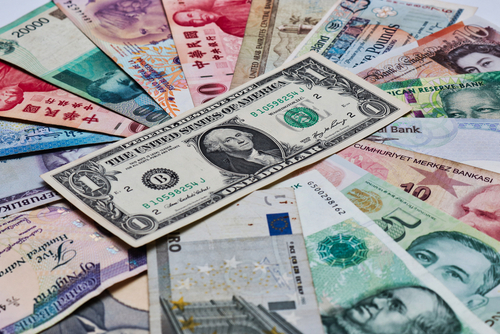

When you hear the word “dollar” or see the $ symbol, you probably think of the US dollar. That’s no surprise. The US dollar is one of the most widely recognized currencies in the world. But did you know that many countries not only use the US dollar as their official currency, but have also adopted the word “dollar” for their own national currencies?
It’s common for first-time US tourists visiting Canada to feel confused, since both countries use “dollars,” even though they’re not the same currency. More seasoned travelers might also ask themselves, “What countries use dollars?” when planning a trip, just to make sure they’re prepared. Then there are places where the US dollar is widely accepted, even though it’s not the official currency.
Remitly wants you to feel confident no matter which “dollar” you’re dealing with. This guide will help break down the different types of dollars used around the world and where they’re accepted. Whether you’re traveling abroad or sending money internationally, we’ll help you avoid unwanted surprises.
Not just the USA: Understanding “dollarization”
Before looking at which countries use the US dollar or have adopted the term, it helps to understand why the US dollar shows up in so many economies around the world.
What is dollarization?
Dollarization might sound like a made-up word if you’ve never heard it before, but it’s not. This term refers to when a country adopts a foreign currency, most commonly the US dollar, as its official legal tender. In some cases, the local currency is phased out altogether when citizens lose faith in it. Prices, wages, taxes, and savings are then all shifted to USD instead.
Dollarization is often used as a tool to stabilize economies facing high inflation, currency devaluation, or financial crisis. This can also mean a loss of control over monetary policy, as the government and the country’s central bank can no longer set interest rates or manage the money supply.
Because the US dollar is the world’s dominant reserve currency, many countries choose it over other foreign currencies, even when those currencies may be temporarily stronger.
Why do countries choose the US dollar?
There are several reasons governments choose the US dollar over their own currency:
- Inflation control: Helps curb rapid price increases.
- Economic credibility: Can increase investor trust and reduce financial uncertainty.
- Simplified trade: The US dollar is the dominant global reserve currency, making international trade easier.
Although countries no longer have full control over their monetary policy, choosing the US dollar still provides a degree of safety and stability.
In certain regions, having the US dollar as either the official or accepted currency can also make life easier for locals and tourists. You can see this with the EU’s use of the euro across many countries, which simplifies travel, business, and daily life.
Countries that use the US dollar
With the US dollar being one of the most attractive currencies to adopt, let’s look at where it’s officially accepted outside the United States.
US territories that use the US dollar
- American Samoa
- US Virgin Islands
- Guam
- Puerto Rico
- Northern Mariana Islands
While traveling, you might also be surprised to find that non-US territories also use the US dollar. These include the British Virgin Islands and the Turks and Caicos Islands. Because of their location and the US dollar’s dominance in surrounding islands and regions, non-US territories often adopt the US dollar to simplify trade and tourism.
Countries that use the US dollar as an official currency
The following countries and territories are not part of the United States but have adopted the US dollar as an official currency, due to economic instability or close financial ties with the US (dollarization):
- Bonaire
- Ecuador
- El Salvador
- Marshall Islands
- Micronesia
- Palau
- Liberia
- Saba
- Sint Eustatius
- Timor-Leste
- Zimbabwe
In some of these countries, the US dollar is not the only official currency. Liberia also uses the Liberian dollar, while Zimbabwe recognizes multiple official currencies.
Spotlight: Ecuador’s dollar story
Ecuador offers one of the clearest examples of dollarization in action. In 2000, Ecuador suffered a severe financial crisis that led to the collapse of its national currency, the sucre. As confidence in the local currency eroded, many Ecuadorian’s began using US dollars even before the government made it official.
When Ecuador formally adopted the US dollar as its legal tender, the move helped stabilize inflation, restore confidence, and bring greater economic predictability. Today, Ecuadorians earn wages, pay rent, and buy groceries with US dollars. Remittances sent from the US to Ecuador are also simpler and avoid exchange-rate fees because the currencies are the same.
Places where the US dollar is accepted (unofficially)
While some countries have formally adopted the US dollar, others simply accept US dollars alongside their local currency. If you’ve traveled to Vietnam or the Bahamas and haven’t had the chance to exchange money, don’t panic. As long as you’re not trying to pay with a $100 bill, US dollars are often accepted, at least in tourist-facing businesses.
Countries and non-US territories that unofficially accept USD:
- Aruba
- Bahamas
- Barbados
- Belize
- Bermuda
- Cambodia
- Cayman Islands
- Costa Rica
- Curacao
- Myanmar
- Nicaragua
- Sint Maarten
- St. Kitts and Nevis
- Vietnam
Many of these destinations are popular tourist destinations and maintain strong economic or tourism ties with the US. Because of this demand, businesses like hotels, tour operators, and larger retailers often accept USD for convenience.
Why do so many countries unofficially accept the US dollar?
One of the main reasons is stability and familiarity, especially in tourism-driven economies. In some countries, the local currency is also pegged to the US dollar, meaning its value is fixed at a set exchange rate. Examples include the Bahamas, Belize, and Barbados, where the local currency remains in a stable relationship with the USD. This makes pricing and accepting US dollars easier for businesses.
However, not every country on this list has a pegged currency. In places like Vietnam, Cambodia, or Myanmar, USD acceptance is more informal and usually limited to tourist areas. In these countries, the local currency is still preferred for everyday transactions.
While the US dollar is widely accepted in many of these destinations, it’s not guaranteed everywhere. Smaller shops, markets, and public transport often require the local currency. Look for signs or policies before paying, and consider carrying both currencies to avoid delays, especially if you’re on a time limit, like during a cruise stop.
Travel tip: Carry small, clean bills. In countries like Vietnam or Myanmar, merchants often refuse torn, marked, or heavily worn US dollars. Crisp bills are the safest option.
Countries with their own “dollar” currencies
Sharing the name “dollar” doesn’t mean currencies share the same value. The Australian and Canadian dollars, for example, are completely separate from the US dollar and from each other. Each “dollar” currency has its own exchange rate, meaning USD to EUR won’t match EUR to AUD or CAD.
The Canadian dollar (CAD)
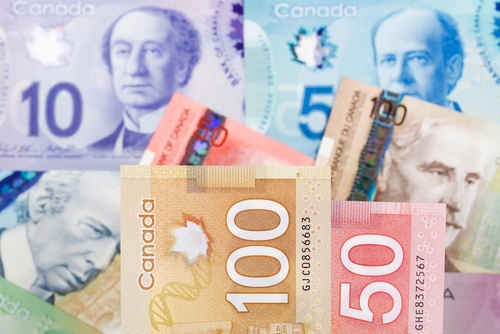
The Canadian dollar is the sole official currency of Canada, and is often nicknamed the loonie, thanks to the loon bird featured on the $1 coin.
Many US tourists traveling north for the first time assume the Canadian dollar is the same as the US dollar. In reality, Canada does not widely accept US dollars. Some tourist-heavy areas, such as Niagara Falls, may accept USD, but exchange rates are usually unfavorable. In most places, especially outside major tourist zones, you’ll need Canadian dollars.
The Australian dollar (AUD)
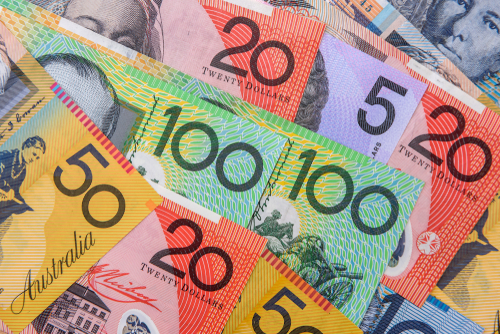
The Australian dollar is one of the most traded currencies in the world and is used in several different countries.
The AUD is the official currency in:
- Australia
- Kiribati
- Nauru
- Tuvalu
Fun fact: Australian banknotes are made from polymer, making them more durable and harder to counterfeit than paper notes.
The New Zealand dollar (NZD)
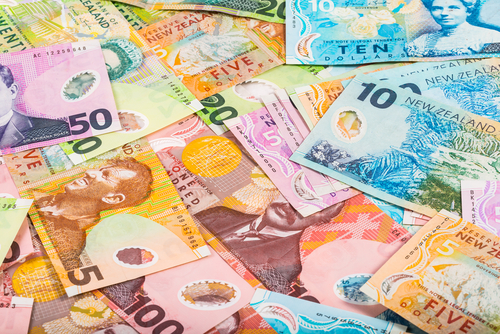
Despite their proximity, Australia and New Zealand do not share the same currency.
The New Zealand dollar is used in:
- New Zealand
- Cook Islands
- Niue
Fun Fact: New Zealand’s Central Bank stopped issuing one- and two-cent coins in 1990 and removed five-cent coins from circulation in 2006.
Singapore dollar (SGD) and Brunei dollar (BND)
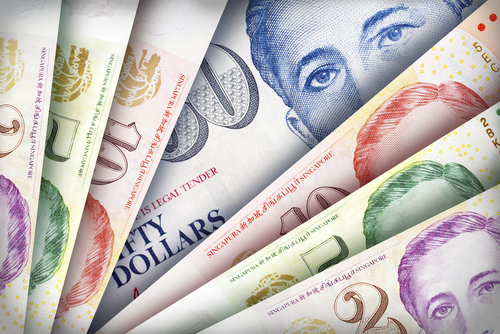
Not only do Singapore and Brunei use the term “dollar” for their individual currencies, but they are fully interchangeable. Under the Currency Interchangeability Agreement, one Singapore dollar can be exchanged for one Brunei dollar, and vice versa, at a 1:1 rate, with no exchange fees.
Caribbean dollars (XCD): One currency, many countries
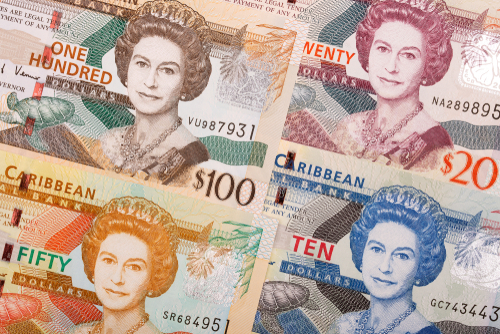
Officially known as the East Caribbean dollar, the XCD is shared by several nations:
- Antigua and Barbuda
- Dominica
- Grenada
- Saint Lucia
The East Caribbean dollar has been pegged to the US dollar at $2.70 XCD to $1.00 USD since 1976, making it one of the strongest forms of currencies in the Caribbean.
Sending money to dollar countries: What you need to know
When sending money abroad through services like Remitly or when exchanging currency while traveling, it’s essential to confirm which dollar a country uses. A common mistake is assuming a $ symbol always means USD, only to realize later that the money was sent or converted into a different currency, such as the Australian dollar. Be sure to check for the currency code (USD, AUD, BND) to avoid costly errors.
Transparency makes a difference
If you’re sending money to countries like Australia or New Zealand, you’re converting funds into their local currencies. That’s why exchange rates matter. Traditional banks don’t always offer the most competitive exchange rates, even though many people still use them out of habit.
Today, there are many ways to send money internationally, from bank transfers to mobile apps and digital money services like Remitly. With so many options available, it’s wise to compare providers carefully.
When choosing a money transfer service, look for one that clearly shows:
- The real exchange rate
- All fees upfront
- Estimated delivery time
- That it’s a regulated provider
Using a reputable, transparent service is key to ensuring your money arrives safely and that your recipient gets the most value.
The US dollar may be the most traded currency in the world, but it’s far from the only dollar out there. Before you travel, check whether the country you’re visiting accepts the US dollar or has its own version of the dollar that you’ll need to exchange into.
Knowing which dollar you’re dealing with helps you travel smarter and avoid expensive currency mistakes. The world is full of dollars, but they’re not all equal. With the right information and the right tools, you can stay in control of your finances wherever life takes you.
FAQs
Can I use the US dollar in Canada?
No. Canada only accepts the Canadian dollar (CAD).
Is the euro stronger than the dollar?
Exchange rates are constantly fluctuating. While the euro might be stronger than the US dollar and weaker than the Australian dollar today, that could all change tomorrow.
Why do so many countries use the word “dollar”?
The world dollar comes from the German word Thaler, a silver coin used in Europe centuries ago. Over time, the name spread globally, and more than 25 countries now use the term “dollar” in their currency.
Do I need to exchange money before I travel?
It depends on your destination. If you’re traveling to Ecuador or El Salvador, exchanging money isn’t necessary as they use USD. However, if you’re traveling to Australia or Canada, you’ll need to exchange USD for the local currency as these currencies are not the same.