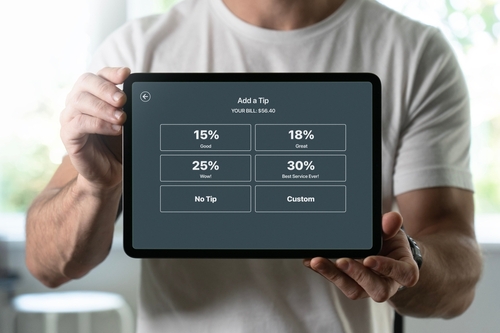

We’ve all felt that familiar hesitation when a payment screen is turned towards us, and we’re asked for a tip. Tipping isn’t always obvious, especially if you’re new to the US, and it has a way of showing up when you don’t expect it.
It’s rarely about not wanting to tip, but more about figuring out what’s expected in a system that relies heavily on unwritten rules. That’s why our team at Remitly has put together this tipping chart for 2026 to make everyday situations simpler. You don’t need to memorize it precisely; it’s just for reference when you feel unsure.
Why tipping feels so confusing in the US
Before getting into percentages and tip screens, it’s helpful to look at what lies beneath the surface. For most newcomers, the confusion around tipping in the US isn’t the math or the societal obligation; it’s trying to understand why it’s such a big issue here compared to other countries. If you didn’t grow up with it, the habit and shared assumptions aren’t as obvious.
Tipping isn’t the same everywhere
In many countries, tipping is occasional or already included in wages. It might mean rounding up the bill, leaving spare change, or not tipping at all unless service is exceptional.
In the US, tipping shows up a lot more often. Seeing tip prompts at coffee counters, food pickups, or checkout screens can make it hard to tell when tipping is expected and when it’s simply being suggested.
The uncertainty usually comes from where tipping appears, not whether you’re willing to tip. There isn’t really one rule that you can learn and apply; it’s more about noticing patterns.
Tips make up a real part of income in the US
Another key difference is how closely tips are tied to income. In the US, many service workers, especially in restaurants, bars, and personal care roles, earn a lower base wage and rely on tips as part of their regular pay.
That’s why tipping expectations are more consistent here, particularly in sit-down dining and personal services. Knowing this doesn’t mean you have to tip everywhere or stress about every screen. It simply explains why tipping plays a big role in daily life and why people tend to treat it as standard rather than exceptional.
How tipping became part of US culture
Tipping in the US didn’t arrive fully formed and it wasn’t universally welcomed at the start. The history and culture behind it explain a lot of the tension people still feel.
A brief history of tipping in the US
Tipping isn’t something the US invented. It arrived in the 1800s, brought back from Europe by Americans who’d seen it used as a way to reward service. At the time, plenty of people disliked the idea. It felt awkward, unequal, and unnecessary, and definitely not the kind of system anyone thought would stick.
Over time, tipping became common in restaurants, hotels, and other service jobs, largely because it allowed businesses to keep base wages low while relying on customers to make up the difference. That approach eventually became part of labor law and everyday life. So when tipping feels baked into everything now, that’s because it’s been quietly shaping service work for generations.
How Americans feel about tipping today
What might surprise you is that many Americans don’t feel that great about tipping either. Surveys keep showing that a lot of people, especially millennials and Gen Z, find tipping unclear and overused. In fact, 63% of adults report having negative feelings towards tipping.
Digital tipping has made those feelings even more visible. Those screens that suggest 20%, 25%, or more have changed the tone of tipping from a private option to awkwardly public. As a result, younger adults are pausing and questioning whether tipping actually makes sense.
So, if tipping sometimes feels uncomfortable, that’s not you missing a cultural cue. It’s part of a broader conversation happening in the US about how tipping fits into modern life, especially as the way we pay and receive services continues to change.
The ultimate tipping chart 2026
| Service | Typical Tip (2026) | Notes |
|---|---|---|
| Sit-down restaurants | 18–22% | Based on pre-tax bill |
| Bartenders | $1–$2 per drink or ~20% | Depends on tab size |
| Food delivery | 15–20% (min $5) | Higher in bad weather or long distances |
| Rideshare & taxis | 15–20% | Flat tip also common for short rides |
| Hair/nail/spa services | 20% | Tip based on total if booking multiple services |
| Coffee shops (counter service) | Optional ($1 per item) | Not expected for grab-and-go |
| Hotel housekeeping | $2–$5 per night | Tip daily, not at end of stay |
| Valet parking | $2–$5 per car | Tip when car is returned |
| Bellhop/luggage | $1–$2 per bag | More for heavy or numerous bags |
| Gig workers (delivery, rideshare) | 15–20% | Or flat tip for short jobs |
| Digital kiosk/self-checkout | Optional | Tip based on service, not prompt |
Once you’ve got the context, it helps to have something simple to come back to. These are the tipping ranges most people in the US use day to day. They’re not strict rules, and they’re not meant to cover every situation. Think of them as a general sense of what’s typical once you’ve settled into life here.
- Sit-down dining: 18-22%
- Bartenders: $1-$2 per drink or around 20% of the total tab
- Food delivery: 15-20%, with a $5 minimum for smaller orders
- Rideshare and taxis: 15-20%
- Hair salons, nail salons, and spa services: 20%
- Coffee shops (counter service): Optional, often $1 per item
If you’re in the right ballpark and responding to the service you received, you’re doing just fine. The rest comes naturally with time.
Dining out: navigating the bill
Restaurants are usually where tipping starts to feel loaded. You’ve spent time there, someone’s looked after you, and then the check arrives, and suddenly there’s pressure to get it “right.”
Sit-down service vs. counter service
A simple way to think about this is whether someone was assigned to you. If a server came over, took your order, checked in, and generally made sure your table was okay, tipping is part of the deal. That’s what the percentage is meant to reflect.
With counter service, the dynamic is a little different. You order at the register, grab your food when it’s ready, and mostly keep to yourself. In those cases, tipping is optional.
A touchscreen asking for a tip doesn’t automatically mean one’s expected, especially if the interaction was quick and transactional. Paying attention to the experience usually tells you more than the sign above the counter.
The service fee vs. the tip
This part trips up a lot of people, including Americans. A service fee usually goes to the restaurant itself, while a tip typically goes straight to your server. The problem is that they can look very similar on a receipt.
Some restaurants explain this upfront. Others don’t, which is why you’ll often see people pause, scroll, or lean back and reread the bill before paying. That moment of hesitation is completely normal. Checking the receipt or asking how a service charge works is totally understandable.
Calculations made simple
Traditionally, tips are based on the pre-tax amount, but many payment screens calculate suggested tips after tax. That’s why those numbers can feel higher than expected, especially if you’re splitting a bill or paying quickly.
Most people choose to estimate by rounding up to a number that feels reasonable. Being in the right general range matters far more than exact math.
What Americans actually do
In real life, tipping isn’t always as tidy as charts make it seem. Most people don’t follow a strict formula; they read the situation, make a call, and move on. Over time, you’ll notice that’s the norm, not the exception.
When people tip more than the chart
People tend to tip a little extra when something genuinely stands out. Maybe the server was especially attentive, handled a complicated order without missing a beat, or remembered your regular order without being asked. Sometimes it’s as simple as spending a long time at a table and recognizing that someone’s been looking after you the whole time.
When people tip less
There are also plenty of situations where tipping less makes sense. If the service was very quick, fairly minimal, or partly covered by a service charge, people often adjust the tip without overthinking it. What matters most isn’t hitting a specific percentage. It’s whether the tip feels proportional to the experience.
Travel and lifestyle tipping
Once you’re outside of restaurants, tipping usually feels a bit more straightforward. The situations repeat, the numbers stay fairly consistent, and after a few encounters, you stop having to think about them at all.
Hotels and valets
Hotels tend to follow pretty established patterns. Housekeeping is often tipped $2-$5 per night, and it’s best to leave it daily so it reaches whoever cleaned the room that day. Valets usually receive $2-$5 when they return your car, and bellhops are typically tipped $1–$2 per bag.
Salon and spa services
For haircuts, nail appointments, massages, and spa treatments, 20% is the standard across most of the US. These services take time, training, and attention, which is why tipping expectations are more consistent here than in other settings. If you book multiple services together, most people simply tip based on the total.
Gig economy workers
Delivery drivers and rideshare drivers are usually covering their own fuel, maintenance, and vehicle costs, which is why tipping is more of an expectation in these situations. Most people tip in the 15-20% range, or leave a fair flat amount for shorter trips or smaller orders. Once you’ve done it a few times, it becomes second nature.
The digital kiosk
Tip screens can feel awkward when they pop up in places you didn’t expect. In these moments, the screen matters less than the service itself.
If you’re buying something packaged, using self-checkout, or picking up food with little interaction, choosing “No Tip” is normal. The suggested buttons are there to prompt a choice, not to signal what’s required. It helps to remember that tipping is about service, not every transaction.
Getting comfortable with tipping over time
By the time you’ve handled a few restaurant bills, delivery orders, and checkout screens, you start to feel like you know what you’re doing. The patterns repeat, and the uncertainty fades without realising. It becomes one of those everyday things you stop thinking about altogether.
This tipping chat is there for when something falls outside the routine. In the same way, Remitly is there for other everyday moments that take time to get used to, like sending money home while you’re settling into life in a new country.
FAQs
Do I need to tip on takeout orders?
It isn’t mandatory, but around 10% is a kind gesture for large or complex orders.
Do I tip if the service was bad?
Lowering the tip to around 15% is common. If something truly went wrong, speaking with a manager can be more effective than leaving nothing.
Should I tip tradespeople like plumbers or electricians?
Generally, no. Offering a drink or snack is the usual way to show appreciation.
How does this tipping chart 2026 apply to holidays?
During the holidays, many people double the usual tip for regular service providers, like their hairstylist or dog-walker, as a thank-you.