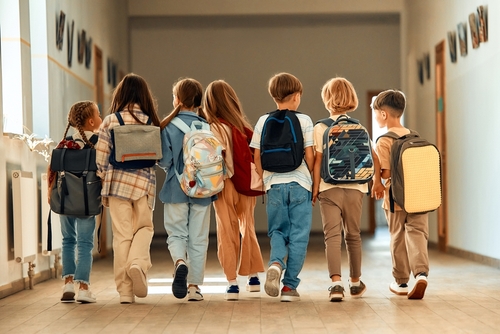

Back-to-school season has a funny way of sneaking up on you. One minute it still feels like summer, and the next you’re thinking about first-day outfits, school supplies, and whether everyone has what they need before classes start.
If your family is moving abroad, or you’re supporting loved ones in another country, keeping track of school schedules can be confusing. School start dates don’t follow one global rule. They vary by country, climate, and even local traditions.
At Remitly, we know firsthand how education planning becomes a big part of the bigger picture when families live across borders. That’s why we’ve put together this guide to help you understand when school starts around the world for the 2026 academic year.
United States
If you’re new to the US school system, you might not know that there isn’t a single “first day of school” for the whole country. School start dates are decided locally, which means your exact date depends on which US city you call home.
How school start dates work in the US
Most schools usually start between mid-August and early September. Some districts begin before Labor Day, while others wait until after the long weekend. Private and charter schools often follow completely different schedules, even if they’re around the block from a public school.
In the US, schools are grouped into districts, which handle things like calendars, holidays, and rules. Each district sets its own schedule, usually through a local school board. That’s why two nearby towns can start school weeks apart, even in the same state. It’s a flexible system, but if you’re used to a single national calendar, it can take some adjustment.
What to do if you move to the US mid-school year
Many families arrive outside the typical back-to-school season. Most public schools allow children to enroll at any point during the year, so don’t worry if you’re joining mid-term.
Start dates help with planning, but enrollment rules matter more. Schools are accustomed to welcoming new students throughout the year, so it’s best to contact your local school district as soon as possible to make the process smoother.
Public vs. private schools
Private and charter schools tend to have more flexibility. Some start earlier in August, while others align with public school schedules. Religious schools may follow different holiday calendars, which can affect start dates and breaks. If you’re considering different options, it helps to check each school’s calendar directly.
North America and the Caribbean
Across North America and the Caribbean, most schools follow a fall start, but the exact dates can vary depending on the country and sometimes even the region.
Canada 🇨🇦
Canada’s school calendar is fairly consistent compared to the US. Most schools start in the first week of September, usually right after Labor Day.
One notable exception is Quebec, where some schools begin in late August. Even with this variation, the overall structure is similar across provinces, making it easier to plan if you’re supporting students in different parts of Canada.
Mexico 🇲🇽
In Mexico, school calendars are set at the national level, so there’s less guesswork. The academic year typically begins in late August and follows guidelines from the Secretaría de Educación Pública.
Because the schedule is standardized, families helping students in Mexico can usually plan tuition payments and school expenses in advance, without worrying about regional differences.
The Caribbean 🇧🇶
Most Caribbean countries follow a calendar that’s similar to the US or UK. In places like Jamaica and the Dominican Republic, schools generally start in September.
While exact dates can shift slightly from one country to another, the September start makes it easier for families with connections across North America, Europe, and the Caribbean to align school planning and support.
Europe
Across Europe, school calendars are mainly structured around tradition and climate. Although most countries start school in late summer or early fall 2026, the exact timing can vary from one place to another.
United Kingdom 🇬🇧
In the UK, the autumn term usually begins in early September. England, Scotland, Wales, and Northern Ireland each manage their own education systems, but start dates generally fall within a similar window. That said, it’s worth checking local authority calendars, as term dates and school holidays can differ by region.
France 🇫🇷 and Spain 🇪🇸
In France, the return to school is known as ‘La Rentrée’, typically in early September. It’s nationally recognized as the moment that summer ends and daily routines resume.
Spain follows a similar schedule, with long summer breaks from mid-June until mid-September. Workplaces reduce hours, or even close, during the summer holidays. Families often notice that local holidays influence the school year rhythm, even if the start date feels familiar.
Germany 🇩🇪
Germany uses a staggered school start system to reduce summer travel congestion. Each federal state sets its own start date, usually between August and September.
This means that families in different parts of Germany can return to school weeks apart, something that often surprises families planning visits or academic support.
Scandinavia 🇫🇮
In countries like Sweden and Finland, the school year often starts earlier than much of Europe. Many students return to class in mid-August, following shorter summer breaks.
The trade-off is that school years are evenly paced, with regular breaks built in. Families often find this creates a steadier routine, even if the earlier start takes some getting used to.
Asia
School calendars in Asia look very different from what families in the US are used to. In some countries, the academic year doesn’t start in late summer or fall at all, which can feel surprising at first.
Japan 🇯🇵
In Japan, the school year traditionally begins in April, coinciding with the blooming of cherry blossoms. It’s a symbolic time of new beginnings, not just for students, but also for workplaces and government offices.
Summer break comes later in the year, and the rhythm of school life is closely tied to cultural traditions rather than the calendar year.
South Korea 🇰🇷
In South Korea, students usually start school in early March. The academic year is divided into two main semesters, with shorter breaks spread throughout the year.
Many families notice how structured the school year feels. Starting in March sets a steady pace, and education planning often happens well in advance, which can be helpful when you’re budgeting for school-related costs.
China 🇨🇳
In China, most schools start the academic year on September 1. It’s one of the more predictable school calendars out there, which can feel refreshing if you’re used to juggling different dates.
Because the start date is so consistent, families can plan tuition payments and school expenses well in advance.
India 🇮🇳
India doesn’t have a single “back-to-school season.” School calendars vary by region and the education board. Some schools start the academic year in April, while others wait until June, once the hottest months have passed.
Philippines 🇵🇭
For many years, schools in the Philippines followed a June start, like other countries in Southeast Asia. Some schedules shifted toward August, but the country is gradually moving back to a June-to-March calendar.
Latin America
In most of Latin America, the school year follows Southern Hemisphere seasons. That means summer and winter are flipped compared to the US, and school often starts much earlier in the calendar year.
Because summer runs from December to February, long school breaks usually fall at the end of the year. The new school year then begins in late February or early March.
Brazil 🇧🇷
In Brazil, the school year usually starts in early February, often after Carnival celebrations. Since Carnival is a major cultural event, schools plan their calendars around it. The festival marks the moment when it’s time to switch back into school mode.
Argentina 🇦🇷 and Chile 🇨🇱
In Argentina and Chile, most schools start in late February or early March. The school year generally aligns with the calendar year, with long summer breaks in December and January.
For families, the first month of the year often feels like a pause, as children finish trips or spend extra time with relatives before routines pick up again.
Colombia 🇨🇴
Colombia operates with two academic calendars running simultaneously. Calendar A, used by most public schools, starts in late January or early February. Calendar B, more common in private and international schools, begins in August.
Oceania
In Australia and New Zealand, the school year lines up with the calendar year rather than starting in the fall like the Northern Hemisphere.
Australia 🇦🇺
In Australia, Term 1 usually starts in late January or early February, after the long summer holidays. While exact dates can vary by state, the overall structure is usually quite consistent across the country. It’s a big shift from the US back-to-school season, but it’s easy to get used to.
New Zealand 🇳🇿
New Zealand follows a similar system, with most schools starting between late January and early February. The school year is divided into four terms, with breaks spaced throughout the year. Even though the year starts early, the regular breaks help balance out the pace of the school year.
Africa
School start dates across Africa can vary widely. Some countries follow a calendar-year structure, while others mirror European or British-style school years.
South Africa 🇿🇦
In South Africa, the school year starts in mid-January, following the Southern Hemisphere pattern. Starting in January means school expenses also arrive sooner, so planning ahead is key, especially if you’re used to fall start dates in other countries.
Nigeria 🇳🇬
In Nigeria, the academic year usually runs from September to July, which can feel familiar if you’re used to the US system. Many schools, especially private ones, follow a three-term system, and tuition is often paid per term. Once the year gets underway, the schedule can feel very structured and predictable.
Kenya 🇰🇪
In Kenya, most schools start in January, lining up neatly with the calendar year. It’s a clean reset that many families appreciate, especially after the long December holidays.
Kenya is also rolling out significant education reforms, including new grade structures and transitions, so school start dates and student placement are increasingly important to plan for.
Tips that make school season easier
Knowing when the school year starts gives you more breathing room, especially when you’re juggling work, family responsibilities, and life in a new place where everything still feels unfamiliar.
How school start dates affect back-to-school costs
Back-to-school expenses can add up quickly. Supply lists often arrive weeks before the first day of class, and prices for things like uniforms, backpacks, and textbooks often creep up as the start date approaches.
Timing matters even more when you’re helping cover tuition or school fees in another country. If you’re supporting students abroad, sending money a bit earlier can make a big difference.
Enrollment and registration deadlines
In most countries, school enrollment happens long before the first bell rings. If you’re new to the system or moving from another country, it’s easy to assume you can sort things out once school starts.
The reality is that missing an enrollment deadline can delay a child’s start by weeks, even if classes are already underway. Getting a head start gives you time to gather paperwork, ask questions without pressure, and avoid that last-minute panic that often coincides with other back-to-school chaos.
School start dates can fall anywhere from January to September, depending on where your family is in the world. The calendars might look different, but the goal is always the same: making sure children feel ready and supported during their academic journey.
When you know what to expect, the busy schedules around back-to-school season feel less overwhelming. And if part of that planning includes sending money for essentials during the 2026 school year, Remitly is here to help you send support safely and on time.
FAQs
When does school start in the US in 2026?
Most US schools start between mid-August and early September, but exact dates depend on the district and whether the school is public, private, or charter.
Why do school start dates vary so much between countries?
Differences in climate, culture, government policies, and whether a country is in the Northern or Southern Hemisphere all influence school calendars.
Can my child start school if we arrive after the school year begins?
In most cases, yes. Most public schools, especially in the US, allow year-round enrollment.
Is the school calendar the same every year?
School calendars are similar year to year, but start dates and holidays can shift slightly.