

Nowadays, online banking services are everywhere, and platforms like Remitly allow you to send money from one person to another with the click of a button. But long before we paid for nearly everything electronically, there was simple cash, and before that, there were beads and cattle.
Money, as we know it today, hasn’t always existed. The term commodity money refers to the use of physical goods as currency. We’re talking about items like salt, livestock, and precious metals.
Seeing the importance that these items have held over thousands of years helps us appreciate how modern money evolved, and understand why many places still use commodity money as a form of payment.
What is commodity money, exactly?
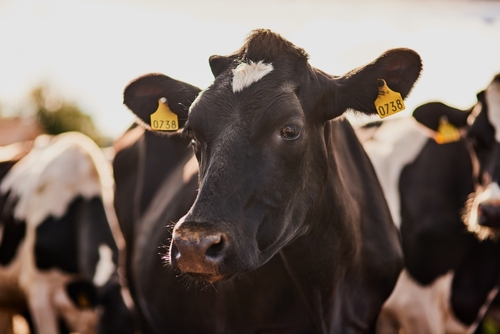
Commodity money is a physical item used as a method of payment for another good or service. This process is commonly known as bartering, and it’s been around for a long time.
We say commodities used for trade have intrinsic value because they have innate worth or use that doesn’t depend on market trends or subjective opinions. Think about livestock, for example; we get meat, milk, and eggs from farmed animals. All of these items can be eaten and sustain humans. Their value isn’t man-made, but intrinsic.
This is in contrast to paper and digital money, which have value only because society assigns worth to them. Electronic money doesn’t have a practical, physical use on its own—we’ve given it value by deciding it can be used to buy things. Modern currencies are also known as fiat money, or money that has been assigned value by a government.
Intrinsic value is one key feature of commodity money; the other is that it needs to be a widely accepted method of payment for goods and services. Precious metals, for example, are valuable as a medium of exchange because they have many practical uses, such as being worn as jewelry. In many cultures, gold is a symbol of wealth and status.
Real-world examples of commodity money
Let’s look at some real examples of commodity money, both historical and modern.
Agricultural products

These are items that humans farm and harvest, such as salt, grain, livestock, rice, tea, and coffee, which have been historically used for bartering. Tea bricks, which are compressed blocks of tea leaves, were used as currency along the Silk Road. The word “salary” comes from the Latin salarium, which translates to “salt money”.
These items are edible and commonly used, making them extremely valuable throughout history because they serve as a means of survival.
Precious metals
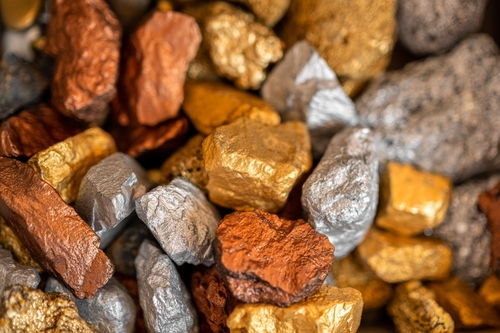
There are eight precious metals in total, but we’ll focus on two of the most well-known ones: gold and silver.
Historically, gold and silver were viewed as a source of wealth; they’ve been used for millennia as a means of paying for goods and services. They’re durable and divisible (i.e., they can be melted and remade), giving them a universal appeal across cultures and countries. They can also be made into attractive-looking items, like jewelry.
In the modern financial world, we’ve adopted the term “gold standard,” which is the act of backing fiat money with physical gold to give it value. The gold standard isn’t really used much today, but the precious metal is still seen as a safe-haven asset in times of economic turmoil.
Other goods

Shells, beads, and even large stones, like the Rai stones of Yap Island in Micronesia, have long held cultural significance.
Cowrie shells historically held value in Africa and Asia largely because of their uniform weight and size, and their relative rarity. They were easy to carry around and weigh, giving them a set, standard value. They were also quite durable, making them even more appropriate as a form of money.
Rai stones were used for big-ticket goods and services, such as dowries and land purchases. They were quarried hundreds of miles away and transported by boat, adding to their value.
Because of their long history and prominence in various cultures, these items still hold cultural value today.
The advantages of commodity money
There are numerous pros to using commodity money, even in today’s modern world. Here are a few:
- Inherent value: These items are worth something because of their practical uses. Precious metals, for example, are used in electronics that power our 21st-century lifestyles through smartphones and computers.
- Stable value: Because the value of these items is tied to physical goods, they’re less prone to the swings that fiat money can have during economic ups and downs.
- Self-regulating: The supply of many of these commodities is finite or hard to come by, such as precious metals that need to be mined and coffee that must be grown continuously.
The disadvantages of commodity money
As much as commodity money has its place in history and our contemporary world, it does have its downsides, such as:
- Portability issues: It’s easy to move cowrie shells, but it’s not as simple as moving a herd of cattle or a house.
- Lack of divisibility: Some commodities aren’t easy to divide into smaller units to make minor purchases, such as a live cow or land.
- Inconsistent quality: Unlike paper or electronic money, which is designed to be uniform in every way, the quality of commodities can vary—two gold coins might not have the same purity, or a bag of rice may have spoiled.
- Supply fluctuations: A bad harvest can destroy crops, driving up the price of related commodities, while the discovery of a large deposit of gold could see the precious metal’s price devalue as supply is increased. This not only disrupts the wider economy, but also affects the individuals who are buying and selling these items.
The movement from commodities to currencies
The shift from commodity money to modern currencies was a gradual process shaped by growing economies and the need for faster, more reliable trade. As societies expanded, everyday transactions became too complex for systems based on livestock, grain or precious metals. These goods were valuable, but they were not always practical. Some were hard to transport, others were difficult to divide, and many were vulnerable to spoilage or changes in quality.
As trade networks grew across regions and continents, people needed a payment system that was lighter, more uniform and easier to manage. The introduction of paper money marked a major turning point.
Historians often point to China as the origin of the first true paper currency during the Tang Dynasty. Merchants started using paper notes as receipts for the large amounts of metal coins they deposited with trusted agents. Over time, these notes became widely accepted on their own because they represented real value stored elsewhere. This idea spread slowly to other parts of the world, setting the stage for modern banking systems.
Nowadays, the adoption of fiat money seems like a no-brainer for the convenience and stability it offers over commodities. Even so, some countries and communities still use commodity money in limited ways. In parts of Africa and Asia, items like livestock or grain remain common for bartering in rural areas. In regions without stable banking systems, goods such as coffee beans or tobacco can serve as a reliable way to store value or trade for essentials.
Commodity money in a contemporary world
The best way to understand commodity money is to see it as a physical good with intrinsic value that serves as a medium of exchange. It has its benefits, like its practical uses in everyday life, but it also has disadvantages, like a lack of portability and inconsistent quality.
While the world has largely moved onto fiat currencies, knowing where our modern payment methods originated helps us understand the way economics works—and highlights how important trust and stability are in any financial system. We rely on this trust in governments to keep paper and electronic money stable, and collectively agree on this money’s value.
FAQs
What are the main characteristics of commodity money?
The first main feature of commodity money is its intrinsic value, which means these items have practical uses in our day-to-day lives. The second is its ability to be a medium of exchange—sought after and widely accepted.
What is the difference between commodity money and fiat money?
Commodity money has intrinsic value, whereas fiat money has extrinsic value. Fiat money, like the US dollar, has value only because the government has assigned it value, and society agrees on this worth and trusts it.
What are some examples of commodity money in history?
These include cowrie shells, gold and silver, grain, livestock, tobacco, coffee, tea, and salt.
How is the value of commodity money determined?
Let’s look at a couple of examples to understand this: When gold coins were used, their purity and weight determined how much they were worth. When it came to goods like salt and tobacco, these were valued according to their supply and demand.
Can cryptocurrency be considered commodity money?
This is a hotly debated topic. Cryptocurrency is a digital currency, so it doesn’t have inherent value like gold or rice. However, some cryptos, like Bitcoin, need to be “mined” digitally, so their scarcity creates a value similar to that of a commodity. Most economists, however, see cryptocurrency as a separate asset class, distinct from commodities and fiat money.
Is gold still considered commodity money?
Yes and no. In most economies, fiat money is used instead of precious metals like gold. However, countries like the US have a gold reserve, because the qualities of gold that made it a valuable commodity all those years ago still exist. This is also why many investors choose to keep their money in gold.