
Online retail has changed the way we shop. We can now get brands from anywhere in the world delivered to our door. But while this is convenient, it can make it challenging to find the right size. It’s not just because you can’t try before you buy, but also because different brands use different standard sizes based on their country. This is often a problem when buying shoes from US or UK brands. Their sizing looks very similar, but they aren’t the same. So, how do you convert US to UK shoe sizes to get the right fit?
For our Remitly community living in the UAE or abroad, we’ve prepared an easy guide to shoe sizes worldwide. You’ll find conversion tables to easily understand US and UK shoe sizes for men’s, women’s, and children’s shoes, so you can find the right size no matter where you are shopping.
Why are US and UK shoe sizes different?
It should be no surprise that the United Kingdom and the United States use different shoe sizes. They also use different units of measurement and even different systems to measure temperature. This is just one more form of measurement that the two countries can’t agree on.
Both countries count sizes upwards using something known as the “barleycorn” system, where one shoe size is ⅓ of an inch, because this is about the same size as a single barley kernel. However, they differ in what they consider the smallest size and where they begin counting. In the UK, the smallest size for men and women is 7 ⅔ inches, and they count up from there. In the US, the starting point is 7 inches for women and 7 ⅓ inches for men. Children’s shoes are different again.
While the difference in shoe sizes between the UK and the US can be frustrating, at least they count upwards in the same increments, making conversion easy. The same isn’t true when looking at other systems. For example, European sizing uses something called the Paris Point system, with each shoe size being ⅔ of a centimetre, which is only 0.26 inches, so sizing quickly falls out of sync with UK and US sizes.
How to convert US to UK shoe sizes: a quick guide
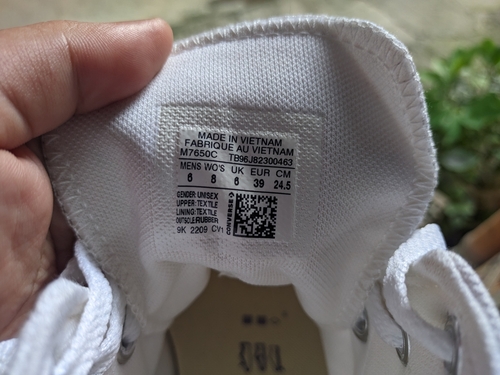
Fortunately, many modern shoes list multiple sizing conventions on the tongue or the box, so you don’t have to do the converting. But if you do find that you need to do your own converting, the calculation is simple between UK and US sizes.
For women, UK shoe sizes are typically two sizes smaller than US sizes. So, a US size 8 shoe would be a UK size 6 shoe for women.
For men, UK shoe sizes are typically one size smaller, so a US size 10 is the same as a UK size 9.
With that said, anyone who has ever tried on a shoe knows that sizing can vary depending on the style of the shoe and the brand, so whenever possible, make sure to try before you buy. Also, make sure you try on shoes with the type of socks you intend to wear with the shoe, as this can make a big difference to the overall fit.
US to UK shoe size conversion charts
Often, the best way to ensure you are buying the right size shoes is to double-check with a simple conversion chart. Below are charts for converting men’s shoe sizes, women’s shoe sizes, and children’s shoe sizes between the UK and the US, with EU sizes and measurements in inches and centimetres for reference.
Men’s shoe size chart – US vs UK
| US | UK | EU | inches | centimetres |
| 6 | 5.5 | 39 | 9.25 | 23.5 |
| 6.5 | 6 | 39 | 9.5 | 24.1 |
| 7 | 6.5 | 40 | 9.625 | 24.4 |
| 7.5 | 7 | 40-41 | 9.75 | 24.8 |
| 8 | 7.5 | 41 | 9.9375 | 25.4 |
| 8.5 | 8 | 41-42 | 10.125 | 25.7 |
| 9 | 8.5 | 42 | 10.25 | 26 |
| 9.5 | 9 | 42-43 | 10.4375 | 26.7 |
| 10 | 9.5 | 43 | 10.5625 | 27 |
| 10.5 | 10 | 43-44 | 10.75 | 27.3 |
| 11 | 10.5 | 44 | 10.9375 | 27.9 |
| 11.5 | 11 | 44-45 | 11.125 | 28.3 |
| 12 | 11.5 | 45 | 11.25 | 28.6 |
| 13 | 12.5 | 46 | 11.5625 | 29.4 |
| 14 | 13.5 | 47 | 11.875 | 30.2 |
| 15 | 14.5 | 48 | 12.1875 | 31 |
| 16 | 15.5 | 49 | 12.5 | 31.8 |
Women’s shoe size chart – US vs UK
| US | UK | EU | Inches | CM |
| 4 | 2 | 35 | 8.1875 | 20.8 |
| 4.5 | 2.5 | 35 | 8.375 | 21.3 |
| 5 | 3 | 35-36 | 8.5 | 21.6 |
| 5.5 | 3.5 | 36 | 8.75 | 22.2 |
| 6 | 4 | 36-37 | 8.875 | 22.5 |
| 6.5 | 4.5 | 37 | 9.0625 | 23 |
| 7 | 5 | 37-38 | 9.25 | 23.5 |
| 7.5 | 5.5 | 38 | 9.375 | 23.8 |
| 8 | 6 | 38-39 | 9.5 | 24.1 |
| 8.5 | 6.5 | 39 | 9.6875 | 24.6 |
| 9 | 7 | 39-40 | 9.875 | 25.1 |
| 9.5 | 7.5 | 40 | 10 | 25.4 |
| 10 | 8 | 40-41 | 10.1875 | 25.9 |
| 10.5 | 8.5 | 41 | 10.3125 | 26.2 |
| 11 | 9 | 41-42 | 10.5 | 26.7 |
| 11.5 | 9.5 | 42 | 10.6875 | 27.1 |
| 12 | 10 | 42-43 | 10.875 | 27.6 |
Children’s shoe size chart – US vs UK
| US | UK | EU | Inches | CM |
| 0 | 0 | 15 | 3.125 | 7.9 |
| 1 | 0.5 | 16 | 3.5 | 8.9 |
| .5 | 1 | 17 | 3.625 | 9.2 |
| 2 | 1 | 17 | 3.75 | 9.5 |
| 2.5 | 1.5 | 18 | 4 | 10.2 |
| 3 | 2 | 18 | 4.125 | 10.5 |
| 3.5 | 2.5 | 19 | 4.25 | 10.8 |
| 4 | 3 | 19 | 4.5 | 11.4 |
| 4.5 | 3.5 | 20 | 4.625 | 11.7 |
| 5 | 4 | 20 | 4.75 | 12.1 |
| 5.5 | 4.5 | 21 | 5 | 12.7 |
| 6 | 5.5 | 22 | 5.125 | 13 |
| 6.5 | 5.5 | 22 | 5.25 | 13.3 |
| 7 | 6 | 23 | 5.5 | 14 |
| 7.5 | 6.5 | 24 | 5.625 | 14.3 |
| 8 | 7 | 25 | 5.75 | 14.6 |
| 8.5 | 7.5 | 25 | 6 | 15.2 |
| 9 | 8 | 25 | 6.125 | 15.5 |
| 9.5 | 8.5 | 26 | 6.25 | 15.9 |
| 10 | 9 | 27 | 6.5 | 16.5 |
| 10.5 | 9.5 | 27 | 6.625 | 16.8 |
| 11 | 10 | 28 | 6.75 | 17.1 |
| 11.5 | 10.5 | 29 | 7 | 17.8 |
| 12 | 11 | 30 | 7.125 | 18.1 |
| 12.5 | 11.5 | 30 | 7.25 | 18.4 |
| 13 | 12 | 31 | 7.5 | 19.1 |
| 13.5 | 12.5 | 31 | 7.625 | 19.4 |
| 1 | 13 | 32 | 7.75 | 19.7 |
| 1.5 | 14 | 33 | 8 | 20 |
| 2 | 1 | 33 | 8.125 | 20.1 |
| 2.5 | 1.5 | 34 | 8.25 | 21 |
| 3 | 2 | 34 | 8.5 | 21.6 |
Keep in mind that these are general international size conversion charts, but that there can be variations between brands. Different styles of shoes also feel different on your feet, so the size that feels comfortable in a sneaker may not be the same in a boot or a formal shoe.
Three simple tips for getting the right fit
When you are on your feet all day, the right fit really matters when it comes to shoes. To make sure you get the right size every time, follow these three simple steps.
1 – Measure your feet – Shoe sizes are based on foot length, so make sure you get the right size by measuring the length of your foot from your heel to the tip of your big toe. This will give you the most accurate information to find the right size shoe.
2 – Check brand-specific charts – While most shoe brands follow standard sizing for their country, this is not always the case. Most brands will provide their own size guides on their website so you can double-check their sizing.
3 – Read customer reviews – Always check reviews before you buy. This not only helps you verify the quality of the product you are buying, but reviewers will usually indicate whether the shoes are “true to size,” or run big or small. This can help you decide whether you need to change your size for this particular shoe.
If the shoe fits
When buying shoes online, you are shopping in an international marketplace, which means a range of different approaches to sizing. You need to know how to convert between different sizes to find the right fit for you. While US and UK shoe sizes seem similar on the surface, they aren’t the same, and getting it wrong will result in a very uncomfortable pair of shoes.
Fortunately, it’s easy to convert between UK and US shoe sizes, especially with a handy conversion chart like the one above. And remember to check whether the brand provides its own sizing chart, since brands often have individual quirks when it comes to sizing.
FAQs
Is a US shoe size the same as a UK size?
No, US and UK shoe sizes aren’t the same. In women’s sizes, UK shoes are two sizes smaller than US shoes; for men, it is just one size smaller.
How do I know if a shoe size is US or UK when shopping online?
When shopping online, websites usually clearly indicate what sizing standard they are using and will include in the product description whether they use US or UK shoe sizes. If it’s not clear, verify whether the website is US or UK by looking at the URL: UK websites will often use .co.uk URLS versus .com URLs for US websites. You can also check where their offices are and where they ship from to verify.
What is the difference between US and UK children’s shoe sizes?
For the same reason as adult shoes, UK children’s shoe sizes are usually half a size smaller than US sizes, but it can vary depending on the child’s age. For this reason, it is always a good idea to use a conversion chart and the brand’s dedicated size guide when buying children’s shoes.
Does “unisex” sizing follow men’s or women’s conversion rules?
Typically, unisex sizing will follow men’s sizing, so you need to convert between men’s and women’s sizes before converting between US and UK sizes. This is not always the case, though, so always check the brand’s guidance.