
Seeing the word “Canceled” flash up on the departure board can be really frustrating. If you’re traveling you might wonder what to do, and what your rights are, if your flight gets canceled. That sinking feeling of missed plans, unexpected delays, and scrambling to figure out what comes next can quickly turn your trip into a stressful experience. But you don’t have to let it ruin your entire journey.
The good news is that passengers do have specific rights and practical options. Acting fast and knowing the rules are your best tools for getting back on track. That’s why we’ve created this clear, step-by-step guide at Remitly to explain what to do if your flight gets canceled. You’ll learn smart rebooking strategies and understand when compensation may apply.
Act fast: multitask your rebooking
When your flight is canceled, every affected passenger is now competing for the same limited seats on the next available flight. To improve your chances:
Get in line and call customer service simultaneously
It’s natural to join the customer service line at the airport, but don’t rely on that alone. Call the airline’s support number at the same time: you might reach an agent faster by phone, and they can sometimes access rebooking options that aren’t available at the counter. If you’re traveling with friends or family, you can have someone stay in line while another handles the phone call.
Use the airline’s mobile app
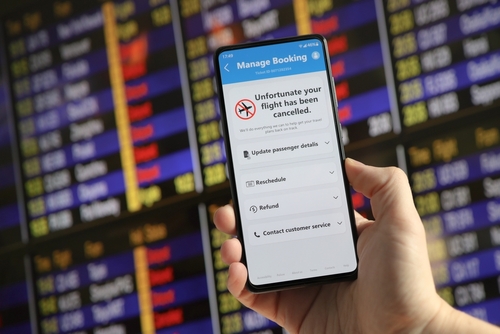
Most airlines allow you to rebook flights directly through their mobile app, and in many cases this is the fastest option. Apps often show real-time seat availability and let you confirm a new booking instantly, without waiting for an agent. Turning on push notifications can also help you catch new flight options or statuses as soon as they appear.
Leverage social media
Some—but not all—airlines respond quickly to direct messages on social media platforms. If you can’t get through by phone, try sending a polite message on social media. Tag the airline and include your flight number, travel date, and a brief description of the issue to improve your chances of a faster response.
Explore your rebooking options
Knowing what questions to ask and understanding your rebooking choices can save you hours or even a full day of waiting at the airport.
Here are a few options to consider:
Rebooking the next available flight
In many cases, airlines automatically rebook a canceled flight on the next available service at no additional cost. While this is usually convenient, it may not always match your schedule or plans. Take a moment to review the next flight details carefully. Ask for a confirmation email or text message so everything is documented.
Checking other airlines
If the next available flight is hours away, ask whether your airline has an interline agreement with other carriers. These agreements allow airlines to rebook a canceled flight on a partner or even a competitor carrier if it gets you to your destination faster.
While there’s absolutely no guarantee they’ll do this, a polite request can sometimes help you reach your destination much sooner.
Consider nearby airports
Another option is flying into or out of a nearby airport. For example, if a flight to New York is canceled, airports like Newark or Philadelphia may have seats available earlier. Ask the agent if rerouting through a different airport is possible, even if it means a short train ride or drive to get there.
Choosing a refund instead
If none of your rebooking options work, or there’s just no point traveling later and you don’t want to fly, you can request a full refund for the unused portion of your ticket—even if it was labeled “non-refundable.”
A refund gives you the flexibility to book with another airline, change your travel plans, or consider alternative transportation if you are still planning to travel, without being stuck with a ticket you can’t use.

Know your rights: why was the flight canceled?
After rebooking a canceled flight, it’s important to know why the cancellation happened because it affects your rights. The reason for cancellation actually determines what assistance, refunds, or compensation you may receive.
Flight cancellations generally fall into two categories, and they’re treated differently:
Controllable vs. uncontrollable cancellations
Some cancellations are within the airline’s control. These include issues like aircraft maintenance problems, crew scheduling shortages, fueling delays, cabin cleaning issues, or other operational errors. They’re categorized as controllable cancellations, and airlines are usually responsible for helping affected passengers.
Other cancellations are caused by factors outside the airline’s control, such as severe weather, air traffic control restrictions, security issues, or natural disasters. These are considered uncontrollable cancellations. While airlines might still assist passengers, compensation rules are often more limited.
If you’re flying within or from the United States
For US flights, the Department of Transportation (DOT) guarantees your right to a full refund if your flight is canceled and you choose not to travel. This airline refund rule applies no matter the reason for the cancellation, even if they offer vouchers, travel credit, or rebooking options.
That said, US law does not require airlines to cover extra expenses like hotel stays, meals, or transportation. However, many airlines do provide this voluntarily, especially for controllable cancellations. So it’s worth asking what support they can offer.
If you’re flying within or from the European Union
Flights departing from the EU, or arriving in the European Union and operated by an EU/UK airline, are protected under EU Regulation 261/2004. This law protects passengers flight cancellation rights, including the possibility of cash compensation for reasons that are within the airline’s control.
Compensation typically ranges from €250 to €600 per passenger, depending on the flight distance and how much the cancellation disrupted your travel.
While cancellations caused by extraordinary circumstances like bad weather don’t qualify for cash compensation, airlines are still generally expected to provide care. This may include meals, hotel accommodation, and alternative transportation.

Secure your amenities (food and hotel)
If a flight cancellation leaves you stranded overnight, knowing how to secure food and lodging can make an already stressful situation more manageable.
Ask for hotel or meal vouchers immediately
If the cancellation is caused by an airline-controlled issue, request hotel accommodations and meal vouchers as soon as possible. Airline agents at the service desk or on the phone may issue these right away. Be sure to confirm what’s covered, such as meal limits or hotel locations, so you can plan your night without surprises.
Be transparent about the cause
When cancellations are due to uncontrollable events, airlines are not required to provide amenities. But some carriers may still offer discounted hotel rates, vouchers, or goodwill assistance.
Be sure to ask and clearly explain your situation. This can sometimes result in extra support. Keep notes of any offers or promises made so you can reference them later if needed.
Keep every receipt
If you have to pay out-of-pocket for meals, hotels, or transportation, save all your receipts. Even when reimbursement isn’t guaranteed, these documents are essential for filing claims with the airline, travel insurance provider, or your credit card company. Organizing receipts right away makes the claim process faster and improves your chances of getting reimbursed.
Handle your luggage
When your trip is disrupted and you’re rebooked for the next day, you need to know what will happen to your luggage. Handling this early can save you from unnecessary inconvenience.
Rebooked on a later flight?
If you’re placed on a flight the following day, some airlines keep your checked bags tagged through to your final destination. This isn’t a hard-and-fast rule and treatment of baggage depends on the standard practices of each airline, airport, and security regime where you happen to be.
But it can mean you won’t have access to your luggage overnight, which can be inconvenient if you need clothes, toiletries, or other essentials.
Need your bags immediately?
If you require medication, a change of clothes, or other critical items, ask an airline agent to retrieve your checked luggage. Be clear about what you need and why it’s important. While not guaranteed, some airlines will release bags in special situations. Keep in mind that retrieval can take time, so be sure to make the request as early as possible.
Choosing a refund instead of rebooking?
If you decide not to travel and opt for a refund, ask the airline for clear instructions on where to collect your luggage before leaving the airport. Airlines are required to return your checked bags eventually, but you may need to go to a specific baggage claim area to retrieve them if you want them back straight away.
If you don’t collect your bags right away, the airline may send them to your original destination later, which can cause delays. To avoid complications, it’s usually best to pick them up at the airport as soon as you can.
Stay calm and take control
Flight cancellations are stressful, but acting quickly and knowing your options can make all the difference. Multitask your rebooking, find out what caused the cancellation, explore alternative flights, and manage your luggage efficiently. Staying organized and informed gives you the best chance to get home quickly and with minimal disruption.
Although cancellations are inconvenient, they don’t have to derail your travel plans. By staying calm and polite, understanding your flight cancellation rights, and following the step-by-step strategies in this guide, you can get moving again with less stress.
FAQs
Do airlines pay for hotels if flights are canceled?
It depends on the cause of the cancellation. If the airline is at fault, such as operational issues, crew problems, or mechanical delays, they often provide hotel accommodations and meals. There’s no guarantee they’ll do this, however.
For cancellations caused by uncontrolled events, like weather or air traffic control issues, airlines usually aren’t required to cover these costs.
Can I get a refund if my flight is canceled?
Yes. You’re entitled to a full refund if you choose not to accept the alternative flight offered by the airline, even if your ticket was initially labeled non-refundable. Contact the airline promptly to ensure you don’t lose your rights.
Does travel insurance cover canceled flights?
Comprehensive travel insurance can cover expenses that airlines don’t, such as hotels, meals, and transportation. Coverage depends on the reason for the cancellation and the specifics of your policy. Always review your policy details before relying on it for reimbursement.
How do I claim compensation for a canceled flight?
Start by filing a claim through the airline’s website or customer service portal. Include your flight details, proof of cancellation, and receipt of your expenses. Following up regularly helps ensure your claim is processed efficiently.
Can I get compensation for a canceled flight due to weather?
Generally, cash compensation isn’t offered for weather-related cancellations. Airlines may still provide meals, accommodation, or rerouting if needed. However, some travel insurance policies may cover these expenses, so check your coverage before your trip.
How can I improve my chances of getting assistance quickly?
Act quickly and explore all available rebooking options, including flights on other airlines or nearby airports. Keep receipts and documentation for any out-of-pocket expenses, as this can help with claims or reimbursement.
Use every channel available, from airline apps to customer service phone lines and social media to reach agents faster and increase your chances of receiving timely support. But be polite, however frustrated you are, with the people you deal with.