
Key Highlights
- Union Station is the main rail hub in Washington DC. It is a historic spot and the main place for Amtrak, VRE, and MARC trains.
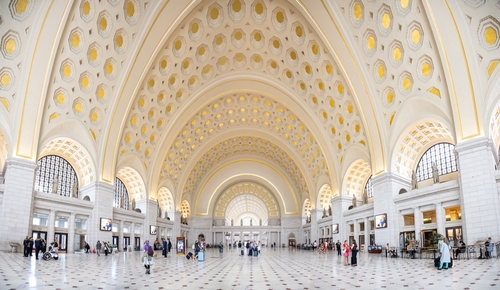
- The Main Hall at Union Station is famous for how it looks. People who travel can find a big food court and many shops to choose from.
- Amtrak customers can use the train platform at Union Station to get to many major cities on the East Coast.
- The Metro station at Union Station helps you move easily to the National Mall and see other good places in the city.
- The city has other important stations, like L’Enfant Plaza, that help people get around Washington DC well.
- If you need help, you can talk to a station manager or follow the clear signs to find your way in the terminals.
Introduction
Welcome to your simple guide for getting around train stations in Washington DC. When you travel in the nation’s capital, you will find that it is easy to get from place to place. The city has a good rail network. This works well for both people who are new in town and those who have been here before. No matter if you come to Washington DC for business, to see your family, or for a short trip, you will find that the city’s train station system can take you where you need to go. Use this guide to learn about the different routes, the services you can get, and the key places you will want to visit. It can make your time in DC feel smoother and help you enjoy your travel without worry.
Overview of Washington DC’s Train Station Network
The train network in the District of Columbia helps connect the whole area. People who live in the city of Washington or visit can get around with ease. The trains make it simple and do not cost a lot.
The Washington Metropolitan Area Transit Authority (WMATA) helps run the rail system. It brings together trains at the national level, those from nearby areas, and local metro lines. You can get off a big train and move onto a smaller metro train without any trouble. The next parts of this text will talk about how the stations work and the way they link together in the city and beyond.
Role of Train Stations in Washington DC Transportation
Train stations are a big part of Washington DC’s public transportation. They help a lot of people get to work every day, many of them have jobs with the federal government. They also help tourists when they want to see the city of Washington. Each train station lets people visit many different neighborhoods, business areas, and important old places in the city.
The main train station in Washington, DC is called Union Station. This train station has been there for a long time and is important for the city. Union Station is a large place and offers many services. It is the main stop for Amtrak trains that go far and move fast. There are also other train lines like the Virginia Railway Express and the Maryland Area Regional Commuter (MARC) train.
When you go inside Union Station, you will find ticket places, baggage help, waiting rooms, and direct access to the Metro station. This makes Union Station the key place for train travel in and out of Washington DC.
Connectivity Between Amtrak, VRE, MARC, and Metro
The best thing about DC’s rail system is how well it connects everything. Union Station is the main train station where Amtrak, Virginia Railway Express, and MARC all meet. That means you can travel on the Northeast Corridor and then get on a local train easy. You can also use the Amtrak app to see your boarding gate for the next part of your trip.
It’s easy to find your way on the Washington, DC Metro from the train station. Union Station has a stop on the Metro Red Line. This gives you direct access to the whole subway. From this spot, you can change trains to get anywhere in the DC area.
Key transfer points include:
- Union Station: Direct access to the Metro Red Line.
- Gallery Place-Chinatown: This is a big hub. Here, you can switch between the Red, Green, and Yellow lines.
- Metro Center: This is where the Red, Blue, Orange, and Silver lines come together.
Union Station: The Heart of DC Rail Travel
Union Station is more than a train station. It is a historic place with special design. Some people even call it a masterpiece. Many say it is the heart of rail travel in DC. When you walk into the Main Hall, you will notice the high ceilings and big open space. The look of the hall reminds people of a Roman triumphal arch. This makes your visit to the capital even more special.
This well-known train station brings in thousands each day. It is the main spot for people coming in and going out by train. Down below, we will talk about the long history of Union Station, the different train services here, and what you can use or do while you are visiting.
History and Architecture of Union Station
The story of union station is as grand as the way it looks. It opened in 1907, and planner daniel burnham made it to help make Washington, DC, look better. He used the Beaux-Arts style, so the station would be a big welcome for people coming to the city and very soon, union station became a main part of life there.
During both world war I and world war ii, the station was very important. It was a busy place for troops and people working for the government to come and go. So many people went through union station at that time, and that made it a big part of America’s story. Now, union station is on the national register of historic places, and that shows how much people still care about it.
The outside of union station is amazing, and when you go in, you will see beautiful marble floors and gold-leafed ceilings. All of its small and big touches share its story with us. Union station is more than just a place to get a train, it is a living museum for those who love buildings and historic preservation.
Major Train Services Departing from Union Station
Union Station is the primary departure point for several major train services, making it a critical hub for regional and national travel. When you arrive, you can check the departure boards or use the Amtrak app to find your train platform. Boarding gates are typically posted 15 minutes before departure.
The three main rail operators at Union Station are Amtrak, MARC, and Virginia Railway Express (VRE). Amtrak provides long-distance and high-speed service, while MARC and VRE offer commuter rail options to Maryland and Virginia, respectively.
Here’s a quick look at the services available:
| Train Operator | Service Type | Key Destinations |
|---|---|---|
| Amtrak | High-Speed & Long-Distance | Boston, New York City, Philadelphia, Florida |
| MARC | Commuter Rail | Baltimore, Perryville, Martinsburg (WV) |
| Virginia Railway Express (VRE) | Commuter Rail | Manassas, Fredericksburg, Northern Virginia |
Notable Facilities, Shops, and Dining Options
Union Station is more than just a place to catch your train. The station gives you many ways to enjoy your time and feel at ease while you’re there. You can rest, eat in the food court, and check out shops before you leave. There is a waiting room where people can sit and relax, making the travel time more comfortable. All these things make the main hall and the rest of the station a good place to be for any passenger.
You can get a quick snack or a big meal at the food court. There are places to eat that fit all tastes and prices. You do not have to worry if you left something at home or want to buy a gift. The station has a variety of shops that sell souvenirs, books, and nice clothes. You can find what you want or need before your trip starts.
Some of the main hall features at Union Station include:
- Dining: A big food court and restaurants where you can eat before you travel.
- Shopping: A variety of shops, so you have options for what to buy.
- Amenities: Restrooms, ATMs, a Metropolitan Lounge for Amtrak customers, and baggage help.
- Location: It is close to places to visit like the National Gallery of Art.
Navigating Union Station with Ease
Getting around a big place like Union Station can look hard. But the station tries to make it simple for everyone. The building has clear signs all over, so you know where to go. This helps you find your train, the Metro, or the food court without trouble.
If you get lost, you do not have to worry. You can go straight to the station manager for help. There is always a station manager at Union Station, and other staff members are ready to answer any questions. The tips below can help you get to Union Station, move around inside, and learn about the station’s easy-to-use features. This will make your visit better and help you go in the right direction.
Arriving at Union Station via Public Transit
Getting to union station with public transit is easy. The red line metro station goes right to it. You can get there from other parts of the city and the suburbs without any problem.
When you get off at the union station metro station, just follow the signs to the main hall of the train station. This gives you a quick way to move from the subway to your Amtrak, VRE, or MARC train. You will not have to worry about bad weather along the way.
The red line also takes you to other main stops, like gallery place. Here you can switch to the green or yellow lines to get to places like navy yard. Having all this in place, the washington metro connects right to union station and makes it easy for people to come and go.
Wayfinding, Entrances, and Layout Tips
Getting around Union Station is easy when you know how it is set up. There are a few entrances on the street level. The most used one is on Massachusetts Avenue NE. This entrance takes you right into the Main Hall.
When you are in the Main Hall, you can go to the train concourse and find the gates where you board the train. To get to the Metro station, just follow the signs for the Red Line. These signs will lead you downstairs to where the Metro entrance is. If you need help, you can go to the station manager’s office. You will find it in the middle part of the station, and there are always people from the staff who can help you.
Here are a couple of quick tips for getting around:
- Main Hall: This is the main spot where you can find shops, food places, and get to the train concourse.
- Lower Level: Here, you will find the food court and also the way into the Metro station.
Accessibility Features for All Travelers
Union Station wants to make sure that getting around is easy for all travelers. The station has many things in place that follow the Americans with Disabilities Act (ADA). These things help people move around the whole building, starting at the parking garage and going all the way to the train platforms. Every space at Union Station was built with accessibility in mind.
If you have trouble moving around, staff can help you with a wheelchair if you ask for it. You will also find accessible restrooms, ticket offices, and a waiting room that is comfortable to use. There are elevators that let people go up or down to any floor, so the whole place stays open and easy to get through.
Key accessibility features include:
- Accessible platforms, restrooms, and waiting areas.
- Wheelchair lifts and a free wheelchair service for moving around the station.
Rail Lines and Routes Serving DC
Washington DC has a strong network of rail lines that link the city to the east coast and places farther away. There is more than one train operator running these lines, and each one has different routes and services. These routes are made for all types of people, like those who ride the train every day or those who travel far. If you use the Amtrak app, it will be easy for you to plan your trip and keep track of the train schedules.
If you need to go to a nearby city fast or you just need a commuter line to a suburb, you will have a good choice. You can find a train that fits what you need. The next parts below explain the services you can expect from Amtrak, MARC, and VRE. These details can help you pick the best line for you, no matter where your metro station is in Washington DC.
Amtrak Services: Northeast Regional, Acela & Long-Distance Routes
Amtrak offers a variety of routes from Union Station, making it a major hub on the East Coast. As the nation’s primary passenger rail operator, Amtrak provides services that connect DC to major cities like Philadelphia and New York City along the busy Northeast Corridor. Frequent travelers can benefit from the Amtrak Guest Rewards program for perks and upgrades.
The Acela service offers a premium, high-speed travel experience, perfect for business travelers or anyone looking for a quicker journey. The Northeast Regional is another popular option, providing reliable service to numerous destinations. In addition to these, long-distance routes connect DC with destinations as far as Florida and Vermont. Some regional trains also stop at New Carrollton.
Here are some of the key Amtrak routes from DC:
| Route Name | Service Type | Common Destinations |
|---|---|---|
| Acela | High-Speed | Boston, New York City, Philadelphia |
| Northeast Regional | Regional | Boston, Richmond, Virginia Beach |
| Vermonter | Long-Distance | Vermont |
| Floridian | Long-Distance | Florida |
MARC Train Lines and Destinations
The Maryland Area Regional Commuter (MARC) train is a key way for people to travel between Maryland and Washington DC. The trains run on weekdays and are both reliable and affordable. Each of the three MARC lines ends at Union Station. This makes it easy to switch trains or use other types of transportation.
The most used route is the Penn Line. The Penn Line takes you from Union Station to the Penn Station in Baltimore. Trains on this line run often during the day. Many people choose this way because it is great for work or a fun trip between Washington DC and Baltimore. The Camden and Brunswick lines go through other places in Maryland, and one even goes into West Virginia.
If you want to take a day trip to Baltimore or need to get from the Maryland suburbs, the MARC train is a great choice. It is comfortable and lets you ride without dealing with highway traffic and stress.
Virginia Railway Express (VRE) Connections
Connections to the Virginia Railway Express (VRE) make it easy for people to go to and from Washington DC and northern Virginia. VRE gives you direct access to Union Station, a well-known train station. At this spot, you can get on the red line, blue lines, and yellow lines of the Metro without any trouble. If you want to drive, there is a parking garage nearby for your use. The National Mall and other major sites are close, too. Because of all this, VRE is a good part of the way people travel in the Washington area.
Additional Train Stations in Washington DC
While Union Station is the biggest and best-known train station in DC, it is not the only important one. There are other train stations in the city. These stations also play a big part in moving people around. They are key places for the metro system where people can switch trains.
These other stations help spread out crowds and make it easy for people to get right to different neighborhoods and business spots. If you ever need help at a metro station, you can go to the station manager. Let’s talk about some more important hubs.
L’Enfant Plaza Station: Key Transfer and Local Access
Yes, L’Enfant Plaza is another very important metro station in Washington DC. It may not serve Amtrak, but it is a main stop for the VRE commuter rail and for the Washington Metro. The station is in a great spot, making it a top choice for people going to government offices or museums.
This metro station is one of the busiest in Washington DC. It is the place where five of the six Washington Metro lines meet. These lines are the Blue, Orange, Silver, Green, and Yellow lines. You can use these lines to travel to lots of places across the city. For instance, you can ride the Yellow or Blue lines straight to the Ronald Reagan National Airport.
If you need to move between lines or are not sure where to go, there are clear signs in the station. You can also talk to the station manager if you want help. L’Enfant Plaza gives people a good way to connect to the south side of downtown DC.
NoMa–Gallaudet U Station and Regional Links
The NoMa–Gallaudet U station is a new and important stop on the Red Line. It is just one stop north of Union Station. The station is right in the fast-growing North of Massachusetts Avenue (NoMa) neighborhood. This area is busy with offices, places to live, and stores.
People can get direct access to this lively part of the city of Washington now. Before, the Metro did not serve it well. This station helped the area grow. It made it easier for many residents and workers in the city of Washington to travel each day.
If you use the Red Line, the NoMa–Gallaudet U station is a good way to get into a busy and new part of the city. The station is close to Union Station, so you can easily get to local or even national trains from there.
Connections to Suburban Stations: New Carrollton, Silver Spring, Alexandria
Washington DC’s rail lines stretch out to many suburbs. This helps connect the city to big places in Maryland and Virginia. Many people park at these stations and then take a train into Washington DC. This guide will show some of the most important stops that help people travel in the area.
Stations like New Carrollton, Silver Spring, and Alexandria make it easy to move around. New Carrollton is in Maryland, Silver Spring is also in Maryland, and Alexandria is in Virginia. These stops are part of the main system. They are used by Metro, Amtrak, MARC, and VRE trains. Because of this, these stations are like small centers where people change trains.
Key suburban stations include:
- New Carrollton: This is at the end of the Orange Line on the east side. Amtrak and MARC trains also stop here and many come from or go to Washington DC.
- Silver Spring: A main spot on the Red Line. It links you to MARC service too.
- Alexandria: In Virginia, this stop is on both the Blue and Yellow lines. VRE trains use it as well.
Using the DC Metro System for Train Travelers
If you come to DC by train, you will find the Metrorail system is a great way to get around the city. The trains are clean. You will get to where you need to go without long waits. The Metrorail system goes to all the main train stations, big attractions, and the best neighborhoods.
You can pay for your trips with a SmarTrip card. It is easy to get and reload at any station. You can also use the SmarTrip card on your mobile wallet if you want to pay that way.
It does not take long to learn how to use the system. The lines are color-coded. You only need to know which color to follow and where to switch trains if you need to. The next sections will show you what you need to get around the Metro. You will find out about the key lines and how to plan your ride. You will soon feel like you know your way around the Metrorail system.
Essential Metro Lines Serving Train Stations
Navigating the DC Metro system is all about knowing the lines. The network consists of six color-coded lines that crisscross the city and extend into the suburbs. For train travelers, the most important line is the Red Line, as it directly serves Union Station.
From Union Station, you can take the Red Line to other key transfer stations to connect to the rest of the system. For example, a short ride to Gallery Place allows you to switch to the Green and Yellow Lines, while Metro Center connects you to the Blue, Orange, and Silver Lines.
Here is a quick reference for key lines serving train stations:
| Metro Line | Key Train Station Connection | Major Transfer Points |
|---|---|---|
| Red Line | Union Station, Silver Spring | Gallery Place, Metro Center |
| Blue/Yellow Lines | L’Enfant Plaza, Alexandria | L’Enfant Plaza, Pentagon |
| Orange/Silver Lines | New Carrollton, L’Enfant Plaza | Metro Center, L’Enfant Plaza |
Purchasing Fares, Transfers, and Trip Planning
Paying for your Metro ride is easy and gives you options. The best way is to use a SmarTrip card. This is a plastic card that you can recharge, and you can get one at any station. You can even add a SmarTrip card to your mobile wallet for a simple tap to pay. You can also use a contactless credit or debit card and tap it at the faregates.
Metrorail fares depend on how far you travel and the time of day. Fares cost more during peak hours. Peak hours are on weekdays from the time trains open in the morning until 9:30 a.m. and again from 3 p.m. to 7 p.m. You can use the Metro’s Trip Planner online before you go. This helps you check the metrorail fares, see the best route, and get ready for your trip.
Helpful tips for metrorail fares and planning:
- Load Money: Put more money onto your SmarTrip card at a station machine or using the app.
- Passes: If you will ride often, think about getting a 1-day, 3-day, or 7-day pass for unlimited rides.
- Plan Ahead: Try the Trip Planner tool on the Metro website. It helps you find your way and lets you check service updates.
Conclusion
To sum up, getting around the train station network in Washington DC can really make your trip better. With Union Station at the center, you get to enjoy both old charm and new stuff. The place gives you easy ways to travel, including rail services like Amtrak, VRE, and MARC. If you know the layout and what is on offer at this train station, you can make your time in the city smoother. Make sure you use the DC Metro system, too, so you can get to nearby attractions and neighborhoods quickly. It does not matter if you live here or you are just visiting, using these options will give you a nice, simple trip around Washington DC. Safe travels!
Frequently Asked Questions
Which Amtrak routes are available from Washington, DC?
From Union Station, you can catch many trains with Amtrak. The high-speed Acela trains and Northeast Regional trains will take you to major cities on the Northeast Corridor, like New York and Philadelphia. There are also long trips that go from here up to Vermont or down to Florida. Some of the region’s trains even stop at the New Carrollton station in the suburbs.
What facilities and shopping are inside Union Station?
Union Station has a lot to offer. You can see the Main Hall, which looks great. There is a big food court, so you will find many different foods to try. You can shop at a variety of shops for gifts or things you need. The waiting room is comfortable for passengers. The station also has restrooms, ATMs, and baggage services for people who travel.
How do I transfer between trains and the Metro in Washington, DC?
Transferring at Union Station is simple. You just need to follow the signs from the train concourse down to the Metro station entrance. It is on the lower level. Union Station has the Red Line stop, too. This line will take you to big transfer places like Gallery Place. There, you can get to other lines.