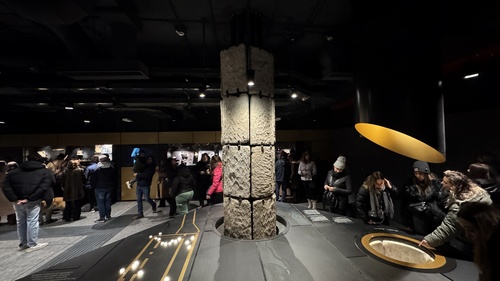

You tap your card, the gates open, and you step onto the escalator. The noise of the busy Roman street fades away as you descend. Around you, the station looks modern. You see sleek glass, polished steel, and bright LED lights. It looks like any major transit hub in London, New York, or Tokyo.
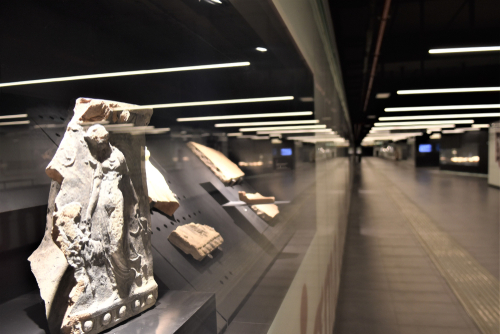
But then, you look deeper. Behind the glass panels lining the walls, you don’t see advertisements. You see ancient stone walls, broken pottery, and the foundations of a city that existed long before the trains arrived.
This is the reality of Rome’s Metro Line C. It is a massive infrastructure project that has turned a simple commute into a journey through time. For residents and tourists, the San Giovanni station and the upcoming stops near the Colosseum offer a unique experience. They blend the necessity of modern travel with the responsibility of preserving the past.
Here is what you need to know about this engineering marvel and what makes it unlike any other subway station in the world.
Why Building a Metro in Rome Is Uniquely Difficult
Rome is often described as a “lasagna city.” This means the city has been built in layers over thousands of years. When you walk on the street today, you are walking meters above the street level of the Renaissance, which sits above the Middle Ages, which sits above the Imperial Roman era.
This makes digging tunnels incredibly complicated. In many cities, engineers only need to worry about pipes and wires. In Rome, every time a shovel hits the ground, there is a high chance it will hit a priceless artifact.
Strict laws protect these archaeological finds. When ruins are discovered, construction must stop. Archaeologists must then assess, document, and preserve the site. This process explains why Line C has faced so many delays. It is not just a construction project; it is the largest archaeological excavation in Europe.
The Station at a Glance
The focal point of this “museum metro” concept is the San Giovanni station. It serves as a crucial link between the new Line C and the existing Line A.
Located just outside the ancient Aurelian Walls, San Giovanni was the first station to officially adopt the stazione-museo (museum-station) format. It opened to the public in 2018 after years of careful work.
Unlike older stations in Rome, which are often dark and purely functional, San Giovanni is bright, spacious, and deeply educational. It sits roughly 30 meters underground, requiring passengers to travel deep into the earth—and deep into history—to reach the trains.
What Was Discovered During Construction
When workers began digging, they found much more than just dirt. The excavation revealed a treasure trove of daily life from ancient Rome.
The team uncovered a vast agricultural enterprise. This included the largest ancient water basin ever found in Rome, which was used to irrigate crops. They found peach pits, remnants of fruit trees, and sophisticated plumbing systems.
As they dug deeper, they found evidence of varying time periods:
- The Modern Age: The top layers revealed foundations from the 19th and 20th centuries.
- The Middle Ages: Below that, they found remnants of medieval pottery and tools.
- Imperial Rome: The deepest layers revealed the farm structures and items from the 1st and 2nd centuries AD.
These discoveries were significant because they showed historians that this area was not just a military zone or a place for monuments. It was a working farm that fed the city.
A Metro Station Designed Like a Museum
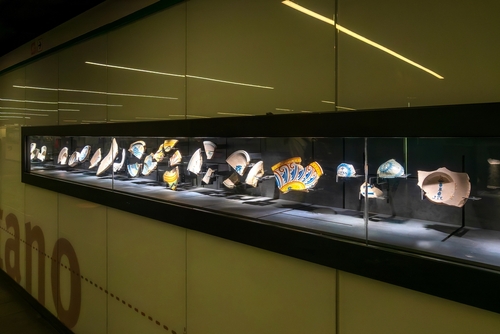
The architects and archaeologists decided not to move these artifacts to a dusty museum across town. Instead, they integrated them directly into the station’s design.
The station uses “vertical storytelling.” As you take the escalators down from the street to the platform, you travel back in time.
- The Atrium: The upper levels display artifacts from the more recent centuries.
- The Descent: As you go lower, the walls display rulers and dates marking the different eras of Roman history.
- The Platform Level: At the bottom, you are surrounded by the oldest history.
Glass panels display the actual items found on site, including gold coins, jewelry, and clay pots. The lighting is designed to highlight these objects without distracting from the station’s function. It is a purposeful design choice that turns a waiting area into an educational space.
What Passengers Experience Today
For the daily commuter, the experience is seamless. The station functions exactly as it should. The trains run on time, and the connections are clear.
However, the atmosphere is different. You will often see people pausing on their way to work to read a plaque or look at an ancient tool. Tourists use the space differently, treating the station as a destination in itself.
The signage is clear and helpful, providing context in both Italian and English. It helps you understand what you are looking at without needing a guide. The feeling is grounding. It reminds passengers that their daily routine is just a small part of the city’s long, enduring story.
Why This Station Matters Beyond Rome
This project is setting a new standard for urban planning in historic cities. Places like Athens, Thessaloniki, and Istanbul face similar challenges. They must balance the need for modern transportation with the duty to protect history.
Rome has shown that you do not have to choose one or the other. You can have both. This project redefines public space. It takes history out of exclusive museums and puts it into the public sphere where everyone can see it for a standard ticket price. It is a transparent approach to heritage that benefits everyone.
Challenges, Criticism, and Costs
It is important to be transparent about the difficulties of this project. The “museum station” came with a high price tag.
- Delays: The meticulous excavation process meant the station opened years behind schedule.
- Budget: The costs ballooned well beyond the original estimates, drawing criticism from taxpayers and politicians.
- Disruption: The construction sites blocked traffic and pedestrian areas for over a decade, frustrating local business owners.
Critics have asked if the time and money were worth it. However, now that the station is open, the consensus is generally positive. It provides a vital transport link and a unique cultural asset, but the road to get there was undeniably difficult.
Visiting Tips for Curious Travelers
If you want to see the San Giovanni station for yourself, it is easy to do. Here are a few simple tips to make your visit better:
- Avoid Rush Hour: Try to visit between 10:00 AM and 4:00 PM. This lets you explore the displays without getting in the way of busy commuters.
- Buy a Standard Ticket: You do not need a special pass. A standard BIT ticket (currently €1.50) grants you access to the Metro system for 100 minutes.
- Look at the Walls: Pay attention to the timeline graphics on the walls as you descend. They help you visualize the depth of the history.
- Pair Your Visit: The station is right next to the Basilica of San Giovanni in Laterano, one of the most important churches in Rome. It is easy to see both in one morning.
Rome’s Past, Still Underfoot
Rome is a city that lives comfortably with its ghosts. The new Metro Line C proves that progress does not have to erase the past. By building around the ruins rather than over them, the city has created a space where the ancient and the modern meet every day.
As you step onto your train and the doors slide shut, you are moving forward. But for a few minutes on the platform, you were standing in the footsteps of ancestors from two millennia ago.
Frequently Asked Questions (FAQs)
What can I see at San Giovanni metro station?
At San Giovanni station, you can explore an impressive display of ancient artifacts uncovered during the construction of Rome’s metro Line C. These items include pottery, coins, and other historical relics that provide a glimpse into life in ancient Rome, all beautifully showcased in a museum-like setting.
Is there an admission fee to see the artifacts?
No, there is no additional fee to view the artifacts at San Giovanni station. The historical displays are integrated into the station itself, making it accessible to all passengers with a valid metro ticket.
How do I get to San Giovanni metro station?
San Giovanni station is located on Line C of Rome’s metro system. You can easily reach it by transferring from other metro lines or buses within the city’s extensive public transportation network.
Can I visit the station even if I’m not commuting?
Yes, you can visit San Giovanni station specifically to view the exhibit. However, you will still need to purchase a metro ticket to access the station.
What makes San Giovanni station unique?
San Giovanni station offers a rare blend of modern infrastructure and ancient history. It’s designed to serve as both a transit hub and a historical showcase, allowing you to connect with the past as you commute through present-day Rome.