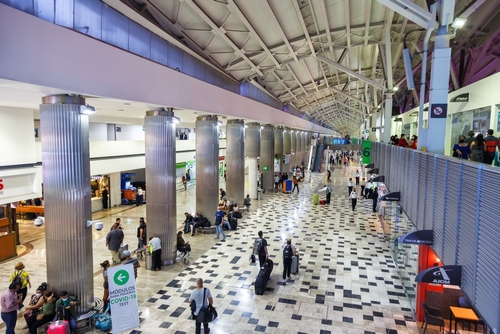

If your next trip involves flying through Aeropuerto Internacional Benito Juárez (MEX), also known as Mexico City International Airport or simply AICM, you’re heading into one of the busiest airports in Latin America. That might sound intense, but busy doesn’t have to mean chaotic.
A lot of us know the feeling of landing in a new country, feeling tired, overstimulated, and just wanting to get to our mode of transport as quickly as possible. At Remitly, we get that travel means a lot to those of us living far from home. So we’ve created this guide to make your long travel day that little bit easier.
Understanding the Mexico City airport layout
Before we get to the specific details like transport and food, there’s one thing that matters more than anything when you first arrive at Mexico City airport: knowing which terminal you need.
AICM has two separate terminals, and they’re not connected by a quick hallway or a short walk. They’re divided by runways, which means switching between them takes a bit of planning. Showing up at the wrong terminal is one of the most common mistakes travelers make. It’s fixable, but adds time you probably don’t want to lose.
Before you head out, it’s worth checking your airline, your flight number, and the terminal listed on your boarding pass. It seems obvious, but we’ve all been there, full of excitement or nerves, and forgetting to check the small things.
Terminal 1 (T1)
Terminal 1 is the bigger, busier sibling. It’s the largest terminal at Mexico City airport and handles a high volume of domestic flights, along with a lot of international ones too. You’ll spot airlines like Volaris, Viva Aerobus, American Airlines, United Airlines, Iberia, and Lufthansa, among others.
Travelers using Terminal 1 usually notice long check-in and security lines at peak times, and more walking between gates. But on the plus side, there are lots of shops and food options.
Terminal 2 (T2)
Terminal 2 is more compact and often easier to navigate. It mainly serves Aeroméxico and its SkyTeam partners, including Delta, Air France and KLM. Travelers find that this terminal is calmer, not because it’s empty but because everything is closer together. For instance, shorter walks, clearer flow, and slightly less noise, which we all know help make travel waits less overwhelming.
Moving between terminals
Switching terminals at Mexico City Airport is very doable once you know how it works.
Aerotrén (Air Train)
The Aerotrén, or Air Train, is usually the easiest and fastest way to move between terminals. The train runs between Terminal 1 and Terminal 2, it’s free to use, and it’s designed specifically for passengers who already have a valid boarding pass. Just remember, it only operates between 5 a.m. and 11 p.m.
Once you’re inside the terminal, signs will guide you to the station, and the ride itself is quick and secure. You’ll just need to show your boarding pass to enter. Even if you’re tired or traveling for the first time, the Air Train feels surprisingly simple.
Inter-terminal buses
If you don’t have a boarding pass, or if the Air Train isn’t operating when you arrive, you can use the inter-terminal buses. It’s a good idea to allow some extra time if you’re using the bus, especially during busy peak hours. Traffic around the airport can slow things down, and factoring in a buffer helps keep the whole experience low-stress.
Getting to and from the city
After you’ve cleared immigration and collected your bags, the next question that comes to mind will probably be “How do I actually get out of here?” Mexico City Airport is pretty close to the city center, but traffic and transportation choices can make the experience feel different depending on what you choose.
Authorized airport taxis
Authorized taxis are usually the easiest option for getting to your accommodation quickly. The process is simple but a little different from what you may be used to. Instead of paying the driver directly, you buy a taxi ticket at an authorized booth inside the terminal before heading outside. The price is fixed based on your destination zone. Once you’ve paid, you’ll be directed to a taxi.
Ride-sharing apps
Ride-sharing apps like Uber and Didi are available at Mexico City Airport. Pickups are usually limited to specific zones rather than right outside the terminal doors. That means you may need to follow signs or app instructions to reach your assigned pickup point.
If you’re comfortable using ride-sharing apps and don’t mind a short walk to the pickup area, this can be a convenient option. Just take a moment to double-check the pickup location in the app.
Metrobus
If you’re looking for a more budget-friendly option and you’re traveling light, the Metrobus is a great alternative. You can jump on line 4, which connects the airport to the historic center.
To use the Metrobus, you’ll need a Metrobus card, which you can buy at stations near the airport. The ride is generally straightforward and avoids some of the city’s surface traffic, but it works best if you aren’t carrying much luggage and already feel comfortable with public transportation.
Metro (subway)
Mexico City’s metro system also reaches the airport area, with the Terminal Aérea station on Line 5 located near Terminal 1. And it’s one of the cheapest ways to travel.
During peak hours, trains might be a bit crowded, and there are limits on large luggage. So, it’s best to use this option if you’re an experienced traveler who can quickly understand foreign subway systems.
Amenities and essential services at Mexico City Airport
Most of us can’t resist the temptation of a snack at airports, and we all probably want to stay connected while we wait.
Wi-Fi and connectivity
How many of us reach for our phones as soon as we land? Thankfully, Mexico City Airport offers free Wi-Fi in both terminals. You’ll usually need to sign in and reconnect after a set amount of time, but it’s reliable enough to send messages and check directions. If you need more time online, cafés and lounges often provide stronger connections, too.
Currency exchange and banking
You’ll find plenty of Casas de Cambio (currency exchange offices) and ATMs throughout both terminals. If you need some cash right away, exchanging a small amount at the airport can be convenient. That said, rates can vary, so it’s worth taking a quick look at your options instead of rushing into the first booth you see.
Many travelers prefer to withdraw cash from an ATM rather than exchange money at the counter, depending on their bank’s fees. There isn’t a right choice here, just whichever one feels easiest in the moment.
Food and dining
Hunger has a way of making everything feel more stressful, and Mexico City Airport has enough food options to keep that from becoming a problem. You’ll find all types of options from familiar fast-food chains to sit-down restaurants serving both Mexican and international dishes. Sometimes, eating first really is the best travel decision.
Lounges
If you’re facing a long wait or just want a quieter space, airport lounges are available in both terminals. Some are accessible through airline status or credit cards, while others let you try them out for a fee.
You’ll find comfortable seating, snacks, Wi-Fi, and a bit of calm. They’re especially helpful during long layovers or delays, when having a place to recharge, physically and mentally, can make a big difference.
Traveling through Mexico City airport
Travel days already come with enough moving parts. Add kids, older relatives, or a long layover into the mix, and it’s normal for things to feel more complicated.
Traveling with children or older family members
If you’re traveling with family, especially older relatives, the pace of the airport can matter just as much as the logistics. Traveling together often means adjusting expectations. Things may take a little longer, and that’s okay. Building in extra time and moving at a comfortable pace can turn a potentially stressful experience into a totally manageable one.
Elevators, ramps, and assistance services are available in both terminals, and airport staff are generally helpful if you need directions or extra support. It’s completely normal to ask for help, and you won’t be the only one doing it.
Long layovers at Mexico City Airport
Long layovers can go one of two ways. They’re either a chance to rest and recharge, or they feel like time that drags on forever, depending on how you organise them.
If your layover is very long, you might want to make the most of this time to explore some of Mexico City. Just remember you’ll need to consider logistics carefully, and it’s probably easier if you’re travelling by yourself or in a couple.
For most people, staying inside the airport is the simplest choice. You can make the most of the lounges to recharge your devices or read peacefully. Even small things, like downloading a show or stretching your legs, can make a long wait feel much shorter. If you really need to sleep, there are sleep pods like izZzleep inside the terminals.
Tips for arrival and departure
Arrival and departure days tend to be when everything feels more intense. So, knowing what to expect makes everything a lot more enjoyable.
Arriving in Mexico City
Mexico uses a mostly digital immigration process now, which means you may not receive the paper form that used to be standard. It’s always a good idea to double-check your travel details before your trip.
Once you’ve cleared immigration, you’ll head to baggage claim and then through customs. Don’t feel like you need to rush this part; everyone around you is doing the same thing.
When you go to collect your luggage, you’ll find that it’s a lot easier if you add a luggage tag or special ribbon. Lots of bags look the same at baggage claim. It’s also a good idea to keep your valuables in your carry-on, so you don’t have to wait until your luggage comes through.
If you already have an international phone plan, you might not need a local SIM card right away. If you don’t have one, SIM cards are available at the airport, but some travelers prefer to wait until they reach the city, where prices and options are more varied.
The same goes for money. You don’t need to have every peso sorted before leaving the terminal. Many people exchange or withdraw just enough to get through the first day and take care of the rest later.
Departing from Mexico City airport
For international flights, getting to the airport about three hours ahead of departure gives you room to handle check-in, security, and any unexpected delays. For domestic flights, two hours is usually enough. Security screening can take longer during busy periods, so you could try wearing shoes that are easy to take off, and keep liquids, devices, and important documents easy to access.
This extra time is more to give yourself space to move through the airport without constantly checking your watch. And to check out any shops if you want to.
A busy airport, made easier with the right prep
Mexico City Airport can feel overwhelming at first, but once you know which terminal you need, how to get around, and what services are actually useful, it becomes much easier to navigate.
Whether you’re visiting family, heading home, or starting a new chapter somewhere else, travel days carry a lot of meaning. At Remitly, we know first-hand how important it is to stay connected across borders. If you need to send money to loved ones in Mexico before or after your trip, we’re here to help with transfers that are fast, secure, and transparent.
FAQs
Is Mexico City Airport safe?
Yes. Benito Juárez International Airport is generally safe, and most travelers pass through without issues by using authorized transportation and keeping an eye on their belongings.
How far is the airport from downtown Mexico City?
The airport is usually about three to six miles from central Mexico City, with travel times ranging from 30 to 60 minutes depending on traffic.
Can I sleep at the airport during a long layover?
Yes. You can use sleep pods like izZzleep inside the terminals, or choose a nearby hotel connected to the terminals for a more comfortable rest.
Is there luggage storage available at AICM?
Yes. Luggage storage is available in both terminals, which is helpful if you have a long layover or want to move around without your bags.