
For many travelers, the first morning in Italy comes with a specific kind of anxiety. You walk into a bustling café, the air thick with the smell of roasted beans and the clinking of ceramic cups. You want a coffee, but the menu looks different, the pace is fast, and you aren’t sure where to stand.
Coffee in Italy is more than just a caffeine fix. It is a daily ritual and a pillar of social life. However, the rules here are different from what you might be used to at home. Ordering a “latte” might get you a glass of plain milk, and asking for a to-go cup can result in confused looks.
This guide is here to help you navigate the Italian coffee bar with confidence. Whether you are a first-time visitor or a coffee lover looking to deepen your knowledge, we will break down exactly how to order, what to expect, and how to enjoy your espresso just like a local.
Understanding Italian Coffee Culture
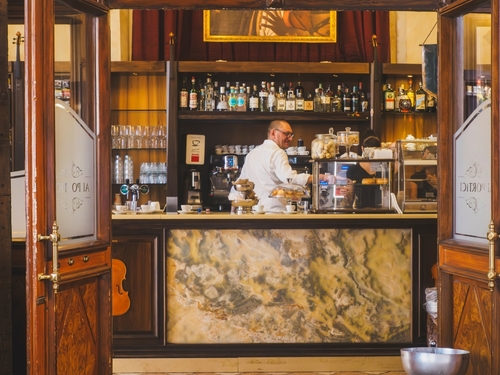
Before you step up to the counter, it helps to understand how Italians view coffee. In many countries, a coffee shop is a place to open a laptop and sit for an hour. In Italy, the “bar” (what Italians call a café) is a place for a quick pause.
The Bar vs. The Table
The most important distinction to learn is the difference between standing at the bar (al banco) and sitting at a table (al tavolo).
Most locals drink their coffee standing at the counter. It is quick, social, and significantly cheaper. If you choose to sit at a table, you will receive waiter service, but the price of your coffee can double or even triple. Neither way is wrong, but you should decide which experience you want before you enter.
The “Milk Rule”
You may have heard that Italians do not drink cappuccinos after 11:00 AM. This is true, but it isn’t a law. It stems from digestion. Italians consider milk to be a heavy food, suitable for breakfast but too heavy to consume after a full lunch or dinner. You can still order one in the afternoon, but you might mark yourself as a tourist.
Essential Italian Coffee Vocabulary
The menu in Italy is simple, but the names imply specific things. Here is what you need to know to get what you actually want.
Caffè (Espresso)
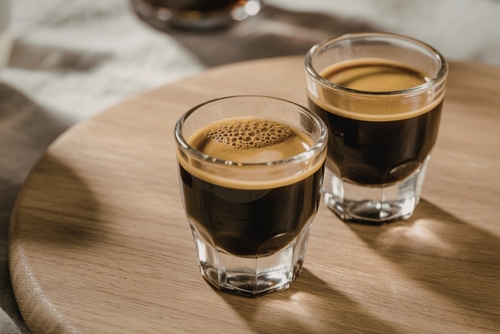
When you order “un caffè,” you will get a single shot of espresso. This is the default. It is small, strong, and usually served with a glass of water to cleanse your palate.
Cappuccino
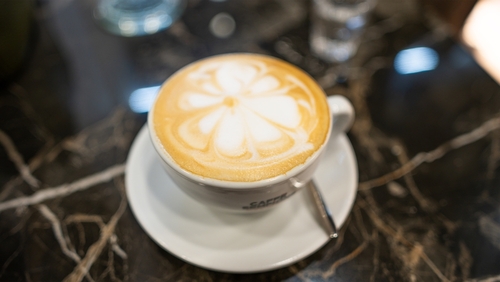
This is a shot of espresso topped with steamed milk and foam. It is strictly a breakfast drink in Italy, often paired with a pastry (cornetto).
Latte Macchiato
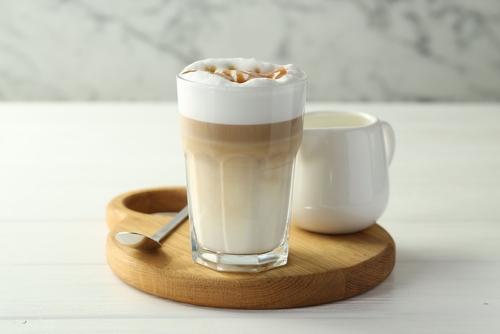
This is likely what you want if you are used to ordering a “latte” at home. It is a glass of steamed milk “stained” with a shot of espresso. If you just order a “latte,” you will simply be served a glass of cold milk.
Caffè Macchiato
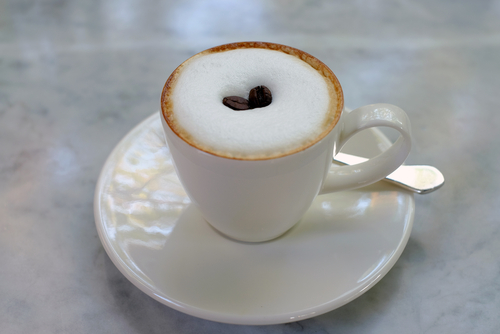
The opposite of the above. This is an espresso “stained” with just a dash of milk foam. It comes in a small espresso cup. You can ask for it with cold milk (freddo) or hot milk (caldo).
Americano
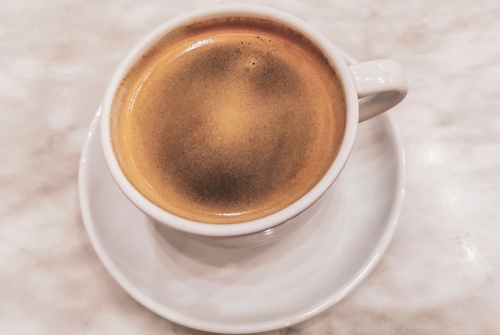
If the intensity of espresso is too much, order an Americano. This is an espresso diluted with hot water, served in a larger cup. It mimics the strength of filtered drip coffee.
Caffè Shakerato
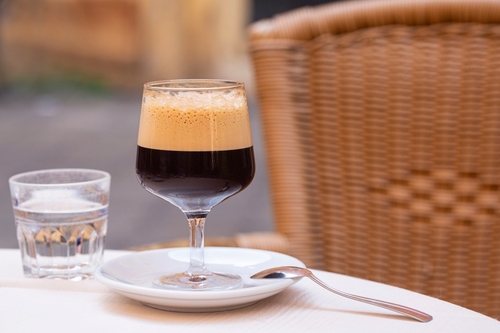
Perfect for hot summers, this is espresso shaken over ice with sugar until it becomes frothy, served in a martini or wine glass.
Step-by-Step: How to Order at an Italian Bar
The flow of an Italian bar can feel chaotic, but there is a system. Here is the standard process for ordering at the counter.
1. Find the Cash Register (La Cassa)
In many busy bars, you cannot simply walk up to the barista and order. You must first go to the register, place your order, and pay.
2. Get Your Receipt (Lo Scontrino)
Once you pay, the cashier will hand you a receipt. Do not throw this away. This is your ticket to getting your coffee.
3. Head to the Bar
Walk to the counter where the espresso machine is. Make eye contact with the barista and place your receipt on the counter. If it is busy, you may need to be assertive but polite.
4. Place Your Order
Ideally, place a small coin (usually 10 or 20 cents) on the receipt as a tip, though this is optional. Tell the barista what you would like.
- You: “Buongiorno. Un caffè, per favore.” (Good morning. A coffee, please.)
- Barista: “Prego.” (Here you go.)
5. Drink and Go
Drink your coffee while standing at the bar. Chat with your companion or the barista, then be on your way. The entire process often takes less than five minutes.
Common Mistakes to Avoid
Ordering coffee should be enjoyable, not stressful. Avoiding these common errors will make your experience smoother.
- Asking for “To-Go”: Coffee in Italy is meant to be consumed on the spot. While takeout cups are becoming more common in tourist areas, they are rare in traditional bars.
- Ordering a “Large” size: Sizes generally do not exist. A cappuccino is one standard size. You cannot order a “venti.”
- Sitting down without checking: If you sit at a table, do not walk to the bar to order. Wait for a server. If you pay at the register for a standing price and then go sit down, the staff may correct you.
- Over-complicating the order: Italian coffee is simple. Asking for vanilla syrup, oat milk, extra hot, and half-caff might not be possible in a traditional family-run bar.
Regional Variations to Know About
Italy is a country of regions, and coffee habits shift as you travel.
In Southern Italy (like Naples or Sicily), the coffee is often roasted darker and served stronger. It is also customary to receive a glass of mineral water with your coffee to cleanse your palate before drinking.
In Northern Italy (like Milan), the roast may be slightly lighter. The pace in the north is often faster, catering to business people rushing to work.
If you are in a train station or airport, the quality may vary, but the speed will be incredible. These baristas are masters of efficiency.
Quick Reference Cheat Sheet
Save this list to your phone for your next trip to the bar.
|
If you want this… |
Order this… |
Pronunciation |
|---|---|---|
|
Small shot of coffee |
Un caffè |
Oon kah-feh |
|
Coffee with lots of milk |
Un latte macchiato |
Oon lah-tay mah-kya-toh |
|
Espresso with a dash of milk |
Un caffè macchiato |
Oon kah-feh mah-kya-toh |
|
Foamy breakfast coffee |
Un cappuccino |
Oon kah-poo-chee-noh |
|
Iced coffee |
Un caffè shakerato |
Oon kah-feh shake-er-ah-toh |
|
Decaf |
Un decaffeinato |
Oon deh-kah-feh-nah-toh |
Polite phrases to use:
- “Posso avere…?” (May I have…?)
- “Al banco, per favore.” (At the counter, please.)
- “Grazie mille.” (Thanks a million.)
Frequently Asked Questions
Can I get non-dairy milk in Italy?
Yes, but it depends on the location. Soy milk (latte di soia) is the most common alternative and is available in most city bars. Oat milk and almond milk are becoming more popular but are not guaranteed in smaller towns.
Is water free with coffee?
Usually, yes. If you are at the counter, you can ask for “un bicchiere d’acqua” (a glass of water). In some regions, like Naples, it is served automatically. In tourist-heavy areas, they might charge a small fee for bottled water.
How much should an espresso cost?
If you drink it standing at the bar, the price is often regulated or kept low by custom. Expect to pay between €1.00 and €1.50 for an espresso. If you sit at a table, the price can rise to €3.00 or more, especially in famous squares like Piazza San Marco in Venice.
Do I need to tip?
Tipping is not mandatory in Italy like it is in the US. However, leaving the small change (10 or 20 cents) on the counter when you order is a nice gesture known as “caffè sospeso” in spirit, though technically that refers to buying a coffee for a stranger. It is simply a polite way to say thank you to the barista.
Embracing the Experience
The most important tip for ordering coffee in Italy is to not overthink it. You do not need to speak perfect Italian to get a great cup of coffee. A smile and a polite “buongiorno” go a long way.
If you make a mistake—like ordering a cappuccino after dinner—the worst that will happen is a knowing smile from the waiter. The goal is to participate in the ritual. Take a moment to stand at the marble counter, watch the barista work the machine with precision, and enjoy the energy of the room. It is one of the most authentic and affordable cultural experiences you can have in Italy.