
Some of the most extraordinary places on Earth appear on no tourist brochure. They have no Instagram geotags, no visitor centers, and no souvenir shops. They exist quietly—shaped by millions of years of geological activity, extreme climates, or political circumstances that keep human footfall to a minimum.
But “hidden” in 2026 doesn’t mean undiscovered. It means something more nuanced. A place can be hidden because it’s geographically remote, logistically demanding to reach, politically restricted, environmentally fragile, or culturally isolated from the mainstream travel circuit. These aren’t just curiosities for the adventurous. They’re places that matter—for biodiversity, for climate research, for the survival of indigenous cultures, and for understanding the geological history of our planet.
This guide explores five of the world’s most remarkable hidden destinations, examines what makes a place truly “hidden,” and considers the ethical questions that come with the desire to explore them.
Fiordland National Park, New Zealand: Where Wilderness Has No Edge
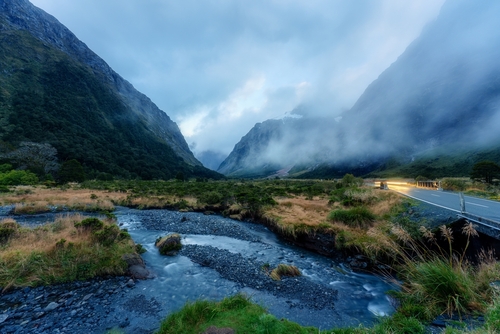
Tucked into the southwest corner of New Zealand’s South Island, Fiordland National Park spans roughly 12,600 square kilometers—the country’s largest national park, and one of the most sparsely visited given its size. The nearest town, Te Anau, has a population of around 3,000 people. Beyond that, there is almost nothing.
Fiordland is part of Te Wahipounamu, a UNESCO World Heritage Site, and it earns that designation many times over. Glaciers carved its landscape during the Ice Age, leaving behind deep fjords—Milford Sound and Doubtful Sound among them—flanked by granite cliffs that rise more than 1,000 meters straight out of the water. U-shaped valleys stretch into the distance, draped in ancient temperate rainforest.
The weather here is relentless. Some parts of Fiordland receive up to 7 meters of annual rainfall, making it one of the wettest inhabited regions on Earth. After heavy rain, waterfalls appear seemingly from nowhere, cascading down sheer rock faces for a few hours before vanishing again. The fjords themselves are deeper than the surrounding ocean floor.
Wildlife thrives in this isolation. The Takahe—a large, flightless bird once thought extinct—has been brought back from the brink here. Fiordland Crested Penguins nest along its coastline. Below the surface of the fjords, a rare freshwater lens sits atop the saltwater, creating conditions where deep-sea black coral grows far closer to the surface than usual.
Fiordland feels hidden not because it’s unknown, but because it resists easy access. Roads are limited. Weather can shut down travel for days. Conservation protections have deliberately restricted development. It is a place that asks something of you before it reveals itself.
Tsingy de Bemaraha, Madagascar: A Stone Forest Few Have Explored
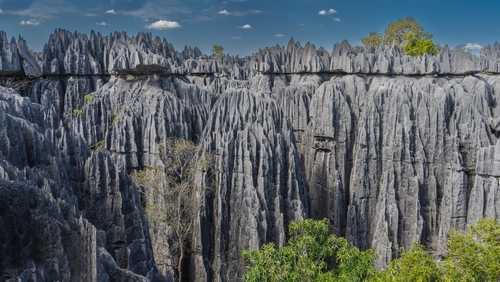
Western Madagascar holds one of the strangest landscapes on the planet. The Tsingy de Bemaraha—a UNESCO World Heritage Site covering approximately 1,500 square kilometers—is a forest made entirely of stone.
Razor-sharp limestone pinnacles rise from the ground in dense clusters, formed over 200 million years by the slow dissolution of rock beneath and above the surface. Natural stone bridges arc between formations. Underground cave systems run beneath the karst. Walking through it requires ladders, ropes, and a considerable tolerance for vertigo.
The Tsingy is home to species found nowhere else on Earth. Several lemur species, rare birds, and plants adapted to this hostile terrain have evolved in isolation here, shaped by an environment that makes most forms of travel—animal or human—extremely difficult.
Getting there involves river crossings and rough overland roads. The terrain itself is physically dangerous. These aren’t marketing deterrents; they’re genuine barriers that have preserved both the landscape and the ecosystems within it. Fewer visitors means fewer disturbances to one of the world’s most unique geological and biological environments.
Socotra Island, Yemen: 30 Million Years in Isolation
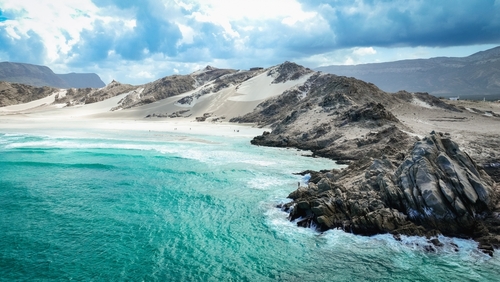
Socotra sits in the Arabian Sea, off the coast of Yemen, and looks like something designed for a science fiction film. Dragon Blood Trees—named for the dark red resin they produce—spread their flat, umbrella-like canopies across limestone plateaus. Bottle trees store water in their swollen trunks. White sand dunes meet turquoise water along the coastline.
The island covers approximately 3,800 square kilometers and is home to around 60,000 people. But its most remarkable characteristic is biological. More than 30% of Socotra’s plant species are endemic—found nowhere else on Earth. This level of endemism is extraordinary, the result of the island’s geological isolation stretching back roughly 30 million years.
Socotra is classified as a UNESCO World Heritage Site and has been called the “Galápagos of the Indian Ocean.” Reaching it, however, is complicated. The island’s remote location and Yemen’s ongoing political instability have significantly restricted tourism. Monsoon winds cut off access for several months each year. For most of the world, Socotra remains entirely out of reach—preserved as much by circumstance as by design.
The Darvaza Gas Crater, Turkmenistan: A Fire That Hasn’t Stopped
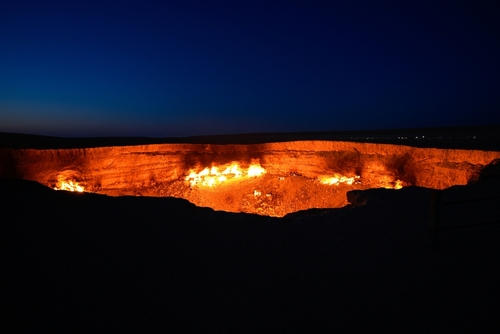
In the middle of the Karakum Desert in Central Turkmenistan, a crater approximately 70 meters wide has been burning continuously since 1971. Soviet engineers, drilling for natural gas, accidentally punctured an underground cavern. The ground collapsed. To prevent the spread of methane, they lit it on fire—intending for it to burn out within a few weeks.
More than 50 years later, it’s still burning.
Known locally as the “Door to Hell,” the Darvaza Gas Crater glows orange against the black desert sky and emits a low, constant roar. The surrounding Karakum Desert is one of the least populated regions in Central Asia, and Turkmenistan’s restrictive visa policies have kept the site largely off the mainstream tourist circuit.
The crater itself has no formal visitor infrastructure. Access requires navigating remote desert roads, and the country’s limited tourism industry means there is little guidance or support for those who make the journey. It remains one of the most surreal, desolate, and genuinely difficult places to visit on Earth.
Oymyakon, Russia: The Coldest Place People Call Home
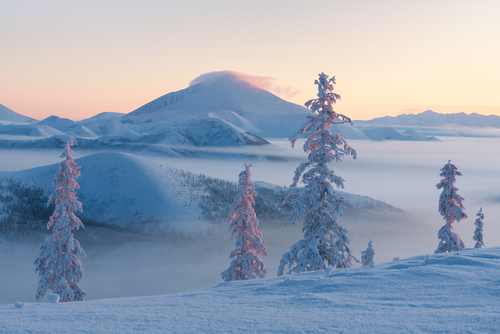
Located in the Sakha Republic in eastern Siberia, Oymyakon holds the record for the lowest temperature ever recorded in a permanently inhabited location—close to −70°C, though average winter temperatures hover around −50°C. Roughly 500 people live here year-round.
The extreme cold is a result of geography. Oymyakon sits in a valley that traps cold air during winter months, creating temperatures that make everyday life almost incomprehensibly difficult. Cars must be kept running constantly or they won’t start. Phones stop working. Ink freezes. Agricultural growing seasons are reduced to a matter of weeks.
Despite all of this, the community endures. The Yakut people who inhabit this region have developed extraordinary adaptations to the cold—in diet, clothing, construction, and daily routine. Visiting Oymyakon is less a sightseeing experience and more a confrontation with the upper limits of human resilience.
The combination of extreme climate, limited infrastructure, and sheer distance from any major urban center places Oymyakon in a category of its own among hidden places.
What Makes a Place Truly “Hidden”?
These five destinations share almost nothing in terms of landscape, culture, or climate. Yet they all qualify as hidden by the same set of overlapping factors:
Geographic isolation keeps a place physically distant from population centers and transport networks. Extreme climate makes it inhospitable or seasonally inaccessible. Political barriers—visa restrictions, instability, or government policy—limit who can enter. Environmental protection deliberately restricts access to preserve fragile ecosystems. Cultural preservation keeps communities insulated from outside influence.
Modern technology has narrowed the definition of “hidden.” Satellite imagery, global mapping tools, and social media have made it nearly impossible for a place to remain completely unknown. What they haven’t changed is accessibility. Distance, weather, politics, and terrain still determine who can actually reach these places—and that, increasingly, is what “hidden” means.
Responsible Exploration: Should We Visit These Places?
The desire to see rare and remote places is entirely human. But that desire, multiplied across millions of travelers, has already transformed once-isolated destinations into Instagram landmarks. The same exposure that generates conservation funding can also accelerate environmental degradation.
Several principles guide responsible engagement with fragile destinations:
- Environmental footprint matters. Every visitor introduces waste, noise, and physical impact. The smaller the footprint, the better.
- Indigenous and local communities deserve respect. Their land, their customs, and their autonomy should always take precedence over a traveler’s curiosity.
- Permit systems exist for good reason. Countries like Bhutan have implemented high-cost, low-volume tourism models specifically to limit damage. Supporting these systems supports preservation.
- Sometimes, staying away is the most ethical choice. For places like Socotra or the Tsingy, the case for leaving them undisturbed is compelling. Admiring them from a distance—through research, photography, and advocacy—can be a more meaningful form of engagement than a physical visit.
Frequently Asked Questions
What is a “hidden” travel destination?
A hidden destination is one that remains largely inaccessible to mainstream tourism due to geographic remoteness, extreme climate, political restrictions, environmental protections, or cultural isolation. It doesn’t mean unknown—it means genuinely difficult or impossible for most people to reach.
Are any of these places open to tourists?
Some are. Fiordland National Park in New Zealand is technically open but demands significant preparation. The Darvaza Gas Crater in Turkmenistan can be visited, though it requires a visa and logistical planning. Socotra and Oymyakon are accessible in principle but limited by political circumstances and extreme conditions respectively.
What’s the environmental impact of visiting fragile destinations?
Even low visitor numbers can disrupt ecosystems that have evolved in isolation. Physical damage to terrain, introduction of invasive species, and disruption to wildlife behavior are all documented consequences of tourism in fragile environments. Permit systems and guided access help mitigate this, but the impact is never zero.
Is it ethical to visit politically restricted countries to see natural wonders?
This is a genuinely complex question. Visiting a country like Turkmenistan generates revenue for a restrictive government, but it also supports local guides and communities. Travelers should research the situation carefully and consider whether their visit contributes to or detracts from the wellbeing of local people.
How can I learn more about these places without visiting them?
Scientific journals, documentary series, conservation organization publications, and travel writing by experienced journalists offer detailed accounts of remote destinations. Supporting conservation organizations that work in these regions is another meaningful way to engage.
The World Is Still Larger Than You Think
Hidden places are shrinking. Climate change, political shifts, and the relentless expansion of global connectivity are all eating away at the edges of remoteness. The places described in this guide may not remain hidden indefinitely.
That makes them more important, not less. Fiordland’s glacially carved fjords, Socotra’s ancient trees, Oymyakon’s frost-hardened community—these are not curiosities. They are records of the Earth’s history and of human endurance. Preserving them, whether through active conservation, careful tourism, or simply choosing not to visit, is a form of respect for what the world still holds.
The most meaningful travel isn’t always the kind that takes you somewhere. Sometimes, it’s the kind that changes how you see what already exists.