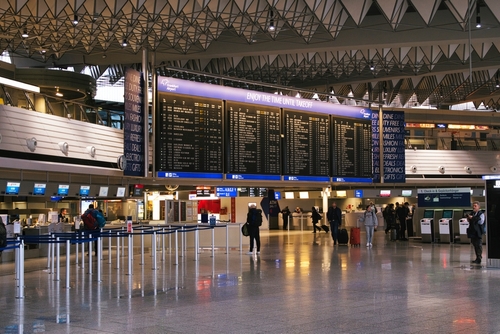

Frankfurt Airport, also known as FRA, is one of the busiest airports in Europe and an important entry point for hundreds of flights from the US every year. For many travelers, it’s their first stop in Europe and a key connection point for onward travel.
At Remitly, we know international travel is rarely just about the journey itself. It’s often tied to bigger moments, like visiting family, moving abroad, or navigating a life lived between two places. To help you out with your travel, we’ve put together this Frankfurt Airport guide. We’ll break down what to expect and take out the guesswork.
Understanding Frankfurt Airport’s layout
Frankfurt Airport is large and can get very busy, but if you know which terminal you’re using and how much time you need to give yourself, it needn’t be an overwhelming experience.
Terminal 1: Lufthansa and Star Alliance hub
Terminal 1 is the busier side of the airport, where most long-haul international flights arrive and depart. If you’re flying with Lufthansa, there’s a very strong chance this is where you’ll land or take off.
This terminal is also home to many Star Alliance airlines, including United Airlines, Air Canada, Singapore Airlines, ANA, and SWISS. If you’re connecting onward from the US to Europe, Asia, or Africa, you’ll most likely find yourself in Terminal 1.
Terminal 2: international and alliance partners
Terminal 2 handles most non-Star Alliance airlines and many other international carriers. If you’re flying with American Airlines, British Airways, Delta Air Lines, Air France, or KLM, for example, this is likely where you’ll be.
This terminal is smaller and more contained, which can feel like a relief after a long flight. It’s also where many transatlantic and international connections operate through this terminal.
Getting between terminals
If your trip involves switching terminals, it’s more straightforward than it looks on the map.
Frankfurt Airport connects Terminal 1 and Terminal 2 with the SkyLine train, which runs frequently and only takes two or three minutes. There’s also a free shuttle bus if you’re traveling with heavy luggage or don’t feel like dealing with stairs.
What to know about the new Terminal 3
Frankfurt Airport is getting even bigger, with Terminal 3 scheduled to open in 2026. It’s designed to take pressure off the existing terminals while giving travelers a more modern, streamlined experience. Once it’s fully up and running, it’s expected to handle millions of passengers a year, with more space and newer facilities.
A lot of airlines that currently operate from Terminal 2 are expected to move to Terminal 3 over time, especially long-haul and international carriers. The new terminal will be connected to the rest of the airport by the SkyLine train, along with road and bus access.
How to get to and from Frankfurt city center
One of the best things about Frankfurt Airport is how easy it is to get to your next destination.
S-Bahn trains
If you’re heading into Frankfurt itself, the S-Bahn is usually the simplest option. The S8 and S9 trains run frequently and connect the airport directly to central stops like Frankfurt Hauptbahnhof—the city’s main railway station—and Hauptwache.
The trains leave from the station in Terminal 1, and the ride into the city usually takes around 15 minutes. Even if this is your first time navigating public transport in Europe, this shouldn’t pose too many problems.
Long-distance and regional trains
If Frankfurt isn’t your final stop, you may not need to enter the city at all. The dedicated long-distance train station, the Fernbahnhof, connects the airport directly to other major German cities and even cities in other countries, such as Paris and Amsterdam.
High-speed trains regularly head to places like Cologne, Munich, Berlin, and Stuttgart. This setup is especially helpful if you’re traveling onward with luggage or want to avoid changing trains in the city after a long flight.
Taxis and rideshares
For travelers arriving late at night, traveling with family, or simply running on very little sleep, taxis and rideshares can be the most comfortable option. Taxi stands are located outside both terminals, and designated pickup areas are clearly marked. Though it can take longer in heavy traffic, the drive into central Frankfurt usually takes between 20 and 30 minutes.
What to expect if Frankfurt Airport is your first stop in Europe
For thousands of US travelers, Frankfurt is where their European adventure officially begins. That can feel exciting and intimidating at the same time, especially if you’re navigating international travel solo or for the first time.
Your first Schengen entry explained
Germany is part of the Schengen Area, which means passport control happens at your first point of entry. If Frankfurt is where you land, this is where you’ll go through immigration, even if you’re connecting onward to another European country.
Immigration officers will ask a few straightforward questions about your trip, like where you’re staying and how long you plan to be in Europe. The process can feel slow during busy travel seasons, but delays are common and usually nothing to worry about.
Connecting flights after immigration
Once you’ve cleared passport control, you may need to go through security again before reaching your connecting flight. This part of the journey can feel rushed, especially if your connection time is tight. Just remember to follow the signs carefully, keep an eye on the flight information screens, and you can always ask airport staff for help.
Essential services and amenities at Frankfurt Airport
Frankfurt Airport is built to handle tired, jet-lagged, and even slightly overstimulated younger travelers. That means most of the essentials, and a few small comforts, are in place. You just need to know where to find them.
Everyday essentials that make travel easier
Staying connected is often an immediate priority after landing, and free WiFi is available throughout the airport. If you need practical basics, both terminals have pharmacies, travel-essential shops, currency exchange counters, and information desks.
If you’re traveling with little ones, Frankfurt Airport is refreshingly stroller-friendly, with baby-changing facilities and play areas that give kids somewhere to burn off energy, and parents a brief breather.
Where to rest and reset between flights
If things feel loud or hectic, try walking a few gates away from the busiest areas. Just a short wander can lead you to quieter seating where the announcements fade, and the number of people thins out somewhat.
For a proper reset, Frankfurt Airport offers shower facilities in specific areas, nap pods for short rest periods, and transit hotels inside the terminal. These options are especially helpful for overnight layovers or early-morning departures, and you don’t need to clear immigration to use them.
There are also pay-per-use lounges that offer calmer seating, food, WiFi, and sometimes showers. For longer layovers, they can feel like a small splurge that pays off in comfort, calm, and a much better mood for your next flight.
Best places to eat at Frankfurt Airport
Food can make or break a travel day, and Frankfurt Airport has no shortage of options.
When you need something quick
If your connection is tight or you’re simply not interested in committing to a full meal, you’ll find grab-and-go options scattered throughout both terminals. Bakeries are especially easy to spot and tend to be the fastest choice, offering fresh bread, sandwiches, and pastries that don’t require much decision-making.
When you have time to sit down
Longer layovers are the perfect excuse to actually sit and enjoy something that feels like a proper meal. Frankfurt Airport has a good mix of restaurants serving traditional German dishes and familiar international favorites, which is comforting when your body clock is still somewhere over the Atlantic.
Taking the time to eat at a table and recharge can make the rest of your journey feel noticeably easier. And if jet lag has fully set in, coffee shops throughout the airport offer a reliable place to regroup, complete with outlets to charge your phone—remember to take plug adapters—or a quiet moment to zone out before your next flight.
Fun facts about Frankfurt Airport
Frankfurt Airport is so large that it operates like a city itself. It employs tens of thousands of people and is complete with its own fire department, medical services, police force, and even its own postal code. It’s also one of the world’s largest cargo airports, quietly moving everything from fresh produce to tech gear across the globe.
All of this activity is spread across multiple runways and terminals that cover eight square miles, which explains why walking between gates can feel suspiciously like a workout. Add in the airport’s famously long taxiways, and it’s not unusual for planes to spend more time rolling to the runway than you might expect.
A quick note about Frankfurt itself
Frankfurt often gets seen as just a financial city, but there’s much more to it than that. Half of the city’s residents have an immigrant background, which means everyday life feels distinctly international. You’ll hear multiple languages on public transport, and getting by in English is usually easy, especially for newcomers.
What surprises many travelers is how compact Frankfurt feels. We’ve mentioned how quickly you can get from the airport to the city centers and many of the city’s main sights sit close together along the Main River.
Even though Frankfurt is Germany’s financial hub and home to the country’s tallest skyline, it balances that business energy with green spaces and historic squares like Römerberg. If you step out during a long layover, it’s entirely possible to get a real feel for the city without feeling rushed.
A smoother trip starts with knowing what to expect
Frankfurt Airport can feel like a lot at first glance, but once you know which terminal you’re in and build in a little breathing room, the whole experience is far more manageable.
Checking your terminal ahead of time, knowing how to move between the airport’s different areas, and keeping an eye on live updates can turn a tense travel day into one that feels more under control. The official Frankfurt Airport app is especially useful, helping you stay flexible instead of frazzled.
And when international travel is tied to bigger moments like reuniting with family or starting over somewhere new, Remitly is here to support you along the way.
FAQs
Is Frankfurt Airport open 24 hours?
Frankfurt Airport is technically open around the clock, but many shops, restaurants, and even some security checkpoints close overnight. If you’re arriving late or leaving very early, it’s normal for things to feel quieter than expected.
Can you sleep at Frankfurt Airport during a layover?
Some travelers do sleep in seating areas, but there are also options like nap pods and transit hotels inside the terminal that tend to be far more comfortable.
How long does it take to get from Terminal 1 to Terminal 2?
The SkyLine train ride itself takes only a couple of minutes, but once you factor in walking time and waiting for the train, it’s smart to allow at least 20 minutes.
Is luggage storage available at Frankfurt Airport?
Yes, luggage storage services are available in both terminals. This can be especially useful if you have a long layover and want to visit Frankfurt’s city center without carrying your bags with you.