
Argentina is a vast and diverse country with rich cultural influences and a wide range of landscapes. It stretches from subtropical rainforest in the north to glaciers and mountains to the south, and its cities reflect centuries of immigration, trade, and political change.
If you’re planning a trip, learning about the most important landmarks in Argentina can help you better understand its history and geography. Many of these locations are a major part of its national identity and attract both locals and international visitors.
In this Remitly guide, we provide an overview of some of the most recognizable Argentinian landmarks. You’ll find a mix of natural wonders and cultural sites, along with simple tips to help you plan a visit and learn more about what makes each place special.
Natural wonders of Argentina
Argentina is home to some of the most breathtaking natural landmarks in the world. Its huge size means you can experience everything from towering mountains to lush jungles, fertile grasslands to vibrant wetlands. Not only do these sceneries look impressive, but they tell a deeper story about the country’s relationship with nature and conservation.
Iguazú Falls (Cataratas del Iguazú)
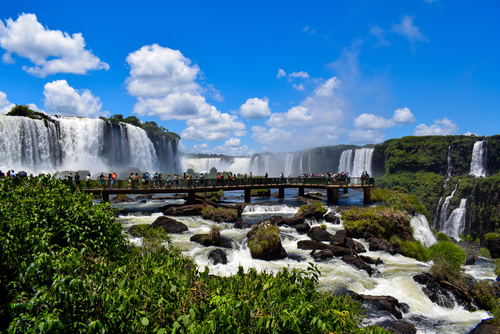
Iguazú Falls is one of the world’s largest waterfall systems. It’s located on the border between Argentina and Brazil, within Iguazú National Park. The falls consist of more than 250 individual cascades spread across nearly two miles of the Iguazú River.
UNESCO has designated the area as a World Heritage Site due to its biodiversity and ecological importance. One of the most visited sections is the Garganta del Diablo, or Devil’s Throat. This dramatic U-shaped drop channels enormous volumes of water into a mist-filled gorge. Meanwhile, the surrounding rainforest is home to thousands of bird species and native plants, so visiting is about more than just the waterfalls themselves.
When you visit Iguazú Falls, you can explore both the Argentinian and Brazilian sides of the park:
- The Argentinian side features an extensive network of walkways that bring you close to the rushing water and allow for a slower, more immersive visit.
- The Brazilian side, while smaller, offers sweeping panoramic views that highlight the full scale of the falls. Many travelers choose to visit both for a more complete perspective.
Perito Moreno Glacier (Glaciar Perito Moreno)
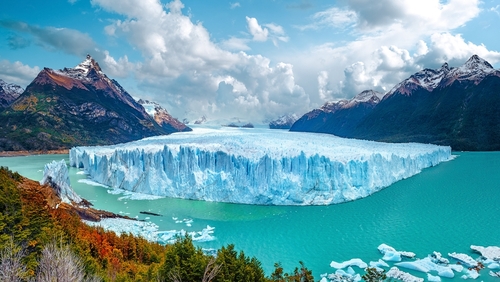
Perito Moreno Glacier is located in Los Glaciares National Park in southern Patagonia, near the town of El Calafate. Stretching about 18.6 miles in length, it is one of Argentina’s most famous glaciers.
What sets Perito Moreno apart is its relative stability. Unlike many glaciers around the world, it has maintained its size over time and is known for frequent ice calving events, where large chunks break off into Lake Argentino. Visitors often gather at the viewing platforms, waiting for the sound of another dramatic break.
You don’t need specialized equipment to visit Perito Moreno Glacier. A system of walkways allows for safe viewing on land, while boat tours provide a closer look from the water. These options make the site accessible to visitors with a wide range of abilities and travel styles.
Aconcagua
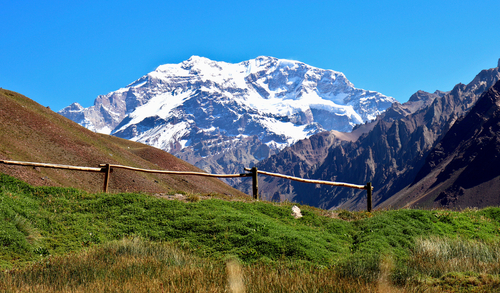
Aconcagua rises prominently in the Andes near the city of Mendoza, close to Argentina’s border with Chile. With a summit reaching nearly 23,000 feet above sea level, it is the highest mountain in the Americas and a defining feature of the region’s landscape.
The mountain is a popular destination for experienced mountaineers, and it holds symbolic importance as part of the Andes range that shapes western Argentina. While Aconcagua is considered a non-technical climb compared to peaks of similar height, reaching the summit still requires permits, careful acclimatization, and extensive preparation.
If climbing Aconcagua doesn’t interest you, visiting Aconcagua Provincial Park might. The park offers hiking trails and viewpoints where you can see mountain views and the surrounding landscapes without attempting the ascent. These areas are well-suited for day trips and give you a strong sense of the Andes’ scale.
Península Valdés
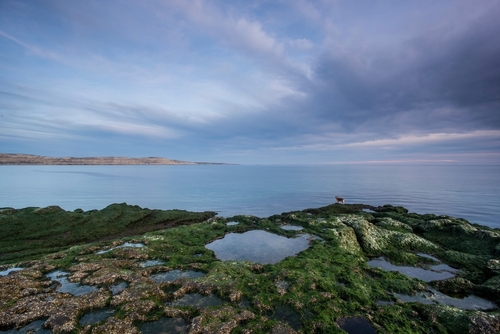
A protected coastal area in Patagonia’s Chubut Province, Península Valdés is recognized as a UNESCO World Heritage Site for its importance to marine wildlife conservation. It includes open steppe, cliffs, beaches, and sheltered gulfs that support a wide variety of species.
The peninsula is best known for seasonal wildlife viewing, particularly of southern right whales (Eubalaena australis). Between June and December, these majestic mammals migrate to the calm coastal waters in the area to breed and nurse their calves. Whales can often be seen directly from the shoreline during this period, making Península Valdés one of the few places in the world where land-based whale watching is common.
The area is also home to sea lions, elephant seals, penguins, and a variety of bird species. In certain places and seasons, you may even observe orcas hunting near the coast, a behavior that’s been studied here for decades. Because wildlife sightings depend heavily on timing and location, guided visits are often recommended.
Local authorities carefully regulate access to Península Valdés to protect its ecosystem. You can explore the area by guided tour or from designated viewpoints, which helps minimize environmental impact while still allowing you to discover the wildlife.
Salina Grandes, Jujuy
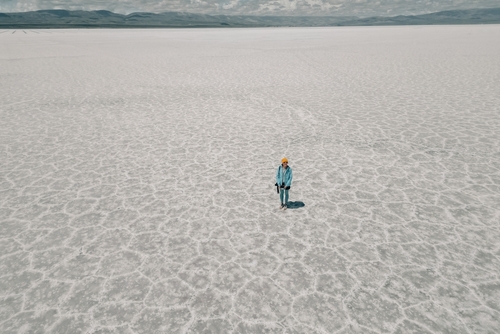
Salinas Grandes is a massive salt flat in northwestern Argentina, spanning parts of Jujuy and Salta provinces. Located high in the Andes, it covers more than 80 square miles.
The salt flats are formed from ancient lakes that gradually evaporated, leaving behind thick layers of salt. Their flat, white surface creates a striking visual contrast with the surrounding mountains and sky. That’s why this area is often included in regional road trips through Argentina’s northwest.
Today, Salinas Grandes is still used for salt extraction and remains an important part of the local economy. When you visit, you’ll typically stop at designated access points where local guides explain the area’s history and how the salt is harvested.
Due to the altitude and intense sunlight, shorter visits are recommended, along with sun protection and plenty of water. Consider taking breaks if you’re not used to high altitudes.
Architectural and historical landmarks
Argentina’s cities are dotted with landmarks closely tied to immigration, politics, and cultural development. Buenos Aires, in particular, reflects strong European influences alongside local traditions, shaped by waves of migration and cultural exchange.
La Boca, Buenos Aires
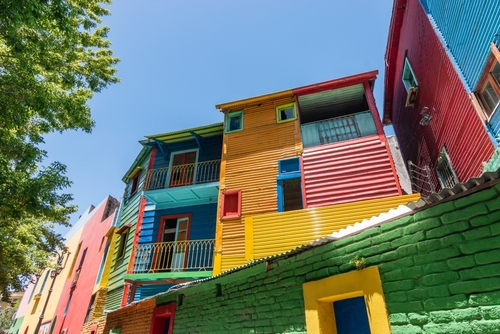
La Boca is one of Buenos Aires’ most recognizable neighborhoods, known for its vibrant colors and distinctive artistic identity. Nestled near the city’s old port, it was historically home to many Italian immigrants whose legacy remains visible in the area’s culture and architecture.
At the heart of La Boca is Caminito, a street museum lined with brightly painted buildings, local artwork, and tango performances. The bold color palette is often associated with early residents who used leftover ship paint to decorate their homes.
La Boca is also linked to the early development of tango and is home to Boca Juniors, one of Argentina’s most well-known football clubs. Today, it is a popular tourist destination for visitors interested in art, music, and local culture. Daytime visits are generally recommended, as the main tourist areas are clearly marked and well frequented.
Recoleta Cemetery (Cementerio de la Recoleta)
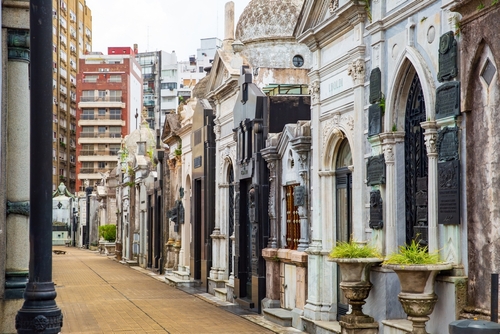
Recoleta Cemetery may seem like an unusual tourist destination at first, but it’s one of Buenos Aires’ most important historical sites. Often compared to an open-air museum, the cemetery contains elaborate mausoleums, statues, and tombs belonging to prominent historic, political, military, and cultural figures.
One of the most visited tombs is that of Eva Perón, a former First Lady of Argentina, who championed the rights of the country’s poor and working class. Architectural styles throughout the cemetery range from neoclassical to Art Deco, reflecting different periods in Argentinian history.
The cemetery’s layout, with narrow walkways and family vaults, reflects burial traditions brought by European immigrants during the 19th century. Walking paths are clearly marked, and maps are available at the entrance.
If you want to better understand the historical significance of specific tombs and families, you should consider a guided tour. Guides often share stories about well-known individuals buried in the cemetery, as well as lesser-known details that bring this unique site to life.
Teatro Colón

Teatro Colón is an iconic cultural landmark in Buenos Aires and is widely regarded as one of the world’s leading opera houses. Located near the city center, it represents Argentina’s long-standing investment in the performing arts.
The current theater opened in 1908 after nearly 20 years of construction. Its design reflects a blend of architectural styles, including Italian Renaissance and French influences. The interior is particularly admired for its acoustics, often ranked among the best in the world. You’ll also notice the detailed craftsmanship, from marble staircases to stained glass and ornate decorative elements.
Over the years, Teatro Colón has hosted internationally renowned opera singers, musicians, and ballet companies, helping establish Buenos Aires as a key cultural center in South America. Today, it remains an active performance venue. You can attend performances or take guided tours that explain the theater’s history, design, and continued role in Argentina’s cultural life.
Understanding Argentina through its landmarks
These famous sites in Argentina offer insight into both its geography and its history. Natural wonders like Iguazú Falls, Perito Moreno Glacier, and Aconcagua highlight the country’s vast and varied landscapes, while urban landmarks like La Boca and Recoleta Cemetery reflect artistic traditions, immigration patterns, and political history.
Whether you’re planning a visit, learning from afar, or settling into life in Argentina, these landmarks provide meaningful ways to connect with the country and the people who call it home.
FAQs
What is the most famous landmark in Argentina?
Argentina has many well-known landmarks, but Iguazú Falls is often considered one of the most internationally recognized natural sites. Among man-made landmarks, Recoleta Cemetery in Buenos Aires is especially famous for its history and architecture.
How many days do I need to see the main landmarks in Argentina?
Argentina is a vast country, and traveling between regions can take time. Many tourists find that 10 to 14 days allows them to visit a few natural landmarks and popular man-made sites without feeling rushed.
Is it safe to visit these landmarks?
Yes, these are all popular tourist destinations with established infrastructure. Like any trip, it’s helpful to take standard safety precautions, such as being aware of your surroundings in busy city areas and following local guidance at natural sites.
What is the best time of year to visit Argentina?
The best time to visit depends on your destination. It’s common to visit Patagonia during the summer months of December through February, while Buenos Aires is often most comfortable in spring, from September to November, or in fall, from March to May.