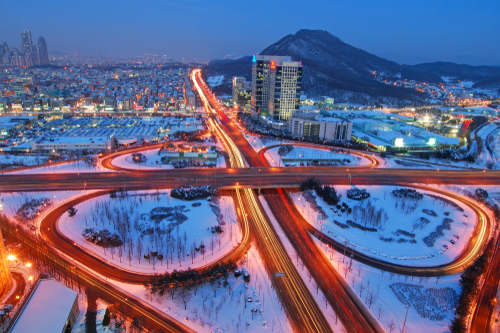

South Korea is famous for its biting winters. If you are planning a trip between December and February, you have probably heard stories about the Siberian winds that sweep down the peninsula. With temperatures often dropping well below freezing, ice and snow are common concerns for anyone planning to drive.
This leads to a question we hear frequently from curious travelers and expats: Does South Korea have heated roads?
It sounds like a futuristic concept, but given Korea’s reputation for advanced smart city technology, it is a valid question. The answer is fascinating, but it is not quite as simple as a “yes” or “no.” While you won’t find heated highways stretching across the entire country, the technology does exist here.
This guide breaks down exactly where you will find heated roads in Korea, how they work, and what you need to know to stay safe during your winter travels.
The Short Answer: Yes, But Not Everywhere
The short answer is yes. South Korea does use heated road technology. However, it is important to manage your expectations. You cannot expect every street in Seoul or every highway in the countryside to melt snow automatically.
Instead, the government installs these systems strategically. You will mostly find heated roads in specific, high-risk locations.
Where You Are Most Likely to Find Them
Local governments focus on areas where ice formation is dangerous and frequent.
- Steep Hills in Seoul: Seoul is a mountainous city. Many neighborhoods, like Seongbuk-gu and parts of Gangnam, have steep residential streets that become treacherous when icy. The city has installed “snow-melting systems” under the asphalt on many of these inclines to prevent cars from sliding backward.
- Tunnel Entrances and Exits: Sudden temperature changes near tunnels often create “black ice,” a thin, invisible layer of ice that is incredibly dangerous for drivers. Heated sections are often installed here to keep the pavement dry.
- Bridge Decks: Bridges freeze faster than roads on the ground because cold air circulates above and below them. You will often see automated de-icing systems or heating elements on major bridges.
- Bus Stops and Pedestrian Zones: In recent years, districts like Seocho-gu in Seoul have installed heated benches and even heated sidewalks near bus stops to prevent pedestrians from slipping.
While heated roads in Korea are an amazing piece of infrastructure, they are currently a safety measure for difficult spots rather than a nationwide standard.
How Do Heated Roads Work in Korea?
South Korea has a long history of underfloor heating. Traditional Korean homes use ondol, a system that heats the floor to keep the room warm. In a way, the heated road systems are just an industrial version of this ancient concept.
There are generally two types of technology used to keep the roads ice-free.
1. Electric Heating Cables
This is the most common method for shorter stretches of road, like steep driveways or bus stops. Construction crews embed electric heating cables about 5 to 7 centimeters below the road surface.
These systems are usually “smart.” They connect to sensors that monitor temperature and moisture. When the sensors detect snow or freezing rain, the system activates automatically. This melts the snow as it lands, preventing accumulation without requiring a snowplow.
2. Automated Liquid Spray Systems
While not technically “heated” from below, you will often see another smart system on highways. Small nozzles run along the side of the road. When temperatures drop, these nozzles automatically spray a saline solution or calcium chloride onto the asphalt.
This lowers the freezing point of water, preventing ice from forming. While less high-tech than electric cables, it is highly effective for keeping traffic moving on major expressways during South Korea snow travel.
Why Heated Roads Are Not Widespread
If the technology exists and works well, why doesn’t South Korea heat all its roads? It comes down to practicality and resources.
High Installation and Maintenance Costs
Digging up existing roads to install heating elements is incredibly expensive. It also requires significant maintenance. Heavy trucks and constant traffic wear down asphalt. If the road cracks and damages the heating cables underneath, repairing them is complex and costly.
Energy Consumption
Heating the outdoors requires a massive amount of energy. South Korea relies heavily on imported energy, so running electric heaters under kilometers of highway is not environmentally or economically sustainable.
Urban Infrastructure Limits
In dense cities like Seoul and Busan, the space under the road is already crowded with subway lines, sewer pipes, gas lines, and electrical grids. Adding a heating infrastructure on top of this complex web is often logistically impossible.
Because of these factors, the government views heated roads as a targeted solution for safety “blind spots” rather than a luxury for general driving.
Winter Driving in South Korea: What You Really Need
If you are planning on driving, you should assume the road will not be heated. Winter driving in South Korea requires preparation. The roads are generally well-maintained, and snow removal crews are fast, but conditions can change quickly in the mountains.
Here is how to prepare for a safe trip.
Check Your Tires
If you are renting a car, do not assume it has winter tires. Most rental cars in Korea come with standard all-season tires. These are usually fine for city driving in Seoul, where snow is cleared quickly. However, if you plan to drive into Gangwon province (the ski region) or cross mountain passes, you should specifically ask the rental agency about winter tires or snow chains.
Snow Chains Are Often Essential
In mountainous areas, police may actually stop traffic during heavy snow and require cars to have snow chains before allowing them to proceed. You can buy spray-on chains for minor traction help, but proper metal or fabric chains are safer for deep snow.
Use Navigation Apps
International apps like Google Maps do not work perfectly for driving directions in Korea due to local data laws. Download Naver Map or KakaoMap. These local apps provide real-time traffic updates and will route you around accidents or closed roads during bad weather.
Public Transport Is a Reliable Alternative
If you are nervous about driving on icy roads, the best advice is often to skip the car rental entirely. South Korea has one of the best public transport systems in the world.
- Subways: They are underground and unaffected by snowstorms.
- KTX (High-Speed Trains): These trains run on schedule even in harsh winter weather.
- Express Buses: Buses use dedicated lanes and professional drivers who are experienced in South Korea winter road safety.
FAQ Section
Here are answers to some of the most common questions travelers ask about Korean winters.
Are heated roads common in Seoul?
They are becoming more common, but they are still not the standard. You will mostly encounter them on steep residential hills in northern Seoul or affluent districts that have invested in “smart city” upgrades. Do not expect flat, main boulevards to be heated.
Does Korea get much snow?
It depends on the region. Seoul is very dry and cold in winter. It may only see a few heavy snow days per year. However, the Gangwon province (east of Seoul) gets heavy snowfall and is the destination for skiing and snowboarding. The southern coast (Busan, Jeju Island) rarely sees snow sticking to the ground.
Are heated sidewalks or bus stops common?
Yes, these are becoming very popular. You will frequently see bus stops with heated seats—look for the specific signage or just hover your hand over the bench to check. Some districts have also installed heated zones on sidewalks near crosswalks to prevent pedestrians from slipping.
Do taxis and buses operate during snowstorms?
Yes, public transport and taxis continue to operate. Buses are generally very safe as they use heavy-duty winter tires. However, during a severe blizzard, taxis may be harder to find as demand skyrockets and drivers drive more slowly for safety.
Conclusion
South Korea is a leader in modern infrastructure, and its use of heated roads is a great example of this innovation. The country uses smart technology to keep steep hills and dangerous bridges safe for drivers.
However, as a traveler, you should view these heated sections as a bonus, not a guarantee. Does South Korea have heated roads? Yes, but you cannot rely on them for your entire journey.
If you are visiting in 2026, the best way to stay safe is to prepare. Dress warmly, download local navigation apps, and consider using Korea’s world-class train and subway systems. If you do choose to drive, take it slow and ensure your vehicle is ready for the cold.
Korea in winter is beautiful, crisp, and exciting. With a little preparation, you can enjoy your travels with confidence.