

Yes, most cruise ships have dress codes—but they vary by cruise line, time of day, and venue. Daytime attire is usually casual, while evening dining may require “smart casual” or formalwear on designated nights.
If you’re planning your first cruise or haven’t sailed in a few years, you might wonder what to pack. Cruise dress codes can feel confusing because each cruise line sets its own rules. Some passengers worry about being underdressed for dinner, while others assume they’ll need formal clothes every night.
The truth is simpler than you might think. Modern cruise lines have relaxed many traditional dress code rules, but some guidelines still apply—especially in dining venues and on formal nights. Understanding what’s expected will help you pack appropriately and feel comfortable throughout your voyage.
This guide explains how cruise ship dress codes work, what you should wear during the day and evening, and how rules differ by cruise line. You’ll also find practical packing tips and answers to common questions about formal nights, dining room requirements, and venue-specific rules.
Quick Answer: What Are the Basic Dress Code Rules?
Most cruise ships follow these general guidelines:
- Daytime: Casual attire is acceptable. Swimwear is fine at the pool, but cover-ups are required when entering indoor areas like restaurants or shops.
- Evening dining: Smart casual attire is typically expected in main dining rooms. This means collared shirts and slacks for men, and dresses, skirts, or dressy pants for women.
- Formal nights: Select evenings may call for elevated attire. Men often wear suits or dress shirts with jackets, while women wear cocktail dresses or gowns.
- Restricted items: Most cruise lines prohibit bare feet in indoor venues, tank tops in dining rooms, and swimwear in restaurants.
- Venue-specific rules: Buffets and casual eateries usually have more relaxed standards than main dining rooms or specialty restaurants.
These rules help maintain a pleasant atmosphere for all guests while allowing flexibility for different preferences and comfort levels.

Who Sets Cruise Ship Dress Codes?
Cruise Line Policies
Each cruise line establishes its own dress code policies. These guidelines appear in guest conduct policies, cruise documents, and frequently asked questions on cruise line websites. Staff members have discretion in enforcing these rules, though most approach violations with gentle reminders rather than strict penalties.
Cruise lines update their policies periodically, so checking current guidelines before your sailing is important. What was required five years ago may have changed.
Ship-Wide vs. Venue-Specific Rules
Dress codes vary by location on the ship:
Main dining rooms typically have the strictest requirements, especially during dinner service.
Specialty restaurants often require smart casual or formal attire, depending on the venue’s concept.
Buffet areas usually maintain relaxed standards throughout the day.
Pool decks allow swimwear but require cover-ups when moving indoors.
Theaters and lounges generally expect casual to smart casual attire for evening shows.
Understanding these distinctions helps you dress appropriately for different areas of the ship without overpacking.
Dress Codes by Time of Day
Daytime Attire
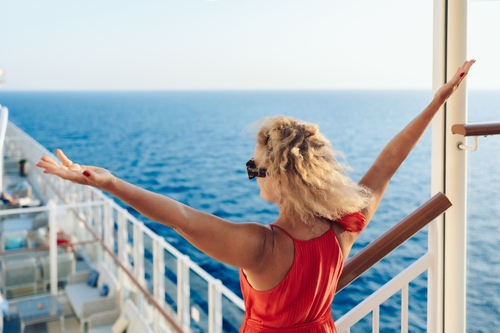
During daylight hours, cruise ships embrace casual comfort. Guests wear:
- Shorts, t-shirts, and casual tops
- Swimwear at pool areas (with cover-ups required indoors)
- Comfortable walking shoes for excursions
- Sun protection like hats and light layers
You can move freely between pool decks, buffet dining, and casual lounges in relaxed clothing. Just remember to slip on a cover-up before entering air-conditioned indoor spaces.
Evening Attire

After 6 p.m., most cruise lines expect guests to elevate their appearance for dinner and evening activities. Smart casual typically means:
For men: Collared shirts, khakis or dress pants, closed-toe shoes. Polo shirts are usually acceptable.
For women: Dresses, skirts with blouses, dress pants with nice tops, or elegant jumpsuits.
Items to avoid: Tank tops, flip-flops, shorts, baseball caps, and swimwear are generally not appropriate in main dining rooms during dinner service.
This standard creates a pleasant atmosphere without requiring formal attire every night.
What Is a “Formal Night” on a Cruise?
Formal night generates more questions than any other dress code topic. Here’s what you need to know.
What It Means
Cruise lines designate certain evenings as “formal nights” or “elegant evenings.” These special occasions encourage guests to dress up for dinner and photos. Most seven-day cruises include one or two formal nights, typically scheduled mid-cruise.
Typical Expectations
On formal nights, suggested attire includes:
Men: Suits, dress shirts with jackets, or tuxedos. A dress shirt with dress pants is usually acceptable even without a jacket.
Women: Cocktail dresses, evening gowns, dressy pantsuits, or elegant skirts with formal tops.
The ship’s photographers set up portrait stations, and many guests enjoy the opportunity to take formal photos with their travel companions.
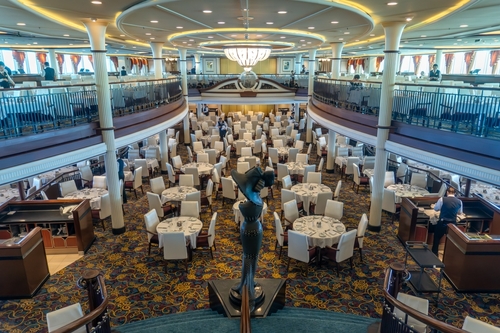
Is It Mandatory?
Formal night participation is rarely enforced strictly. If you prefer not to dress up, you have options:
- Dine at the buffet or casual restaurants, which maintain their regular dress codes
- Order room service
- Skip formal nights entirely without penalty
Some cruise lines now use terms like “optional elegant evening” to clarify that participation is voluntary. However, if you plan to dine in the main dining room on formal night, meeting the dress code shows respect for other guests and enhances the experience.
Differences by Cruise Line
Dress code expectations vary significantly across different cruise brands.
Luxury Cruises
Upscale cruise lines like Regent Seven Seas, Seabourn, and Crystal Cruises maintain more formal standards. Guests often dress elegantly for dinner most evenings, and formal nights may include more elaborate attire expectations. These cruises attract passengers who enjoy dressing up and appreciate refined dining experiences.
Mainstream Cruises
Popular cruise lines including Royal Caribbean, Carnival Cruise Line, and Norwegian Cruise Line have relaxed their dress codes in recent years.
Royal Caribbean designates certain nights as “formal” but allows considerable flexibility. Smart casual attire works for most dining venues.
Carnival uses “cruise elegant” and “cruise casual” categories. Their dress code is among the most relaxed, with jeans acceptable in most dining venues.
Norwegian Cruise Line pioneered “freestyle cruising” with no formal nights on most ships. Their dress code emphasizes comfort while maintaining basic standards in specialty restaurants.
River Cruises
River cruise lines like Viking, AmaWaterways, and Avalon typically embrace “upscale casual” attire. Formal nights are uncommon, though guests often dress nicely for the captain’s dinner. The intimate atmosphere and destination-focused experience means less emphasis on formal clothing.
Can You Be Denied Boarding or Refused Service?
Most cruise lines reserve the right to enforce dress codes, but actual consequences are rare.
Boarding Policies
You will not be denied boarding solely because your packed clothing doesn’t meet dress code standards. Cruise lines check for prohibited items (weapons, illegal substances, etc.) but don’t inspect your wardrobe.
Venue Refusal
Cruise staff may politely refuse entry to specific venues if your attire violates clear guidelines. Common situations include:
- Wearing swimwear or cover-ups to the main dining room
- Appearing with bare feet in restaurants or indoor public areas
- Displaying clothing with offensive language or imagery
- Showing up shirtless or in workout clothes to dinner
In practice, staff members usually offer gentle reminders and suggest alternative dining options rather than creating confrontations. Most passengers comply when informed of the rules.
Guest Conduct Clauses
Cruise contracts include guest conduct clauses that technically allow enforcement of dress codes. However, cruise lines prefer positive guest experiences over strict rule enforcement. They balance maintaining standards with accommodating diverse preferences.
What Should You Pack for a Cruise?
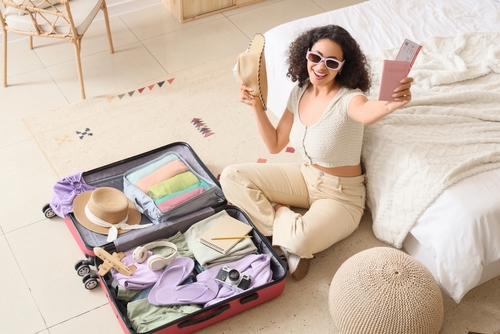
Smart packing ensures you’re prepared for all dress code situations without overstuffing your luggage.
Essentials
Casual daytime outfits: Pack enough shorts, t-shirts, and casual wear for excursions and pool time. Include a light jacket or sweater for air-conditioned spaces.
Smart casual eveningwear: Bring at least three or four dinner-appropriate outfits. Men should pack collared shirts and dress pants. Women need dresses, skirts, or dress pants with nice tops.
One formal option: Even if you’re unsure about participating in formal night, having one dressy outfit provides flexibility. Men can pack a dark suit or dress shirt with dress pants. Women might bring a cocktail dress or elegant pantsuit.
Comfortable excursion shoes: Choose walking shoes suitable for tours and shore excursions. Closed-toe shoes work better than sandals for active activities.
Swimwear and cover-ups: Bring at least two swimsuits so one can dry while you wear the other. Pack a cover-up for walking between your cabin and the pool.
What to Avoid
Certain items create problems on cruises:
- Excessively revealing clothing may violate policies in dining venues
- Clothing with offensive language or imagery
- Only flip-flops or shower shoes (bring at least one pair of closed-toe shoes)
- Too many formal outfits (unless sailing on a luxury cruise line)
Climate Considerations
Adjust your packing based on your destination:
Caribbean cruises: Focus on lightweight, breathable fabrics. Bring sun protection and light layers for air conditioning.
Alaska cruises: Pack warm layers including fleece or wool sweaters, waterproof jackets, and long pants. Evenings can be cold even in summer.
Wind on deck: Bring a windbreaker or light jacket for outdoor deck time. Wind makes it feel cooler than the actual temperature.
Layering advice: Cruise ships maintain cool indoor temperatures while outdoor areas can be hot. Layerable clothing adapts to both environments.

Myths vs. Reality
Understanding common misconceptions helps set realistic expectations.
|
Myth |
Reality |
|---|---|
|
Cruises require tuxedos |
Most modern cruises accept suits or even dress shirts without jackets on formal nights |
|
Formal night is mandatory |
Nearly all cruise lines make formal night optional with alternative dining available |
|
There’s one universal cruise dress code |
Each cruise line sets its own rules, ranging from very casual to quite formal |
|
You’ll be kicked off the ship for dress code violations |
Enforcement is gentle, usually involving polite requests to change or dine elsewhere |
|
You need different outfits for every night |
Smart packing means mixing and matching a few key pieces |
Cultural and Destination Considerations
Dress codes extend beyond the ship when visiting ports.
Religious Sites on Shore Excursions
When visiting churches, temples, mosques, or other religious sites, modest clothing is required. This typically means:
- Covered shoulders and knees
- No shorts or tank tops
- Removing shoes when entering certain spaces
- Head coverings for women at some religious sites
Research dress requirements for specific ports before packing. Your cruise line may provide guidance for popular shore excursions.
Regional Expectations
European cruises often attract passengers who dress more formally for dinner than those on Caribbean cruises. Mediterranean itineraries may have a more elegant evening atmosphere.
Caribbean cruises embrace relaxed tropical vibes with more casual dress codes overall.
Asian cruises may include cultural elements that influence dress expectations, especially during special events or theme nights.
Luxury Itineraries
Exotic or longer cruises on luxury lines typically maintain elevated dress standards throughout the voyage. Passengers on world cruises or luxury expedition ships often pack more formal evening options.
Plan Your Cruise Wardrobe With Confidence
Cruise ship dress codes exist to create pleasant dining experiences while allowing flexibility for different preferences. Most modern cruise lines have relaxed traditional rules, making it easier than ever to pack appropriately without stress.
Remember these key points:
- Daytime is casual; evenings call for smart casual attire
- Formal nights are common but rarely mandatory
- Each cruise line sets its own standards
- When in doubt, pack one versatile dressy outfit
- Comfortable clothing matters more than perfection
Check your cruise line’s current dress code policy before packing. This ensures you bring appropriate clothing while avoiding unnecessary items. With the right preparation, you’ll feel comfortable and confident throughout your voyage.
Cruise Dress Code FAQs
Can you wear jeans on a cruise?
Yes, jeans are acceptable on most modern cruise lines during the day and often in the evening. However, some cruise lines and upscale restaurants may discourage ripped, distressed, or overly casual jeans in main dining rooms during dinner. Dark, well-maintained jeans paired with a nice top or collared shirt usually meet smart casual standards.
Do you have to participate in formal night?
No, formal night participation is voluntary on most cruise lines. If you prefer not to dress up, you can dine at buffet restaurants, casual eateries, or order room service instead. Norwegian Cruise Line has eliminated traditional formal nights entirely on most ships.
Can you wear shorts at dinner?
This depends on the cruise line and restaurant. Most main dining rooms discourage shorts during dinner service, even on casual nights. Buffets and poolside venues typically allow shorts throughout the evening. Check your specific cruise line’s policy for clarity.
Are flip-flops allowed?
Flip-flops are fine during the day around pool areas and on deck. Most cruise lines restrict them in main dining rooms during dinner. Bring at least one pair of closed-toe shoes for evening dining and excursions.
Can you wear swimsuits in restaurants?
No, swimwear is not allowed in restaurants, even casual buffets. You must wear a cover-up when leaving pool areas to enter dining venues, shops, or other indoor spaces. This rule applies across all cruise lines.
What happens if I forget formal attire?
Many cruise ships operate onboard shops selling formal clothing. You can also rent tuxedos on some cruise lines. Alternatively, skip the main dining room on formal night and choose casual dining options instead.
Do children have dress codes?
Children generally follow similar guidelines to adults, though cruise lines are more lenient. Kids should wear appropriate clothing in dining venues but aren’t expected to dress formally unless parents choose to include them in formal night activities.
Can I wear a hat indoors?
Baseball caps and casual hats are typically discouraged in main dining rooms during dinner service. Decorative or formal hats may be acceptable depending on the style and venue.