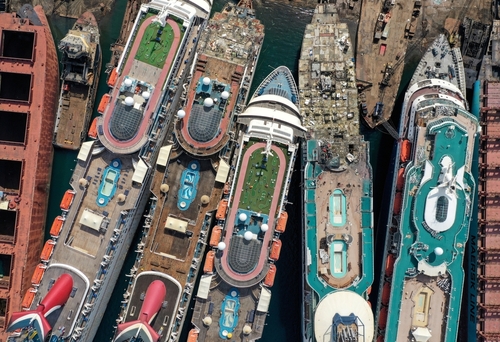

There’s something special about a cruise ship. These massive vessels are more like floating cities. They carry millions of travelers around the world each year, bringing a touch of glamor and comfort to the travel experience. But even the grandest cruise ship eventually reaches the end of its sailing days. That’s where a cruise ship graveyard comes in.
The cruise ship graveyard is not a dumping ground for out-of-service vessels. These sites play a vital role in a cruise ship’s lifecycle, dismantling and recycling as many components of the ship as possible. At Remitly, we care about sustainability, so let’s dive into how a cruise ship gets recycled.
What exactly is a cruise ship graveyard?
A cruise ship graveyard is a poetic name for what is essentially a ship-breaking yard. While you might imagine rusting hulls left to decay, the reality is a lot more organized. A cruise ship graveyard is not somewhere a ship goes to rest and rust, but a place where its useful components are salvaged and reused.
Recycling is the main activity of a cruise ship graveyard. And while that’s great for sustainability, it’s also a matter of practicality. Building a cruise ship costs millions of dollars, and every ship is a vast collection of valuable materials that can be reused on other ships or in other industries.
How and why cruise ships are recycled
In a modern cruise ship graveyard, up to 90% of the ship and its components can be reused or recycled. That includes everything from structural steel and aluminum to copper wiring, machinery, and interior fixtures.
These materials may be used on other ships or turned into construction materials, and even consumer goods. So ship graveyards play an important role in reducing the need to mine new resources to make the things we need.
The average life of a cruise ship is around 25 to 40 years. After that, maintaining an older ship becomes more expensive. Plus, new safety regulations sometimes mean older ships are no longer fit for purpose. Sometimes, it’s too expensive to refit an older ship to meet new rules, requirements, and standards. It’s often better to retire the ship and use its components somewhere new.
While a cruise ship graveyard may be the final stage of the ship’s lifecycle, it’s not a place where ships are forgotten. Instead, it’s where they’re transformed into something else so they can continue to be useful after their last voyage.
The journey to the shore: how it works
If you’ve ever seen the size of a modern cruise ship, you might be wondering where you’d even start with taking one apart. The answer is a step-by-step ship-breaking process that breaks these giant machines down into their components. And it starts with beaching the ship.
Beaching
The first step to retiring a cruise ship is to beach it. This means it’s deliberately driven onto a sandy shoreline at high tide. Experienced pilots drive the vessel onto the sand until the vessel grounds itself. Then, when the tide goes out, the ship is on dry land and accessible.
Around 70% of ships are dismantled this way. The advantage of this is that it doesn’t require expensive drydock facilities and machinery to move the ship. Of course, it does mean that workers can only work on the ship at low tide.
Once the ship is secure on dry land, the dismantling process begins from the inside.
Stripping the interior
The first phase of ship-breaking starts with emptying the ship. Cruise ships are filled with thousands of items that can be reused just as they are. Furniture from cabins and lounges, lighting fixtures, electronics, mattresses, kitchen equipment, and even decorative elements can all be reused. Teams of workers move through the ship, taking out everything that can be reused piece by piece.
Many of these items are resold into local markets, where they may be used in homes, hotels, restaurants, and small businesses. Cruise ship kitchen equipment may end up in commercial kitchens, and doors, sinks, and wiring often end up in construction projects.
For a big ship, this process can take weeks or even months. Busy cruise ship graveyards have contacts with local industries and international brokers who know exactly where to sell items salvaged from the ship. This helps the cruise ship owners get back some money on their investment.
While all this goes on, the ship looks much the same, at least from the outside. But once this process is over, the most dramatic stage of ship-breaking is next.
Cutting the steel
Once the ship has been emptied, workers use torches and heavy cutting tools to cut the ship’s hull apart. Starting from the upper decks, they move downward, cutting the hull into large sections of steel. This is difficult and potentially dangerous work, as the massive sections of steel can weigh several tons.
The steel plates are then transported to nearby facilities where they’re melted down and refined. This steel becomes raw material for new buildings, bridges, vehicles, household appliances, or even new ships.
Famous locations around the world
Around 1,000 cruise ships are retired to breaking yards every year. There are breaking yards around the world, but this industry is dominated by a few major players who handle most of the industry’s recycling.
Aliaga, Turkey
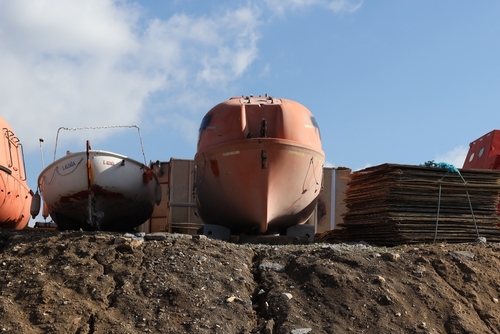
Because of its location, Aliaga is one of the most prominent ship recycling hubs for European-owned vessels. Located on Turkey’s Aegean coast, it operates under strict environmental and worker safety regulations when compared to many South Asian yards.
One example of this is that the facilities here rely less on beaching and more on dismantling ships at the pier. That allows greater control over hazardous materials such as asbestos, fuel residues, and heavy metals. They also sometimes use the so-called landing method, which means landing the bow of the ship on the beach while leaving the stern floating in the water.
Because of its higher standards, Aliaga is frequently chosen for new or high-profile cruise ships, particularly ones that require compliance with EU regulations. Aliaga offers some of the most sophisticated ship-breaking processes anywhere in the world, so while costs are higher here than at some other yards, the process is also more closely monitored.
Alang, India
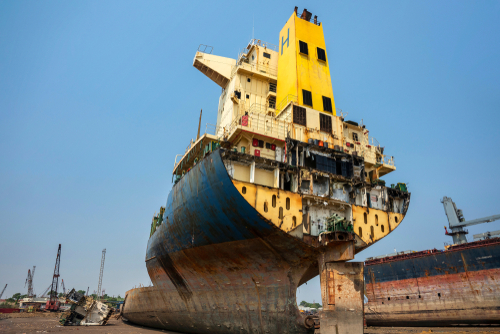
Alang is located on India’s Western coast and is the world’s largest ship-breaking yard, responsible for dismantling more than one-third of all retired ships. In its heyday in 2012, this yard dismantled 415 ships in a single year, but the volume of ships arriving at this yard has been dropping since then.
Alang was once known for its capacity, its skilled workforce, and its ability to process ships quickly. Unfortunately, that sometimes came at the expense of both worker protections and environmental standards.
This changed in 2019, when India signed onto the Hong Kong International Convention for the Safe and Environmentally Sound Recycling of Ships. This convention mandates specific standards for worker training, environmental protection, and recycling. The shipyards at Alang were significantly upgraded to meet the standards.
Chittagong, Bangladesh
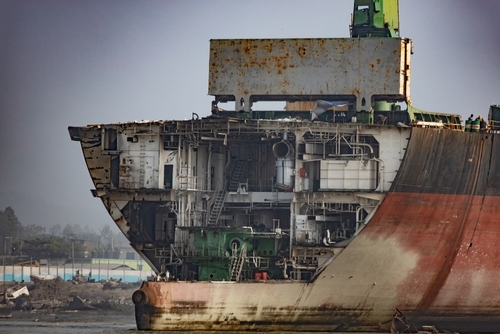
Chittagong is second only in size to Alang. This massive ship-breaking yard has long tidal beaches ideal for beaching big ships and an experienced labor force that can handle the biggest ships in the world. Thanks to the low cost of living in Bangladesh, it also offers one of the cheapest ship-breaking services in the world, returning more money for retired ships to their owners.
If you’ve watched the Avengers: Age of Ultron movie, you’ll have glimpsed Chittagong, standing in for the salvage yard in Wakanda.
The environmental impact and future
Ship recycling can be dirty and dangerous work. Older cruise ships were built at a time when materials like asbestos, heavy metals, and oil-based compounds were frequently used. When these older ships are dismantled, these substances pose serious environmental and health hazards if they’re not properly contained.
Fuel residues, oily sludge, insulation materials, and toxic paints all require the right handling to prevent pollution of coastal waters. Plus, toxic substances are a threat to workers.
In recent years, the industry has undergone major changes thanks to the Hong Kong Convention, which has been adopted by the International Maritime Organization. Among other rules, the convention requires ships to carry an inventory of hazardous materials and mandates control procedures for dismantling them at certified facilities.
The convention was adopted in 2009, but only entered into force in June 2025. So far, implementation has been patchy, with the yards like Aliaga and Alang leading the way, while some other South Asian yards like Chittagong have been slower to upgrade their facilities and processes.
But momentum is building. Under pressure from regulators and environmentally conscious customers, cruise lines are increasingly choosing yards that meet these international standards, even if it costs them more.
As regulations tighten, ship recycling is becoming less about disposal and more about responsible resource recovery. Traveling sustainably means taking into account all aspects of the cruise ship lifecycle, including its end. Programs like the Hong Kong International Convention help ensure that shipyard workers and the environment are protected as these huge ships are broken down.
The end of a ship’s journey
A cruise ship graveyard is not a place ships go to die. Instead, they are where they go to be reborn. Modern ship-breaking facilities are actually recycling hubs that turn old vessels into valuable raw materials, with thousands of new uses.
Every ship currently on the sea will one day reach the end of its lifecycle. When it does, dismantling it properly is key to helping reduce pollution, preserve resources, and keep the oceans cleaner.
If you’re an ecologically conscious cruise ship traveler, it’s worth shopping around for cruise lines that are committed to sustainable recycling practices. By applying pressure to cruise lines with your purchasing decisions, you can help contribute to a cleaner and more environmentally sustainable ship recycling process.
FAQs
Can tourists visit a cruise ship graveyard?
Usually not. These are heavy industrial sites with strict safety protocols, so casual tourism is usually not allowed. Chittagong in Bangladesh used to be a tourist attraction, but visitors are no longer allowed. It’s still possible to take a tour to view the yard from the outside.
How long does a cruise ship last before going to the graveyard?
A cruise ship can last anywhere from 25 to 40 years. After that point, it usually becomes too expensive to maintain and keep it up-to-date with evolving standards, at which point the ship is retired.
What happens to the furniture inside the ships?
Furniture and fittings inside ships are often sold to hotels, restaurants, the construction industry, or collectors. At the world’s biggest shipyards, entire industries have sprung up to give these items a second life.