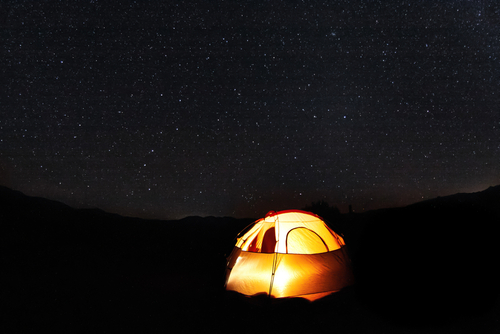

Step outside your tent at 2 a.m. in the middle of New Mexico’s Gila National Forest, and something stops you cold. It’s not a sound. It’s the sky.
The Milky Way stretches from one horizon to the other in a thick, luminous band—thousands of stars sharp enough to seem unreal. No orange glow from a distant city. No passing headlights. Just the universe, laid out above you in full.
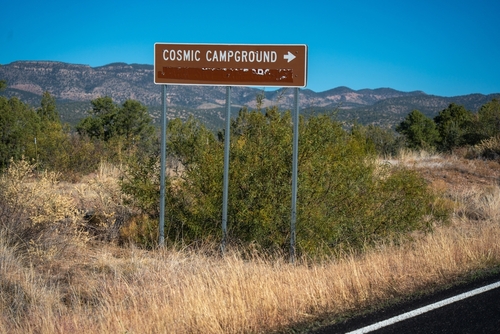
This is Cosmic Campground, and there are very few places in the continental United States where you can still experience a night sky like this.
Light pollution now affects the majority of Americans. Roughly 99% of people in the U.S. and Europe live under light-polluted skies, and about one-third of humanity can no longer see the Milky Way from where they live. The stars haven’t disappeared—we’ve simply buried them under a glow of our own making.
Cosmic Campground exists as a deliberate pushback against that trend. Situated near Glenwood, New Mexico, it was designed from the ground up with one purpose: to give people access to one of the last genuinely dark skies in America. This post covers everything you need to know about visiting, what makes it scientifically and culturally significant, and why places like it matter more than ever.
What Is Cosmic Campground?
Cosmic Campground sits within the Gila National Forest in southwestern New Mexico, managed by the U.S. Forest Service. It’s a small, primitive campground—but “primitive” here is intentional, not an oversight.
The campground features concrete telescope observation pads, a detail that immediately signals what this place is for. These flat, stable pads are designed to support telescope setups, giving amateur astronomers a solid surface to work from throughout the night. The surrounding terrain is wide open and flat, offering unobstructed 360-degree views of the sky from horizon to horizon.
There are no buildings blocking the eastern sky. No trees crowding the south. Nothing between you and the full arc of the cosmos.
A Campground Designed Around Astronomy
Most campgrounds are designed for day use—trails, fishing, picnic areas—with the night sky as an afterthought. Cosmic Campground reverses that logic entirely. The layout, the minimal infrastructure, and the site guidelines all prioritize one thing: keeping the darkness dark.
This design philosophy extends to the rules visitors follow. More on that shortly.
An Official International Dark Sky Sanctuary
Cosmic Campground holds a designation that very few places in the world can claim: it is an International Dark Sky Sanctuary, recognized by the International Dark-Sky Association (IDA).
This designation is awarded to remote, publicly accessible sites that have exceptional starry nights and nocturnal environments, and that are actively protected. It’s the highest tier of recognition for dark sky preservation—reserved for places where artificial light is genuinely, measurably absent.
Cosmic Campground was the first International Dark Sky Sanctuary on U.S. National Forest land. That distinction alone tells you something about how rare it is.
What “Dark Sky” Actually Means
To understand why the designation matters, it helps to know what you’re comparing against. In a typical suburban area, you might see a few dozen stars on a clear night. The sky is never fully dark—it carries a persistent orange or gray tint from nearby towns and roads.
At Cosmic Campground, visitors report seeing:
- The Milky Way as a dense, textured band—not just a faint smudge
- Thousands of individual stars, including ones invisible from most locations
- Distant galaxies with the naked eye
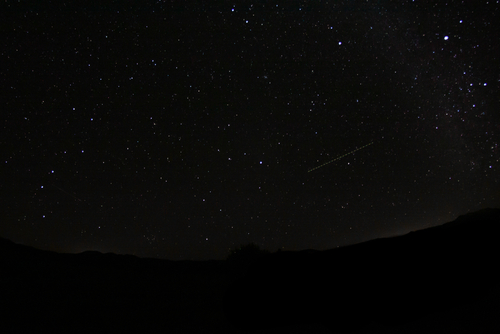
- Meteor showers in full, unfiltered detail
- Planets bright enough to cast faint shadows
The nearest significant light sources are dozens of miles away. Glenwood, the closest town, has a tiny population and contributes almost no sky glow. The result is a darkness that feels almost primordial.
A 360-Degree View With No Obstructions
Many stargazing spots suffer from partial obstruction—mountains to the west, tree lines to the south, a ridge that blocks the low-horizon planets. Cosmic Campground’s flat, open terrain solves this.
Visitors can watch celestial objects rise in the east and trace their full arc across the sky before setting in the west. For astrophotographers, this means capturing wide-angle shots of the entire sky dome. For visual observers, it means nothing is hidden.
The Gila National Forest surrounding the campground provides a natural buffer from development. There are no highways cutting through the landscape, no warehouse districts on the outskirts of town. The wilderness does what wilderness does—it keeps the modern world at a distance.
The Simplicity Is the Point
Cosmic Campground offers the basics and nothing more:
- Primitive campsites
- Pit toilets
- Picnic tables
- Concrete telescope observation pads
- No potable water
- No trash service (pack in, pack out)
For visitors accustomed to campgrounds with electrical hookups, Wi-Fi, and camp stores, this can feel like a step back. It isn’t. Every piece of infrastructure that gets added to a campground brings light with it—security lighting, bathroom fixtures, parking lot lamps. Keeping Cosmic Campground simple is what keeps it dark.
There’s also something to be said for the disconnection itself. Without cell service, without streaming, without the ambient hum of modern convenience, visitors tend to actually look up. The night sky stops being background noise and becomes the entire point of being there.
A Community Built Around Protecting the Darkness
One of the more distinctive aspects of Cosmic Campground is its culture. Visitors follow a specific set of etiquette guidelines designed to preserve the dark sky for everyone:
- Use red lights instead of white flashlights. Red light doesn’t disrupt night vision the way white light does.
- Avoid using headlights after dark, especially near the observation pads.
- Respect quiet hours. Sound carries in the desert, and the experience is contemplative.
- No lights near the telescope pads during observation hours.
These aren’t posted as bureaucratic rules—they’re the shared norms of a community that comes to Cosmic Campground with a common purpose. The people camping alongside you are there for the same reason you are. That shared focus creates an atmosphere that’s hard to find in more conventional outdoor spaces.
What You Can Experience There
Stargazing and Astrophotography
Peak viewing season runs from late spring through early fall, when nights are clear, dry, and reliably dark. New Mexico’s high desert climate means low humidity and minimal cloud cover—conditions that professional observatories also seek out.
Specific highlights include:
- The Milky Way core, visible from roughly April through October
- Meteor showers, including the Perseids in August and the Leonids in November
- Deep-sky objects like the Andromeda Galaxy, visible to the naked eye under truly dark skies
- Planetary viewing through a telescope at almost any time of year
For astrophotographers, Cosmic Campground’s stable telescope pads and unobstructed horizons make it an exceptional shooting location. Long-exposure shots of the Milky Way rising over the desert landscape are entirely achievable here.
The Gila National Forest Beyond the Night
Cosmic Campground doesn’t stop being worth visiting once the sun comes up. The surrounding Gila National Forest is one of the largest national forests in the American Southwest, and it offers:
- Hiking trails ranging from easy desert walks to multi-day backcountry routes
- Wildlife viewing, including mule deer, black bears, and an impressive variety of bird species
- Hot springs within the broader Gila area
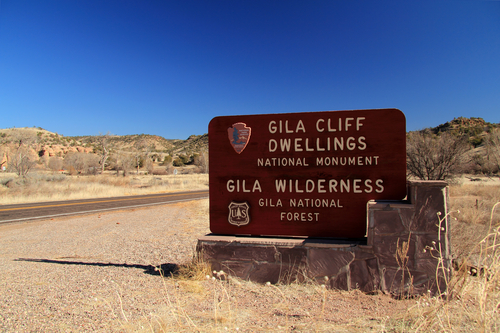
- The Gila Cliff Dwellings National Monument, one of the most significant Mogollon archaeological sites in the country
A trip to Cosmic Campground can easily anchor a longer exploration of one of New Mexico’s most underrated corners.
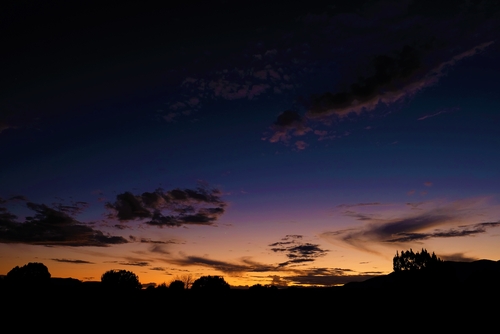
Why Dark Sky Places Are Becoming So Important
The International Dark-Sky Association estimates that light pollution increases by roughly 2% per year globally. That number compounds. Skies that were dark a decade ago are now touched by the glow of expanding suburbs and new distribution centers on the edges of cities.
The consequences go beyond stargazing. Artificial light at night disrupts bird migration patterns, confuses sea turtle hatchlings, affects insect populations, and interferes with human circadian rhythms. Ecosystems that evolved over millions of years in a rhythm of light and dark are being gradually destabilized.
Dark sky sanctuaries like Cosmic Campground serve two functions. They protect natural darkness as a resource—for wildlife, for science, and for human wellbeing. And they make the case, by simply existing, that darkness has value worth defending.
For future generations, access to a truly dark sky may become as meaningful as access to clean water or quiet wilderness. Sanctuaries preserve that access before it disappears entirely.
Frequently Asked Questions (FAQs)
Where exactly is Cosmic Campground located?
Cosmic Campground is located in the Gila National Forest near Glenwood, New Mexico. It sits in the southwestern part of the state, roughly 175 miles northwest of Las Cruces and about 230 miles southwest of Albuquerque.
Is there a fee to camp at Cosmic Campground?
As of publication, there is no fee to camp at Cosmic Campground. It is managed by the U.S. Forest Service as a primitive, fee-free site. Always confirm current conditions with the Gila National Forest directly before your visit, as policies can change.
Do I need to bring my own water?
Yes. There is no potable water at Cosmic Campground. You must bring all your own water for drinking, cooking, and washing.
What’s the best time of year to visit for stargazing?
Late spring through early fall offers the best conditions—clear nights, warm temperatures, and the Milky Way core visible in the sky. Summer weekends around major meteor showers are especially popular.
Do I need a telescope to enjoy Cosmic Campground?
No. The naked-eye sky at Cosmic Campground is extraordinary on its own. Binoculars enhance the experience, but even without equipment, you’ll see more stars than most people see in a lifetime of looking up from cities and suburbs.
Are there nearby amenities or lodging options?
Glenwood, the nearest town, has limited services. Silver City, about an hour away, offers more options including lodging, grocery stores, and restaurants. Plan ahead and stock up before arriving at the campground.
Is the campground suitable for families with children?
Yes, though the primitive conditions require some preparation. There’s no running water, trash service, or camp store. Families who are comfortable with basic camping will find it a genuinely memorable experience—especially for children who have never seen a truly dark sky.
The Rarest Kind of Dark
Cosmic Campground occupies a specific and increasingly rare category: a place that was deliberately built to preserve something most of the world is slowly losing.
It’s not famous. It doesn’t have a visitor center or a gift shop. It asks something of you—preparation, patience, a willingness to sit in the dark and look up. What it gives back is a view of the universe that feels less like a tourist attraction and more like a reminder of something essential.
The stars were always there. We just stopped being able to see them.
If you’re planning a trip to Cosmic Campground, check current conditions and road access through the Gila National Forest website before you go, and review the IDA’s stargazing etiquette guidelines so you’re ready to be a good neighbor to the other observers sharing the sky.