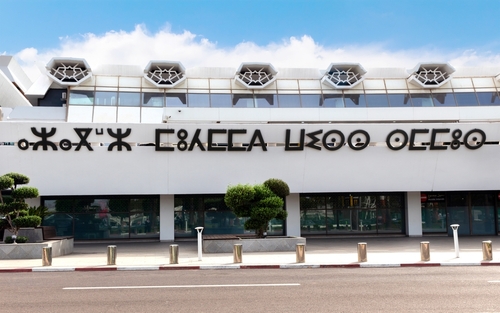

For many travelers, Casablanca Mohammed V International Airport (CMN) is their first glimpse of Morocco, and after a long flight, arrivals can feel both exciting and a little overwhelming. Casablanca Airport welcomes millions of visitors every year, including tourists, business travelers, expats, and those returning home to visit family.
In this Remitly guide, we’ll walk you through what to expect at Casablanca Airport, step by step. From immigration procedures and transportation options to currency exchange, SIM cards, and essential amenities, a little preparation will help you navigate the airport confidently and settle in smoothly on your first day in Morocco.
Getting to know Mohammed V International Airport
Mohammed V International Airport is an iconic part of Morocco’s historic, cultural, and architectural landscape. Named after the “Father of the Nation,” it’s become a symbol of its development and progress. But many international visitors are unfamiliar with this important hub. Let’s dive into everything you should know.
Essential information about Casablanca Airport
Located in the Moroccan city of Nouaceur, the airport is just about 19 miles south of Casablanca. Despite the distance, it’s well connected to Casablanca and the surrounding areas by train, taxi, and private transfer.
It also operates 24 hours a day, although some shops, cafés, and services close late at night or during early morning hours. As Morocco’s primary international airport, CMN is also one of Africa’s busiest air transit hubs.
Terminals
If you’re flying internationally, you’ll likely arrive through Terminal 1 or Terminal 2, which are well-connected and easy to navigate on foot. Signage throughout the airport is generally available in Arabic, French, and English, but airport staff are always on hand to help with directions if needed.
Looking ahead, CMN is set for a major expansion, as officials have approved the construction of a new terminal expected to be completed by 2029. It’s part of a broader national strategy to upgrade infrastructure ahead of the 2030 FIFA World Cup, which Morocco will co-host with Spain and Portugal. The expansion is designed to ease congestion, improve passenger flow, and make the overall airport experience more comfortable as passenger volumes continue to grow.
Airlines and domestic connections
Casablanca Airport is the primary hub for Royal Air Maroc, Morocco’s national airline. It also serves at least 30 major international passenger and cargo carriers from Africa, Europe, the Middle East, and North America.
CMN also offers frequent domestic connections to Marrakech, Fez, and Rabat, making it convenient if you’re continuing your journey within Morocco. However, things can get busy during peak travel seasons and religious holidays, so a bit of patience helps.
Arriving in Casablanca: a step-by-step process
So, your plane is finally landing in Morocco; what’s next? Things will move quickly once you disembark, so it’s best to know what to expect.
Step 1: On arrival
Arrival halls at Casablanca Airport are often bustling with activity, but especially when multiple international flights land around the same time. Lines may move more slowly than expected, which can be frustrating, but it’s a normal part of the arrival process.
Airport staff usually stay calm and professional, even when crowds build. Approaching the wait patiently can make all the difference.
Step 2: Immigration and customs
After disembarking your flight, you’ll follow the signs to passport control.
Before reaching the immigration counter, you’ll need to complete an arrival card, usually handed out during your flight. If you didn’t receive one on board, blank cards are available near the immigration area. For a smoother experience, keep a pen in your carry-on and have the address of your accommodation handy.
Also, make sure your passport meets Morocco’s entry requirements, including minimum validity, based on your nationality. Immigration officers often speak English, Arabic, and French and may ask basic questions about your stay.
After clearing passport control, you’ll proceed through customs. If you have nothing to declare, you’ll likely pass through without any issues. But if you do, be sure to make a truthful and comprehensive declaration to avoid penalties like fines and seizure.
Step 3: Baggage claim
After customs, you’ll enter the baggage claim area, where carousels are clearly marked by flight number. Luggage carts are available, and airport staff are on standby to help.
If your luggage doesn’t arrive, locate your airline’s baggage assistance desk before leaving the airport. You’ll usually need your baggage tag and boarding pass if you need to file a report.
Step 4: SIM cards and connectivity
One of the most convenient reasons for arriving at Casablanca Airport is just how easy it is to get connected. Representatives from local telecom providers such as Maroc Telecom, Orange Morocco, or Inwi offer free starter SIM cards. These usually include a small amount of data that can be topped up later at kiosks, convenience stores, or official provider shops throughout the city.
Maroc Telecom offers the widest national coverage, which is useful if you plan to travel beyond Casablanca. Orange and Inwi are also reliable options, particularly in urban areas, and provide competitive, tourist-friendly data packages.
To activate a SIM card, you’ll need your passport to register your SIM as required by local rules. Internet speeds in Casablanca are generally good for navigation, messaging apps, and coordinating rides. Having mobile data as soon as you land can make your first day feel easier—just be sure your phone is unlocked before traveling.
Money matters: currency and cash
Understanding the Moroccan Dirham
Morocco uses the Moroccan Dirham (MAD), which is considered a closed currency. This means you generally can’t buy or exchange Moroccan Dirhams outside the country. Many travelers bring foreign currency or withdraw cash upon arrival.
ATMs vs. exchange booths
Having some cash on hand is useful for taxi fares, tips, snacks, or small purchases. That’s why, inside the arrivals hall, you’ll find both ATMs and currency exchange booths.
- You’ll usually get better exchange rates at ATMs than at exchange counters, and most international debit and credit cards are accepted.
- For security, it’s a good idea to withdraw a moderate amount rather than a large sum at ATMs, especially if you’re just passing through Casablanca.
- That said, exchange booths can be more convenient, but keep your receipt. You may need it if you want to exchange leftover dirhams before leaving Morocco.
Tipping basics for travelers
Tipping in Morocco is customary, but the amounts are more modest.
- At the airport, porters who assist with luggage typically expect a small tip.
- Meanwhile, taxi drivers don’t anticipate tips, but rounding up the fare is a common and appreciated gesture.
- Hotel staff, such as bellhops or housekeeping, may also receive small tips for attentive service.
That’s why carrying small denominations is recommended, as it can make tipping easier.
Transportation: getting to the city center
Since the airport isn’t located in Casablanca, there are several reliable options to get to the city center.
Using the train
For many travelers, the train is a quick and affordable way to reach Casablanca. The Moroccan National Railway Office (Office National des Chemins de Fer, ONCF) runs trains every hour to 90 minutes out of the basement of Terminal 1. Typically, a journey to the center of Casablanca takes about 45 minutes, and tickets cost 50 MAD, or about $5.50 USD.
ONCF trains generally run from early morning until late evening. If you arrive very late at night, a taxi may be your only option.
Trains connect the airport to major stations such as Casa Voyageurs and Casa Port, which provide easy access to hotels, trams, and taxis. You can buy tickets at counters or vending machines, and the process is straightforward even if you don’t speak French or Arabic.
Taking a grand taxi
Outside the terminal, you’ll see white grand taxis, which are traditional shared or private taxis in Morocco. Grand taxis don’t have a taximeter, so you’ll need to agree on the price upfront. The typical fare to Casablanca ranges from 250–300 MAD ($27–33 USD), depending on traffic and time of day.
Grand taxis are convenient if you’re traveling with luggage or in a group, but they’re significantly more expensive than the train. Pre-booked private transfers are also available, offering fixed pricing and a meet-and-greet service. Many hotels offer airport shuttles, so it’s worth checking if yours does in advance.
Renting a car
Are you planning to drive? You can pick up your rental car right after landing, which can make navigating Morocco more convenient.
Renting a car can be useful if Casablanca is just your starting point, though driving through busy Moroccan streets may feel hectic for first-time visitors. This option is best if you’re a confident driver.
Layovers and connections
Casablanca Airport is a major transit hub for flights between Africa, Europe, and North America, so most connections are made here. If you have a connecting flight, expect additional security screening before boarding and allow plenty of time between flights.
If you have a long layover, you may be able to leave the airport for a while, depending on your nationality and visa requirements. Several hotels near CMN offer shuttle services, making them a comfortable option for overnight stays. Airport lounges also provide quieter spaces to rest, refresh, and recharge before your onward journey.
Departures and amenities
And after you’ve had your Moroccan adventure and are ready to head back home, what does the departure experience look like?
Check-in and security
For international flights, aim to arrive at least three hours before departure. Casablanca Airport has multiple security checkpoints, including checks at terminal entrances and before boarding. Security procedures are thorough, lines can be lengthy and time-consuming, and you don’t want to risk missing your flight.
Lounges, food, and shopping
The airport offers a selection of cafés, fast-food outlets, and duty-free shops selling perfumes, cosmetics, alcohol, Moroccan souvenirs, and more. However, your options may be limited late at night or early in the morning. Lounge access is available to eligible travelers, including business-class passengers and those with lounge access cards.
Wi-Fi and charging
Free Wi-Fi is available throughout the airport, typically requiring a simple login to access. You can also find plenty of charging stations, but they are often very busy. A portable power bank should do the trick.
Other amenities
Casablanca Airport also has:
- A 24-hour medical clinic on-site, providing basic medical assistance if needed. Prayer rooms that are clearly marked, reflecting Morocco’s Muslim-majority culture.
- Private washrooms, with facilities tailored to people with disabilities.
- Designated smoking areas, beauty and massage treatments, and armrest-free sitting and sleeping areas.
If you’re traveling with children, you can use family restrooms, changing tables, and designated play areas, making the airport comfortable for travelers of all ages.
Start your Moroccan adventure confidently
Casablanca Airport can feel busy, but understanding what to expect will help you navigate it more comfortably. From clear arrival procedures to accessible transportation and user-friendly airport facilities, Mohammed V International Airport is prepared to welcome international travelers. With preparation, you can reduce stress and focus on enjoying your time in Morocco.
FAQs
Is Casablanca Airport safe?
Yes, Casablanca Airport is generally very safe, and you’ll see security staff throughout the terminals. As with any international airport, keep a close eye on your belongings and follow posted guidelines.
Can you sleep at Casablanca Airport?
While it’s technically possible to stay overnight at CMN, seating is limited and lighting remains bright throughout. Nearby airport hotels are more comfortable for rest.
Does the airport have luggage storage?
Left-luggage facilities at Casablanca Airport are often unavailable due to security restrictions. Plan accordingly to avoid relying on luggage storage during long layovers.
Is there a prayer room?
Yes, prayer rooms are available and clearly marked within the terminal, reflecting Morocco’s Muslim-majority culture.
Is Casablanca Airport open 24 hours?
Yes. Mohammed V International Airport operates 24 hours a day, though some services may be limited overnight.
Is Uber available at Casablanca Airport?
Ride-hailing services like Uber do not operate reliably in Casablanca. Most travelers use trains, grand taxis, or pre-booked private transfers to get around.