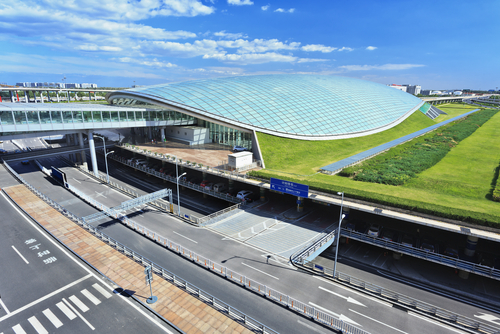

Beijing has two major international airports, and even seasoned travelers mix them up. It’s one of those details that suddenly feels obvious after you land, but can be confusing when you’re booking flights.
At Remitly, we know international travel isn’t just about planes and passports. We know what it’s like to land in a new airport, tired, jet-lagged, with your phone at 12%, trying to figure out how to get to your final destination. That’s why we’ve put together this guide to break down the differences between PEK and PKX, so you can head straight to the fun part of traveling.
Beijing Capital International Airport (PEK): the traditional hub
Beijing Capital International Airport (PEK) is located northeast of the city and has been Beijing’s main international gateway for years. It is sometimes also abbreviated to BCIA.
PEK is big, busy, and very experienced at handling international arrivals. At first glance, it can feel a bit overwhelming, but it’s also surprisingly organized once you’re moving through it.
Airlines that typically operate from PEK
PEK is home to a lot of long-haul international routes. You’ll spot popular airlines like Air China, United Airlines, American Airlines, KLM, Swiss International Airlines, Lufthansa, and several other major international carriers.
If you’re flying from the US or Europe, there’s a good chance your flight will land here, particularly on legacy airlines that have been serving Beijing for years.
One thing to note is that airports and airlines shift their routes from time to time. So it’s always best to double-check your booking to confirm whether you’re flying into PEK or PKX before reserving any onward travel.
Terminal layout and getting around
For more international travelers, the massive Terminal 3 is the star of the show. At the time it was built, it was one of the largest airport terminals in the world.
Getting between terminals at PEK is easier than you might think, given the size. There’s a free shuttle running 24/7 between all terminals. While rides usually take 10-20 minutes, they’re frequent enough that you won’t be waiting for long.
Inside Terminal 3, an internal shuttle train takes you between the main arrivals area and the international departure gates. If you’re moving between Terminals 1 and 2, there’s a short indoor walkway.
One thing a lot of first-time visitors notice is how calm PEK feels, despite the crowds. The chaos is organized, with lines moving steadily and efficiently, making it a pleasant airport to pass through.
Getting to the city from PEK
Once you’ve cleared immigration and grabbed your bags, the next question is usually, “Okay… how do I get into the city?” Thankfully, PEK gives you a few options.
- Taxis: If you’re looking for a quick and easy ride right to your hotel door, official taxis are available 24/7. Most journeys into central Beijing take around 40 minutes. Drivers use a meter rather than a flat fare, so it’s smart to have your address written in Chinese just in case.
- Private transfer: You can pre-book a private Beijing airport transfer to avoid any guesswork on arrival. You’ll be met inside the terminal by a driver and taken straight to your destination without having to queue.
- Airport Express: One of the fastest and cheapest ways to reach the city center, this express train takes you from the airport train station to major subway hubs like Sanyuanqiao and Dongzhimen in about 20 minutes. From there, you can hop onto Beijing’s wider metro system.
- Shuttle bus: If you’re traveling light and not in a rush, there are also regular Beijing airport shuttle buses (line 7) that connect PEK with key points in the city.
Beijing Daxing International Airport (PKX): the modern marvel
If PEK feels familiar and well-established, PKX feels like stepping into the future. This is Beijing’s newer international airport. Beijing Daxing International Airport, known as PKX, is located south of the city and is often nicknamed “The Starfish.” The name comes from its unique radial layout, where gates extend outward from a central hub, making the airport surprisingly easy to navigate despite its size.
Spanning roughly 18.1 square miles, PKX is home to what many consider the largest single terminal building in the world, and yet it rarely feels overwhelming. It was built to handle huge numbers of passengers. And it’s often mentioned as one of the airports set to become a global hub in the decades ahead. In fact, by 2040, it’s expected to handle up to 200 million passengers.
Airlines you’ll see at PKX
PKX grew out of Beijing’s plan to spread air traffic between two airports, and it has quickly become home to a wide mix of carriers.
A lot of China’s big names fly into PKX, like China Southern Airlines, China Eastern Airlines, Air China, Beijing Capital Airlines, China United Airlines, and Xiamen Airlines. You’ll also find well-known global airlines such as Delta Air Lines, Qatar Airways, Etihad Airways, Finnair, British Airways, and Vietnam Airlines flying here.
Getting to the city from PKX
Once you’ve stepped off the plane at Beijing Daxing International Airport (PKX), you’ve got several ways to reach downtown Beijing. The best choice often depends on how soon you want to get there and how much luggage you’re carrying.
- Taxis: If you’re looking for door-to-door simplicity, a licensed taxi is hard to beat. You’ll find taxis waiting right outside the arrivals level, and they’ll take you directly to your city destination in about an hour or slightly more. You can pay with cash, WeChat, Alipay, or the local Beijing Pass card once you’re inside the vehicle.
- Daxing Airport Express subway: If you’re looking for a more budget-friendly option, this is for you. Trains run roughly every 10 minutes from early morning until late evening, and in about 20–25 minutes you’ll be at Caoqiao Station, where you can connect with other subway lines.
- Train: There’s also a high-speed train line that links PKX with Beijing West Railway Station in about 29 minutes. That’s a great option if you’re planning onward travel by rail.
- Shuttle bus: If you’re traveling light and not in a hurry, a Beijing airport shuttle bus is typically the most economical way to travel. Just keep in mind that they take longer than trains or taxis and can involve more walking once you reach your stop.
PEK vs. PKX: which Beijing airport is better for you?
If you’re trying to decide which airport to fly into, keep in mind that most of the time, the choice is actually made for you. It’s usually the airline that decides whether your flight lands at PEK or PKX. Still, knowing the differences ahead of time can make your arrival feel much smoother.
PEK is closer to central Beijing and has that classic, big-city airport energy. It’s busy, well-worn, and very familiar to frequent international travelers. PKX, on the other hand, sits farther south and feels newer and more open, with wider spaces and a calmer flow that many people appreciate after a long flight.
Neither airport is ‘better’ across the board. In fact, both are highly regarded when it comes to international airports. The real win is simply knowing where you’re landing, so you can be ready for your arrival and plan your transportation into the city.
What first-time travelers should know about Beijing airports
Arriving at a new international airport can feel like sensory overload, especially after a long-haul flight. Knowing a few “this is normal” details ahead of time can make Beijing airport feel a lot more manageable once you’re on the ground.
Things that surprise first-time travelers
One of the first things people notice is the sheer scale of both PEK and PKX. Distances can feel long, especially when you’re jet-lagged and dragging a heavy carry-on. Security checks may also happen more than once, depending on your route or terminal. That can feel confusing if you’re not expecting it, but it’s completely normal and part of how these airports operate.
Another surprise for many US travelers is how quiet and orderly everything feels. Compared to many large American airports, there are fewer loud announcements, less visible rushing, and a calmer overall pace. At first, it might feel almost too quiet, but most travelers find that sense of calm reassuring once they settle into it.
Daily essentials at Beijing airport
After a long flight, your body usually needs attention before your phone or wallet does. Both PEK and PKX are well set up for this, but everything is on a larger scale than most US airports.
Food courts, cafés, restrooms, and seating areas are easy to find, spread out across the terminals. You’ll find plenty of opportunities to grab water, use the restroom, or sit for a few minutes before moving on. A short pause to rehydrate or regroup can make the rest of your arrival feel much smoother.
Money moments and communication
Payments in China are largely mobile-first, and while ATMs are available for withdrawing RMB, international cards don’t always work seamlessly for everyday purchases like taxis or convenience shops. It’s best to set up platforms like Alipay or WeChat Pay before you arrive, to save yourself time and confusion.
Wi-Fi is available at both airports, but it can be inconsistent, and sometimes requires verification that doesn’t cooperate with international phone numbers. Having a SIM card or roaming plan ready in advance can help avoid a lot of stress.
Navigating the language
Arriving in China can feel a little different from landing in most other countries, especially when it comes to language. While major airport signage is available in English, you’ll still see a lot of Chinese characters, and knowing a few key terms (plus how to translate the rest) makes navigating Beijing airport much easier.
Also, a lot of first-time travelers to Beijing don’t realize that Google services don’t work reliably in China, including Google Translate. So it helps to download a translation app that works offline, such as Apple Translate, Microsoft Translator, Waygo, or Baidu, especially if you need to show a taxi driver an address or understand a sign on the go. Having your hotel name and destination saved in Chinese characters on your phone (or even as a screenshot) can also make a big difference.
Starting your Beijing journey on the right foot
Whether you land at PEK or PKX, you’ll be arriving at a modern airport that’s used to welcoming international travelers every day. What really makes the difference is knowing where you’re landing, having a rough plan for getting into the city, and giving yourself a little grace after a long flight.
A quick double-check of your airport code before you fly, a bit of prep for Wi-Fi, and having the Remitly app ready for international payments can take a lot off your mental load. When your arrival feels calm and under control, everything that comes next tends to fall into place more easily.
FAQs
Which Beijing airport is better for international flights?
Both PEK and PKX handle international flights well, and the better option usually depends on your airline rather than personal preference.
How far apart are PEK and PKX?
The two airports are roughly 40 miles apart, and traveling between them can take over an hour.
Is there a shuttle bus between PEK and PKX?
There is no direct airport-to-airport shuttle, so transfers require trains or taxis.
Can I use Uber at Beijing airport?
Uber doesn’t operate in Beijing the same way it does in the US, so taxis and airport trains are usually the easiest options.